Sepsis Warning Signs: The Emergency Hiding Inside an Ordinary Infection
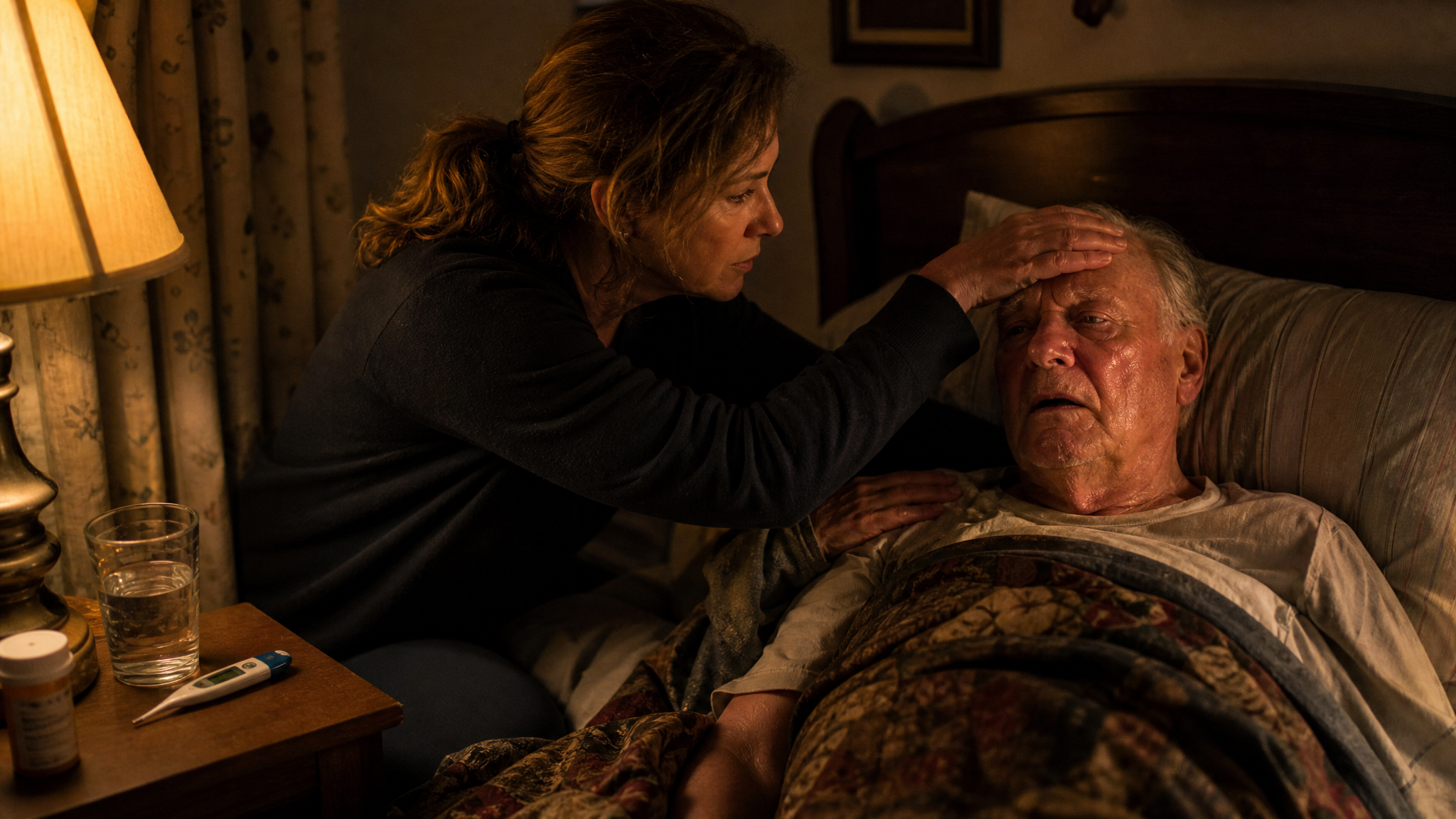
Most emergencies announce themselves. A heart attack grabs the chest. A broken bone won't hold weight. Sepsis is different. It starts as something boring, a urinary tract infection, a scraped knee, a lingering cough, and then the body's own immune response turns on itself. The sepsis warning signs that follow look so much like the flu that families routinely wait days when they had hours. About 1.7 million American adults develop sepsis every year, and at least 350,000 of them don't survive it. Here's how to recognize it early enough to matter.
What Sepsis Actually Is (and Why It Kills So Fast)
Sepsis is not a special kind of infection you catch. It's what happens when your body's response to an ordinary infection spins out of control. Instead of fighting the bacteria or virus in one spot, the immune system floods the whole body with inflammatory chemicals. Blood pressure drops. Small clots choke off circulation. Organs start failing, sometimes within hours.
According to the CDC, in a typical year 1 in 3 people who die in a hospital had sepsis during that hospitalization. And this is not mostly a hospital-acquired problem. CDC data shows roughly 80 percent of sepsis cases begin outside the hospital. It starts at home, with an infection that seemed manageable on Tuesday and became life-threatening by Thursday night.
That speed is the whole story. Sepsis can progress from "feeling off" to septic shock in less than a day. The people who survive intact tend to be the ones whose family member said something early.
The TIME Acronym: Four Sepsis Warning Signs to Memorize
The Sepsis Alliance built the TIME acronym so ordinary people could catch sepsis the way FAST helps them catch a stroke. Four letters, four checks.
T is for Temperature. Higher than normal, or lower. A fever makes sense to most people. The dangerous one is the temperature that drops below about 96.8°F, because a body too overwhelmed to mount a fever is in worse trouble, not better.
I is for Infection. There's a known or suspected infection somewhere. A UTI, pneumonia, an infected cut, a tooth abscess, a recent surgical incision. Sepsis needs a starting point, and it's usually one you already know about.
M is for Mental decline. New confusion, slurred words, unusual sleepiness, or being hard to wake up. In older adults this is often the first and loudest sign, and it's the one families most often explain away.
E is for Extremely ill. Severe pain, serious discomfort, shortness of breath, or the sentence clinicians take dead seriously: "I feel like I might die." Sepsis patients say that with strange frequency, and they mean it.
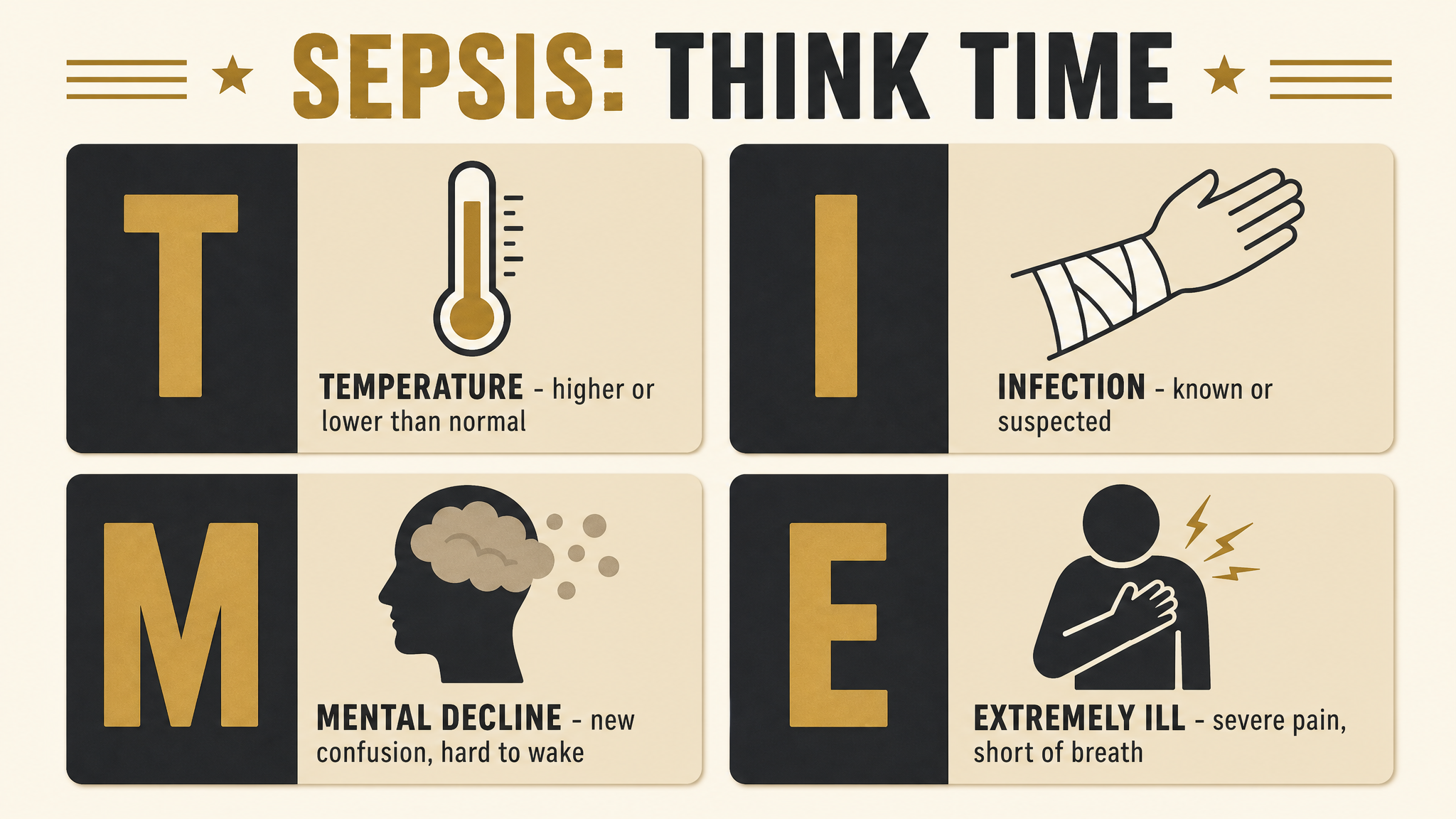
One letter alone might be nothing. Any of them layered on top of an infection is a 911 call or an immediate ER trip.
Sepsis Warning Signs That Hide in Plain Sight
The reason sepsis kills people who had every chance to get help is that its early signs impersonate minor illness. Rapid heart rate, clammy skin, fever, aches. That's also a description of the flu.
So watch for the misfits, the details that don't belong in a normal sick day:
- A grandmother with a UTI who suddenly can't remember what day it is. Confusion is not a normal part of any routine infection.
- Someone shivering under blankets with a temperature that's low, not high.
- Skin that's pale, mottled, or bluish, or a person sweating through clothes while feeling cold.
- Barely any urine output over several hours.
- Breathing that's fast and shallow at rest, as if they just climbed stairs.
- A person who's normally stoic telling you the pain is the worst they've ever felt.
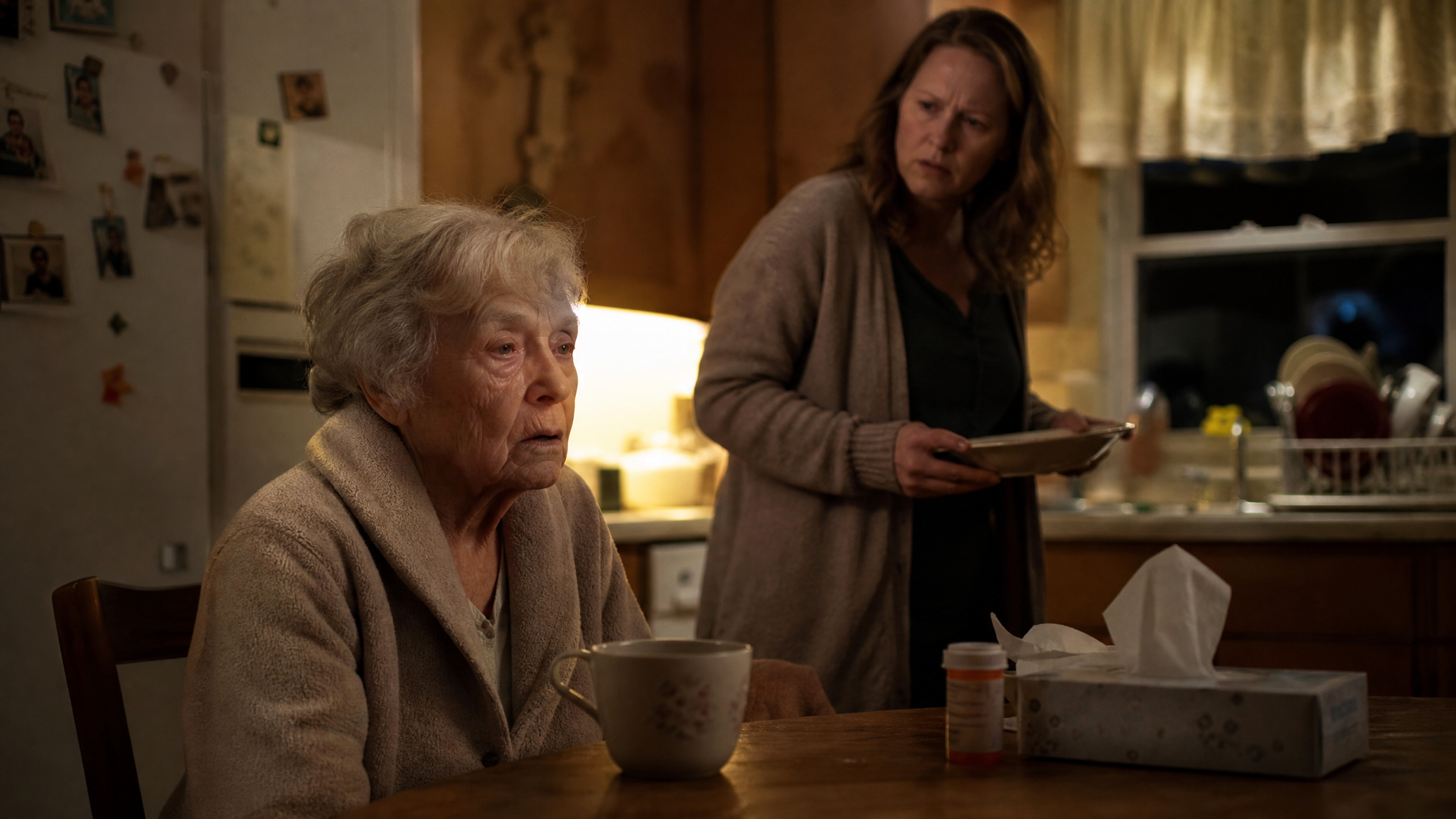
We've written before about how warning signs of a heart attack get rationalized away as indigestion. Sepsis gets rationalized as "a bug that's going around." Same mistake, same cost. If someone with an infection looks worse than the infection should make them, trust that instinct.
Who Is Most at Risk of Sepsis
Anyone can develop sepsis. A healthy 30-year-old can go septic from an infected puncture wound or an untreated dog bite. But the CDC's risk data is clear about who carries the heaviest odds:
- Adults 65 and older, whose immune systems respond more slowly and whose symptoms show up strangely
- People with chronic conditions like diabetes, lung disease, kidney disease, or cancer
- Anyone with a weakened immune system, from chemotherapy, steroids, or transplant medication
- Patients recently hospitalized or recovering from surgery, where incisions and catheters give bacteria a door
- Sepsis survivors, who face a higher risk of developing it again
- Babies under one year old
If you're caring for someone in these groups, the TIME checklist isn't trivia. It's a tool you'll likely use. Seven in ten sepsis patients had recently used health care or were managing a chronic illness, which means the people most likely to develop sepsis are the ones who already have a caregiver nearby. That caregiver just has to know what they're looking at.
Why Waiting for the Doctor's Office Is the Deadly Choice
Here's the decision families get wrong, and it's an understandable mistake. It's 9pm. Dad has a fever and seems foggy. The doctor's office opens at 8am. Waiting eleven hours feels reasonable. With sepsis, it isn't.
Research on septic shock has found that every hour of delay before antibiotics raises the risk of death, with several large studies putting the increase around 7 to 9 percent per hour. Eleven hours of waiting isn't a scheduling choice. It's a survival penalty that compounds overnight while everyone sleeps.
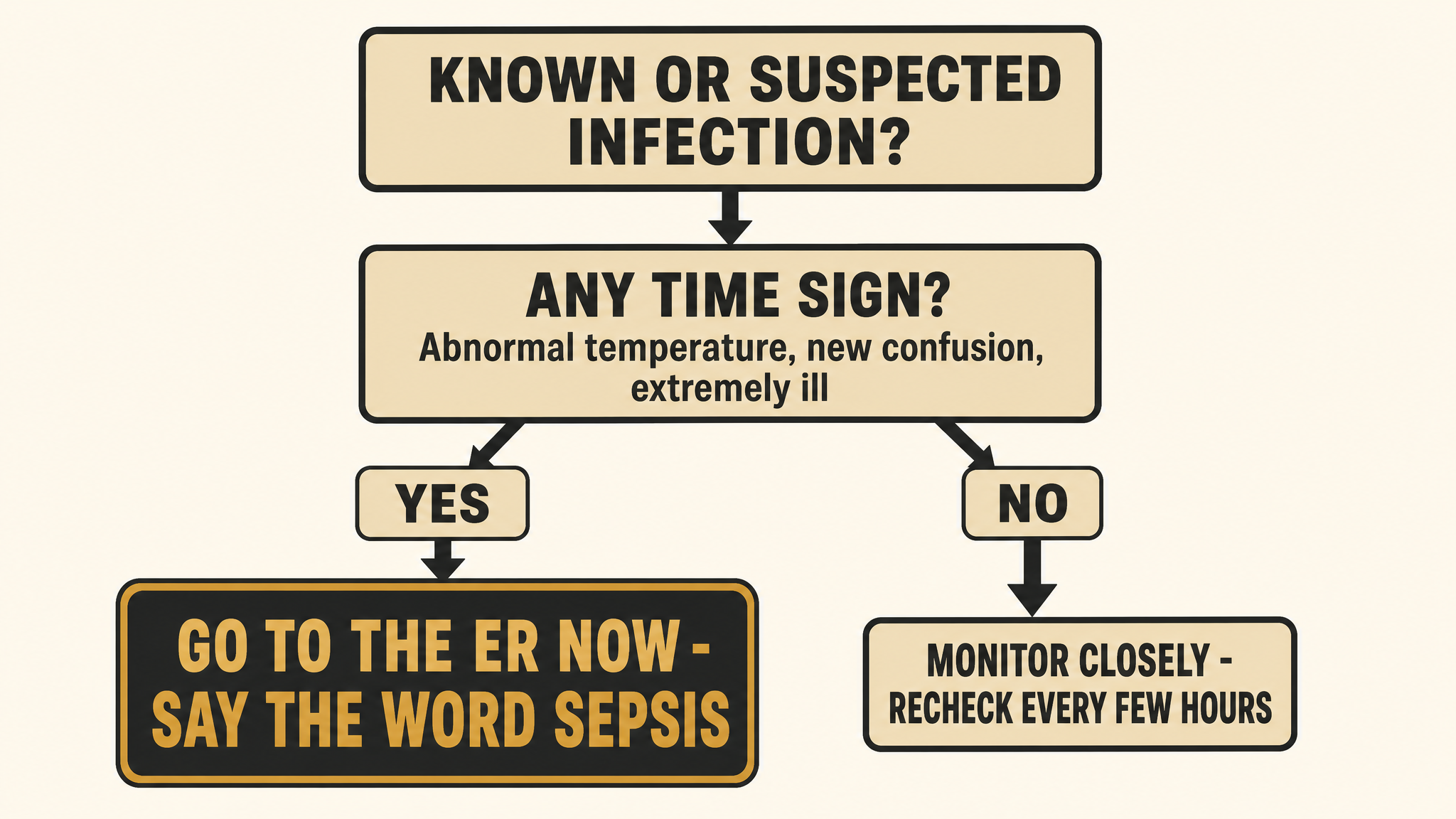
The math only runs one direction. If it turns out to be a bad cold, the ER visit cost you a night and some money. If it's sepsis and you waited, no morning appointment can buy those hours back. This is the same logic we lay out for recognizing a stroke: the treatments work, but they're locked behind a clock.
Urgent care is not the answer here either. Sepsis needs blood work, IV antibiotics, and fluids, and most urgent care clinics will simply forward you to the ER after an hour of delay. Infection plus any TIME sign goes straight to the emergency department.
What to Do in the First Hour
Once you suspect sepsis, your job is speed and clarity.
Call 911 or go to the ER immediately. If the person is confused, struggling to breathe, or fainting or unresponsive, call 911 rather than driving. Paramedics can start fluids en route.
Say the word "sepsis" out loud. Tell the dispatcher, the triage nurse, and the doctor: "I'm concerned about sepsis. They have an infection and they're confused/burning up/breathing fast." That word triggers protocols. Vague descriptions of feeling unwell don't.
Bring the story. When the infection started, what it was, medications taken, chronic conditions, and any recent surgery or hospital stay. The confused patient can't report any of this. You're their memory.
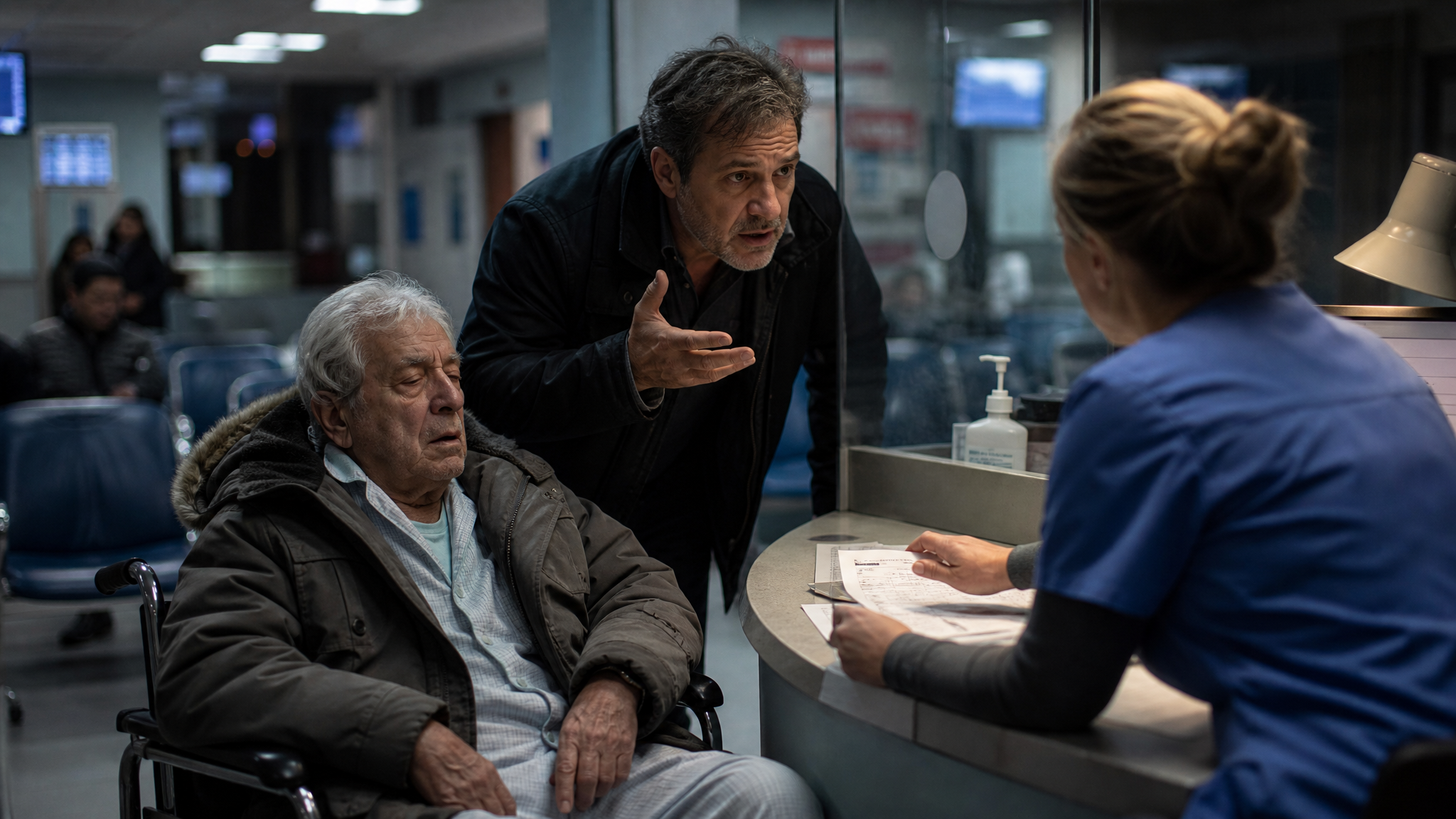
Don't talk yourself out of it in the parking lot. Nobody has ever regretted an ER visit that ruled out sepsis. Plenty of families regret the night they decided to wait.
The first hour of an emergency belongs to whoever is standing there, and being ready for it is a habit, not luck. The 1stHour Trauma Kit was built for that habit: 82 pieces of serious medical equipment for the injuries that can't wait, organized so you can act before help arrives.
This content is for informational purposes only and does not constitute medical advice. Sepsis is a medical emergency. If you suspect sepsis, call 911 or seek emergency care immediately.


