Dog Bite First Aid: What to Do in the First Hour After an Attack
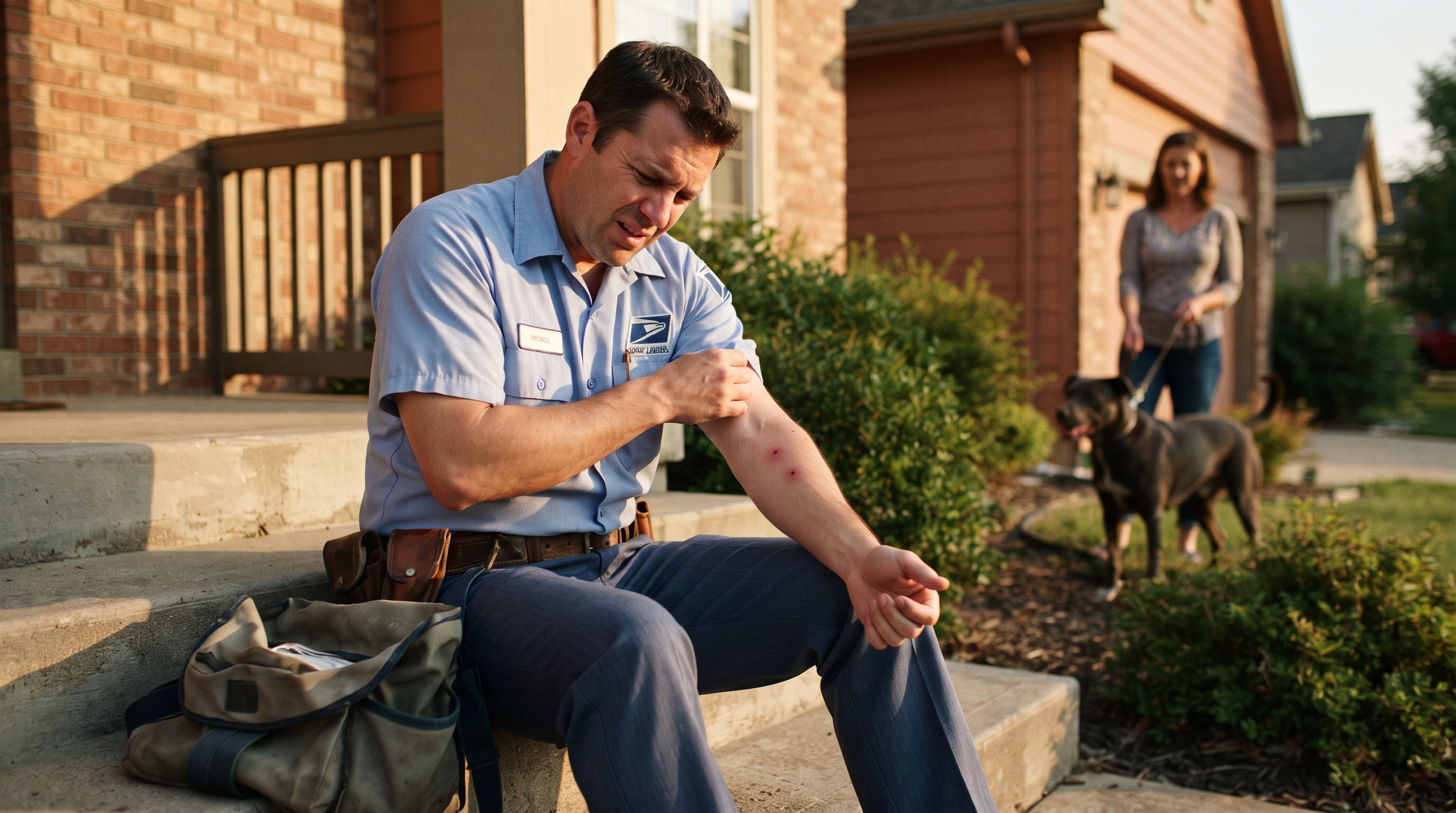
Good dog bite first aid starts before the wound even looks serious. Most bites don't look like much right after they happen. A couple of puncture marks, maybe some redness, and the dog is already being pulled away by an embarrassed owner. It's easy to clean it up, slap on a bandage, and move on with your day. That instinct is understandable, and it's also how a lot of small bites turn into infections a few days later.
We built 1stHour around the idea that the first hour after something goes wrong is the one that decides how the rest of it goes. Dog bite first aid is a good example of why. What you do right now, how you clean it, whether you get medical care, whether you find out about the dog's vaccination status, has more to do with your outcome than how deep the bite looked at first glance.
Why "It's Just a Little Bite" Is the Wrong Instinct
Dog teeth aren't like a knife. A bite doesn't just cut the surface, it crushes and tears tissue underneath the skin while leaving a small entry point on top. That's why a bite that looks like two small holes can still cause real damage to muscle, tendon, or the tissue around a joint.
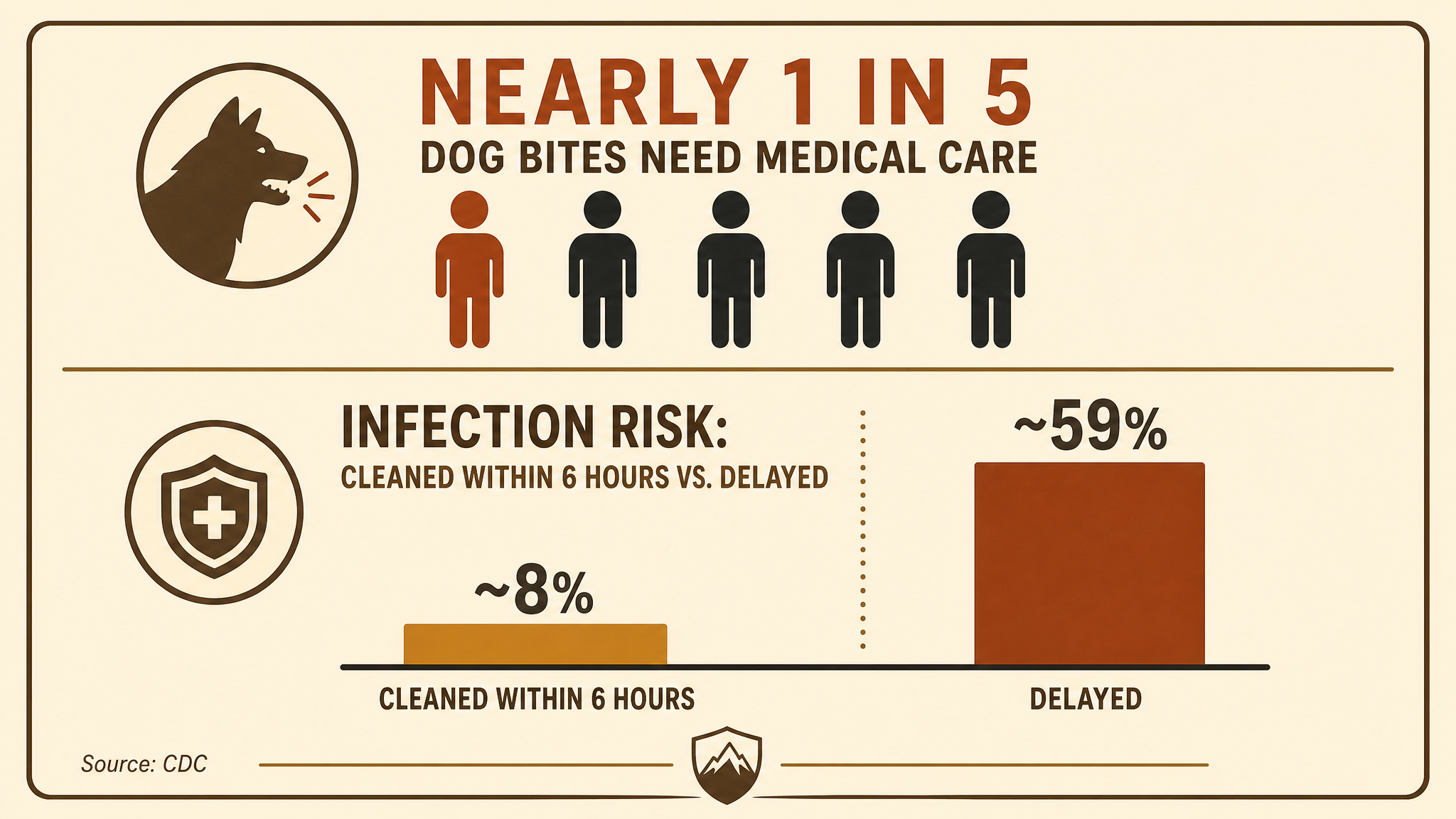
More than 4.5 million people are bitten by dogs every year in the U.S., and nearly one in five of them ends up needing medical attention. That's not a rare outcome. It's common enough that "wait and see" is a real risk, not just caution.
Any dog can bite, including a dog you know well, when it's scared, in pain, startled, or protecting food or puppies. This isn't about which breeds bite more. It's about treating every bite the same way regardless of whose dog it was.
Stop the Bleeding First
Before you worry about cleaning anything, look at how much the wound is bleeding. If blood is flowing steadily or spurting, or if it's soaking through cloth faster than you can blot it, apply firm, direct pressure with a clean cloth or gauze and don't let up. Keep the pressure on until it stops, someone else takes over, or you get to a hospital.
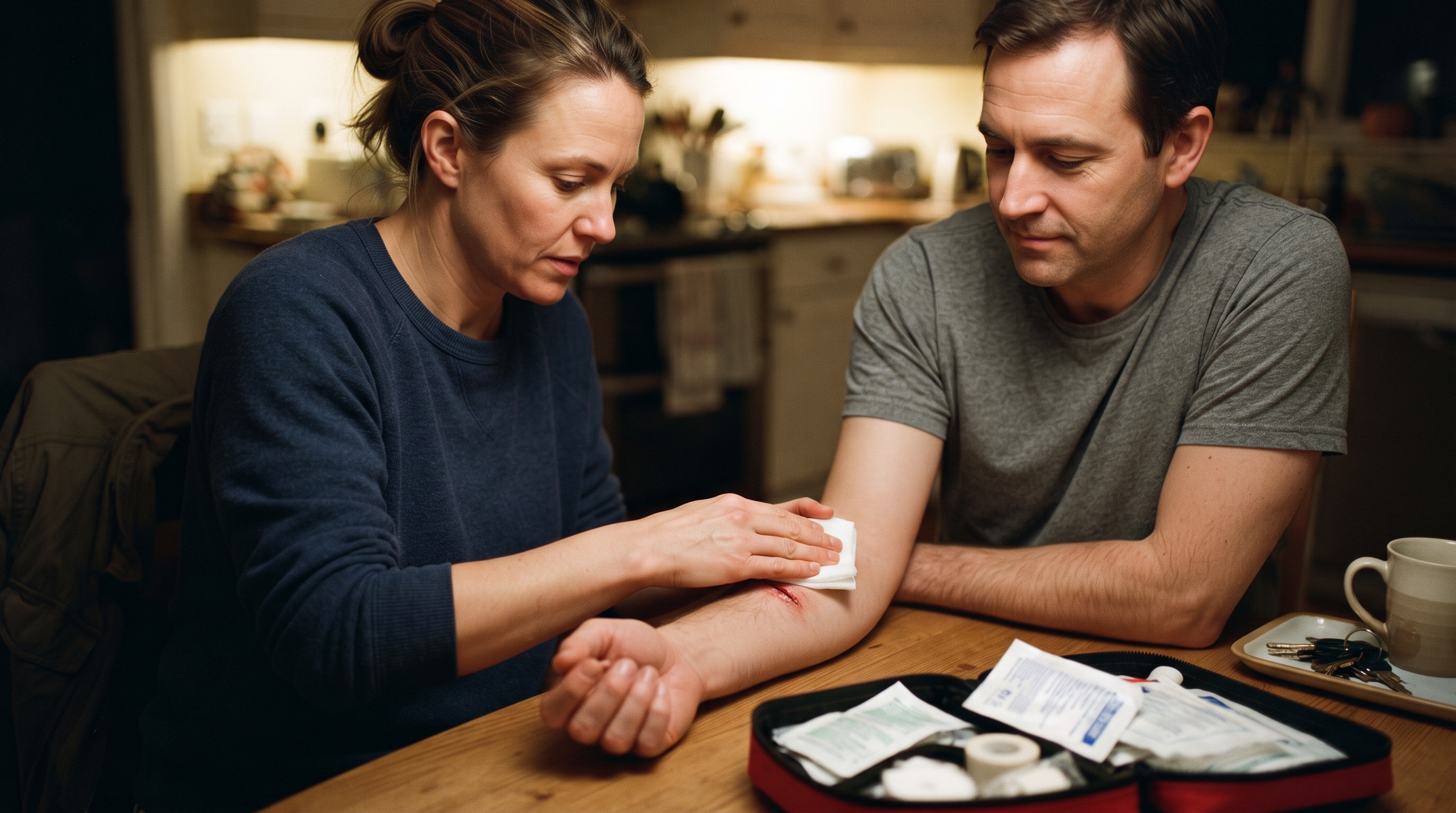
If blood soaks through the material you're using, don't peel it back to check. Just add another layer on top and keep pressing. Lifting the original layer disturbs whatever clot is trying to form underneath it.
Most dog bites don't bleed like this. If yours is more of a puncture with some oozing, you can move straight to cleaning it. Our guide on how to stop severe bleeding covers what to do if a bite (or any wound) is bleeding heavily enough to be genuinely dangerous.
How to Clean a Dog Bite the Right Way
Once bleeding is controlled, wash the wound with soap and running water for at least five minutes. That's longer than most people do, and it matters. Dog mouths carry bacteria that don't belong in your bloodstream, and thorough washing is one of the biggest factors in whether a bite gets infected.
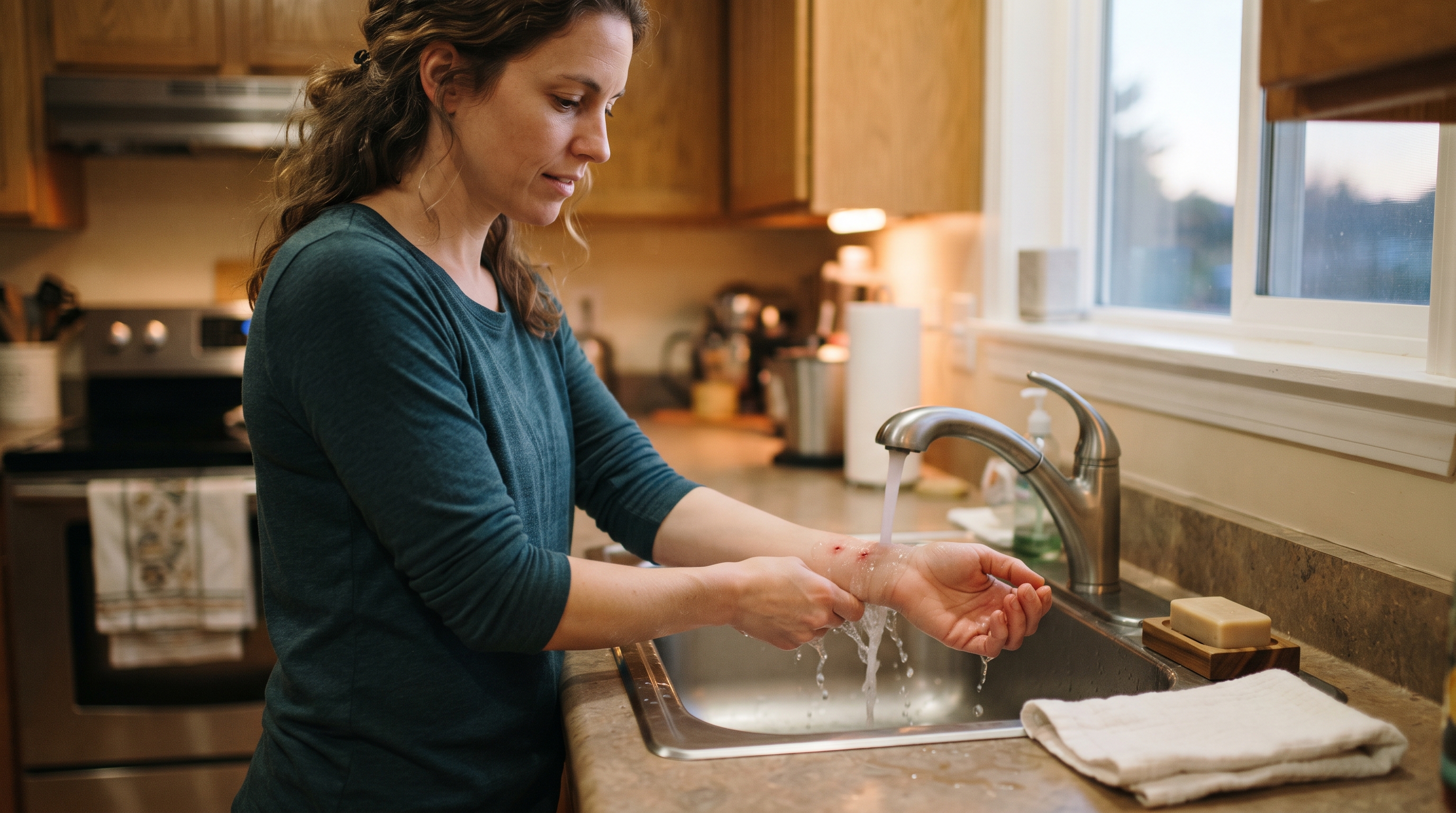
Run the water directly over the wound rather than just dabbing at it. Use mild soap around the edges of the bite to help lift bacteria away, but don't scrub hard directly into a puncture wound. After washing, pat the area dry with a clean cloth, apply a thin layer of over-the-counter antibiotic ointment if you have one, and cover it with a sterile bandage.
Bites on the hands, feet, or over a joint deserve extra attention because they heal slower and infect more easily in those spots. If a bite is a deep puncture rather than a shallow scrape, our guide to treating a puncture wound walks through the specifics of caring for a wound that goes deeper than it looks.
Signs of Infection to Watch For in the Days After
The first hour matters, but a dog bite doesn't stop being a concern once it's cleaned and bandaged. Infection often shows up over the following two to three days, not immediately. Keep an eye on the wound and get medical care if you notice:
- Increasing pain or swelling instead of gradual improvement
- Redness that spreads outward from the bite rather than staying contained
- Warmth around the wound that feels hotter than the surrounding skin
- Pus or cloudy drainage
- Red streaks running away from the wound toward the rest of the limb
- Fever, chills, or swollen lymph nodes near the bite
Any one of those on its own is worth a call to your doctor. Several together, especially fever with red streaking, means don't wait for an appointment. Go in the same day.
Rabies Risk: What You Actually Need to Know
This is the part people either panic about or ignore completely, and neither reaction is useful. The actual question is simple: do you know this dog's rabies vaccination status?
If it's a known pet with current vaccination records, the risk is very low, though you should still confirm the vaccination with the owner and note their contact information in case anything changes. If it's a stray, a wild animal, or a dog whose vaccination history is unknown, that's a different situation entirely. Tell your healthcare provider exactly that when you seek care. They'll likely consult your local health department to decide whether rabies post-exposure prophylaxis, a series of shots that's highly effective when started promptly, makes sense for your case.
Watch the animal if you can do so safely, or ask someone else to. Strange behavior, aggression that seems out of character, stumbling, or excessive drooling are all worth reporting alongside the bite itself.
When a Dog Bite Needs More Than a Bandage
Plenty of dog bites are minor enough to manage at home with the steps above. Others aren't, and knowing the difference matters more than trying to be tough about it. Get medical care, not just a home remedy, if any of the following apply:
- The wound is deep, gaping, or won't stop bleeding with steady pressure
- The bite is on the face, neck, hands, feet, or over a joint, where infection risk and cosmetic or functional damage are both higher
- You don't know if the dog has been vaccinated against rabies
- It's been more than five years since your last tetanus shot
- The person bitten is very young, elderly, or has a weakened immune system, all of which raise infection risk substantially
According to the CDC, deep wounds and bites in these high-risk locations warrant medical attention right away, and starting proper wound care within six hours of the bite meaningfully lowers infection risk compared to waiting. The American Red Cross outlines the same emergency-care steps we've walked through here, including when a bite crosses the line into something requiring 911.
Reporting the Bite (and Why It's Not Overkill)
Reporting a dog bite to animal control or the police feels like an extra step nobody wants to take, especially if it's a neighbor's dog or a pet you like. Do it anyway. It's not about getting anyone in trouble. It's about making sure the rabies vaccination status gets confirmed on record, and about protecting whoever that dog encounters next.
If you can, get the owner's name, address, and the name of the veterinarian who administers the dog's vaccines. If it's a stray or you don't know the owner, report as much detail as you can about the animal's appearance, behavior, and location. Local health departments use that information to track exposure risk, not just to punish dog owners.
Having a stocked first aid kit within reach turns most of these steps from "figure it out" into "already have what I need." If yours needs an update, our home first aid kit checklist is a solid place to start.
None of this requires anything exotic, just clean supplies within reach and a clear head about when a bite needs more than a bandage. That's the whole idea behind the 1stHour Trauma Kit. It's 82 pieces built for exactly this kind of moment, so you're not scrambling through a junk drawer while someone's hand is bleeding.
This content is for informational purposes only and does not constitute medical advice. If you've been bitten by a dog, seek professional medical attention, especially if you don't know the animal's vaccination status. In a medical emergency, call 911 immediately.


