Does My Cut Need Stitches? How to Decide in the First Hour
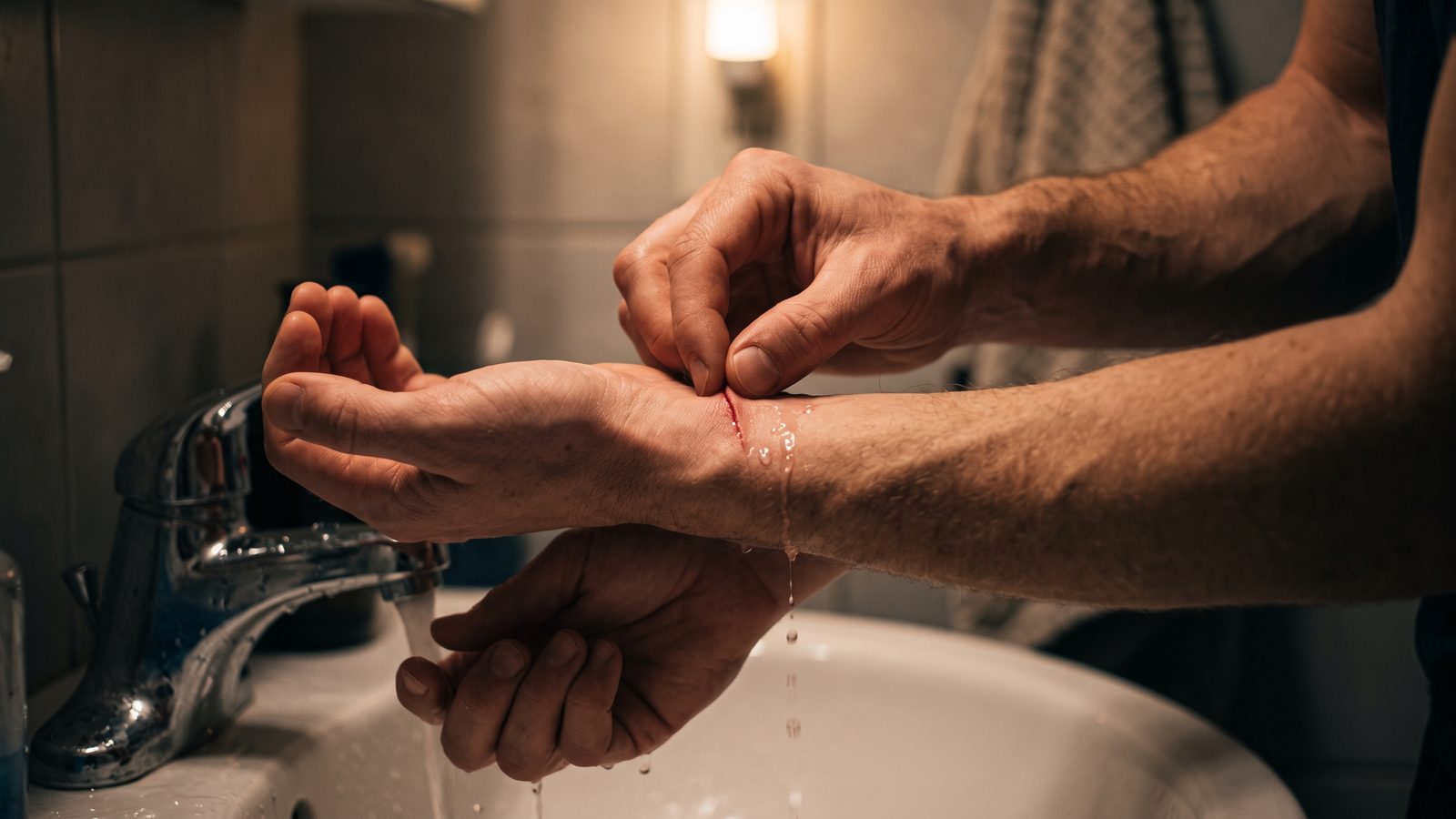
You're standing at the sink with a dish towel wrapped around your hand, and there's more blood than you expected. Does my cut need stitches, or can I handle this myself right here?
Most cuts don't need stitches. Most of what looks alarming in the first thirty seconds calms down once you clean it and get a look at what's actually underneath. But some cuts do need a professional, and the ones that get missed are usually missed because nobody checked the wound the right way. Here's how to check it.
The Gape Test: The Fastest Way to Tell If Your Cut Needs Stitches
Rinse the wound under running water first so you can actually see what you're dealing with, not just blood. Then gently bring the edges of the skin together with clean fingers, or press a folded piece of gauze against it.
Does it stay closed on its own, or close with barely any pressure? Good sign. Bandage it and move on.
Does it pop back open the second you let go, or does it take real pressure to bring the edges together at all? That's a gaping wound, and gaping wounds usually need stitches, staples, or medical-grade adhesive to hold. Skin held together with nothing but a bandage tends to heal wide, slow, and with a worse scar than it needed to have.
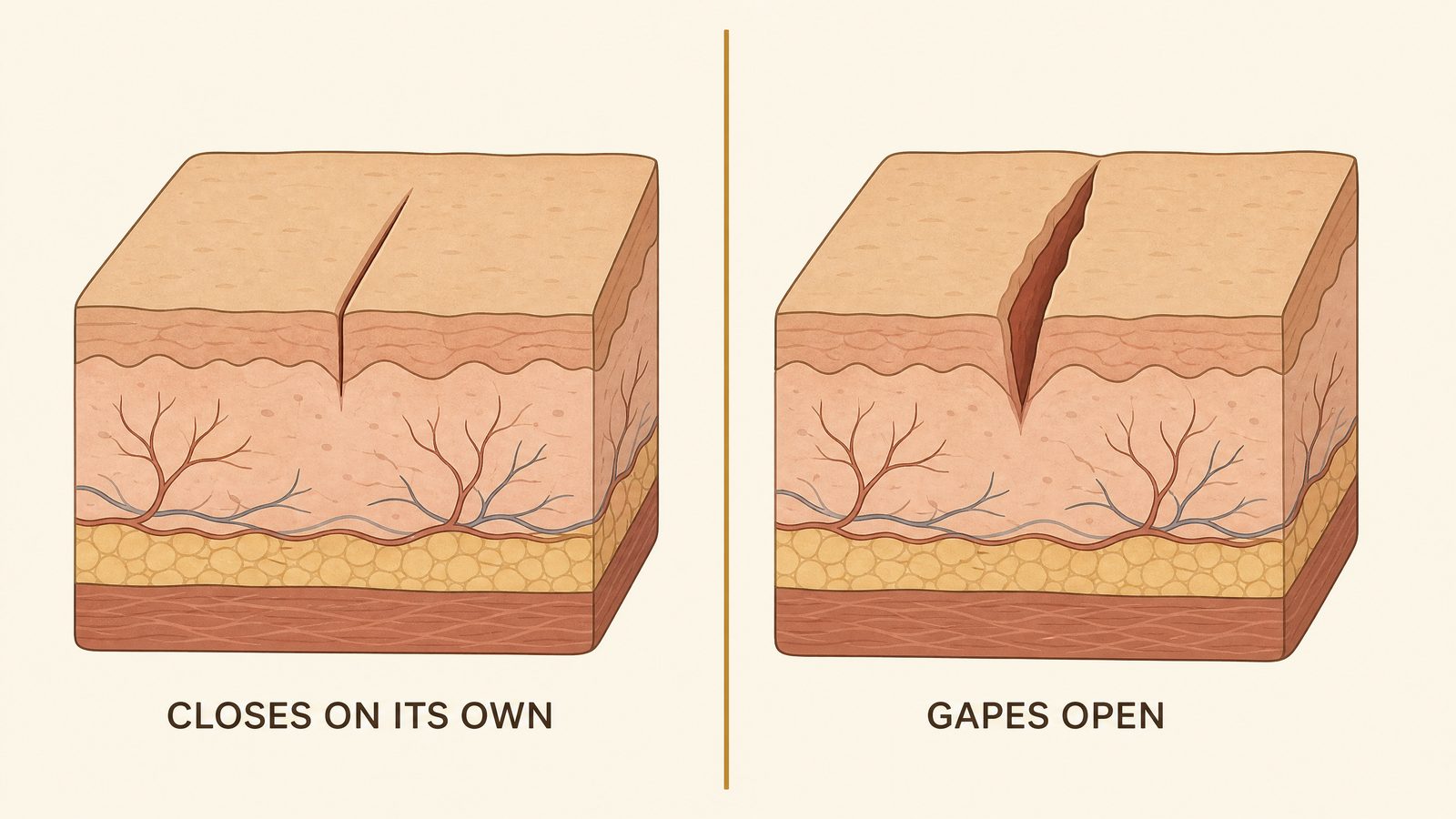
This one test catches most of what matters. Everything else below is refinement.
Depth, Location, and Why Your Knuckle Is Different From Your Shin
Depth matters as much as length. A short cut that's deep enough to show the yellowish, fatty layer under the skin (or worse, muscle) needs medical attention even if it's barely half an inch long. A long, shallow scrape that never gets past the top layer of skin usually doesn't, no matter how much it bled.
Location changes the math too. Three places get automatic extra caution:
The face. Even a small facial cut is worth a second opinion, because scarring is more visible there and the skin heals differently than on your arm or leg.
Joints. A cut over a knuckle, elbow, or knee moves every time you bend it, which means it reopens easily and heals slower. It also raises the odds of tendon or joint involvement, which isn't something to guess about at home.
Hands. Hands are dense with nerves, tendons, and small blood vessels packed close together. A cut that looks minor on a palm or finger can still nick something that affects grip strength for good if it's not checked.
If the wound checks any of those boxes, that's your answer regardless of what the gape test showed.
How Long Do You Have Before a Cut Needs Stitches?
Here's something most people don't know: stitches aren't just for wounds that are actively bleeding. There's a time window for closing a wound properly, and once it passes, a provider may clean the wound and let it heal open rather than stitch it, because closing a wound that's had time to start infecting traps bacteria inside.
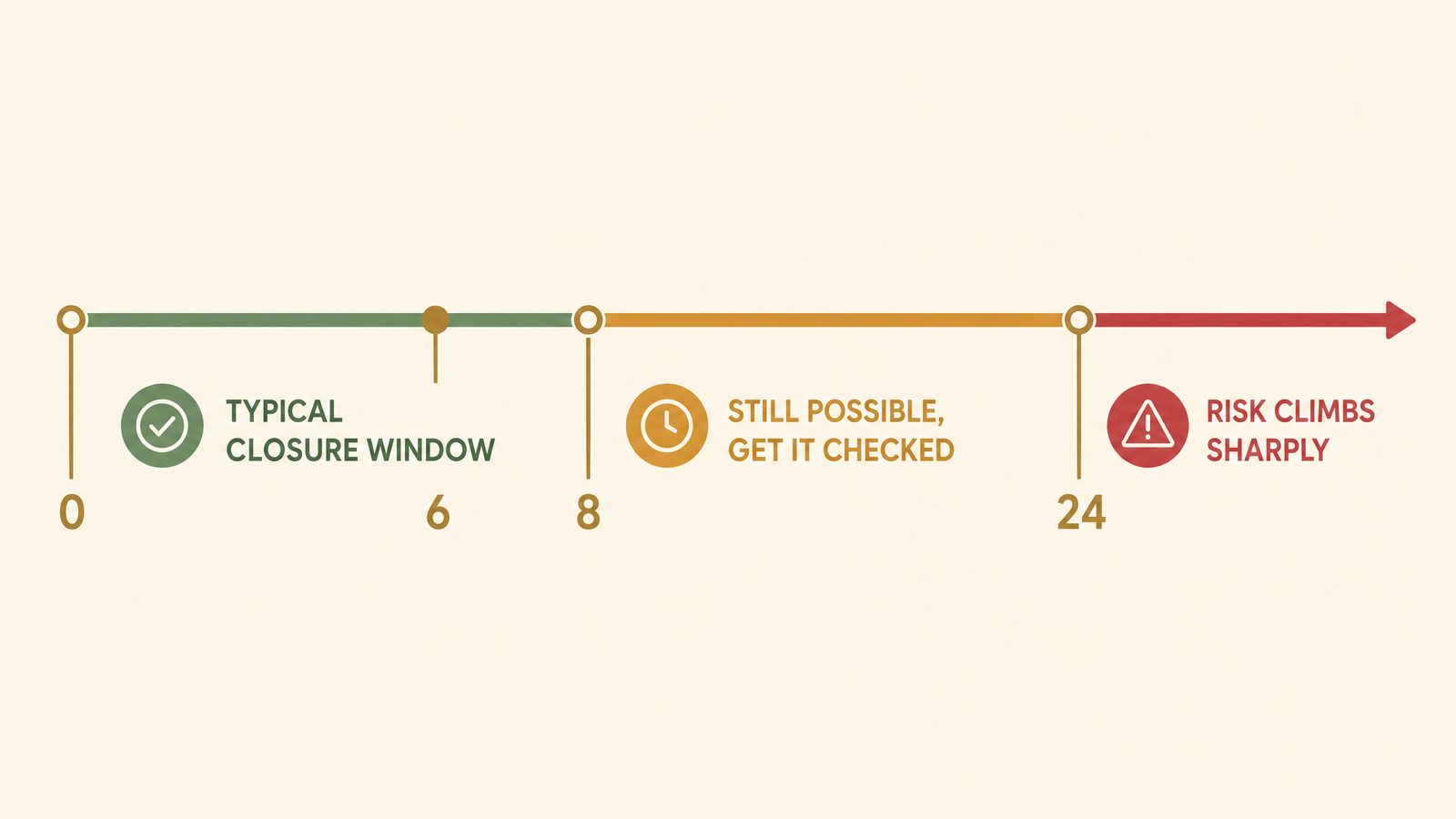
The traditional rule of thumb taught for decades is 6 to 8 hours from injury to closure. That number came from older research and it's held up reasonably well as a general guideline, but it's not a hard line. Cleveland Clinic notes the practical window can run close to 24 hours for a clean facial cut, while a dirty wound on a hand or foot needs attention faster than that. The variables that actually predict trouble are less about the clock and more about how contaminated the wound is, how large it is, and where it's located.
What that means for you: don't use "well, it's been a few hours" as a reason to skip care you'd otherwise seek. If a wound needs stitches, get it looked at the same day. If you're on the fence, sooner beats later every time, and a wound that sits open and untreated for half a day is a different, higher-risk decision than one caught in the first hour.
When It's a 911 or ER Call, No Debate
Some situations skip the decision-making entirely. Call 911 or get to an ER immediately if:
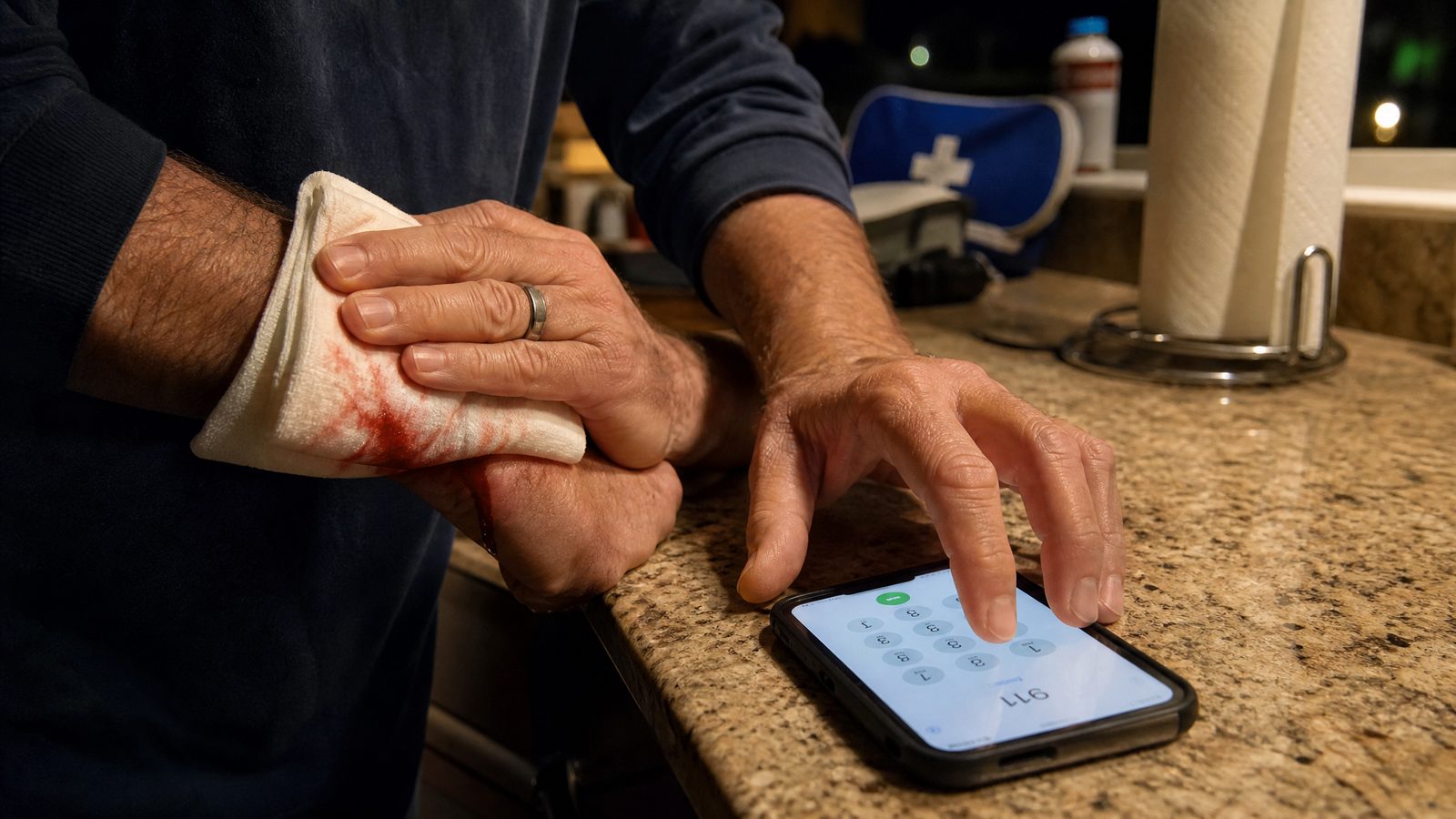
- Blood is spurting or pulsing out of the wound, not just flowing
- Direct, firm pressure for a full 10 minutes hasn't slowed the bleeding
- The cut came from an animal or human bite, especially if it broke the skin deeply
- There's something embedded in the wound (glass, metal, wood). Don't pull it out yourself; it may be blocking a blood vessel
- The wound was caused by a high-force impact: a gunshot, a crush injury, or being impaled
- You can see fat, muscle, tendon, or bone
None of these are close calls. If you're weighing whether to drive yourself or call for help, that hesitation is usually the answer.
If It's Borderline: Cleaning and Closing a Cut at Home
If the gape test passes, the depth and location look fine, and none of the emergency signs above apply, you can likely handle it yourself. Mayo Clinic's first-aid guidance is a good baseline: wash your hands first, then rinse the wound under running water rather than soaking it. Wash the surrounding skin with soap, but keep soap out of the wound itself, and skip the hydrogen peroxide and iodine. Both feel like they're doing something, and both actually irritate healthy tissue and can slow healing.
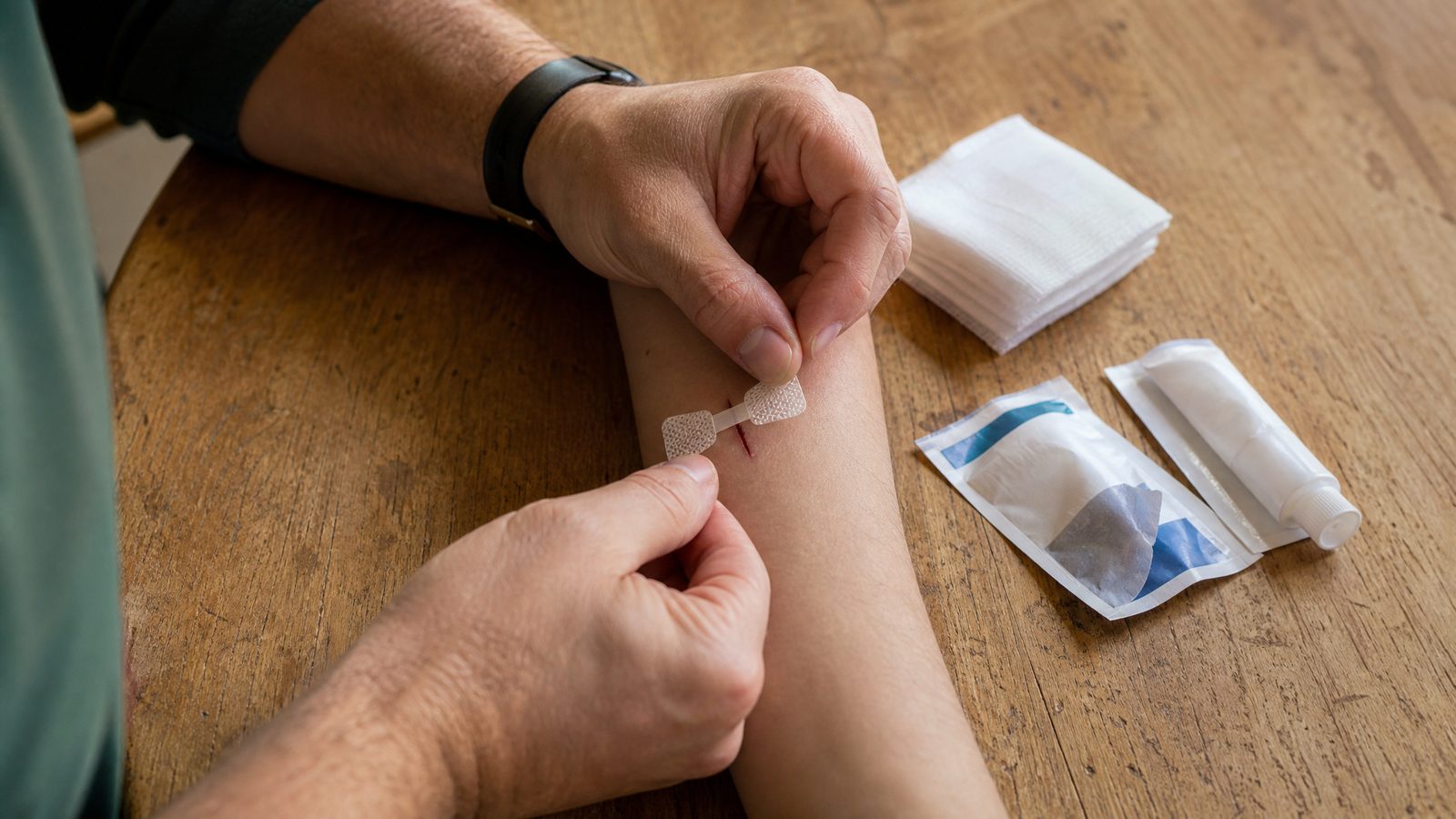
If the edges want to separate but a little pressure closes them, a butterfly closure or sterile adhesive strip (steri-strips) can hold the wound shut better than a standard bandage. Apply a thin layer of antibiotic ointment or plain petroleum jelly, cover it with gauze or a bandage, and change the covering daily or whenever it gets wet or dirty.
Tetanus is the piece people forget. If it's been more than five years since your last tetanus shot and the wound is deep or dirty, Mayo Clinic recommends getting a booster. For animal or human bites specifically, the CDC's standard adult booster schedule is every 10 years, but a healthcare provider will often check your history and recommend one sooner given how bites introduce bacteria. This is a five-minute errand, not a big deal, and it's a lot better than finding out later you needed it.
If any of this applies to a cut that's actively bleeding hard, that's a different conversation entirely. Our guide on stopping severe bleeding covers direct pressure and packing technique when a bandage isn't enough. A puncture wound also plays by different rules than a clean-edged cut, since the entry point can look small while the damage runs deep. And any bite wound gets its own protocol, regardless of size, because of infection risk.
After It's Closed: Watching for Infection
Whether a provider closed it or you did, the next few days matter. Watch for spreading redness, increasing pain instead of gradually easing pain, pus or cloudy drainage, warmth around the wound, or a fever. Any of those is worth a call to a doctor or urgent care, even after the initial decision about stitches is behind you.
Most cuts heal fine either way. The goal here isn't to talk you into stitches you don't need or talk you out of ones you do. It's giving you a way to check, calmly, in the first sixty seconds, instead of guessing under a kitchen towel while your hand throbs. A well-stocked home first aid kit makes that first sixty seconds a lot less chaotic, since you're not digging through drawers for gauze while you're already bleeding.
Deciding whether a cut needs stitches is a lot easier when you're not also hunting for gauze, a butterfly closure, or an antiseptic wipe mid-crisis. The 1stHour Trauma Kit carries 82 pieces of real medical equipment, organized so you can clean, close, or escalate a wound without guessing what's in the drawer.
This content is for informational purposes only and does not constitute medical advice. When in doubt about a wound, especially one involving the face, a joint, a bite, or heavy bleeding, seek care from a qualified medical professional.


