Snow Shoveling Heart Attack Risk: Who Should Skip It
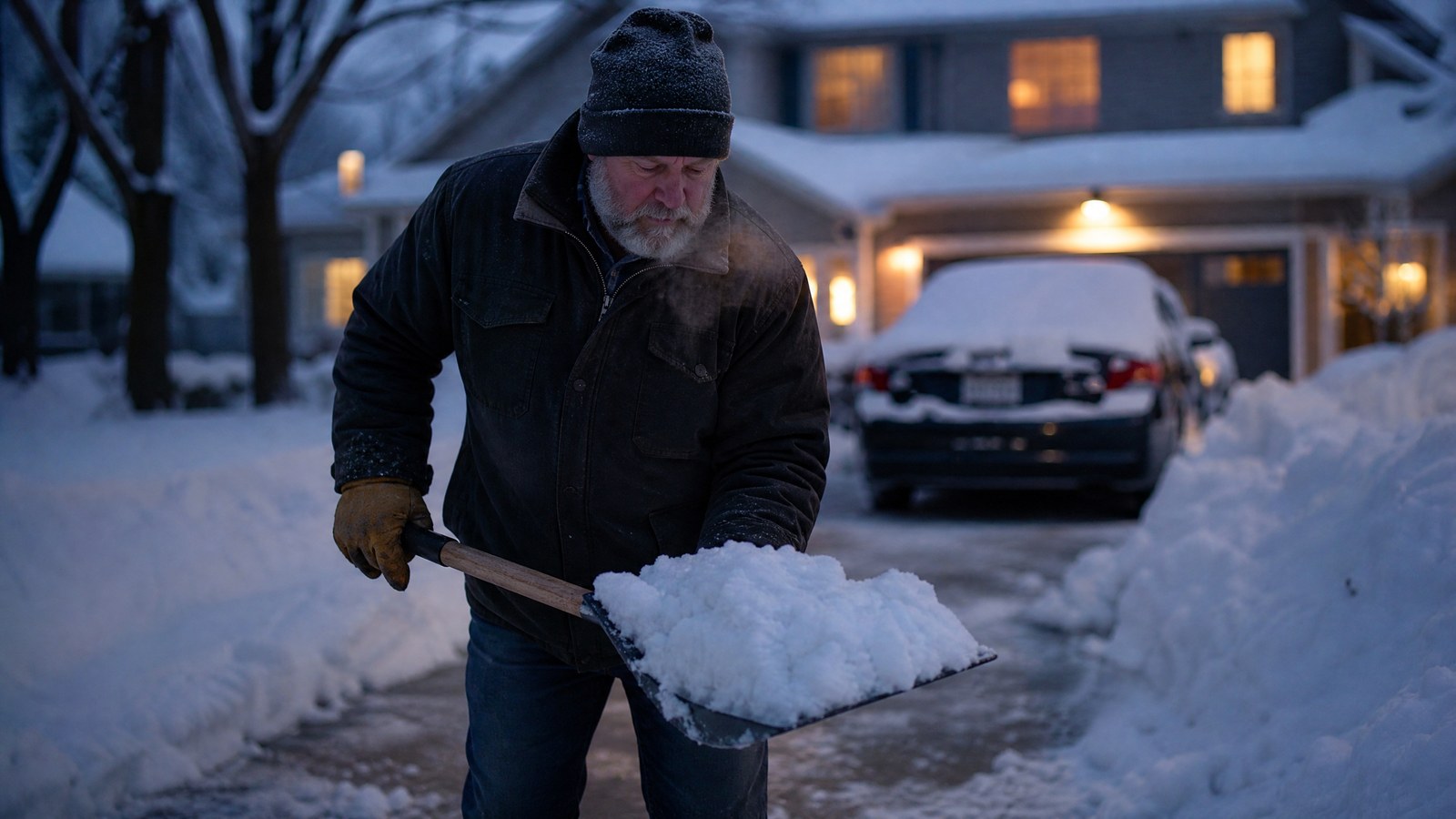
Ten inches fell overnight. The plow buried the end of the driveway, and you need to get to work. So you grab the shovel, skip the coffee and start throwing snow as fast as you can. That scene plays out every winter, and for some people it ends in the back of an ambulance. Snow shoveling heart attack risk is real and well documented, and most of it is avoidable. This guide covers why shoveling is so hard on the heart, who should skip it entirely, how to do it more safely, and what to do in the first minutes if someone goes down.
What Drives Snow Shoveling Heart Attack Risk
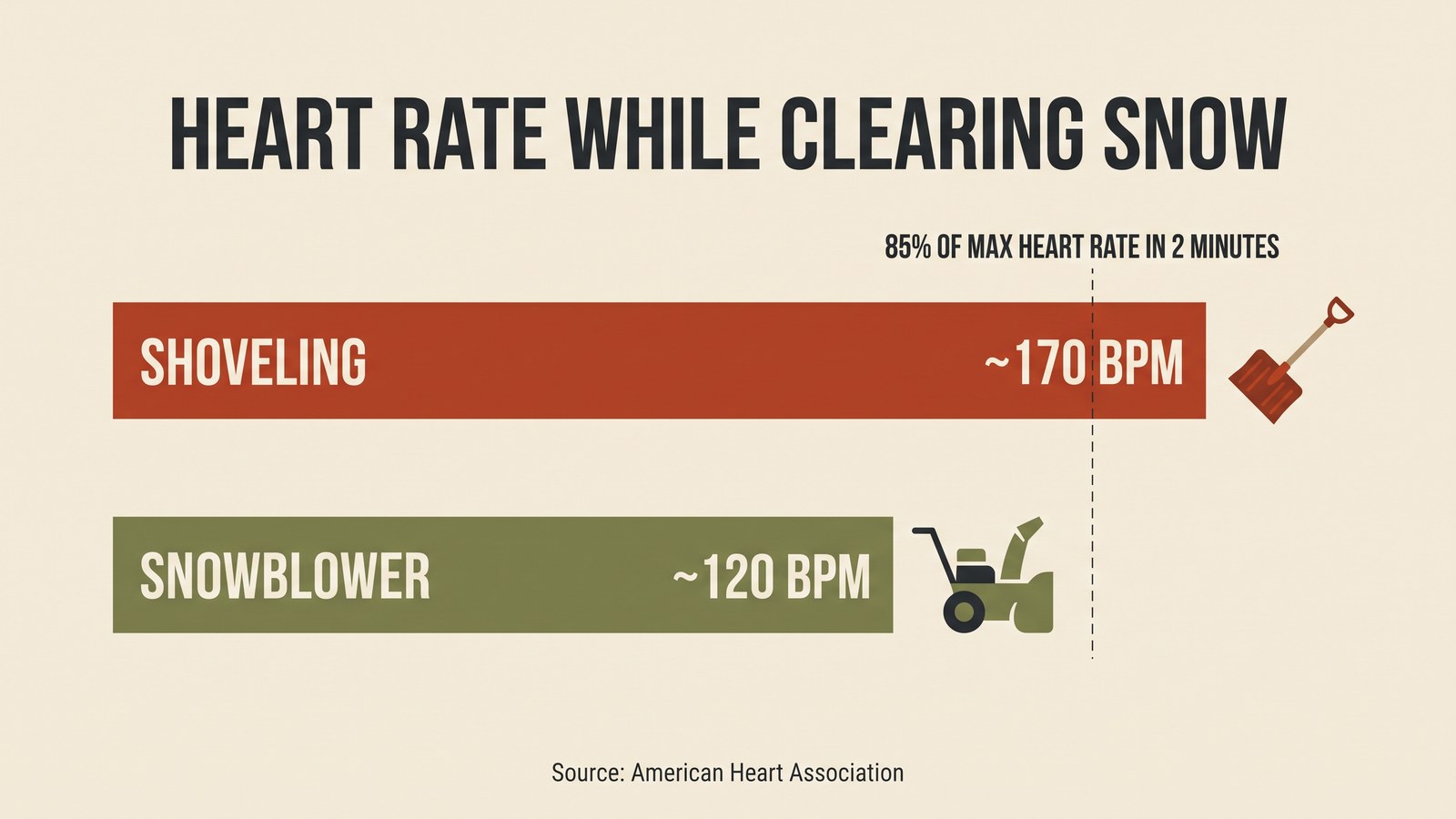
Shoveling looks like ordinary yard work. Your heart doesn't treat it that way. The American Heart Association reports that in one study, participants' heart rates passed 85% of their maximum after only two minutes of shoveling. Barry Franklin, Ph.D., who led the AHA's scientific statement on the topic, points to several things stacking up at once:
- It's mostly arm work. Arm exertion is harder on the heart than leg work like walking.
- It's static strain. Holding a loaded shovel is isometric effort, which raises blood pressure sharply.
- People hold their breath while lifting heavy loads, which pushes heart rate and blood pressure up further.
- Your legs stay still, so blood can pool in the lower body instead of returning to the heart.
- Cold air narrows blood vessels, including the coronary arteries that feed the heart muscle.
The same AHA report compares the two ways of clearing a driveway: heart rates averaged around 170 beats per minute while shoveling, versus around 120 behind a snowblower.
Stack those five strains together and a heart that copes fine with daily life can suddenly come up short on oxygen. That's how a hidden blockage turns into a heart attack, or a dangerous rhythm turns into cardiac arrest.
The numbers back this up. A national study from Nationwide Children's Hospital found about 11,500 snow shoveling injuries and medical emergencies treated in U.S. emergency rooms each year. Cardiac problems were only 7% of those cases, but they made up more than half of the hospital admissions and every one of the 1,647 deaths recorded over the study period.
Who Faces the Highest Snow Shoveling Heart Attack Risk
In the same study, people 55 and older were more than four times as likely as younger people to have heart symptoms while shoveling, and men in that group were twice as likely as women. Age matters, but it's not the whole story. Your health history and fitness count for more.
According to the AHA, you should have someone else shovel if you:
- Have had a heart attack or stroke
- Have had bypass surgery, a stent or angioplasty
- Have known or suspected heart disease
- Have high blood pressure, high cholesterol or diabetes
- Smoke now or used to smoke
- Carry a lot of extra weight or don't get regular exercise
That last group is the one that surprises people. Someone who sits at a desk all week and then shovels a heavy, wet snowfall once or twice a winter is asking a deconditioned heart to do a sprint. According to AARP, Franklin goes further and advises people 45 and older not to shovel at all. If you're in that range and unsure, ask your doctor before the first storm, not during it.
Good alternatives: a snowblower (it still raises heart rate, but far less than shoveling, according to the AHA), a neighbor's teenager, a paid service, or deicer on the walk until help arrives.
How to Shovel Snow Without Overloading Your Heart
If you're healthy and active and you're going to shovel anyway, these habits cut the strain:
- Don't shovel right after a meal or a drink. AARP advises skipping alcohol, heavy caffeine and smoking beforehand, since they raise heart rate and blood pressure on their own.
- Warm up for a few minutes. March in place or walk around the house. The Nationwide Children's researchers recommend light exercise before you start.
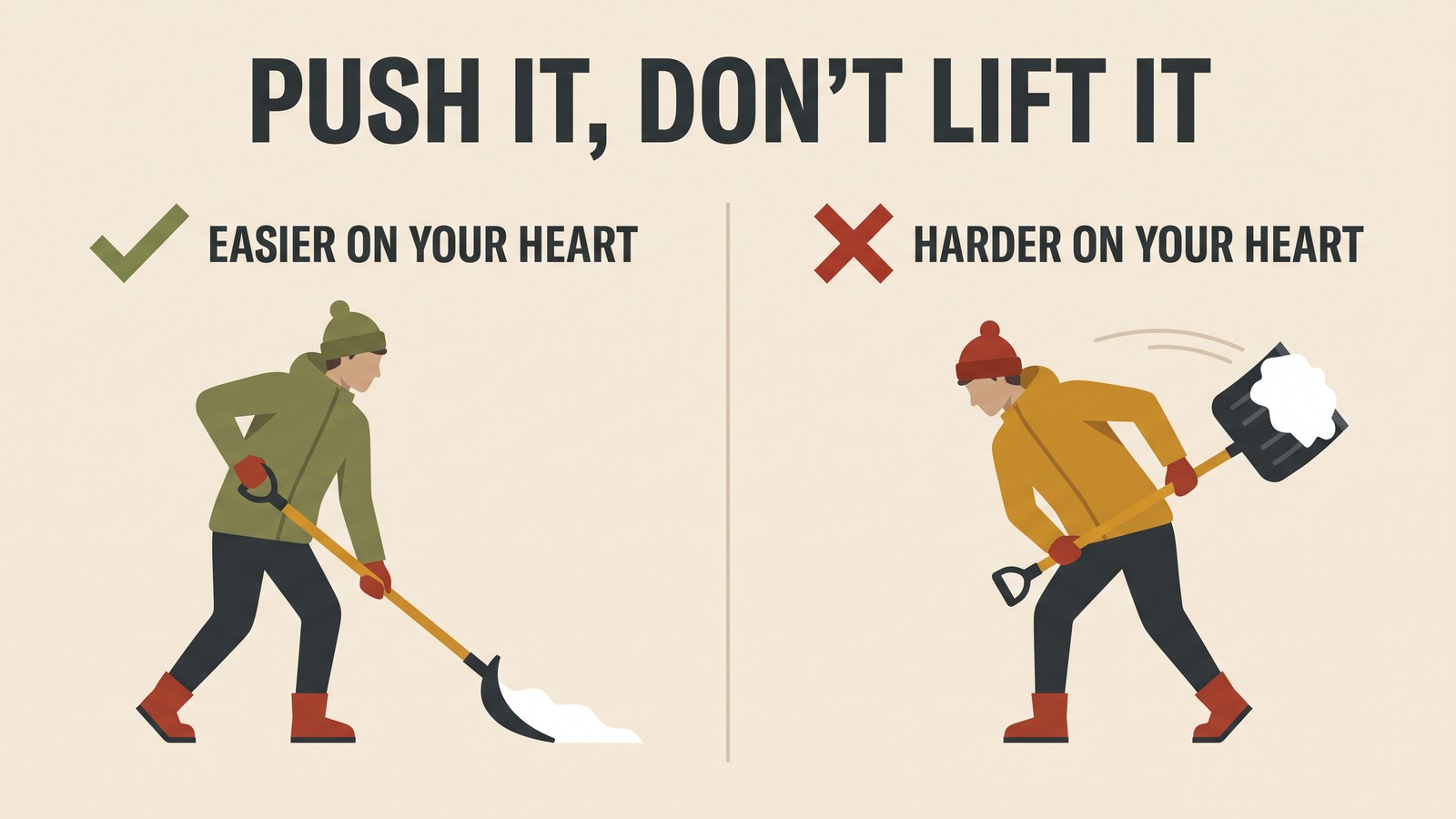
- Push the snow, don't lift it. Pushing or sweeping is far easier on your heart than scooping and throwing. When you do have to lift, take small loads. A single shovelful of wet snow can weigh around 16 pounds.
- Bend your knees and keep the load close. An ergonomic shovel with a bent handle helps your back too.
- Breathe. Notice if you're holding your breath on each lift and stop doing it.
- Take breaks before you need them. Stop and rest often, even if you feel fine. Never work to exhaustion.
- Go out more than once. Clearing two or three inches several times during a storm is much easier than digging out a foot of packed snow the next morning.
- Dress for it. A hat, gloves, layers and something over your mouth and nose. Cold air hitting your face and lungs is part of what tightens those arteries. Wear boots with good traction, since slips and falls are another big cause of shoveling injuries.
And tell someone you're heading out. If you live alone, keep your phone in your pocket, not on the kitchen counter.
Warning Signs: When to Stop Shoveling and Call 911
Heart attacks during snow removal don't always look dramatic. Stop shoveling immediately if you notice:
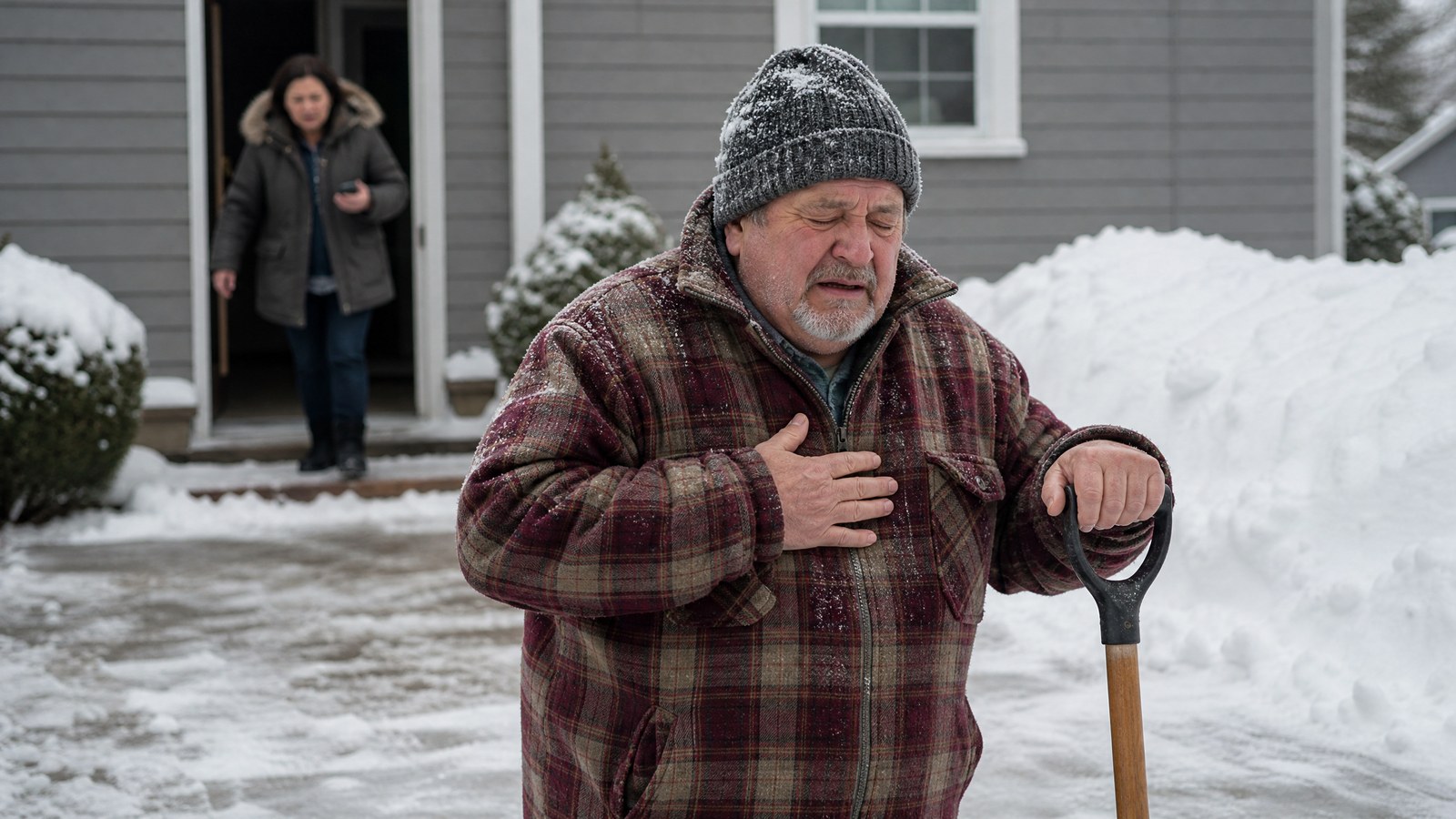
- Chest pain, pressure, squeezing or fullness, especially if it lasts more than a few minutes or comes and goes
- Pain or discomfort spreading to one or both arms, the back, neck, jaw or stomach
- Shortness of breath that's out of proportion to the work
- Lightheadedness, nausea or a sudden cold sweat
- A racing, pounding or irregular heartbeat
- Unusual fatigue or weakness
Put the shovel down, go inside and sit. If symptoms don't fade quickly after you stop, call 911. Don't drive yourself to the hospital and don't wait to see if it passes. The 911 dispatcher may tell you to chew an aspirin; follow their instructions. Our guide to the warning signs of a heart attack covers how symptoms can differ in women and older adults, who are more likely to have nausea, back or jaw pain and fatigue instead of classic chest pain.
If Someone Collapses in the Snow
A heart attack and cardiac arrest aren't the same thing. If you're fuzzy on the difference, our explainer on heart attack vs. cardiac arrest breaks it down. In short: in a heart attack the person is usually awake and talking. In cardiac arrest they collapse, stop responding and aren't breathing normally.
If someone goes down while shoveling:
- Check if they respond. Tap their shoulders and shout.
- Call 911 and put the phone on speaker, or send someone else to call.
- If they're unresponsive and not breathing normally, start CPR. Push hard and fast in the center of the chest, about 100 to 120 times a minute. You don't have to move them indoors first. Do it right where they are, on the driveway if you have to. Our hands-only CPR guide walks you through it.
- Get an AED if one is close. Send someone to grab it while you keep doing compressions. Here's how to use an AED if you've never touched one.
- Keep going until paramedics take over or the person starts breathing.
After a big storm, roads are slow and ambulances take longer. What you do in those first minutes carries more weight than usual. Our winter storm prep checklist helps you get the house and the people in it ready before the snow starts.
Winter emergencies rarely come one at a time. A heavy snowfall brings shoveling strain, falls on the ice and slow response times, all on the same morning. We built The 1stHour Trauma Kit for the stretch between something going wrong and help arriving. See what's inside The 1stHour Trauma Kit and keep one by the door this winter.
This content is for informational purposes only and does not constitute medical advice. If you have heart disease or risk factors, talk to your doctor before shoveling snow. In an emergency, call 911.


