Scorpion Sting First Aid: What to Do in the First Hour

You reached into a boot, a woodpile, or a sleeping bag, and something stung your hand like a hot needle. Scorpion sting first aid is simple, and most stings in the US stay minor. What matters is knowing the few signs that mean the sting is not minor, and acting on them early. Here is what to do, step by step, and what to skip.
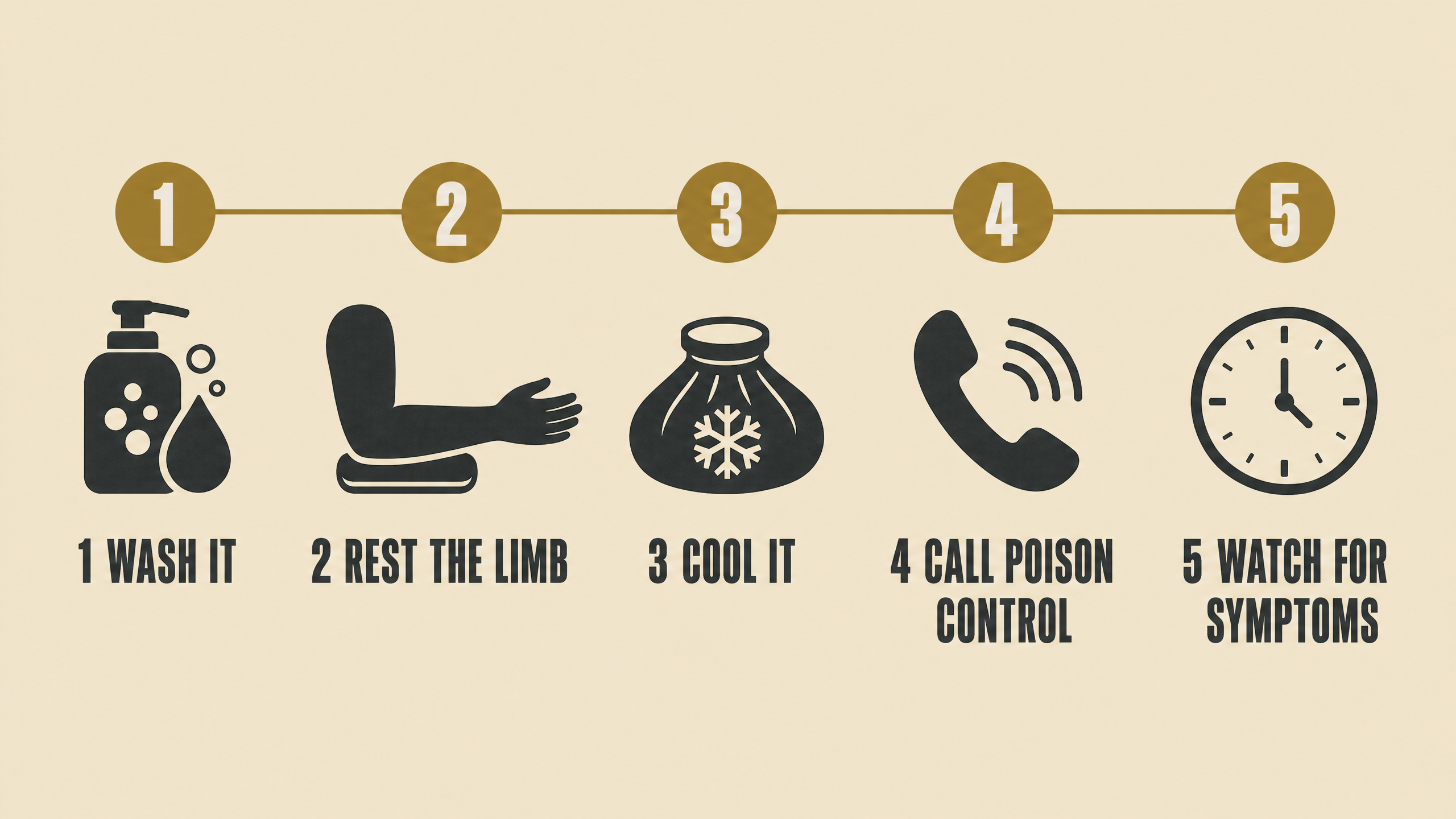
Scorpion Sting First Aid: The Steps
Stay calm and move through these in order. Panic raises your heart rate, and you want it low.
- Move away from where it happened so you do not get stung twice. Scorpions hide under rocks, in shoes, and in folds of clothing.
- Wash the sting site with mild soap and water.
- Rest the limb. Keep a stung arm or leg in a comfortable, supported position, ideally at about heart level.
- Hold a cool, damp cloth or a wrapped cold pack on the spot. The Mayo Clinic says a cool compress may ease the pain. Keep ice off bare skin.
- Call Poison Control at 1-800-222-1222. It is free, confidential, and open all day and night. You can also use webPOISONCONTROL online.
- Take ibuprofen or acetaminophen for pain if you have no reason to avoid them.
- Watch the person for at least a few hours. Symptoms from a serious sting build over time, so do not leave them alone.
Take a quick photo of the scorpion if it is safe to do so. Do not chase it or pick it up. A photo helps the poison specialist and the ER.
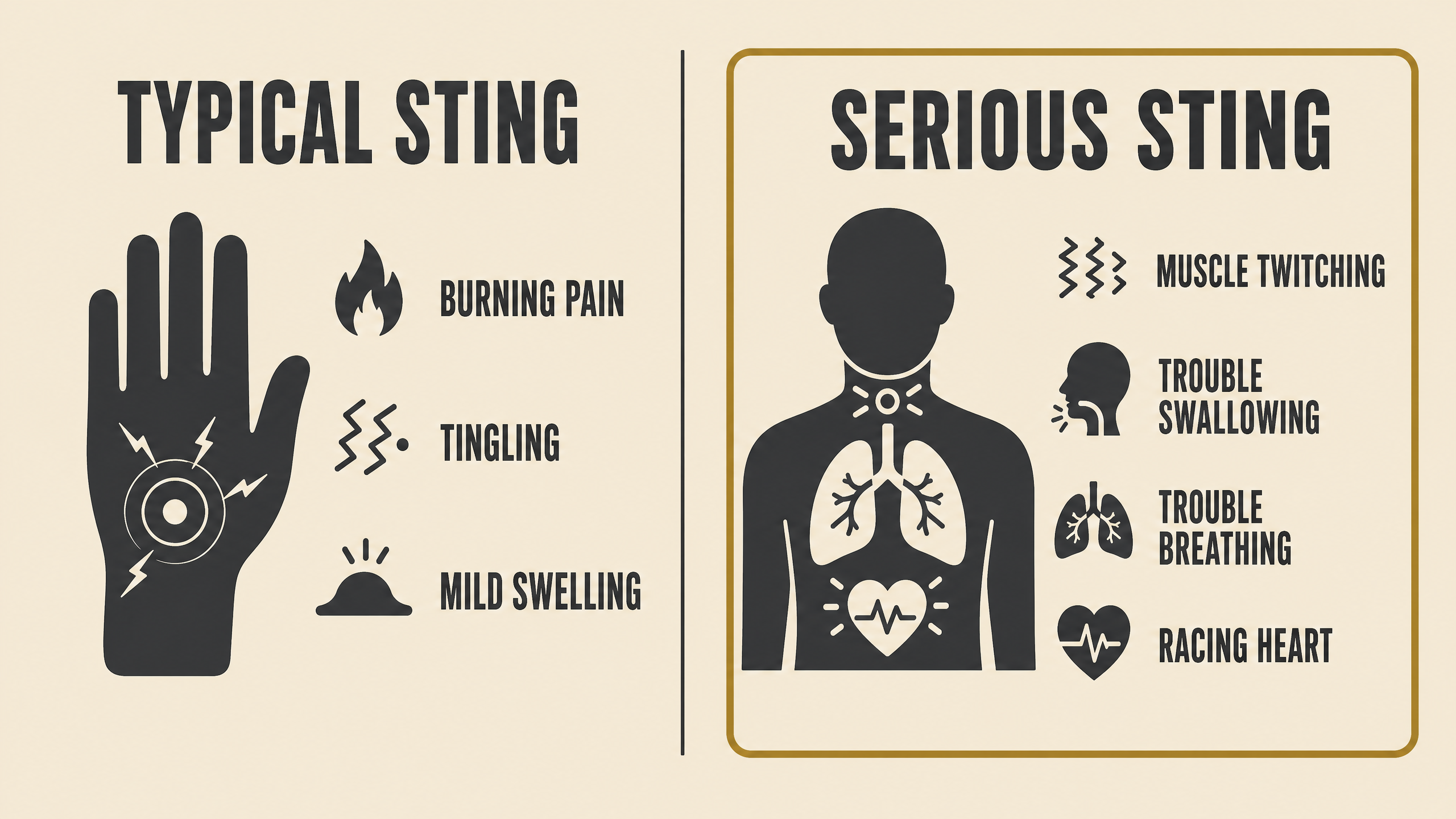
Bark Scorpion Sting Symptoms vs. a Typical Sting
Not every scorpion is a danger. Poison Control says the bark scorpion, in the genus Centruroides, is the most venomous scorpion in the US. The Mayo Clinic calls it the only US species with venom strong enough to cause serious symptoms. It lives mainly in the desert Southwest, especially Arizona, New Mexico, and parts of California.
A typical sting looks like this: sharp, burning pain right away, with numbness or tingling, and sometimes a little swelling and warmth. Many stings are also "dry," with little or no venom injected. The pain is real, but it fades.
A bark scorpion sting can go further. Watch for these signs of a whole-body reaction:
- Muscle twitching or jerking, or unusual movements of the head, neck, or eyes.
- Trouble swallowing, drooling, or slurred speech.
- Trouble breathing.
- Sweating, nausea, or vomiting.
- A racing heart or high blood pressure.
- Restlessness that is hard to calm. A young child may cry and not settle.
These signs usually show up within the first hours and can worsen before they ease.
Scorpion Sting Emergency Signs: When to Go to the ER
Most healthy adults can manage a scorpion sting at home with Poison Control on the phone. Some people cannot. The Mayo Clinic notes that older adults and young children face the greatest risk, and that serious toxicity is mostly seen in very young children, who get a higher dose of venom for their size.
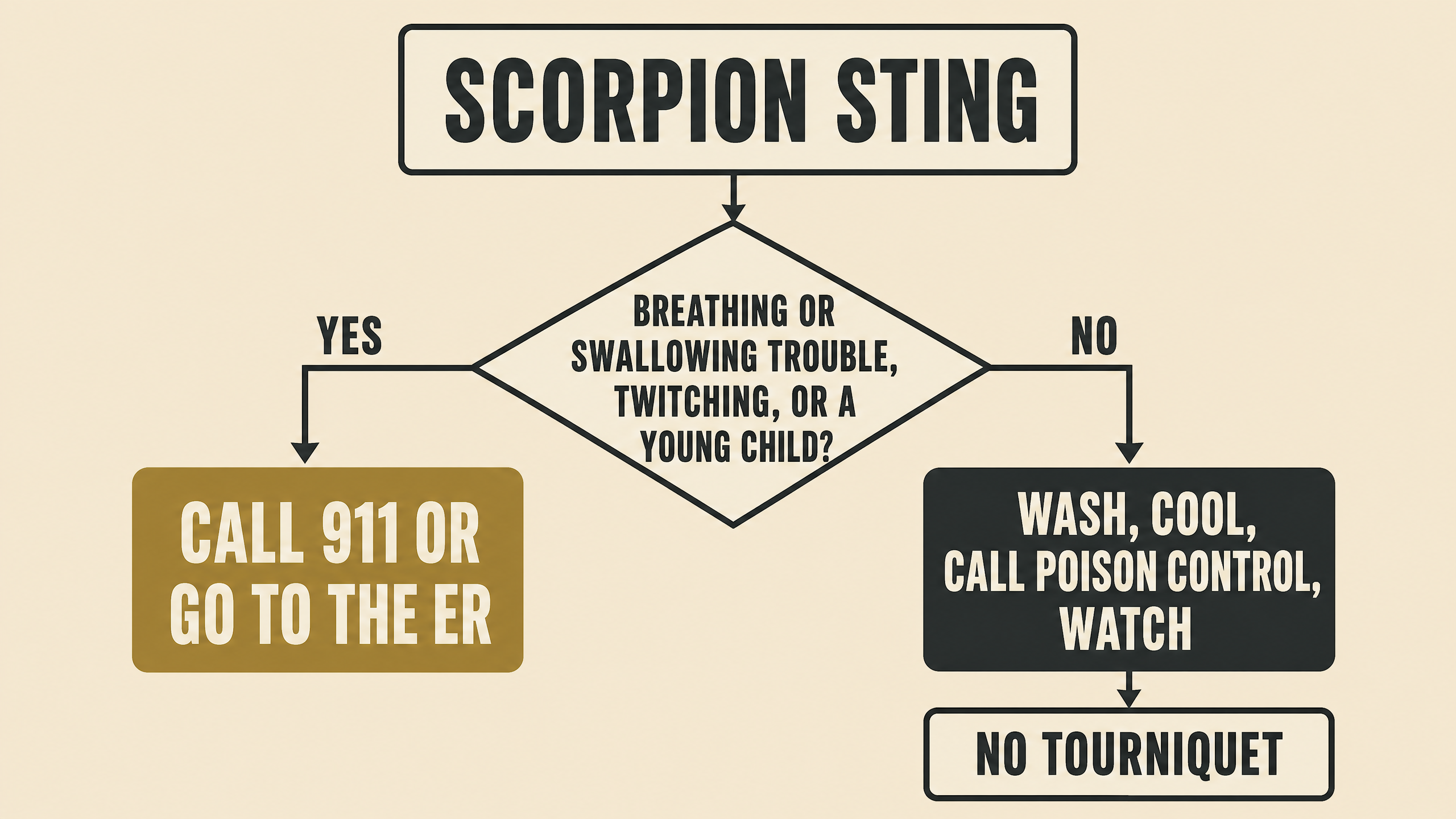
Call 911 or get to the ER right away if you see any of these:
- Trouble breathing, or swallowing that is getting worse over the first hour.
- Muscle twitching, jerking, or strange eye movements.
- Chest pain, a very fast heartbeat, or confusion.
- Hives, swelling of the face or throat, or other signs of an allergic reaction. A past mild reaction to stings does not rule out a severe one.
- Pain that home care does not control.
- The person is a young child or an older adult and symptoms go beyond the sting site.
For severe cases, hospitals can give pain medicine through a vein, and in the US there is an antivenom for serious Centruroides stings. It is costly and not every hospital stocks it, so call ahead if you can. Deaths in the US are extremely rare.
Scorpion Sting First Aid Mistakes: What Not to Do
Some old advice makes things worse. Skip all of it.
- Do not use a tourniquet. Poison Control says one should never be used.
- Do not cut the wound or try to suck out venom.
- Do not give or take sleep aids or sedatives to calm down. Mayo Clinic advises against any medicine meant to make you sleep or feel less anxious.
- Do not eat or drink a lot if swallowing is hard. Take small sips of water.
- Do not apply a hot pack, which can add to the swelling and pain.
If swallowing does not improve or gets worse over the next hour, seek medical care. The same goes for a sting you are unsure about. Our guides on spider bite symptoms, snake bite first aid, and bee sting first aid cover how the plan changes for other bites and stings.
Does a Scorpion Sting Need a Doctor?
Often it does not. The Mayo Clinic says most scorpion stings need no medical treatment, and healthy adults without serious symptoms can follow the steps above. Pain, numbness, and tingling can last for hours and sometimes a few days.
Still, call Poison Control for any sting you worry about, and call right away for a child. See a doctor if breathing trouble appears, if pain is not controlled, or if symptoms last more than a week. Check that your tetanus shot is up to date, too.
If you ever suspect swallowed or injected poison of any kind, accidental poisoning first aid lays out the first moves.
How to Avoid Getting Stung Again
Scorpions come out at night and hunt in the dark. A few habits cut the risk a lot.
- Shake out shoes, boots, clothing, and sleeping bags before you use them.
- Wear gloves when moving wood, rocks, or debris.
- Use a headlamp and sturdy shoes when you walk around camp after dark.
- Seal gaps around doors and windows at home, and clear stacked wood and clutter near the house.
- Keep sleeping bags zipped and tent flaps closed when you camp in scorpion country.
Keep a basic kit in your pack and your truck so you can wash, cool, and wrap an injury quickly. Our home first aid kit checklist shows what to include.
Stings and bites happen on the trail, at the campsite, and in the garage, far from a clinic. Keep soap, cold packs, and trauma supplies where you can reach them so the first hour goes your way. See what's inside The 1stHour Trauma Kit, built for the moments before help arrives.
This content is for informational purposes only and does not constitute medical advice. In an emergency, call 911. For poison questions, call Poison Control at 1-800-222-1222.


