Pneumonia Symptoms: When a Cough Needs the ER

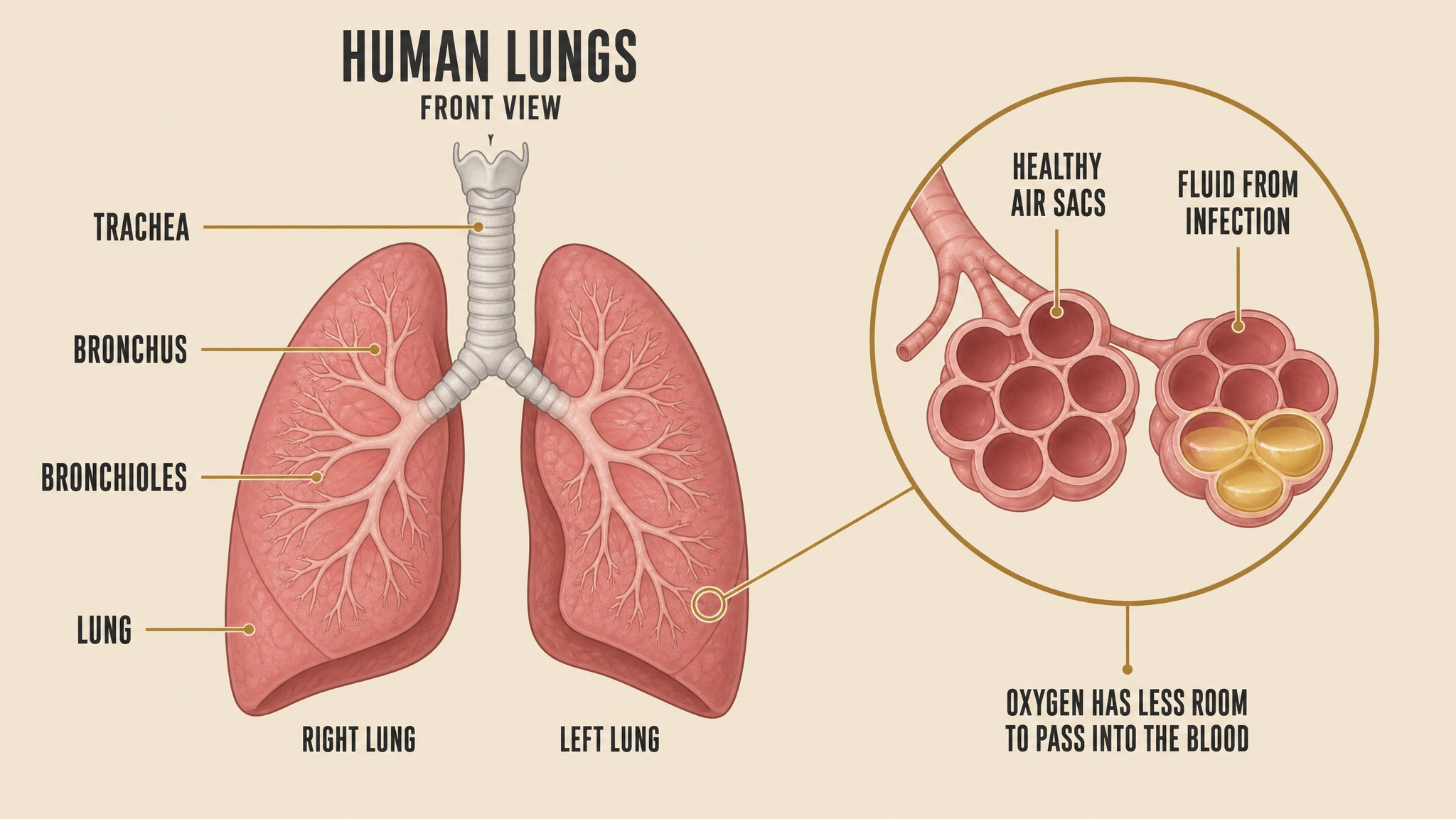
A cough that began with a cold or the flu is normal. A cough that gets worse after a few days of feeling better is not. Pneumonia is a lung infection that fills tiny air sacs with fluid, and it can move from "annoying" to dangerous faster than most people expect. Here is how to spot the early signs, what changes in older adults, and the specific signals that mean you should stop waiting and go in.
Early Pneumonia Symptoms: More Than a Cough
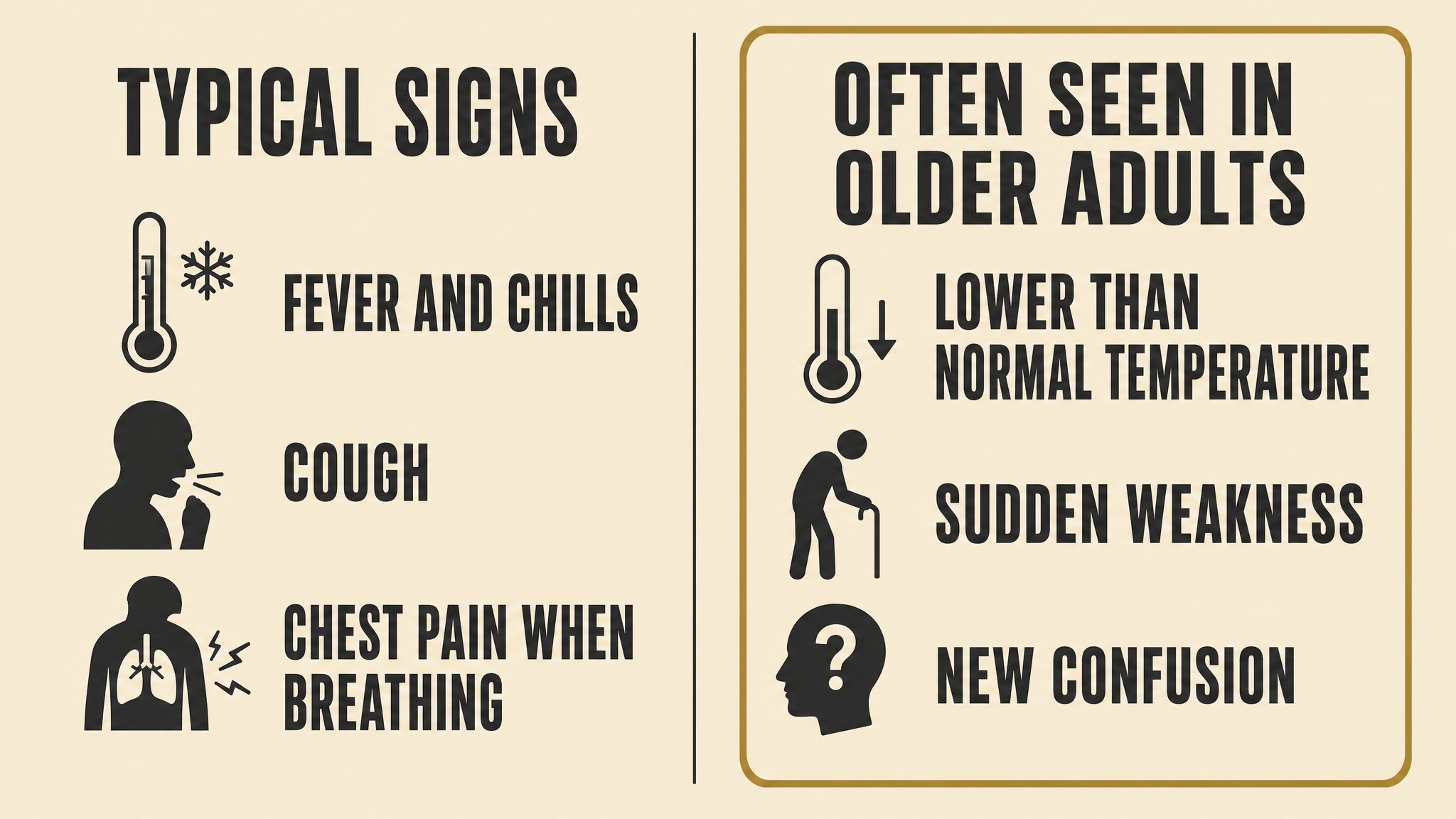
The CDC lists the common pneumonia symptoms as a cough, fever with shaking chills, unusual tiredness, trouble breathing, chest pain that worsens when you breathe or cough, and sometimes nausea, vomiting, or diarrhea. The National Heart, Lung, and Blood Institute adds that the cough may or may not bring up mucus, and that symptoms range from mild to serious.
The pattern matters more than any single symptom. A normal cold peaks and then fades. Pneumonia often looks like this:
- You start to recover from a cold or the flu, then get worse again.
- The fever returns, or you get chills that make your teeth chatter.
- Breathing hurts on one side, a sharp pain that catches at the top of each breath.
- You feel winded doing things that were easy last week, like climbing the stairs.
"Walking pneumonia" is a milder form. People keep working and keep walking around with it, which is how it got the name. Mild does not mean harmless. If a cough is lasting more than a week or two, or you are getting worse instead of better, get it checked.
Pneumonia Symptoms in Older Adults Look Different
This is the part families miss. The NHLBI notes that older adults may not have typical symptoms. They may run a lower-than-normal temperature instead of a fever, and they may feel weak or become suddenly confused.
Picture a parent who is usually sharp and chatty. Over a day or two they get quiet, sleepy, and unsteady. They are not complaining of a cough. The family assumes it is a bad week, or a urinary infection, or just age. It might be pneumonia, and the confusion can be the first and only sign.
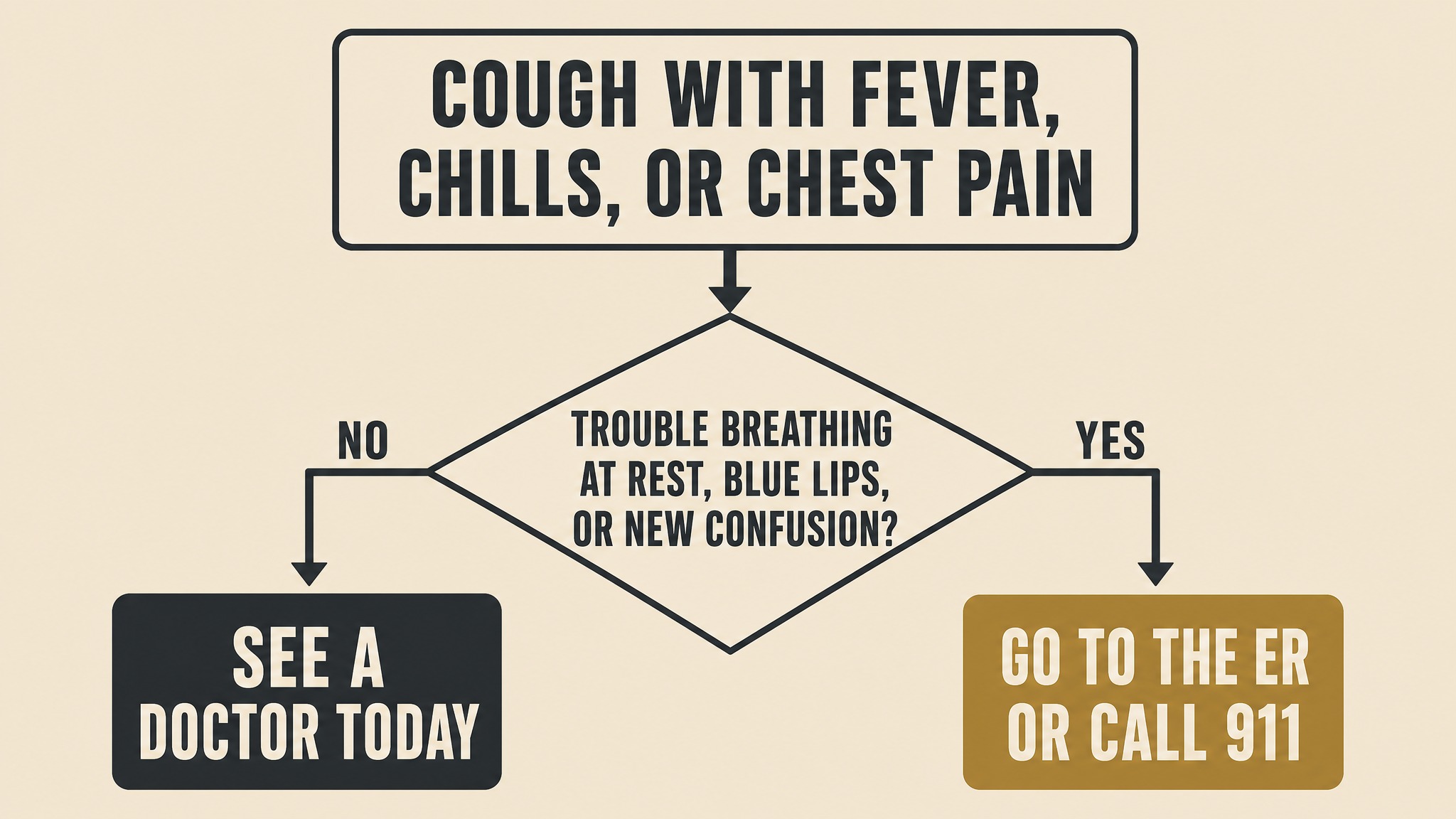
So here is the rule we would use at home: a sudden change in thinking, energy, or behavior in an older adult is a medical symptom, even without a cough or fever. Call the doctor the same day. If there is also fast breathing or any bluish color, go to the ER.
Signs of Low Oxygen: When to Go to the ER for Pneumonia
When infected lungs cannot move enough oxygen into the blood, the whole body feels it. These are the signs that mean you should not wait for a morning appointment:
- Shortness of breath while sitting still, or being unable to speak a full sentence without pausing for air.
- Fast, shallow breathing, or the skin between the ribs pulling in with each breath.
- Blue, gray, or very pale lips, face, or fingertips.
- New confusion, extreme sleepiness, or being hard to wake.
- Chest pain that is severe, or a racing heartbeat you cannot calm.
- A fever that will not come down, or a very high fever with shaking chills.
If you own a fingertip pulse oximeter, a reading that stays at or below about 92 percent is worth a call to a doctor or the ER, and many clinicians treat readings in the low 90s as a reason to be seen promptly. Cold fingers, nail polish, and poor circulation can throw the number off, so treat it as one clue and not a verdict. How you look and breathe matters more than the screen.
Call 911 if the person is struggling to breathe, turning blue, or cannot be kept awake. Do not drive someone who is gasping or confused.
Who Is Most at Risk From Pneumonia
Anyone can get pneumonia, but some people get hit harder. The NHLBI names young children, older adults, and people with serious health conditions as being at risk for more severe pneumonia and complications. In practice, that includes adults over 65, smokers, people with asthma, COPD, diabetes, or heart disease, anyone with a weak immune system, and people recovering from the flu or another respiratory infection.
If you or someone you care for is in one of those groups, lower your threshold. A cough with a fever should lead to a call to the doctor the same day, not after the weekend.
What to Do While You Arrange Care
Pneumonia usually needs a clinician. A doctor will listen to the lungs, may order a chest x-ray, and decides whether it is bacterial, viral, or something else. Antibiotics help with bacterial pneumonia but do nothing for viral cases, so please do not take leftover pills. Sorting that out is the doctor's job.
While you wait for the appointment or the ride:
- Sit upright and rest. Lying flat can make breathing harder.
- Sip water or warm fluids to keep the mucus loose.
- Use a thermometer and write down the temperature and the time.
- Note how fast the person is breathing and whether they can talk in full sentences.
- Gather the medication list, since the ER will ask.
Avoid cough suppressants unless a clinician says it is fine. The cough is how the lungs clear the infection.
Pneumonia After the Flu, Smoke, or Fumes
Pneumonia often arrives as a second act. A person gets the flu, feels a little better, then crashes a few days later with a high fever and a deeper cough. That second wave deserves a call to the doctor, not a wait-and-see.
Smoke and chemical exposure can also injure the lungs and set the stage for infection. If you were around heavy smoke and now have a worsening cough, read our guide to smoke inhalation symptoms for the warning signs. Two other emergencies can look similar, so know the differences: a blood clot in the lung causes sudden sharp chest pain and breathlessness, covered in our post on pulmonary embolism symptoms, and a spreading infection can become life threatening, as we explain in sepsis warning signs. If the chest pain is the main issue, our guide to chest pain that is not a heart attack walks through the other causes. And if the wheezing and tight chest are familiar, see asthma attack without an inhaler.
For deeper reading, the Mayo Clinic has a plain-language overview of pneumonia symptoms and causes.
Lung infections reward people who act early and are not shy about calling for help. See what's inside The 1stHour Trauma Kit, gear and guidance built for the first hour of whatever happens next.
This content is for informational purposes only and does not constitute medical advice. If you or someone else is struggling to breathe, turning blue, or confused, call 911 or go to the nearest emergency room.


