Chest Pain Causes: When It Isn't a Heart Attack
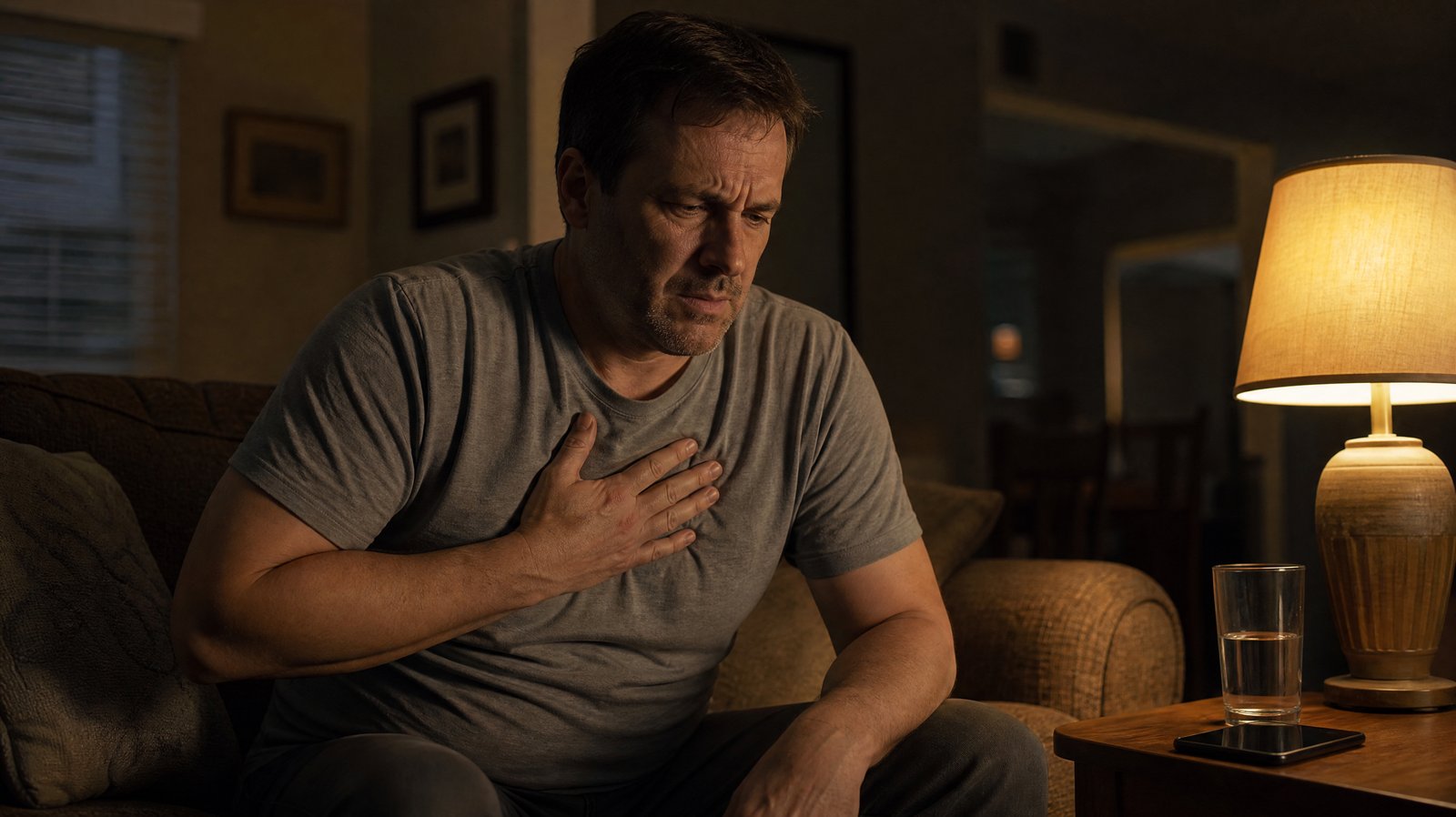
Your chest hurts and your mind goes straight to the worst place. That's a reasonable reaction. But most people who show up to an ER with chest pain aren't having a heart attack. One study of emergency visits found fewer than 6% of chest pain cases turned out to be a life-threatening heart problem.
The rest were something else entirely. A handful of chest pain causes account for nearly all of them. Knowing what they feel like won't replace a doctor's exam. But it can tell you whether you're dealing with a Tuesday-night inconvenience or something that needs attention right now.
The Chest Pain Causes That Point Away From Your Heart
A cardiologist looks for a specific pattern before worrying about the heart, and you can use the same one. According to Cleveland Clinic, heart-related chest pain tends to come on as pressure or squeezing rather than a sharp poke, spreads across an area roughly the size of a fist, and doesn't ease up no matter what position you're in or how hard you press on it.
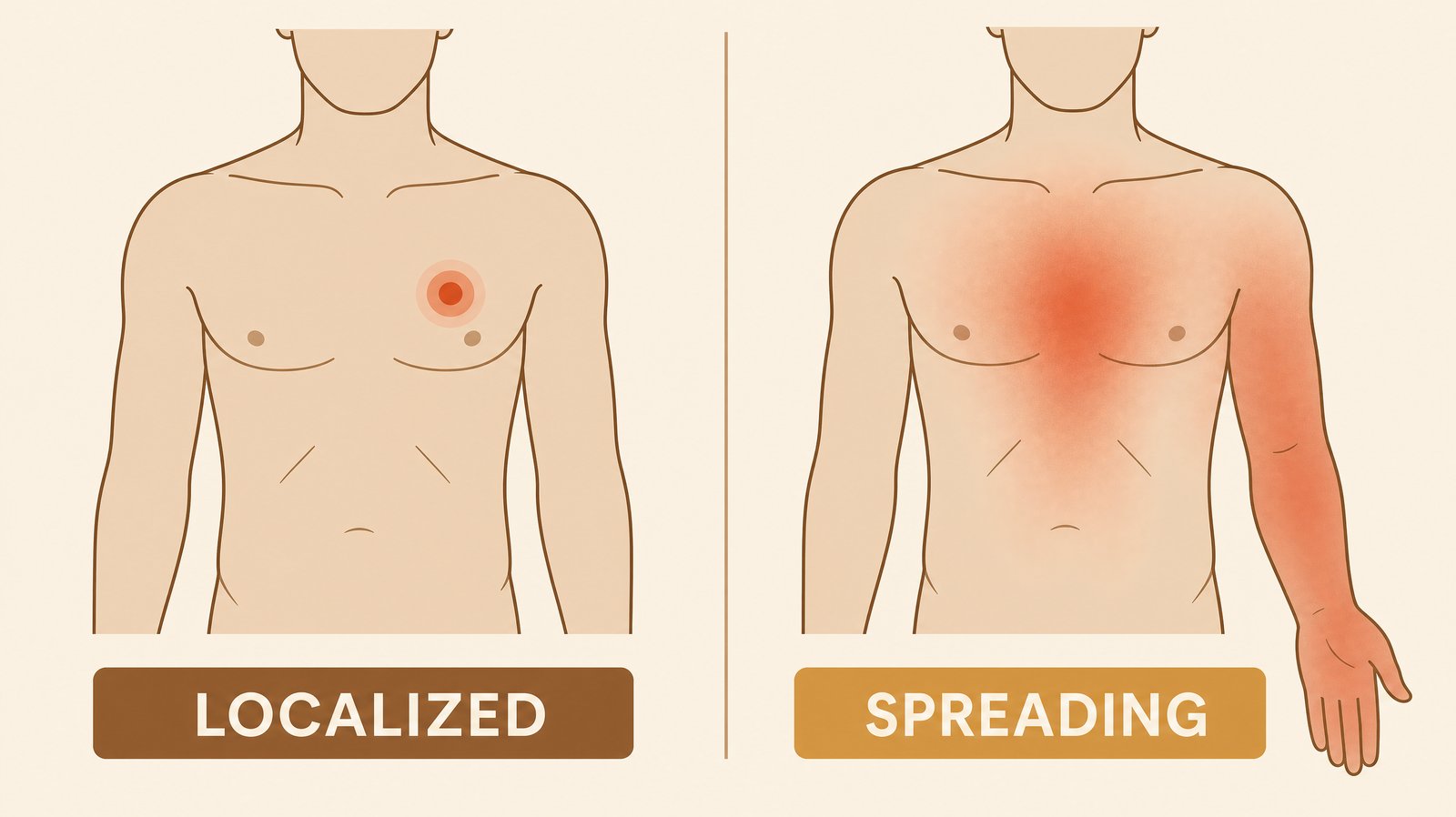
Everything else tends to break that pattern. If you can point to the pain with one finger, if pressing on that exact spot reproduces it, or if it gets better or worse depending on how you're sitting or breathing, that's a strong sign it's coming from your chest wall, your gut, or your nerves rather than your heart. Pain that lasts only a few seconds and vanishes also rarely means a heart attack, since cardiac pain tends to build and stick around for several minutes or longer.
None of these patterns are a guarantee. They're a way to think it through, not a substitute for getting checked when something feels genuinely wrong.
Costochondritis: The Most Overlooked of the Common Chest Pain Causes
Costochondritis is inflammation where your ribs meet your breastbone, and it's one of the most common chest pain causes doctors see. Cleveland Clinic estimates that roughly a third of people who come in with chest or rib pain turn out to have it.
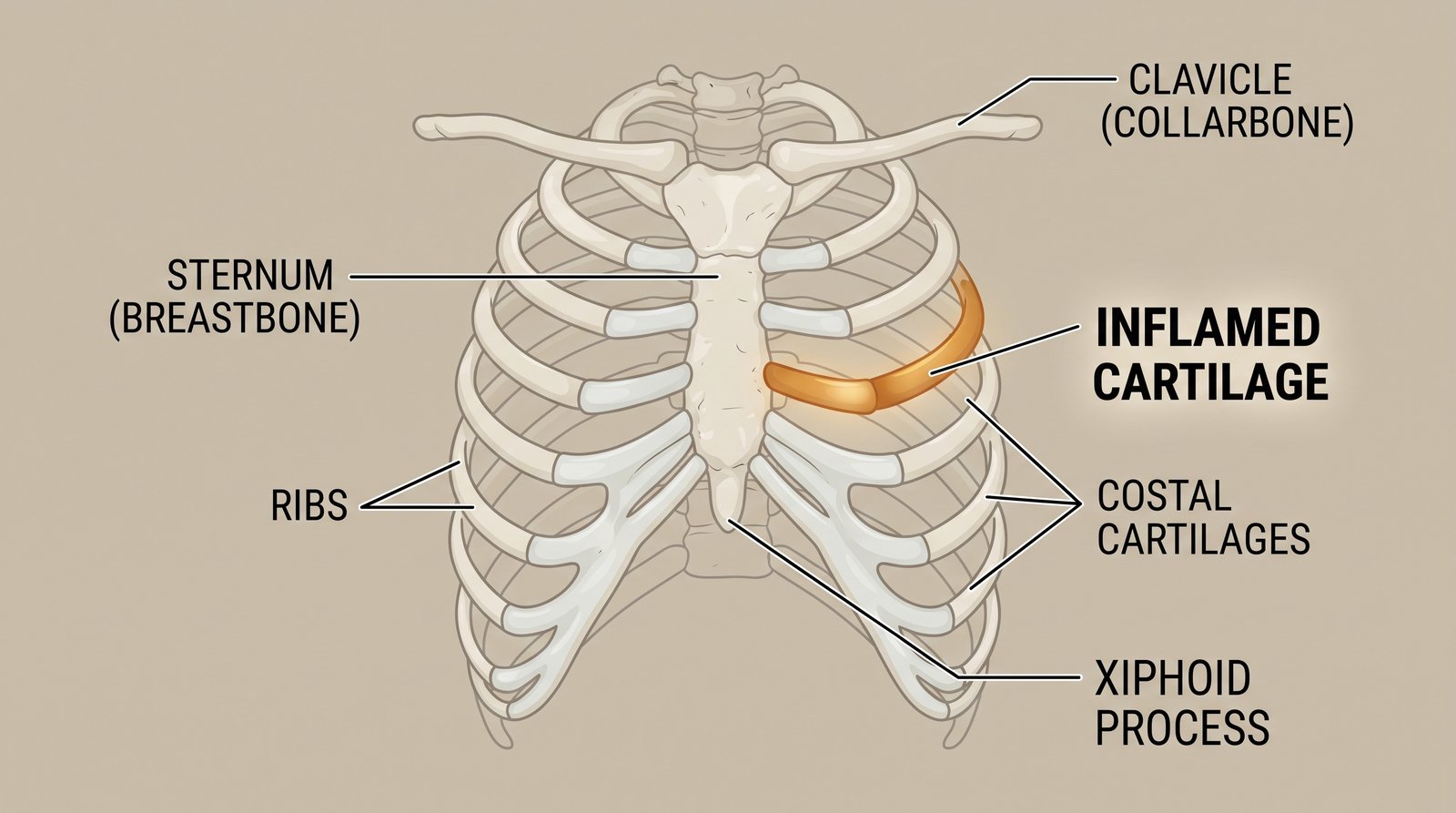
It usually shows up as a dull ache that turns sharp when you move. Certain triggers give it away fast: taking a deep breath, coughing, twisting your torso, reaching overhead, or lying on the affected side. Press directly on the sore spot next to your breastbone. If that reproduces the exact pain you've been feeling, that's about as close to a diagnostic test as you can do at home. A heart attack doesn't get worse when you poke your chest with a finger.
Costochondritis often follows a rough workout, a hard cough from a cold, or lifting something heavier than usual. It's uncomfortable, sometimes for weeks, but it isn't dangerous. Rest, over-the-counter anti-inflammatories, and time are usually all it takes. Still, get any new chest pain checked by a provider at least once, since costochondritis is typically a diagnosis of ruling other things out first.
Muscle Strain and Rib Injuries
A pulled chest wall muscle feels a lot like costochondritis and often gets confused with it. Both hurt more with movement, both respond to pressing on the sore spot, and both tend to follow overuse: a heavy lifting day, an intense workout, or a hard fall.
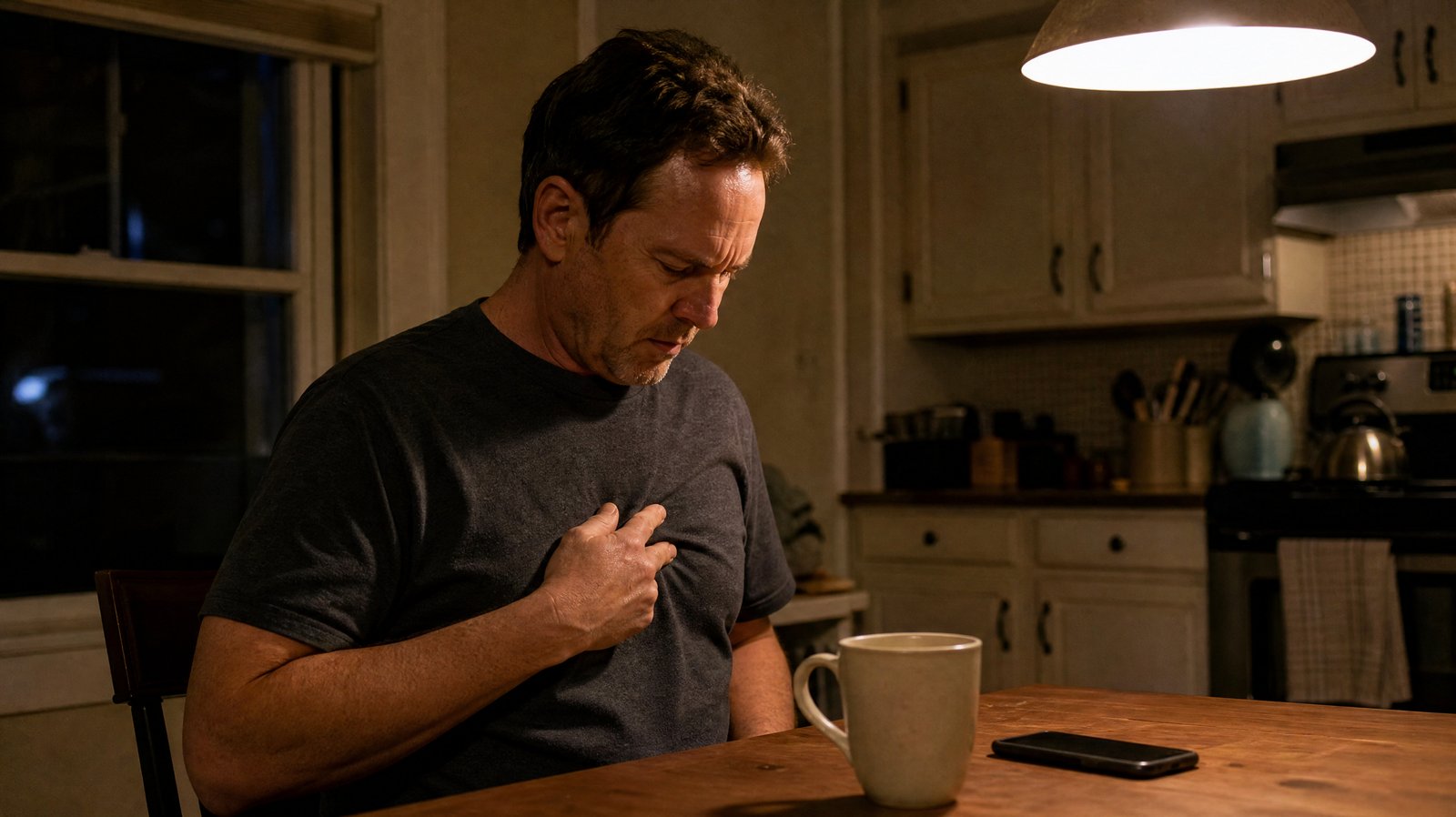
The giveaway is usually the story behind it. If you know exactly when it started, right after a specific movement or effort, that's a point in favor of strain rather than anything cardiac. Ice for the first day or two, then heat after that, plus rest from whatever aggravated it, handles most of these within a week or two.
If a rib injury came from real trauma, a fall, a car accident, a direct blow, treat it more seriously. A broken rib can share the same location-specific, movement-triggered pain pattern as a strain, but it carries its own risks, including damage to the lung underneath. A hard hit to the ribs that makes breathing painful deserves its own look, especially if breathing feels shallow or you're coughing up anything unusual.
Acid Reflux and GERD
Heartburn earns its name honestly. Stomach acid backing up into your esophagus can cause a burning sensation right in the middle of your chest that mimics cardiac pain closely enough to send plenty of people to the ER by mistake.
A few clues tend to separate the two. Reflux pain often shows up after a big or spicy meal, gets worse when you lie down flat, and may come with a sour taste in your mouth or a feeling like food is stuck. It frequently responds, at least partially, to an antacid within twenty or thirty minutes, which cardiac pain won't do.
Here's the catch worth taking seriously: reflux and heart pain can genuinely look identical in the moment, and antacids relieving the pain isn't a reliable enough test to rule out your heart on its own, especially the first time you experience this kind of pain or if you have risk factors like high blood pressure, diabetes, or a family history of heart disease. Treat a first-time episode as unknown until you've had it looked at.
Panic Attacks and Anxiety
A panic attack can produce chest tightness, a racing heart, shortness of breath, and a wave of genuine fear that something is seriously wrong, which is exactly what makes it so easy to mistake for a cardiac event. The physical sensations are real. Adrenaline tightens chest wall muscles and speeds up breathing, and that combination reads as danger to your body even when your heart is fine.
A few things tend to distinguish a panic attack: it often peaks within about ten minutes and then eases, it's frequently tied to a stressful trigger you can identify afterward, and it tends to come with tingling in the hands or around the mouth from breathing too fast. Cardiac pain, by contrast, is more likely to build steadily and stay heavy rather than come in a fast spike-and-fade wave.
If this is your first time experiencing anything like it, don't try to self-diagnose your way out of getting checked. Panic attacks and heart problems can and do coexist in the same person, and a history of anxiety doesn't grant permanent immunity from a cardiac event.
Shingles: The Chest Pain Cause That Shows Up Before the Rash
This is the one almost nobody thinks of, which is exactly why it belongs on this list. Shingles, caused by the same virus behind chickenpox reactivating in a nerve, often announces itself with pain, burning, or tingling on one side of the body. According to the CDC, this early warning sign can appear one to five days before any rash shows up.
When it happens to land on the chest or upper back, that pre-rash burning can feel eerily like a cardiac event, especially in older adults, who are also at higher risk for both shingles and heart disease. The tell is the distribution: shingles pain almost always stays confined to one side of the body in a band-like strip, tracing the path of a single nerve, rather than spreading centrally across the chest the way cardiac pain does.
If a rash does show up, usually as a stripe of small blisters, that confirms it. Until then, one-sided burning pain with no clear cause and no relief from repositioning is worth mentioning to a provider, particularly if you're over 50.
When Any of These Chest Pain Causes Still Means Call 911
Everything above describes patterns, not guarantees. The pattern-matching in this piece is meant to inform your judgment, not replace it, and knowing what a heart attack actually feels like matters more than memorizing this list.

Call 911 if chest pain is crushing, squeezing, or feels like pressure rather than a sharp point. Call if it spreads to your arm, jaw, neck, or back. Call if it comes with shortness of breath, cold sweat, nausea, or lightheadedness.
Call if the pain has lasted more than a few minutes and isn't easing. Call if you simply can't find a position or explanation that accounts for it. And if you have risk factors for heart disease, treat a new, unexplained chest pain as cardiac until proven otherwise.
A racing heart during a true emergency isn't the same as the racing heart during sudden cardiac arrest, which is a different and even more immediate emergency. Either way, hesitation costs more than a false alarm ever will. Emergency rooms would much rather see you for costochondritis than not see you at all for something worse.
Most chest pain has a name that isn't "heart attack," and most of the time, a stocked first-aid kit is about resting a strained muscle or riding out a scare rather than an emergency. But the kit's real job is being ready for the times the pain isn't a false alarm. See what's in the 1stHour Trauma Kit so you're covered whether it's a pulled muscle tonight or something that needs faster hands next time.
This content is for informational purposes only and does not constitute medical advice. If you're experiencing chest pain and are unsure of the cause, especially for the first time, call 911 or seek emergency care immediately.


