Pulmonary Embolism Symptoms: When a Blood Clot Reaches the Lungs
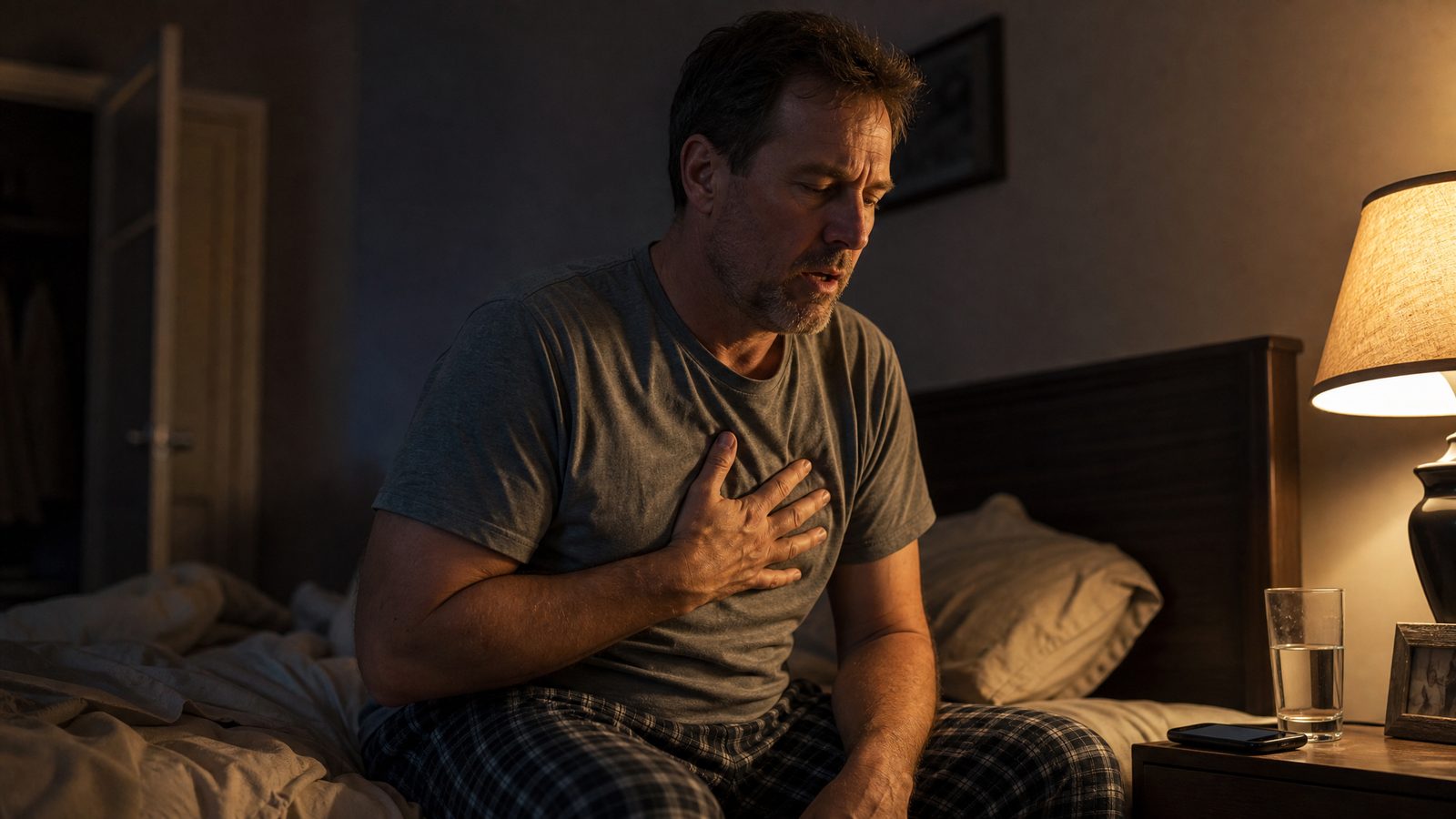
You're breathing harder than you should be for no reason you can point to. Your chest hurts in a way that spikes every time you inhale. Your heart is going fast, and there's a strange, specific dread sitting under all of it that doesn't match how you normally feel when you're anxious.
This combination is exactly how a lot of people first meet a pulmonary embolism, and it's exactly why so many of them wait too long to do anything about it. Here's what's actually happening, what to watch for, and why the first hour after symptoms start is the one that decides how the rest of this goes.
What a Pulmonary Embolism Actually Is
A pulmonary embolism, or PE, happens when a blood clot breaks loose somewhere else in your body, usually a deep vein in the leg, and travels through your bloodstream until it gets stuck in an artery in your lung. Once it's lodged there, it blocks blood flow to part of the lung and puts sudden strain on the right side of your heart, which has to push harder against the blockage.
Doctors call the clot in the leg a deep vein thrombosis, or DVT, and the clot that travels to the lung a pulmonary embolism. Together they're both forms of what's known as venous thromboembolism, or VTE. The CDC estimates VTE affects up to 900,000 Americans a year, and it's connected to 60,000 to 100,000 deaths annually. That's not a rare event happening to someone else. It's a common one that most people simply don't recognize when it's happening to them.
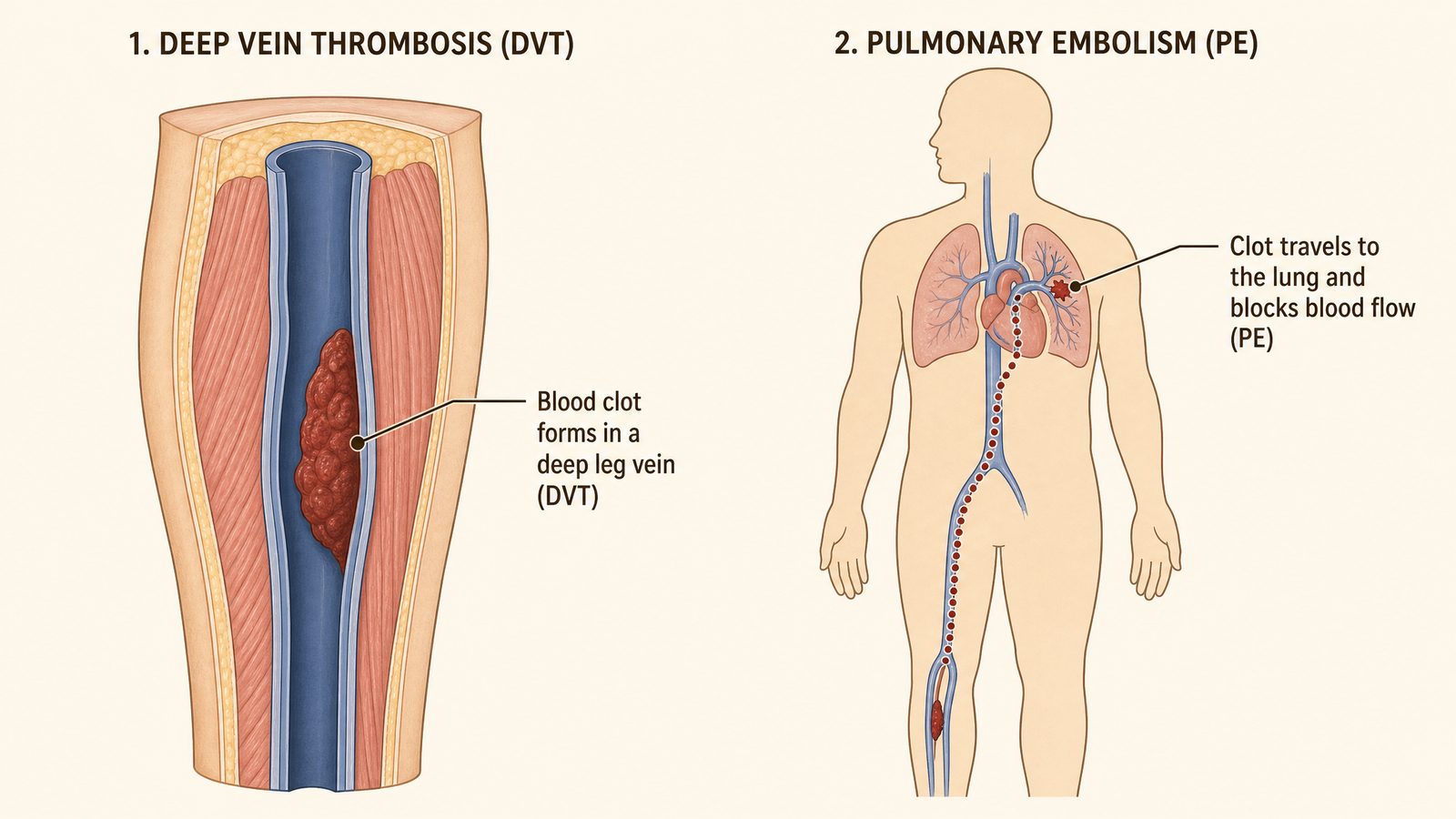
One detail worth knowing: you don't always get warning from the leg first. It's entirely possible to have a pulmonary embolism with no DVT symptoms at all, which is part of what makes it so easy to miss.
Pulmonary Embolism Symptoms to Take Seriously
The core pulmonary embolism symptoms show up together more often than they show up alone, and the combination matters more than any single one of them:
- Sudden shortness of breath, even while sitting still or lying down
- Sharp, stabbing chest pain that gets noticeably worse when you take a deep breath, cough, or bend over (doctors call this pleuritic pain)
- A heart rate that's fast or irregular for no clear reason
- A cough, sometimes bringing up blood-tinged mucus
- Lightheadedness, dizziness, or actually fainting
- Heavy sweating that doesn't match the room temperature or your activity level
- A sharp sense of anxiety or impending doom that feels different from ordinary worry
- Less commonly: low blood pressure, bluish or pale skin, low fever, or pain that shows up in the upper back instead of the chest
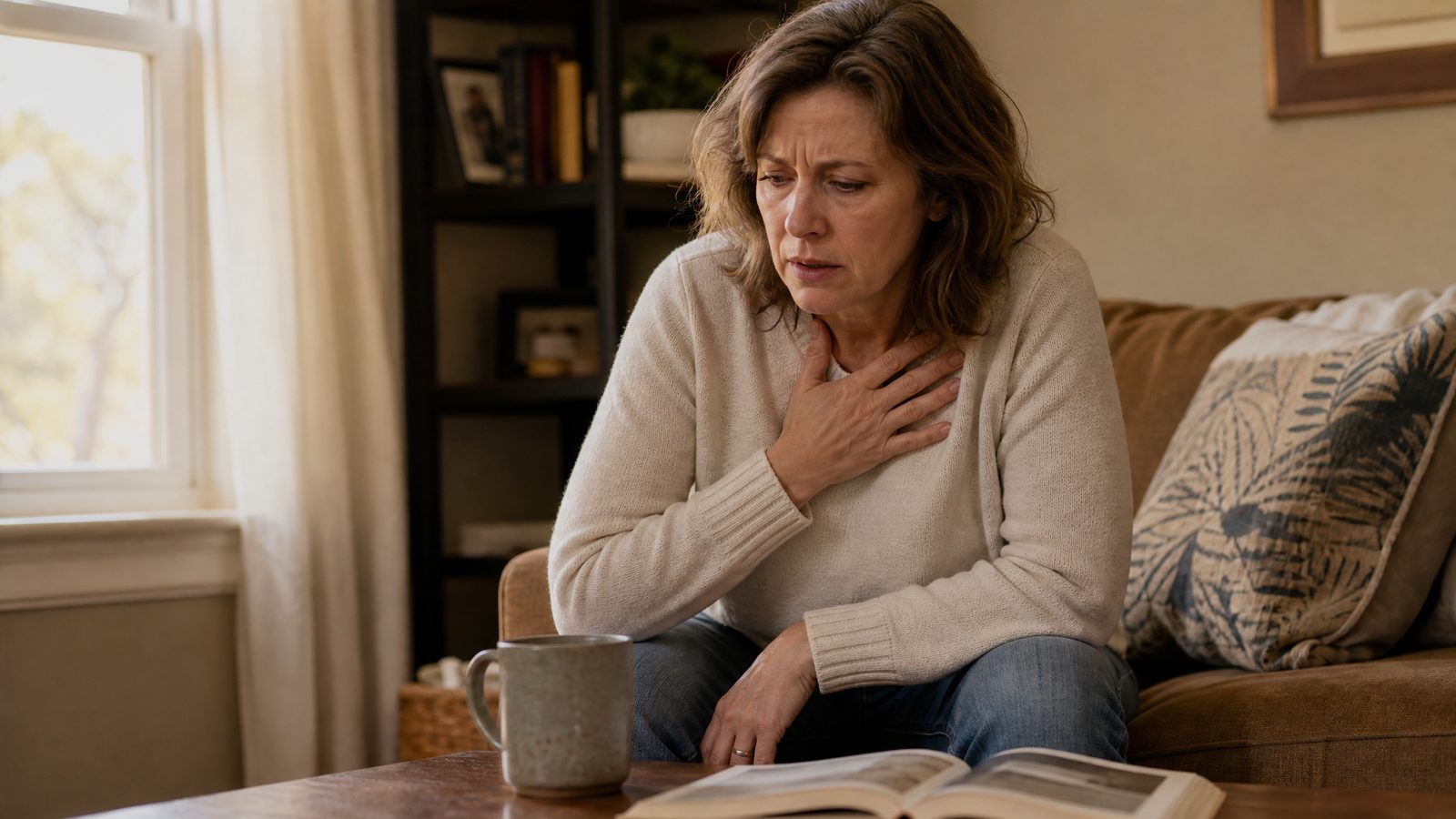
You don't need every symptom on this list for it to be serious. Sudden breathlessness paired with sharp chest pain on its own is enough reason to call 911. Waiting to see if a second or third symptom shows up costs you time you may not have.
Why Pulmonary Embolism Symptoms Get Mistaken for Something Else
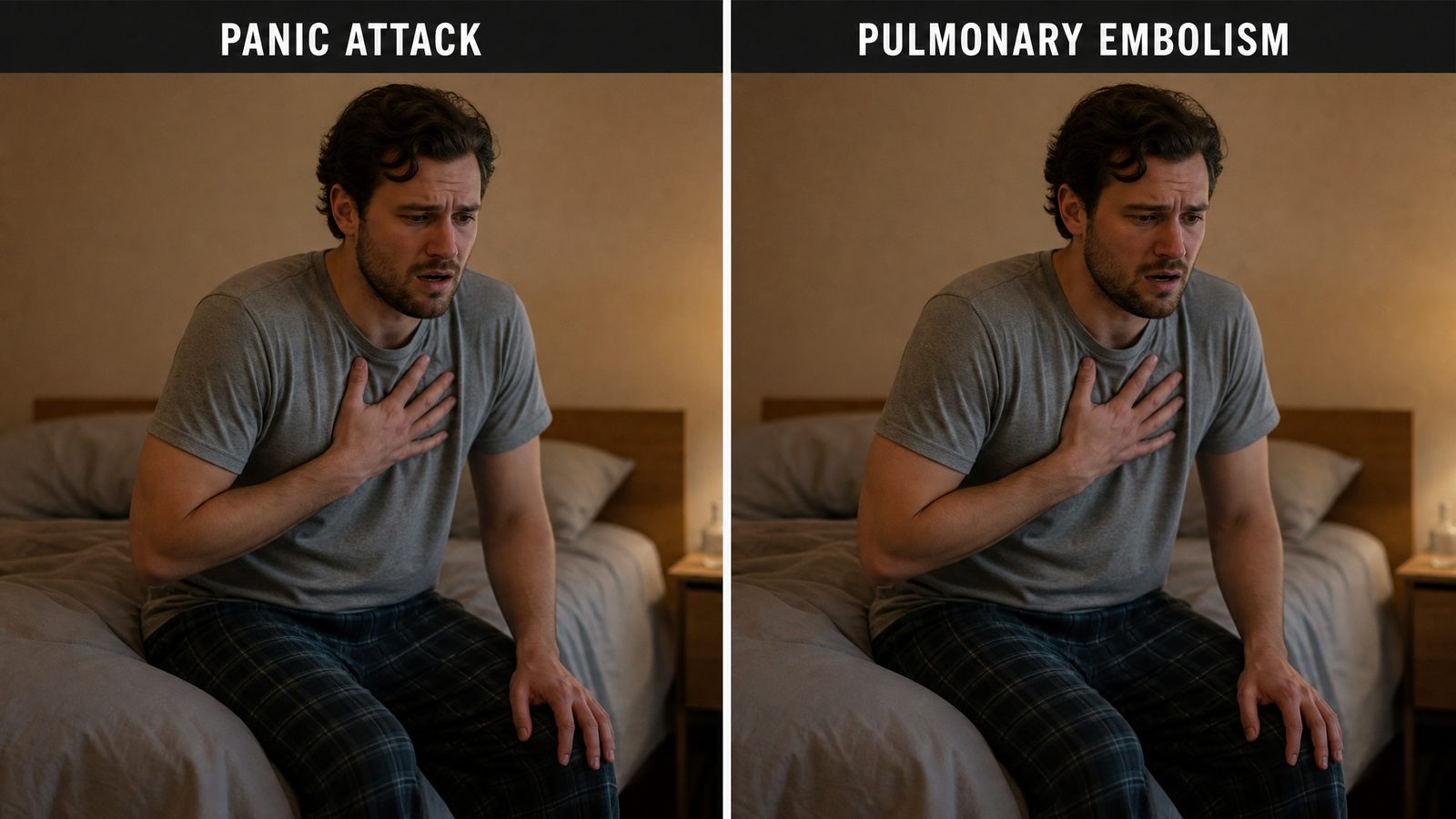
This is the part that trips people up. Shortness of breath, chest tightness, a racing heart, and that impending-doom feeling are also the textbook signature of a panic attack. Sharp pain that worsens with movement or breathing can feel a lot like a pulled muscle or a strained rib. If you're generally healthy and don't have an obvious reason to expect a blood clot, it's genuinely reasonable to talk yourself into the less scary explanation first.
The American Heart Association has pointed out directly that pulmonary embolism is common and can be deadly, but few people know the signs well enough to act on them. Part of the problem is that up to half of all PE cases happen with no obvious trigger at all, no recent surgery, no long flight, nothing that would make you suspect a clot. That means the people who assume "it can't be that, I have no risk factors" are sometimes wrong.
The safest rule here isn't to diagnose yourself. It's to notice that the symptoms are severe, sudden, and don't match your usual pattern of anxiety or muscle pain, and to let a medical team sort out the rest. A panic attack and a pulmonary embolism can both send you to the ER, and only one of them should.
The Leg Symptoms That Come Before It
Because most pulmonary embolisms start as a blood clot in the leg, it's worth knowing what came before, even though you won't always get this warning. Watch one leg for swelling, warmth, redness, or a deep ache or cramp that doesn't fade with rest, especially if it's isolated to one side rather than both.
That kind of one-sided leg symptom, paired later with sudden breathlessness or chest pain that isn't a heart attack but still doesn't feel right, is the classic DVT-to-PE progression. If you've noticed the leg symptoms and then the breathing changes, tell the medical team that history right away. It shortens the path to the right test.
Who's Most at Risk for a Pulmonary Embolism
Certain situations raise your odds of forming a clot in the first place, according to the CDC:
- Recent surgery, especially on the abdomen, pelvis, hip, or legs, or a broken bone
- Long periods of immobility: a hospital stay, a leg in a cast, or sitting for hours on a long flight or road trip
- Pregnancy and the three months after delivery, along with birth control or hormone therapy that contains estrogen
- Cancer and certain cancer treatments
- A previous DVT or PE, or a family history of one
- Being overweight, smoking, or having an inherited clotting disorder
None of these guarantee a clot, and none of their absence rules one out. They're context, not a checklist you need to satisfy before symptoms count.
Why Every Hour Without Treatment Matters
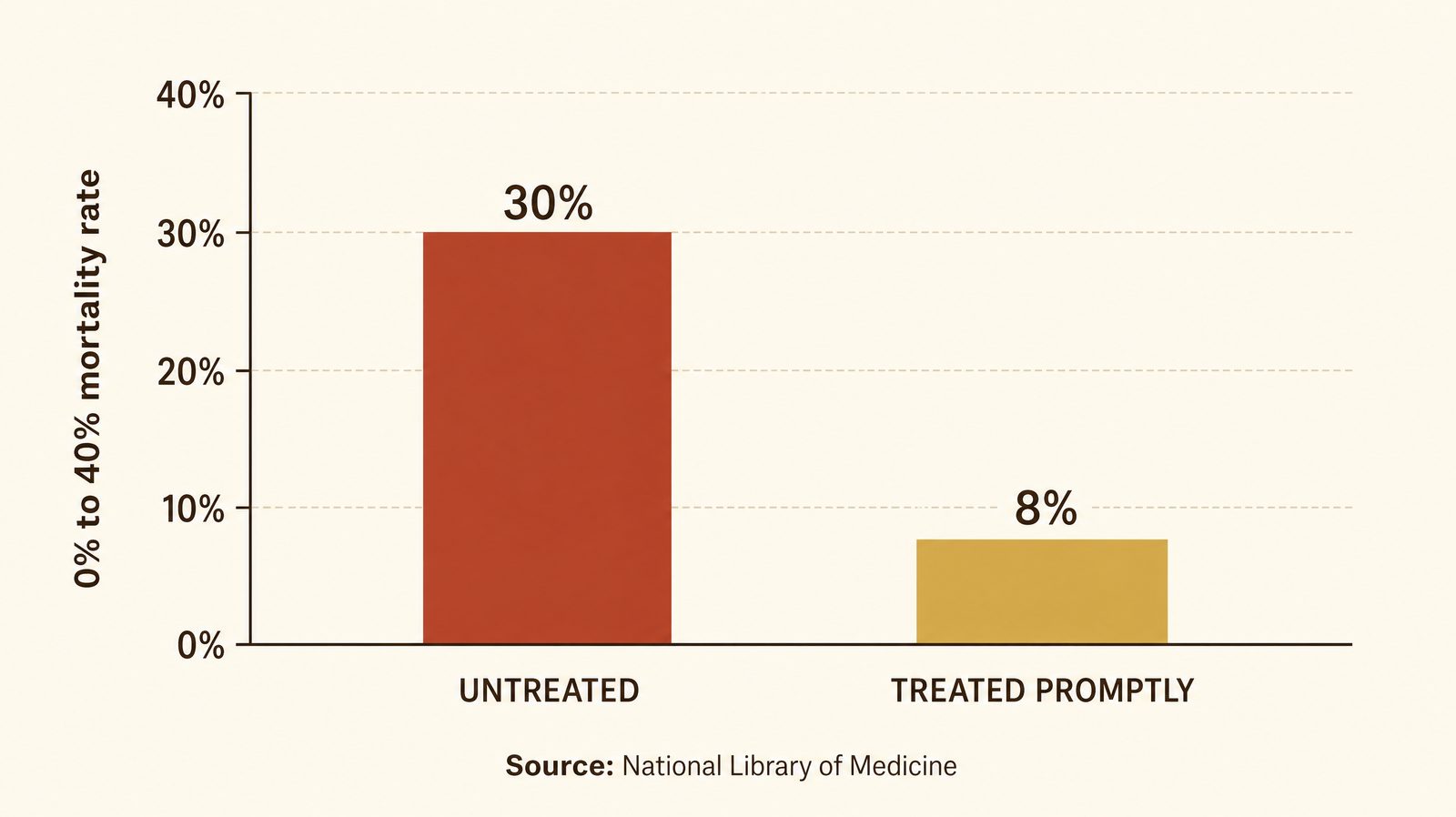
This is where the timeline really does decide the outcome. According to research summarized by the National Library of Medicine, an untreated pulmonary embolism carries a mortality rate around 30 percent. With prompt treatment, that number drops to roughly 8 percent. That's not a small difference measured in weeks. It's the difference treatment makes when it starts soon enough, and getting there fast is entirely about how quickly someone calls for help and gets to a hospital that can run the right tests.
The CDC also notes that sudden death is the first and only symptom in about a quarter of pulmonary embolism cases, meaning some people never get a warning phase at all. For everyone else, the milder version of this, the breathlessness, the chest pain, the racing heart, is the warning. Treating it like one is what keeps a survivable event survivable.
What Happens at the ER
If your symptoms point toward a possible PE, expect a D-dimer blood test first, which checks for a byproduct of clot breakdown and helps rule the diagnosis in or out quickly. If it's positive or your risk is high enough to skip straight there, the next step is usually a CT pulmonary angiogram, a scan that images the blood vessels in your lungs directly and is the primary way doctors confirm a PE.
Treatment for most people centers on blood thinners, which stop the clot from growing and let your body dissolve it over time. In more severe cases, doctors may use clot-dissolving medication or a catheter procedure to remove the blockage directly. Not everyone needs to be hospitalized, and lower-risk cases can sometimes be managed and monitored without an inpatient stay.
None of these decisions are ones to make yourself. They belong to the team running your tests, not to a symptom checklist read at home. If a racing heart is what got your attention in the first place, it's worth knowing when heart palpitations mean something worth checking versus when they don't.
None of this is about scaring you into panic every time you're winded after climbing stairs. It's about knowing the specific combination, sudden breathlessness plus sharp chest pain plus a racing heart, that's worth treating as an emergency instead of explaining away.
A well-stocked first aid kit and a clear plan for the first hour of any emergency won't treat a pulmonary embolism, but they matter for the dozens of other situations where fast, correct action in that same first hour changes the outcome. That's the whole idea behind what we build at 1st Hour: see what's inside The 1stHour Trauma Kit, gear and guidance for the minutes that decide everything else.
This content is for informational purposes only and does not constitute medical advice. If you or someone near you has sudden shortness of breath, sharp chest pain, or other symptoms described above, call 911 immediately.


