Blood Clot in Leg Symptoms: The Signs Not to Sleep On
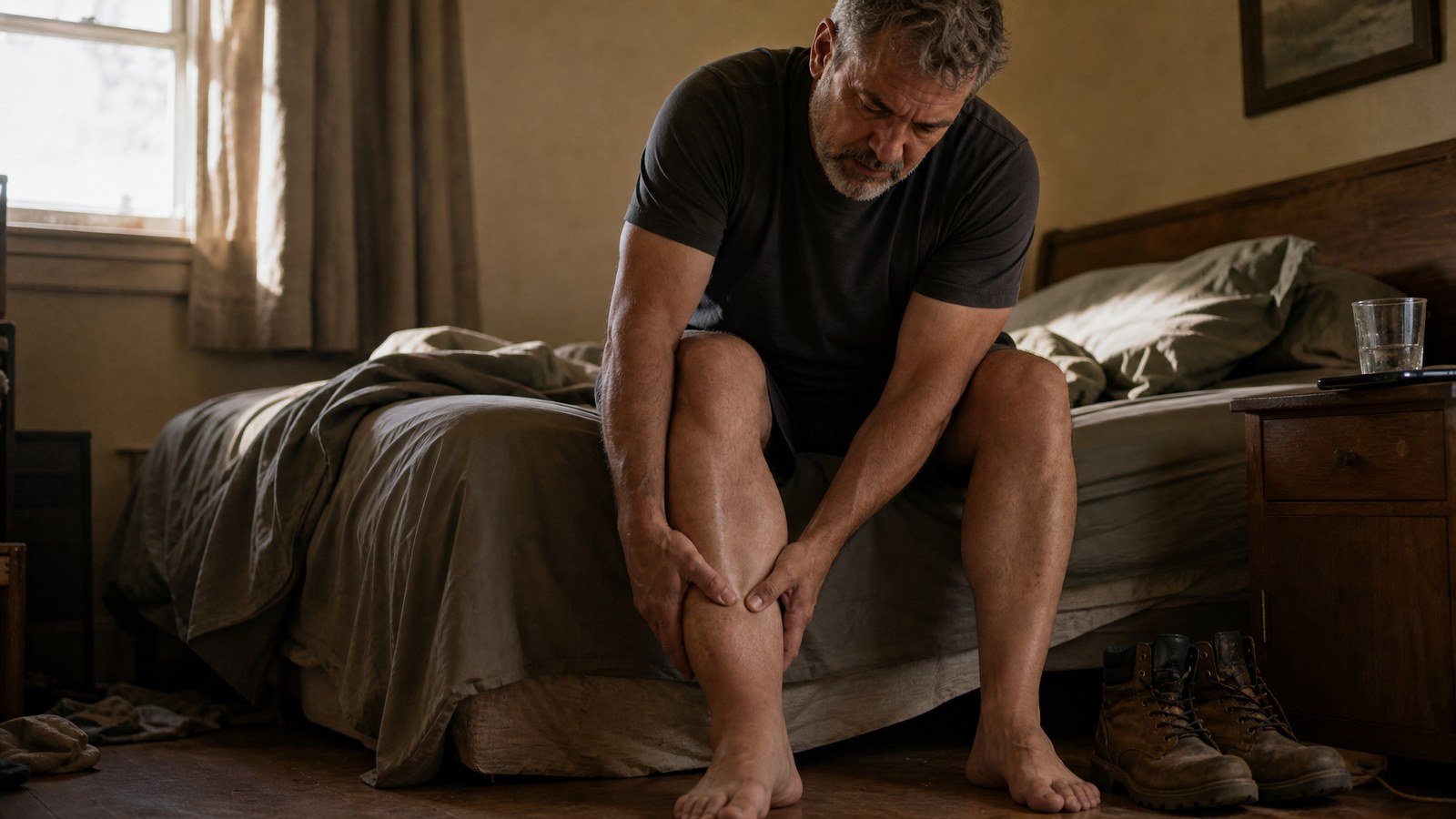
Most people who end up with a blood clot in their leg spend the first day or two convinced they pulled something. That is the honest reason this condition is dangerous. It does not announce itself. It feels like a bad calf strain from a workout you do not remember doing, and the natural response is to stretch it, walk it off, and give it a week.
The CDC puts the number of Americans affected by deep vein thrombosis or a related lung clot at as many as 900,000 a year, with 60,000 to 100,000 deaths. A lot of those deaths follow a week of assuming it was a muscle. Here is how to tell the difference, and what actually matters in the first hour after you start to suspect it.
What a Blood Clot in Your Leg Actually Is
The medical name is deep vein thrombosis, usually shortened to DVT. A clot forms inside one of the deep veins running through your calf or thigh, the ones buried in the muscle rather than the visible ones near the skin. That clot blocks blood trying to get back up to your heart, which is why the leg swells below it.
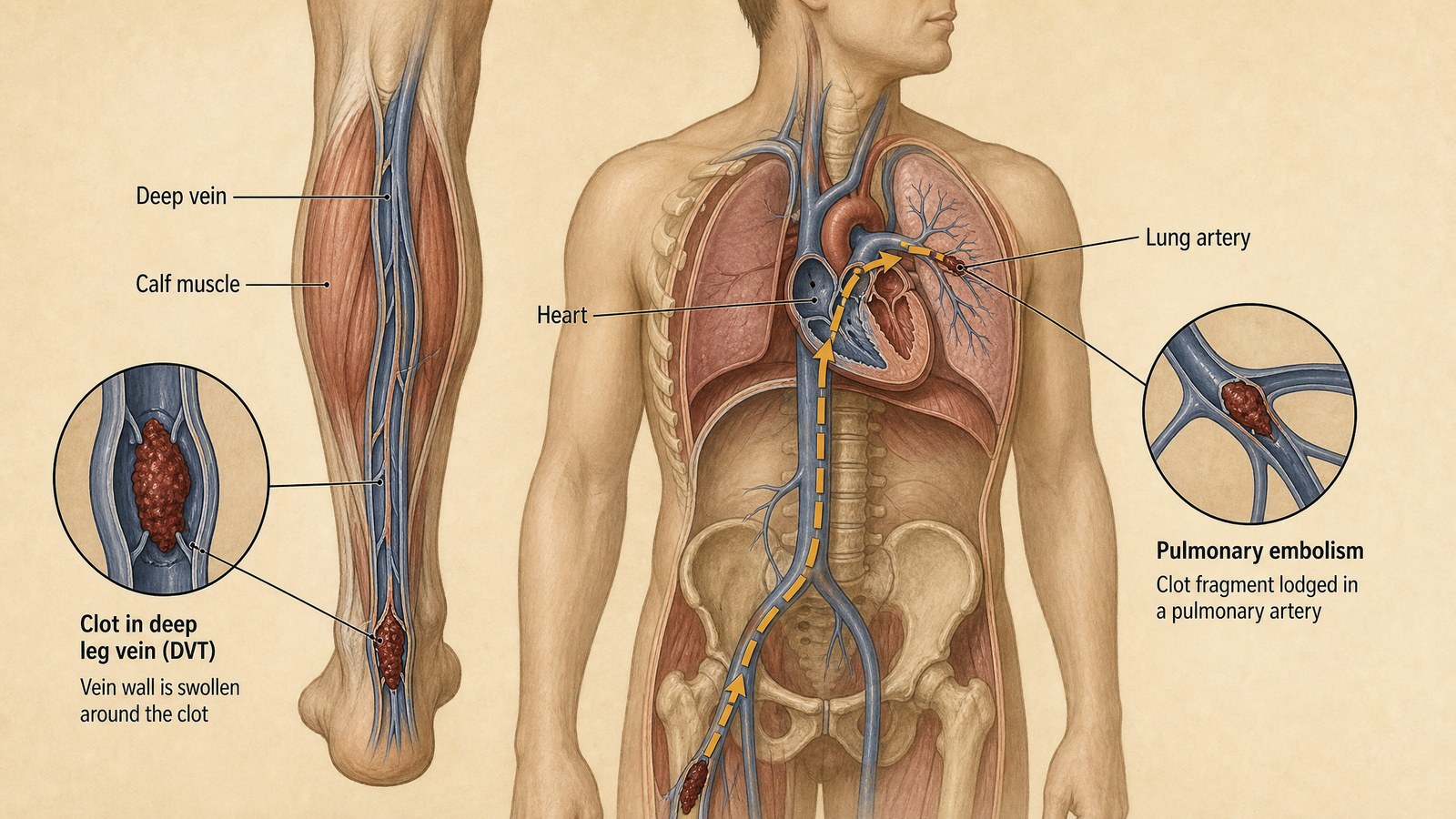
The leg is not the real problem. The real problem is that leg veins drain into the lungs. A piece of that clot can break loose, travel up, and lodge in a pulmonary artery. That is a pulmonary embolism, and it is what kills people. The CDC notes that sudden death is the first symptom in roughly a quarter of pulmonary embolism cases. No warning, no build-up.
So when you read the symptom list below, understand what you are looking for. You are not trying to diagnose a sore leg. You are trying to catch a lung emergency about four days before it happens, while it is still just a sore leg.
One more thing before the list, and it is the fact that should shape how you read the rest of this page. Roughly half of all DVTs produce no noticeable symptoms at all. A clean symptom check is reassuring. It is not proof.
The Signs of a Blood Clot in Your Calf, Ranked by How Much They Matter
Every site gives you these as a bulleted list of equals. They are not equals. Some of these mean call your doctor today and some of them mean very little on their own.
Swelling in one leg and not the other. This is the single most useful sign, and the asymmetry is the whole point. Both ankles puffy after a flight is normal. One calf noticeably thicker than the other, so the sock leaves a deeper mark on one side, is not. Measure if you are unsure. A difference of more than about an inch and a half around the calf is meaningful.
A firm, ropy cord you can feel under the skin. Doctors call this a palpable cord. It runs along the line of the vein, does not move like a muscle knot does, and is tender when you press it. Cleveland Clinic lists it among the telltale findings. If you find one, that is a call-today sign.
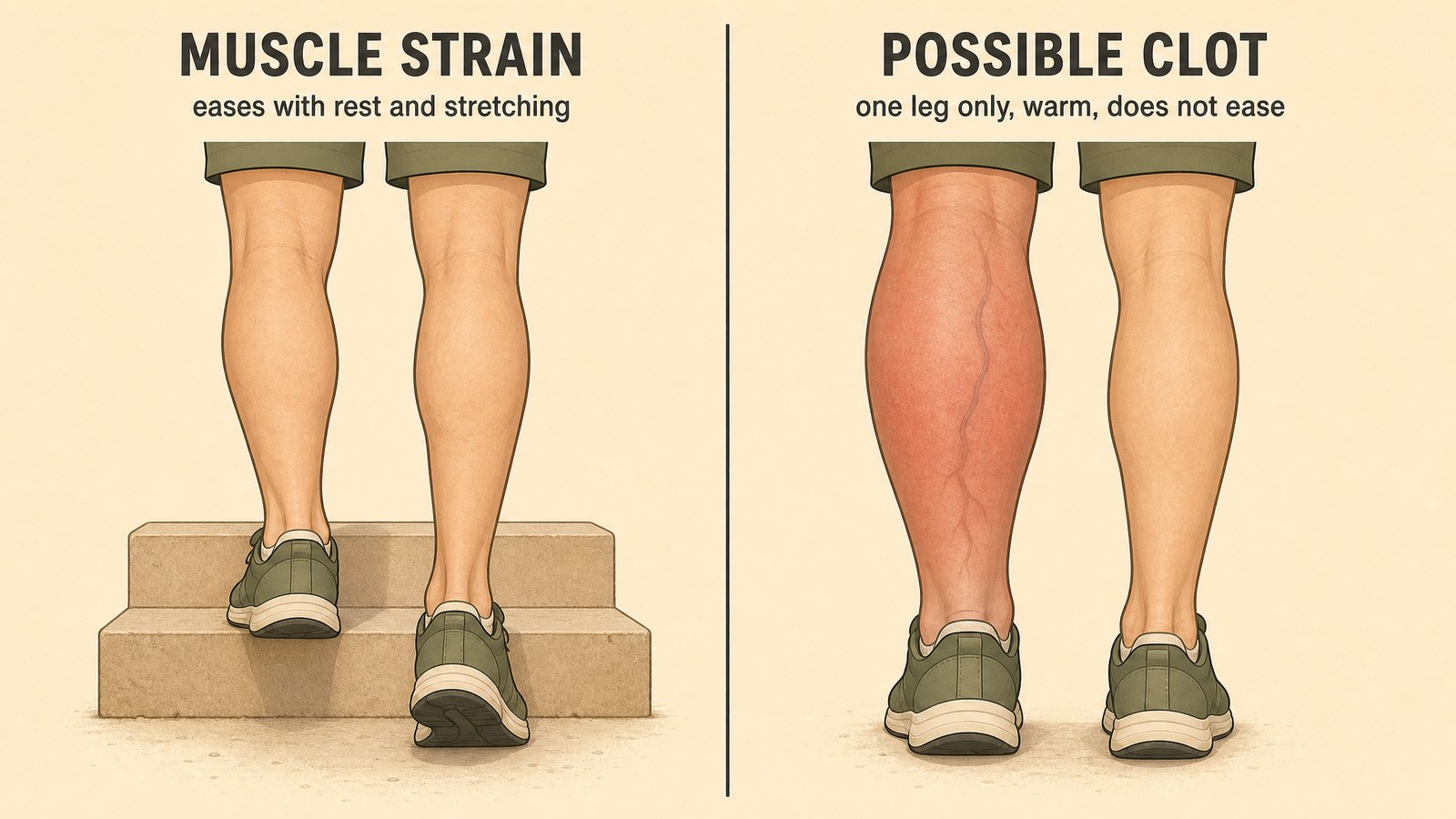
Pain that ignores rest. A pulled muscle improves over a few days and feels better when you stay off it. Clot pain often does the opposite. It sits there. Many people describe it as a cramp or a charley horse that never resolves, and it frequently worsens when you stand or walk without ever really easing when you stop.
Skin that is warm to the touch. Compare the two legs with the back of your hand. A clot inflames the vein wall, and the area over it runs warmer than the same spot on the other leg.
Redness or discoloration. A red, purple, or bluish patch over the painful area, particularly alongside cramping and swelling, is a developing-clot pattern.
Heaviness or fatigue in the leg. Vague on its own and easy to dismiss. It matters when it shows up with anything above.
You may have seen a self-test called Homans' sign, where you flex your foot upward and see whether the calf hurts. Skip it. It is unreliable enough that clinicians no longer lean on it, and a negative result gives you false comfort.
Blood Clot in Leg vs Muscle Cramp: How to Tell the Difference
This is the fork in the road most people are standing at, so here it is plainly.
| Muscle strain or cramp | Possible blood clot | |
|---|---|---|
| How it started | You can usually name the moment | No clear cause, appeared over hours or days |
| Response to rest | Improves | Stays the same or worsens |
| Stretching | Often relieves it | Does nothing, or hurts more |
| Both legs? | Can be either | Almost always one leg only |
| Skin temperature | Normal | Warmer on the affected side |
| Swelling | Mild if any | Noticeable, and only on one side |
| Trend over 3 days | Getting better | Flat or getting worse |
Short version: a strain has a story and gets better. A clot has no story and does not.
The Blood Clot Symptoms That Mean Call 911, Not Your Doctor
Everything above buys you a same-day phone call. This next group buys you an ambulance. These are the signs the clot has already reached your lungs:
- Shortness of breath that comes on suddenly, with no exertion to explain it
- Chest pain that sharpens when you breathe in or cough
- Coughing up blood, even a small amount
- A heart rate that stays fast while you are resting
- Lightheadedness, or actually passing out
- Sweating and a sense of dread that something is badly wrong
Cleveland Clinic reports that about one in three people with a pulmonary embolism die within a few hours of symptoms starting, often before anyone has made a diagnosis. That is a narrow window, and it is why this is a 911 call and not a drive to urgent care. Per the American Lung Association, you can also have a lung clot with no leg symptoms at all, so do not talk yourself out of it because your calf feels fine.
If you have ever read our piece on warning signs of a heart attack, you will notice the overlap. Sudden breathlessness plus chest pain is an ambulance either way. Let the hospital sort out which one it is.
Two Things People Do That Make It Worse

Do not massage or stretch the leg. This is the mistake almost nobody warns you about, and it is the one that can turn a bad week into an emergency. Your instinct with a tight, aching calf is to rub it out or roll it. If that ache is a clot, physical pressure on the vein can dislodge material and send it toward your lungs. Foam rollers, massage guns, deep tissue work, aggressive stretching: none of it until someone has ruled out a clot with an ultrasound.
Do not give it a week. The wait-and-see approach is reasonable for most sore legs and unreasonable for this one. A clot does not resolve on its own the way a strain does, and every day it sits there is another day it can throw a piece loose. If the pattern in that table looks like the right-hand column, make the call today. Cleveland Clinic's own guidance is not to wait and see whether symptoms fade.
Same logic we apply to sepsis warning signs and recognizing a stroke fast. Conditions where the clock is the main variable do not reward patience.
Who Is Actually at Risk of a Blood Clot in the Leg
Broader than most people assume. If you are in more than one of these groups, take leg symptoms more seriously than the average person would:

- Recent surgery or a hospital stay. More than a third of clot cases each year trace back to a recent hospitalization, and the CDC notes most of those show up after discharge, once everyone has stopped watching.
- Long stretches of sitting still. Flights and drives over about four hours. Also desk work without breaks, and recovery on a couch after an injury.
- A cast, splint, or recent leg injury. Immobilization plus trauma to the vein is the classic setup.
- Estrogen. Birth control pills, hormone therapy, pregnancy, and the weeks after delivery all raise clotting risk.
- Cancer and some cancer treatments.
- A personal or family history of clots, or an inherited clotting disorder.
- Obesity, smoking, and being over 60.
Dehydration on long travel thickens the blood and makes the sitting worse, which is a small thing you can control. Our guide to signs of dehydration in adults covers what to watch for. On any flight or drive past four hours, get up hourly, flex your ankles while seated, and keep drinking water.
What Happens When You Go In
People delay because they do not know what they are walking into. It is less than you think.
A clinician looks at both legs and asks about risk factors. You will likely get a D-dimer blood test, which measures clot breakdown products. A negative result in someone at low risk is usually enough to send you home. If it comes back elevated, or your risk profile is high to begin with, the next step is a compression ultrasound of the leg. Painless, no needles, about twenty minutes.
If they find a clot, the usual treatment is oral blood thinners, and most people go home the same day. Not admitted, not operated on. A few hours of your evening against a condition that kills tens of thousands of Americans a year is a trade worth making.
Ready before you need it. Most of what we write about here comes down to recognizing a problem early and having something on hand to act with. The 1stHour Trauma Kit is built for the first hour of an emergency, the stretch before help arrives, with 82 pieces chosen for real injuries rather than shelf appeal.
This content is for informational purposes only and does not constitute medical advice. If you think you may have a blood clot, contact a medical professional. Do not use this article to rule out a deep vein thrombosis or any other cause of leg pain and swelling. If you have sudden shortness of breath, chest pain, or you are coughing up blood, call 911.


