Panic Attack vs. Heart Attack: How to Tell the Difference
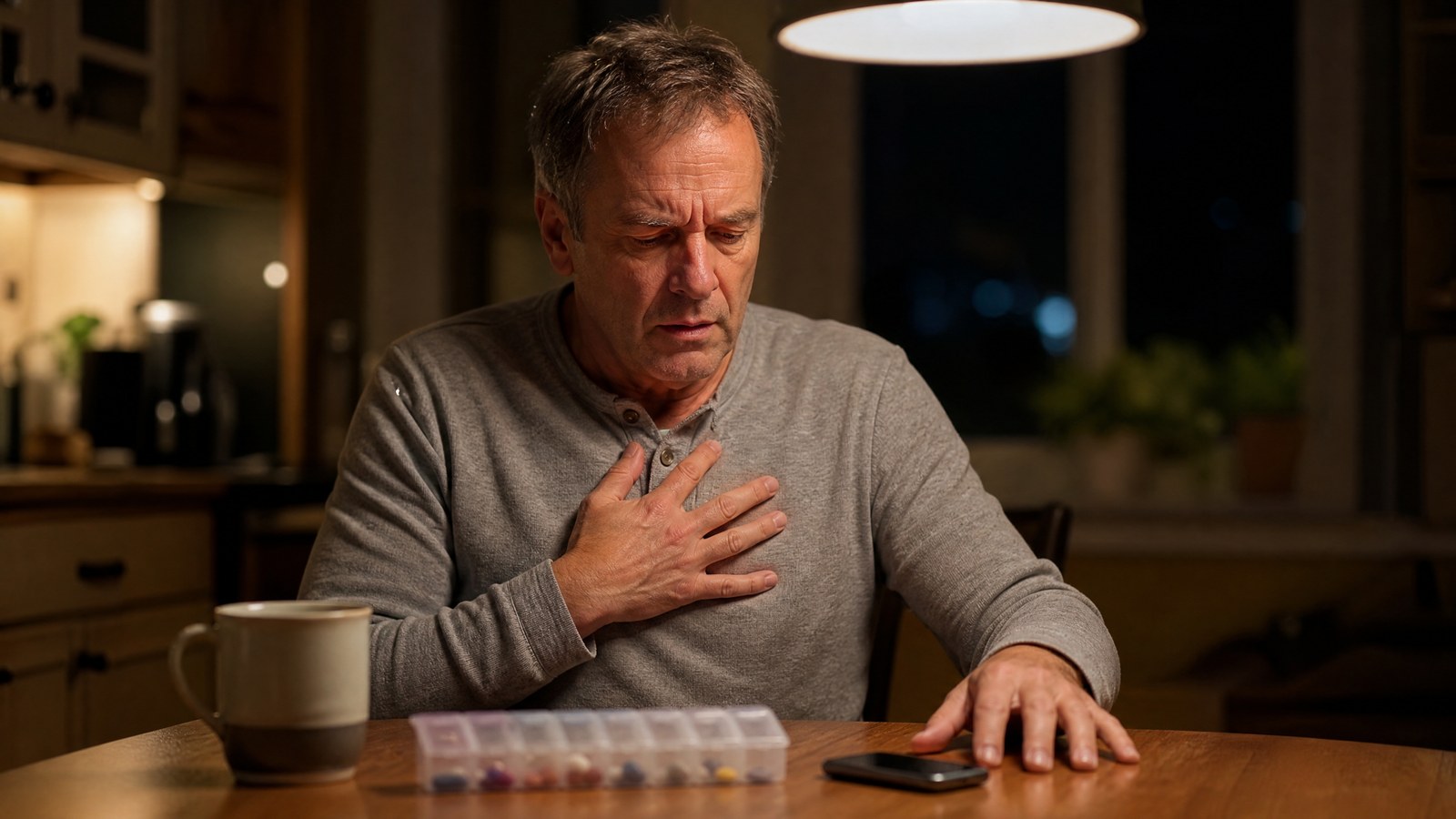
Your chest tightens, your heart pounds, and your hands go tingly. Your mind jumps straight to the worst case. Maybe it is anxiety. Maybe it is your heart. This guide covers panic attack vs heart attack, what separates them, and what to do in the first few minutes while you decide.
Panic Attack vs Heart Attack: Why They Feel So Alike
Both can start suddenly. Both can bring chest pain, a racing heart, shortness of breath, sweating, and a sense that something is badly wrong. A panic attack is a surge of fear that sets off real physical reactions, and those reactions can land right where a heart attack does.
That overlap is why people end up in the ER convinced they are dying and walk out with a panic diagnosis. It is also why other people brush off a real heart attack as stress and wait too long. Neither mistake is rare.
Be honest with yourself about one thing before the details. The signs below are guides, not tests. A heart attack can show up as mild discomfort, and a panic attack can feel crushing. Only a clinician with an ECG and blood work can sort it out.
Panic Attack vs Heart Attack Symptoms Side by Side
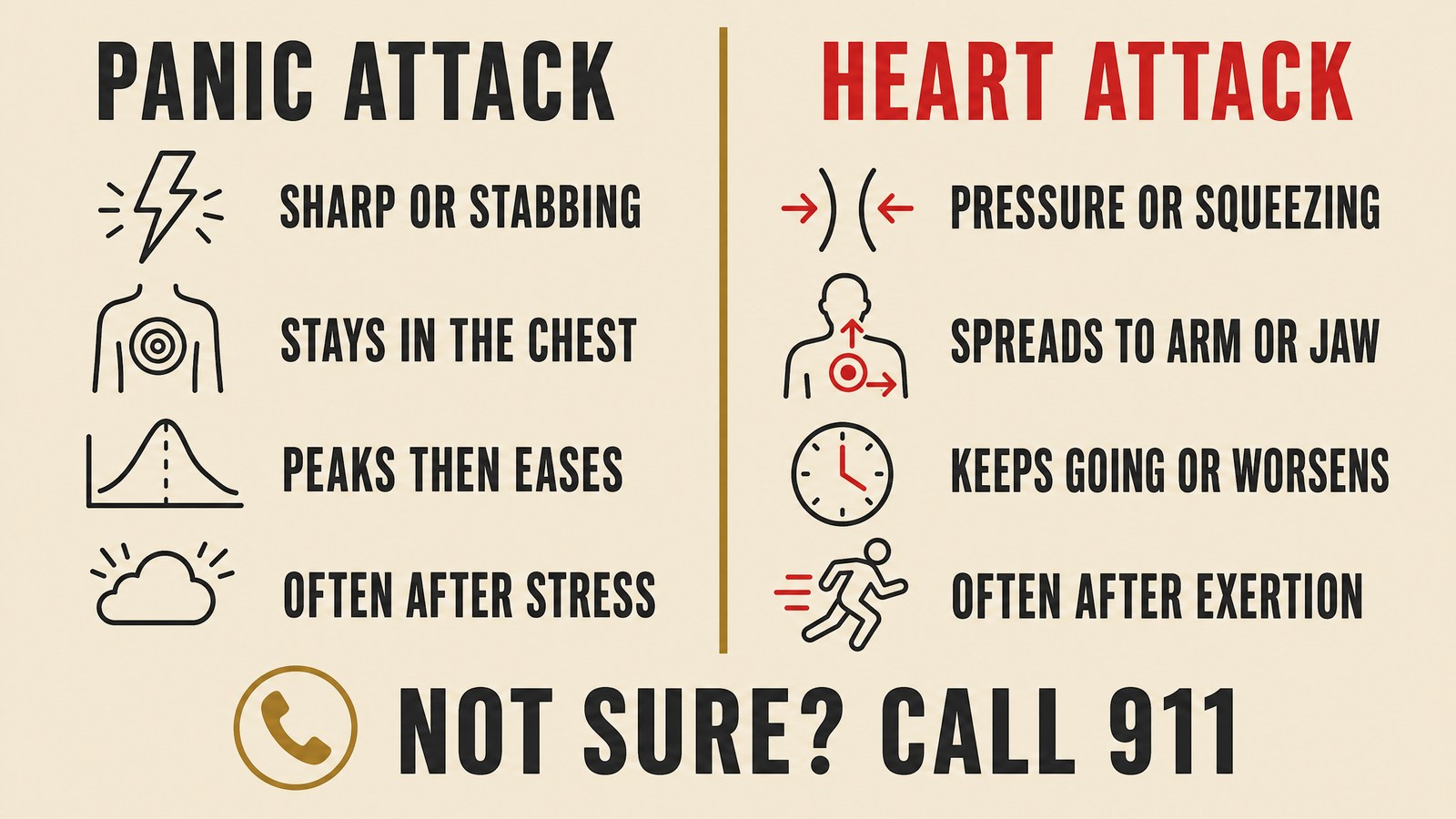
Mayo Clinic's panic attack vs. heart attack guide and Cleveland Clinic's breakdown of the two point to the same patterns:
- Pain type: Heart attack pain is usually pressure or squeezing. Panic attack pain is more often sharp or stabbing.
- Where it goes: Heart attack pain can spread to the arm, jaw, neck, shoulder blades, or back. Panic attack pain usually stays in the middle of the chest.
- How it changes: Heart attack pain keeps going or comes in waves and gets worse over time. Panic attack symptoms peak within minutes and ease, usually within 30 minutes.
- What sets it off: Heart attacks often start with physical strain, like shoveling snow or climbing stairs. Panic attacks often follow emotional stress, though they can come out of the blue.
- Other symptoms: Nausea and vomiting lean toward the heart. Shakiness and tingling hands lean toward panic.
Notice that every row says "tends to" or "usually." None of them is a rule.
Signs That Point Toward a Heart Attack
The American Heart Association lists the warning signs of a heart attack as chest pressure, squeezing, fullness, or pain that lasts more than a few minutes or goes away and comes back. Pain or discomfort in one or both arms, the back, neck, jaw, or stomach counts too, as does shortness of breath with or without chest discomfort. Cold sweat, nausea, and lightheadedness are common companions.
Women can have a different picture. Chest pain is still the most common symptom, but women are more likely to report nausea, vomiting, back or jaw pain, unusual tiredness, and shortness of breath. Older adults and people with diabetes can also have milder or odd symptoms. Our guide to the early warning signs of a heart attack goes deeper on these.
Your risk matters as well. Cleveland Clinic notes that people with heart disease may have angina, which is chest pain, days or weeks before a heart attack. If you have had a heart attack before, Mayo Clinic says to seek immediate medical attention for any symptoms that resemble it.
Signs That Point Toward a Panic Attack
A panic attack usually comes with a wave of fear, a pounding or racing heart, trembling, tingling in the hands, a feeling of unreality, and breathing that feels too fast. The pain tends to be sharp, stays in the chest, and starts to improve rather than worsen. Most attacks crest within minutes and fade within about half an hour, though you may feel drained for a while afterward.
A history of anxiety or earlier panic attacks makes panic more likely. It does not make a heart attack impossible. Cleveland Clinic points out that people with anxiety, depression, or chronic stress can have a higher risk of heart problems, not a lower one. If this attack feels different from your usual ones, or the pain is new, do not assume it is panic.
Treat Chest Pain as a Heart Emergency First
Here is the decision rule that works: until a clinician says otherwise, act as if it is your heart.
The costs are lopsided. If you call 911 and it was panic, you lose an evening and maybe a bill, and you get reassurance. If you wait and it was a heart attack, you lose heart muscle with every passing minute. Cleveland Clinic says a heart attack is a medical emergency and that you should not wait to see whether symptoms pass. Mayo Clinic says that if you are unsure, you should not delay care.
The American Heart Association says to call 911 if you have heart attack warning signs. Paramedics can start treatment when they reach you, and people who arrive by ambulance with chest pain may get faster treatment at the hospital. Do not drive yourself, and do not ask a neighbor to drive you if you can get an ambulance.
What to Do While You Wait for Help
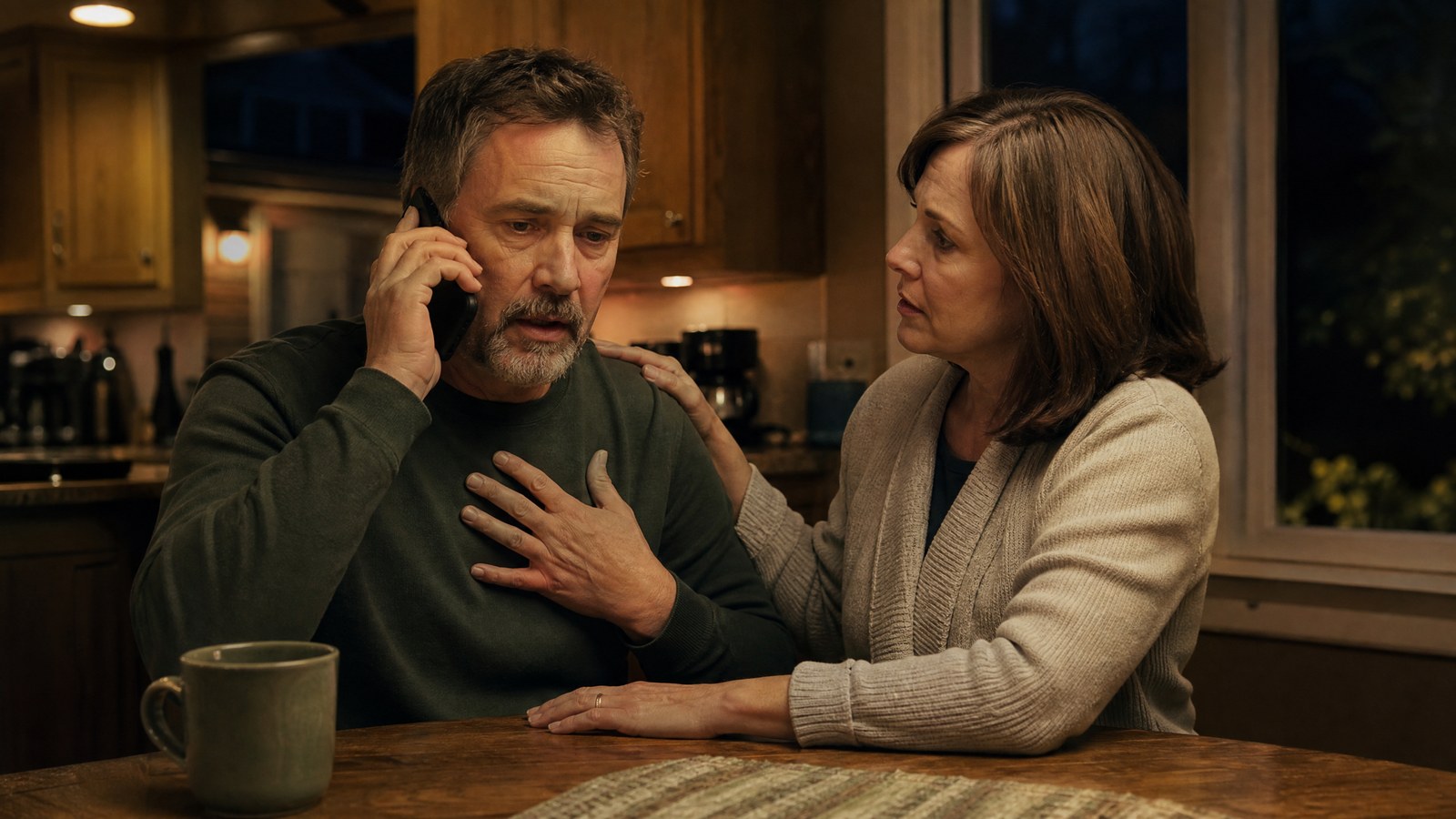
If chest symptoms are new, severe, or lasting more than a few minutes, call 911 first. Then:
- Tell the dispatcher you have chest pain and what else you feel. Say your address clearly.
- Sit down and stay as still as you can. Loosen tight clothing.
- Follow what the dispatcher tells you, including whether to chew an aspirin. Do not take medicine on your own without asking.
- Unlock the front door and turn on a light so paramedics can get in. If you are alone, do this before you sit back down.
- Have someone stay with you. If you are not alone, have them watch your breathing and responsiveness.
- If the person collapses and is not breathing normally, start hands-only CPR and send someone for an AED. Our guide to using an AED walks through it, and the difference between a heart attack and cardiac arrest is worth knowing before you ever need it.
If the pain turns out to be something else entirely, such as reflux, a pulled muscle, or a lung problem, our piece on chest pain causes that are not a heart attack covers what else can feel this way.
After a Doctor Says It Was Panic
Hearing "it was a panic attack" can bring relief and embarrassment in the same breath. Skip the embarrassment. You made the safe call, and it was the right one.
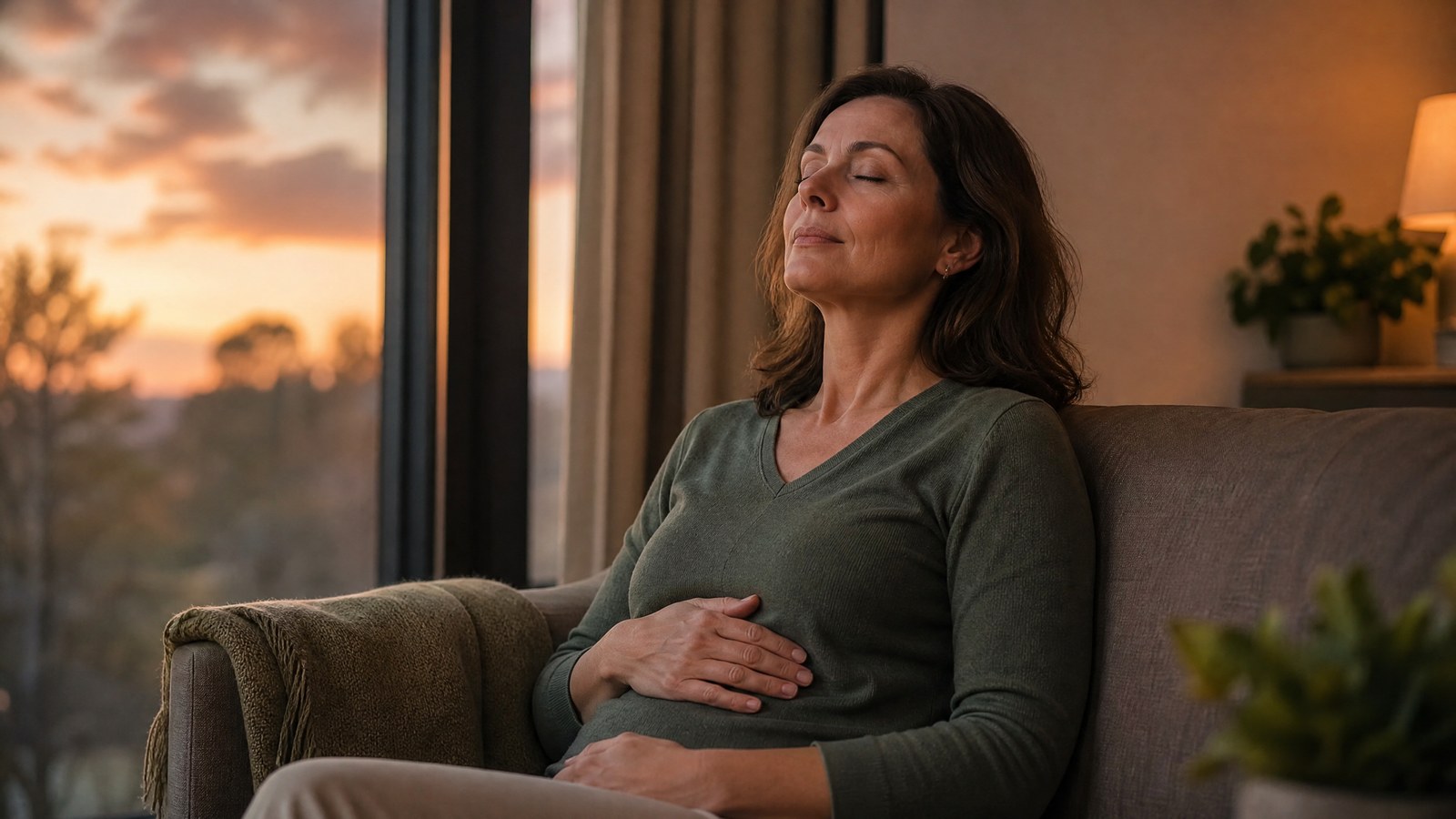
Once a clinician has ruled out your heart, a few things help the next time:
- Slow your breathing. Breathe in through your nose for four counts and out through your mouth for six. Longer exhales settle a racing body.
- Name it out loud: "This is a panic attack, and it will pass." Naming it takes some of the fear out of the physical symptoms.
- Ask your doctor about repeat attacks. Panic attacks that keep coming can be treated, and therapy and medicine both work well.
- Keep your heart checkups up to date. A past panic diagnosis never replaces them.
Panic that you cannot explain, or chest symptoms that feel different from your usual pattern, still deserve a fresh look every time.
The first minutes of any emergency set the tone for the next hour. See what's inside The 1stHour Trauma Kit, built for the moments before help arrives.
This content is for informational purposes only and does not constitute medical advice. Chest pain can be a heart attack, so call 911 and follow the instructions of emergency responders.


