Lightning Strike Survival: What to Do in the First Hour After a Strike
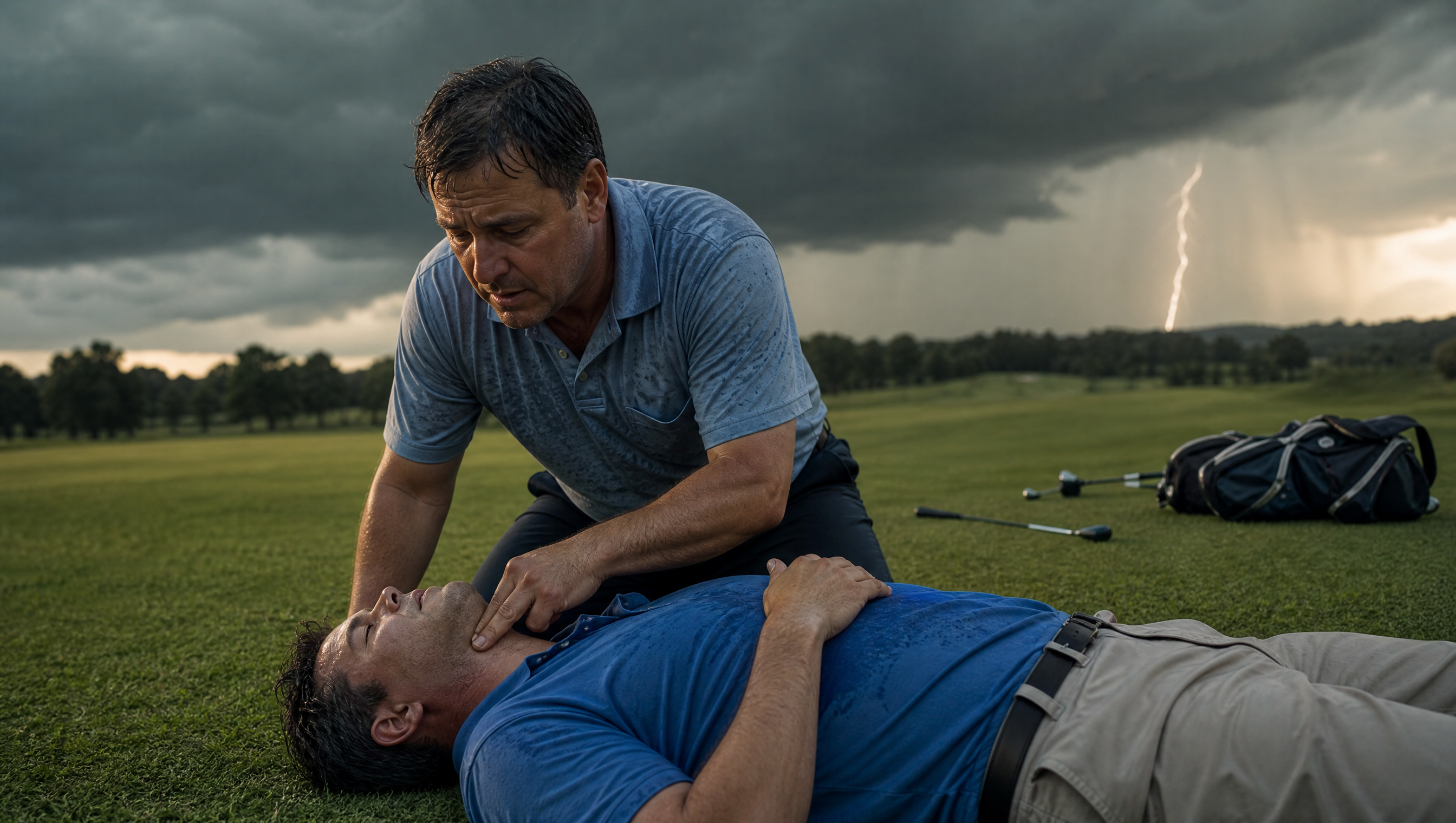
Somebody on a golf course, a job site, or a trail is going to get caught out when a storm rolls in faster than expected, and if lightning finds them, the people standing nearby are going to freeze for a second wondering if it's safe to go near. That hesitation costs time you don't have. This post covers what actually happens to a body during a lightning strike, why the person lying still and not breathing needs your attention before the person who's awake and screaming, and how to keep the next strike from getting anyone else.
Is It Safe to Touch Someone Struck by Lightning?
Completely safe. This is the fear that stops people cold, and it's based on a mix-up with downed power lines, not lightning. A power line stays energized and will shock anyone who touches a person still in contact with it. Lightning is different. It's a single, massive discharge that passes through in a fraction of a second and then it's gone. There's no current left in the body afterward, no charge waiting to jump to you. The CDC confirms this directly: people struck by lightning don't carry an electrical charge, and it's safe to handle them and start first aid right away.
The American Red Cross says the same thing in its guidance on lightning strike injury: touching a lightning victim carries zero shock risk to the rescuer. So the moment someone goes down near you, the only question that matters is whether they're breathing. Everything else comes after.
One real caution: if you're still outside during an active storm, get everyone under cover first, victim included if you can move them safely. Lightning can strike the same area twice, and it has. Treating the person where they fell, in the open, during the same storm that just hit them, puts you both back in danger.
Lightning Strike First Aid: The First Three Minutes
Once you're somewhere reasonably safe, or you've confirmed the immediate storm threat has passed, work through this in order:
- Call 911 first, or have someone else call while you check the person. Tell the dispatcher it was a lightning strike specifically. That detail changes what the responding crew expects to find.
- Check for breathing and a pulse. Look at the chest, listen close to the mouth, feel at the wrist or neck. Give it a real ten seconds, not a glance.
- Start CPR immediately if there's no breathing or no pulse. Don't wait to see if they "come around." Lightning-induced cardiac arrest often responds to fast CPR better than cardiac arrest from most other causes, and every second without compressions lowers the odds.
- Use an AED the moment one is available. Many golf courses, parks, and job sites have one mounted somewhere nearby. If you've never used a defibrillator before, our AED guide walks through it in under two minutes, and it's worth reading before you're standing over someone who needs it, not during.
If they're breathing and have a pulse but aren't responsive, keep them still, keep their airway clear, and stay with them until help arrives. Don't assume "breathing on their own" means they're out of danger. Lightning strikes hit the nervous system hard, and consciousness can take a while to return even in people who go on to recover fully.
Why Lightning Victims Get CPR First, Even Before Someone Screaming in Pain
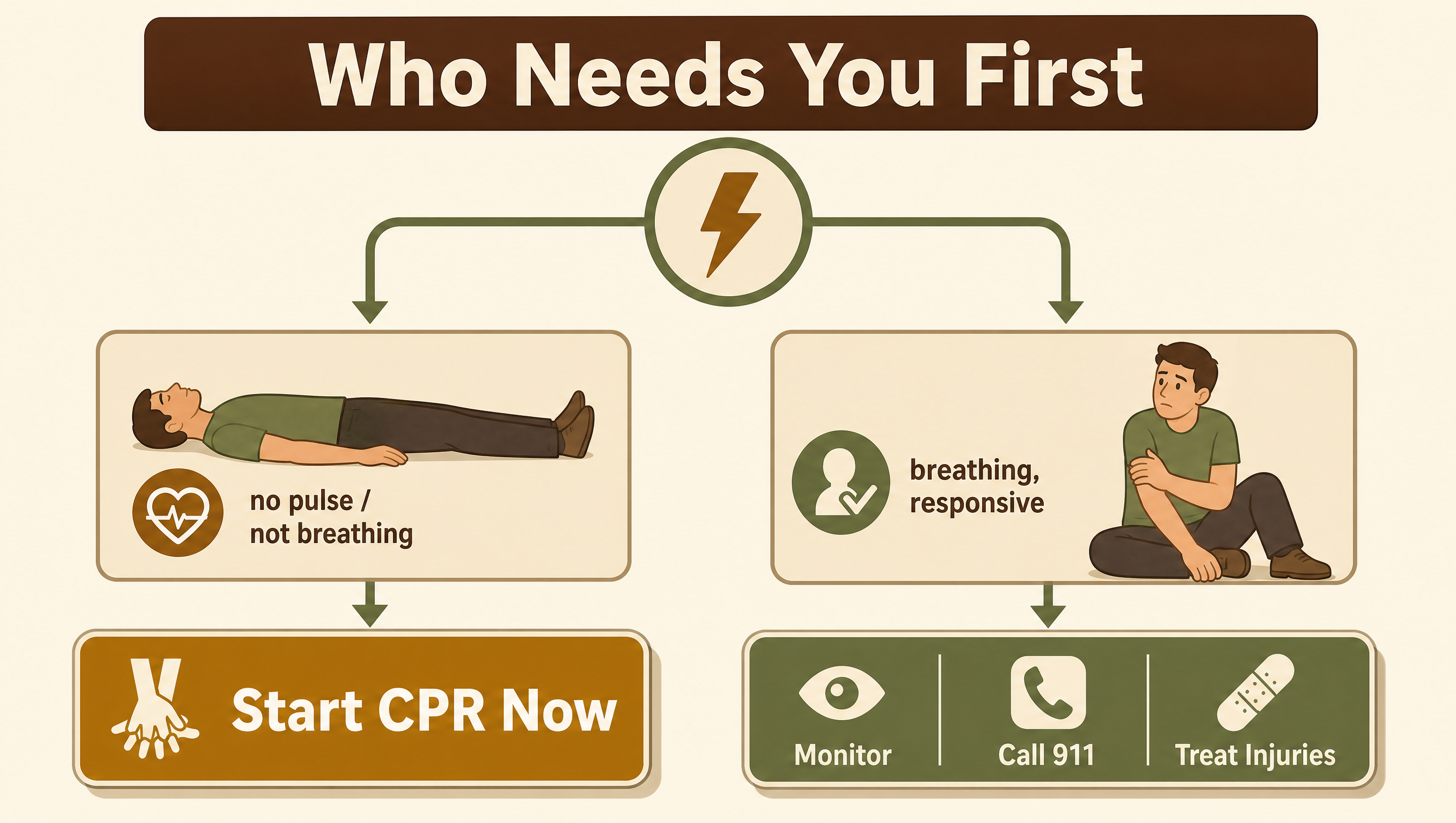
This is the part almost nobody explains, and it's the piece that makes this different from a car accident or a fall. In a normal mass-casualty situation, the rule of thumb is to help the people who are talking and moving before the ones who look dead, because the quiet ones are usually the most far gone. With lightning, you flip that instinct.
Lightning cardiac arrest tends to happen because the strike depolarizes the entire heart muscle at once, throwing it into a flatline rhythm rather than the chaotic beat you'd see with a typical heart attack. Research summarized by the National Institutes of Health describes this mechanism and notes that lightning-related cardiac arrest is frequently reversible with prompt CPR, since the heart's electrical system often just needs a restart rather than facing the kind of blocked-artery damage a typical cardiac event causes.
That means the person lying motionless and silent, the one every instinct tells you to check last, is often the one with the best shot at a full recovery if you start compressions now. Meanwhile, the person who's awake, in pain, and yelling about a burn on their arm is, by definition, breathing and circulating blood on their own. They can wait the ninety seconds it takes you to start CPR on the person who can't wait at all.
Lightning Burns and Injuries That Don't Look Like Much But Are
Once breathing and a pulse are confirmed, or CPR is underway and help is on the way, check for other injuries. Lightning burns behave differently from the burns you'd get off a stove or a campfire, and that difference throws people off.
You might see small, dark entry and exit marks where the current came in and out, sometimes barely bigger than a coin. You might also see a faint, branching, fern-like pattern on the skin called a Lichtenberg figure. It looks alarming, almost like a bruise in the shape of a tree, but it's not actually a burn at all. It's a temporary marking caused by ruptured capillaries near the skin's surface, and it typically fades on its own within a day or two without treatment.
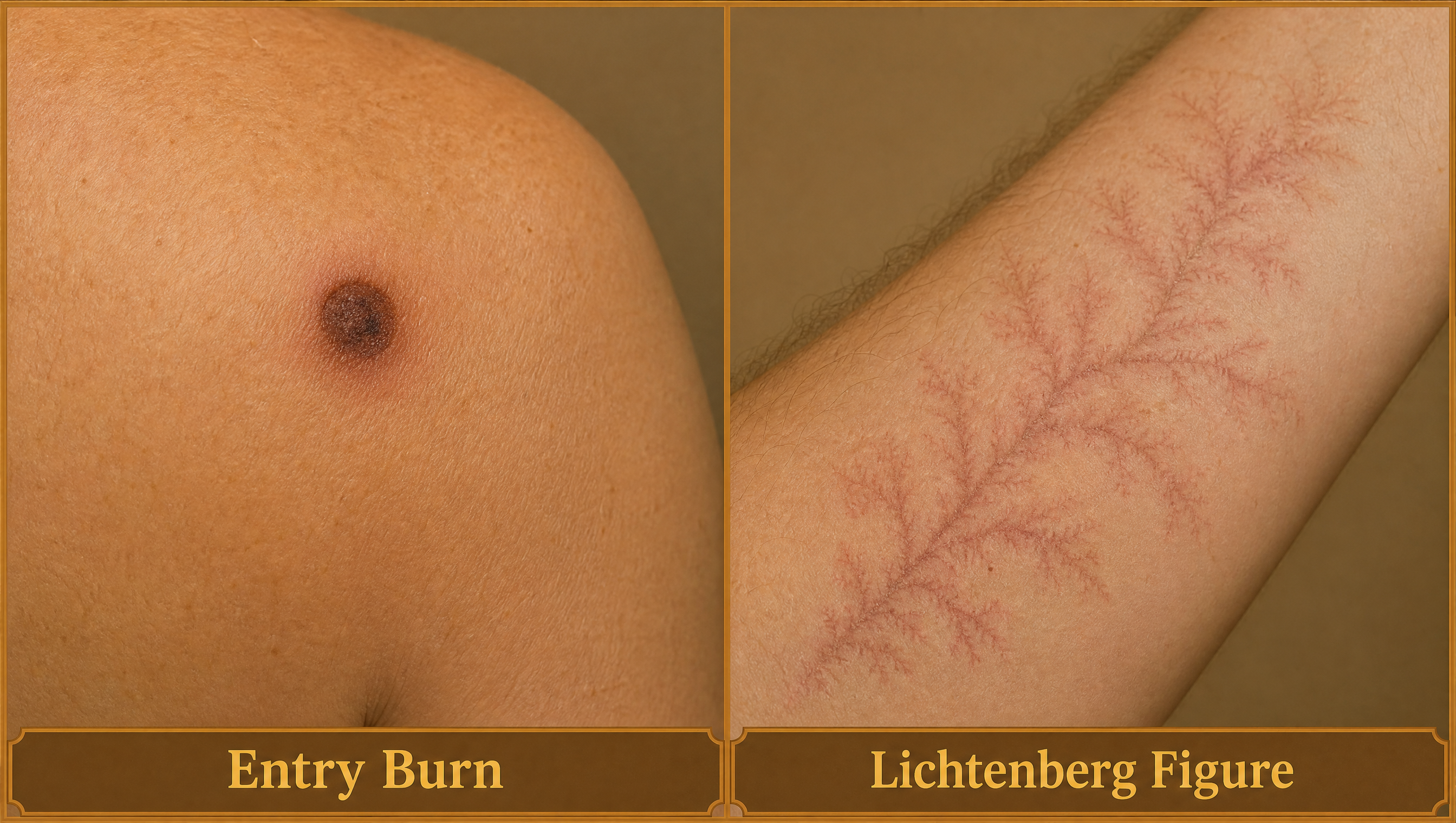
What deserves real attention is anything that doesn't fade: numbness, tingling that doesn't go away, muscle weakness, or temporary limb paralysis. This has a name, keraunoparalysis, and it's more common than most people realize. It looks frightening in the moment; a person struck by lightning can be unable to move their legs for twenty minutes and then walk on their own shortly after. That doesn't mean it's safe to assume it will resolve. Treat it as a real injury and get it checked, even after movement returns.
Blunt trauma is the other injury people forget to look for. The muscle contraction from a strike, or the fall that follows it, can cause fractures, dislocations, or a hard hit to the head, especially if the person was standing on a ladder, roof, or uneven ground when it happened. Check for those the same way you would after any fall.
For the burns themselves, the same rules apply as with any other burn injury: cool running water, a loose clean covering, no ice, no ointment. Our burn first aid guide covers that in more depth if you want the fuller version. And if you're ever unsure whether an injury is a lightning burn or came from contact with electrical equipment during the same storm, like a downed line, treat it with the added caution in our electrical shock first aid guide, since the two hazards sometimes overlap during severe weather.
The 30-30 Rule: Preventing the Next Strike Before It Happens
The best lightning response is the one that happens before anyone gets hit. The National Weather Service built a simple rule for exactly this: if you see lightning or hear thunder, you're already close enough to be at risk. Get inside, and stay inside until 30 minutes have passed since the last flash or rumble.
The math behind the "first 30" is straightforward. Sound travels roughly one mile every five seconds, so if you count 30 seconds or less between the flash and the thunder, the storm is within about six miles, close enough to strike where you're standing. That's your signal to stop whatever you're doing and get under real shelter, not a golf cart, not a small open-sided pavilion, not a tree.
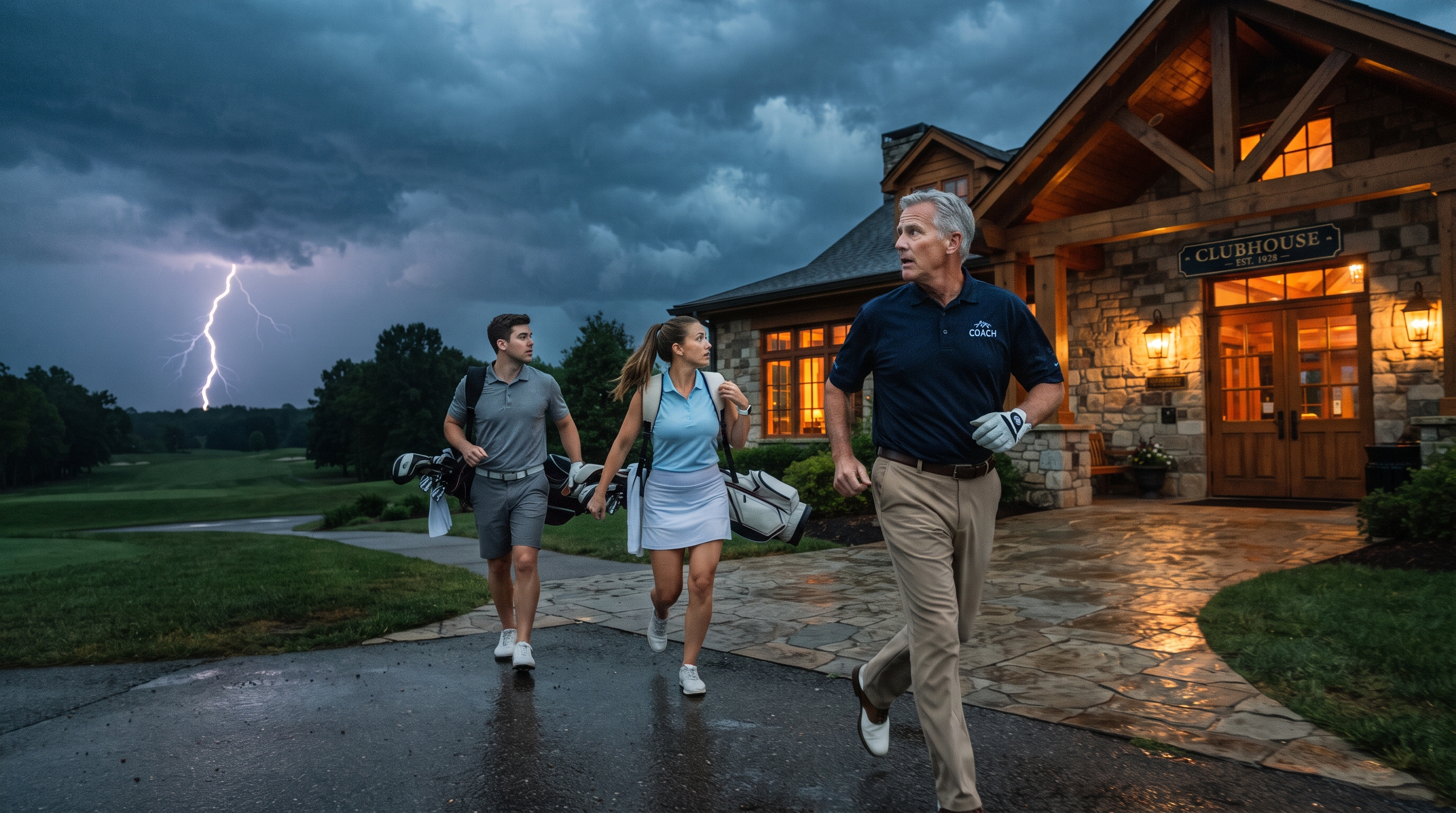
The second "30" is the one that catches people off guard. More than half of lightning deaths happen after the storm has already passed, because people step back outside the moment the rain stops or the sky looks clear. A storm can still be discharging lightning from miles away even after it looks like it's moved on. Wait the full 30 minutes from the last lightning or thunder you actually witnessed, not from when the rain let up.
If you're caught outside with no shelter and the storm is on top of you, get away from open water, high ground, and anything tall and isolated, like a lone tree or a flagpole. Crouch low with your feet together and minimize your contact with the ground, but understand this is a last resort, not a safe position. Nothing beats getting inside a hard-topped building before the storm arrives in the first place.
Lightning Strike First Aid: When to Always Call 911
Call 911 immediately, every time, for any of these:
- No breathing or no pulse (start CPR while you wait or while someone else calls)
- Loss of consciousness, even briefly, even if they seem fine now
- Chest pain, irregular heartbeat, or shortness of breath
- Weakness, numbness, or paralysis in any limb
- Confusion, memory loss, or trouble speaking
- Burns, especially entry and exit marks in two different spots on the body
- Any fall, especially from height, at the time of the strike
A lightning strike is never a "wait and see" situation, even for someone who seems completely fine walking away from it. The internal effects, especially on the heart and nervous system, don't always show up in the first few minutes. Get every strike victim evaluated, no exceptions.
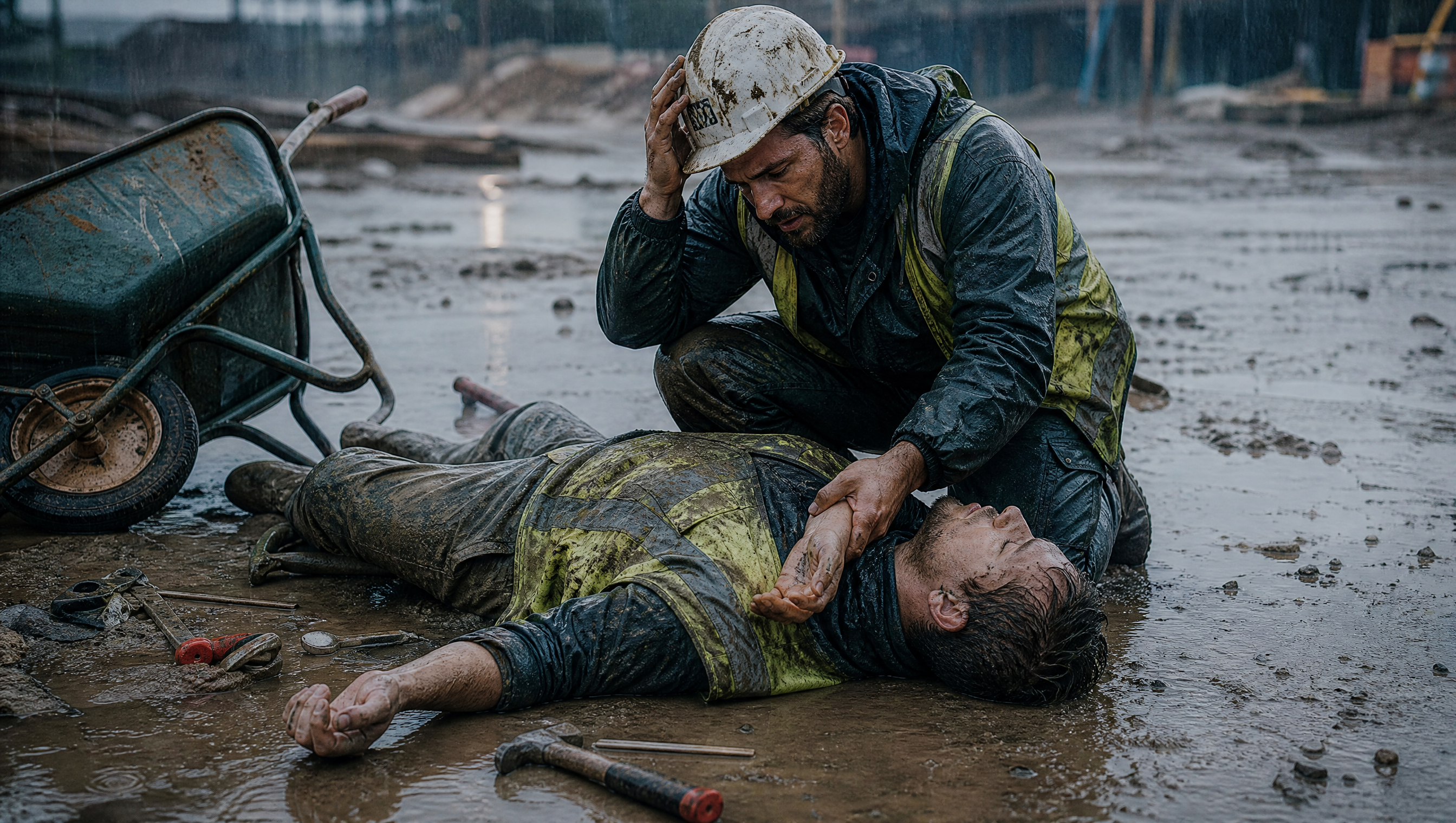
If you spend real time outdoors, whether that's on a course, a job site, or a trail, the same "the first hour decides everything" logic applies to a lot of other weather-driven emergencies. Our hypothermia first aid guide covers what happens when a storm leaves someone cold and wet for too long, which is a real risk in the minutes right after a strike if the ground is soaked and the temperature has dropped.
Lightning strikes are one of those emergencies where the right first move runs against instinct twice: it's safe to touch them when everything in you says it isn't, and the quiet, motionless person needs you before the one who's loud and in pain. Knowing that order ahead of time is what actually saves someone, not figuring it out in the moment. If you spend time outdoors for work or recreation, having the basics on hand for burns and other injuries in the meantime matters too. Our home first aid kit checklist is a solid starting point, and The 1stHour Trauma Kit is built to go where you go, so you're carrying the right gear before you ever need it.
This content is for informational purposes only and does not constitute medical advice. Lightning strikes can cause life-threatening cardiac and neurological injury. Always call 911 after any lightning strike and seek professional medical evaluation, even if the person appears unharmed. This is not a substitute for hands-on emergency training.


