How to Stop a Nosebleed: When It Signals Something Worse
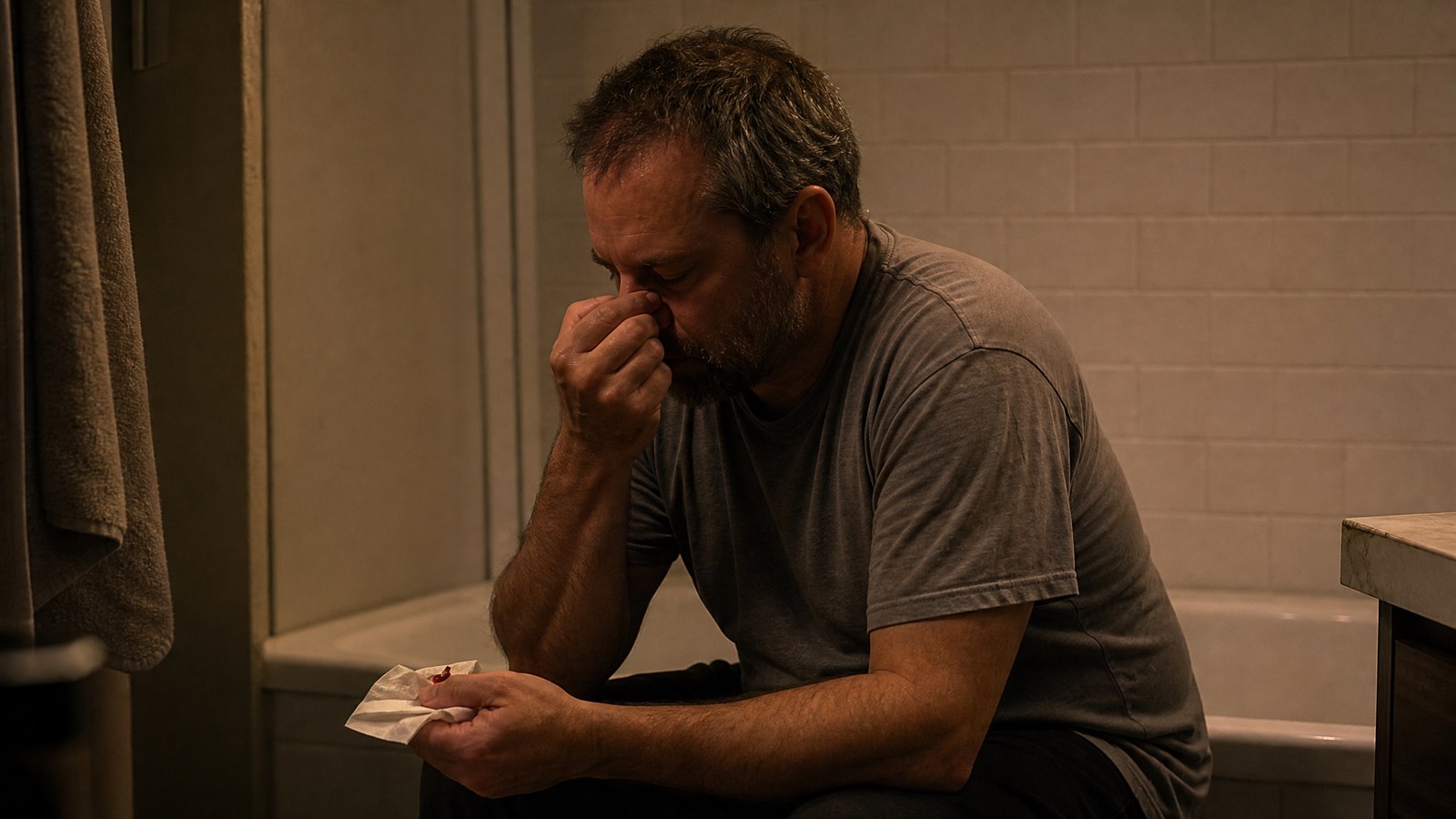
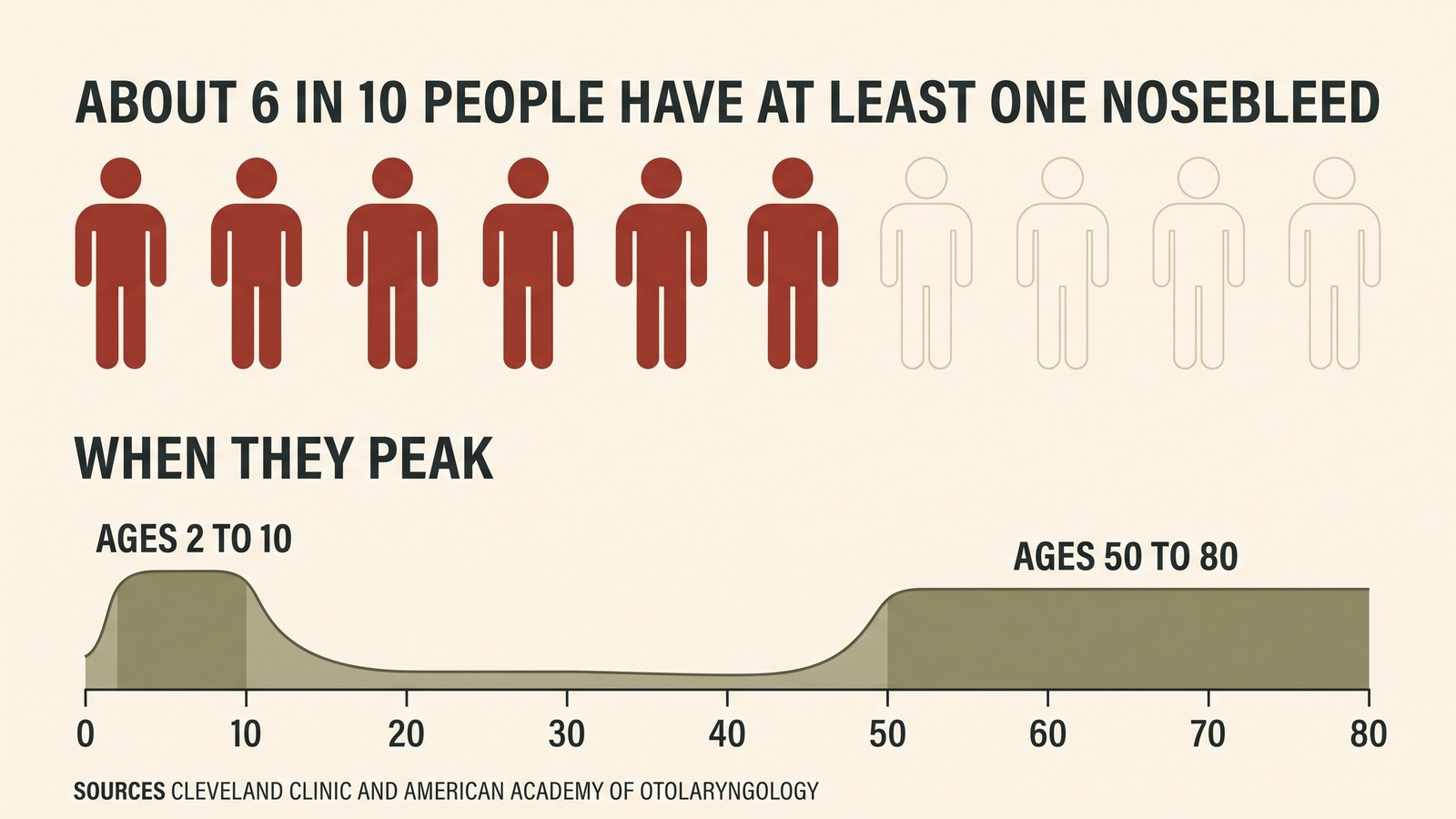
Here's how to stop a nosebleed the right way, and the part almost nobody covers: how to tell the difference between the ordinary kind that stops on its own and the kind that's telling you something. Most nosebleeds are the first kind. About 6 in 10 people get at least one in their life, usually from nothing more sinister than dry air. But the technique matters, the clock matters, and there's a short list of situations where a nosebleed is a reason to stop what you're doing and get help.
How to Stop a Nosebleed: The Technique Most People Get Wrong
Five steps. None of them are complicated, and one of them is the one everybody skips.
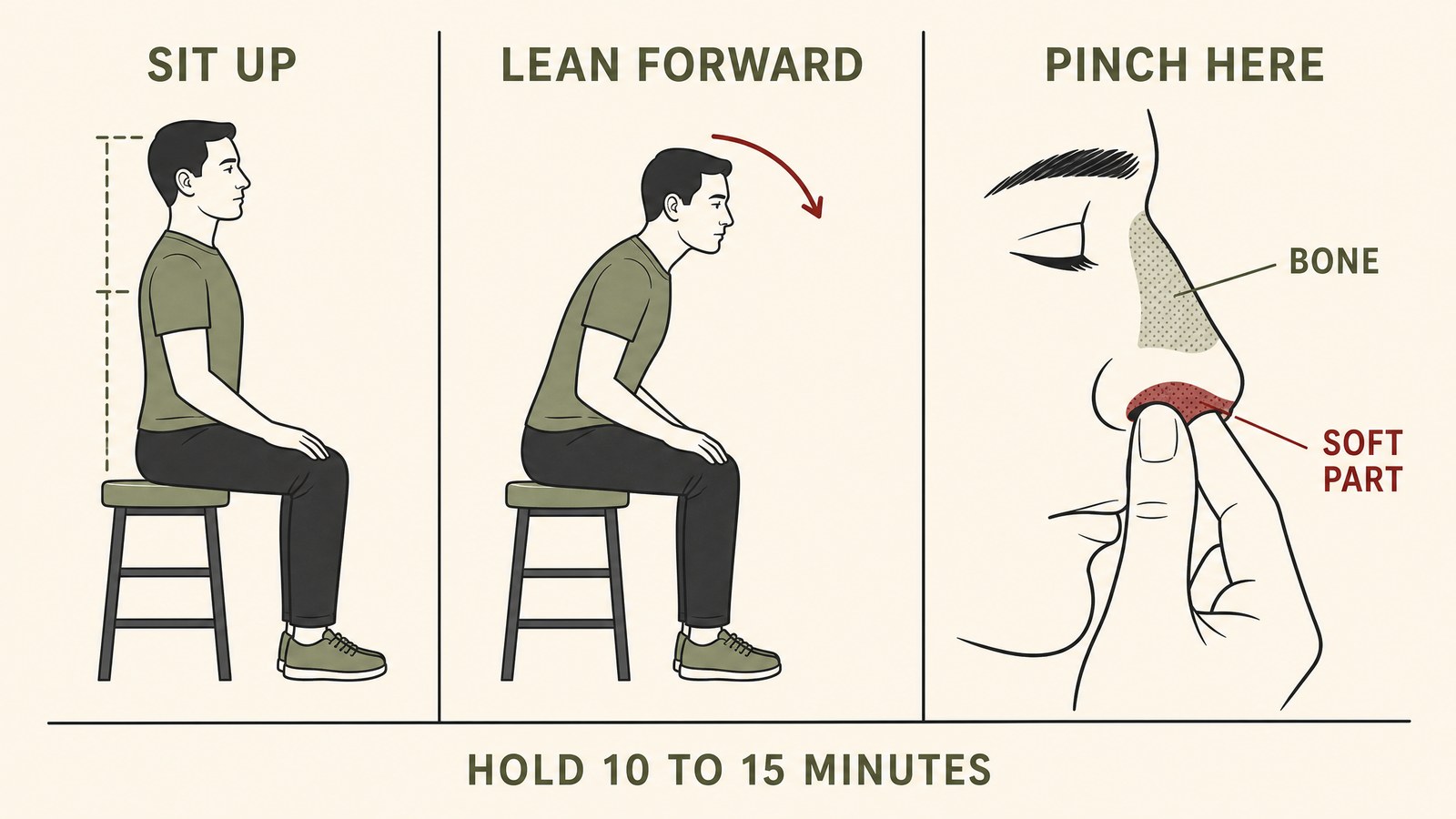
- Sit up straight. Keep your head above the level of your heart. Standing works too. Lying down does not.
- Lean slightly forward. Not back. Forward.
- Gently blow out any clotted blood. This feels counterproductive and it isn't. A clot sitting in the nostril keeps the tissue propped apart so pressure can't seal the vessel.
- Pinch the soft part. Thumb and index finger, on the fleshy sides of the nose just above the nostrils. Not the bony bridge higher up. The bleeding almost always comes from the septum, the wall between your nostrils, and squeezing the soft tissue is what actually presses that vessel closed.
- Hold it. Keep holding it. The American Red Cross says pinch continuously for 10 to 15 minutes. The American Academy of Otolaryngology recommends five minutes, and if it's still going, another ten.
Breathe through your mouth. Stay calm if you can, and help the other person stay calm if it's not you. Someone worked up bleeds harder than someone who's been reassured.
Why Head Back Is the Wrong Move
Somebody taught most of us to tilt the head back and it stuck. It's wrong, and it's worth understanding why so you don't default to it under stress.
Tilting back doesn't stop the bleeding. It just changes where the blood goes. Instead of running out the front of the nose where you can see it and manage it, it runs down the back of the throat. The Red Cross is blunt about the consequence: blood pooling back there can lead to choking or vomiting on it. Swallowed blood also irritates the stomach, so people end up nauseated on top of everything else, and then nobody can tell whether the bleeding has actually slowed down or just relocated.
Forward and slightly down. That's it.
How Long Should a Nosebleed Last Before You Worry?
This is where most nosebleeds that "won't stop" go wrong, and it isn't a medical problem. It's a stopwatch problem.
People pinch for two minutes, let go to check, see blood, panic a little, and pinch again. Then they check at three minutes. Then at ninety seconds. Every time you release to look, you break the clot that was forming and the clock starts over from zero. Fifteen minutes of that is not fifteen minutes of pressure. It's eight separate two-minute attempts, none of which had a chance.

So set an actual timer on your phone and don't touch your nose until it goes off. Ten minutes minimum, fifteen is better. Catch the drips with a tissue or a damp washcloth rather than releasing pressure to dab at it.
If you've done a genuine, uninterrupted 15 to 20 minutes of pressure and it's still bleeding at a real rate, that's your signal to stop troubleshooting at home and go get it looked at. Cleveland Clinic puts the same threshold on it. That's not a failure on your part. Some bleeds come from a vessel that external pressure simply can't reach, which brings us to the next part.
Anterior vs. Posterior: Two Different Problems
Nose bleeds fall into two categories, and they behave completely differently.
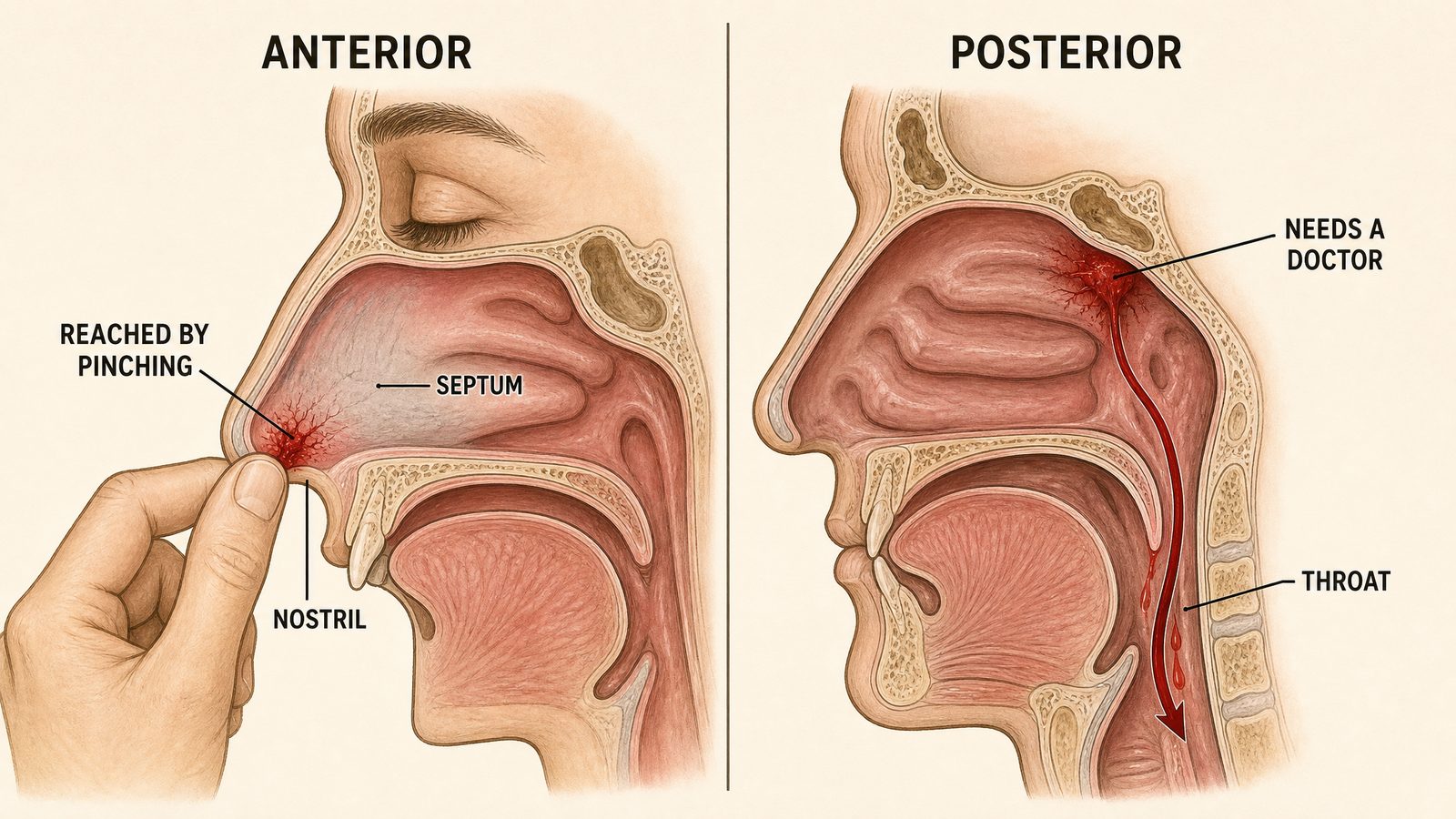
Anterior nosebleeds start in the front, low on the septum. The blood vessels there are shallow, fragile, and easy to reach. This is the overwhelming majority of nosebleeds and the reason pinching works at all. Blood comes out one nostril, sometimes both, and direct pressure seals it.
Posterior nosebleeds start higher and deeper, from larger vessels near the back of the nose. They're much less common. They're also, per Cleveland Clinic, the ones that need medical attention right away. Two things give them away: the blood runs down your throat whether you're sitting, standing, or leaning forward, and pinching the outside of your nose does almost nothing, because the source is nowhere near your fingers.
That second detail is the useful one. If you're doing the technique correctly and it isn't touching the bleeding, that's information. It means the problem is deeper than your grip can reach, and a provider needs to see it. Treatment usually involves cautery, sealing the vessel, or nasal packing, and those aren't home procedures.
ENT specialists note posterior bleeds turn up more often in older adults and in people who've had previous nasal or sinus surgery or an injury to the nose or face.
When a Nosebleed Is a 911 Call
Most of the time this section won't apply. When it does, don't spend time deliberating. Call 911 or get to an emergency room if:
- Blood is spurting or pouring rather than flowing, or you've lost roughly half a soda can's worth or more (the Red Cross benchmark, and less than that counts as a lot in a child)
- Genuine, uninterrupted pressure for 15 to 20 minutes hasn't stopped it
- The nosebleed followed a blow to the head, a fall, a car accident, or a hit to the face. A nosebleed after a head injury is a reason to be checked for something more serious than a broken vessel
- You're on a blood thinner such as aspirin or warfarin, or you have a clotting disorder, and it won't stop
- You're having trouble breathing
- You've swallowed a lot of blood and can't stop vomiting
- You feel faint, weak, or short of breath
If the person is bleeding heavily from the nose and from somewhere else after an accident, work the bigger problem first. Our guide on stopping severe bleeding covers direct pressure when a nose pinch isn't the injury that matters. And if there was any impact to the head, read up on concussion warning signs too, because a nosebleed is sometimes the only visible thing while the real injury is inside the skull.
When It Signals Something Worse
A single nosebleed on a dry January night means almost nothing. A pattern means something. Cleveland Clinic says to call a provider if you're getting them often, if you feel weak, faint, tired, cold, or short of breath (symptoms of anemia from ongoing blood loss), if they started around the time you began a new medication, or if you're getting nosebleeds along with unusual bruising elsewhere on your body. That last combination is the one worth taking seriously, since it can point to a clotting disorder or another blood condition rather than a nose problem.

A few specific situations deserve a conversation with your doctor rather than a wait-and-see:
You're on anticoagulants
Blood thinners don't cause nosebleeds so much as they turn a small one into a long one. If yours have gotten frequent or hard to stop since starting a thinner, that's a dosage and management conversation. Do not adjust or stop the medication on your own. That decision belongs to whoever prescribed it, and stopping a thinner carries its own serious risks.
You have high blood pressure
Hypertension is common among people who show up at emergency rooms with severe nosebleeds, particularly the posterior kind. What that does not mean is that you can read your blood pressure off a nosebleed, and a bloody nose alone isn't a reason to assume a crisis. But if you have known hypertension and you're getting heavy or repeated nosebleeds, mention it. The same goes if you're having other symptoms alongside it. Chest pressure, a racing heart, or the warning signs of a heart attack turning up at the same time changes the picture entirely.
You're over 50, or you smoke, and it's new
Both groups skew toward posterior bleeds. ENT specialists also flag that tumors, most of them not cancerous, are worth ruling out in older patients and smokers with persistent one-sided nosebleeds. That's not a reason to panic. It's a reason to get an actual look inside the nose instead of assuming dry air.
You're pregnant
Blood vessels in the nose expand during pregnancy, which makes nosebleeds more common and usually more annoying than dangerous. Still worth mentioning at a checkup.
How to Stop a Nosebleed From Coming Back
If you get them every winter, the fix is almost always moisture. Heated indoor air dries the nasal lining until it cracks, and the vessels underneath sit close enough to the surface that a hard sneeze is enough to open one.
- Use a saline nasal spray or saline drops two or three times a day in each nostril
- Put a light coating of saline gel or plain petroleum jelly inside the nostrils with a cotton swab, especially at bedtime. Don't go more than a quarter inch in
- Run a humidifier in the bedroom at night, or add one to the furnace
- Sneeze with your mouth open, into your elbow or a tissue
- Blow your nose gently. Forceful blowing is a common trigger
- Keep fingernails short, and keep everything else out of your nose
- Go easy on over-the-counter decongestant and antihistamine nasal sprays. Overusing them dries the membranes out and creates the problem you're trying to treat
- If allergies are driving it, get the allergies actually controlled rather than treating each nosebleed as a separate event
Smoking dries and irritates the nose too, which is one more entry on the long list.
A borderline call about whether something needs a professional is easier when you've already thought it through once. Same logic applies to a cut: our guide on whether that cut needs stitches walks the same kind of decision in the first hour.
Stopping a nosebleed takes gauze, a tissue, and fifteen uninterrupted minutes. What it usually costs people is calm, because they're standing over a sink with nothing on hand and no clear idea whether this is normal. A stocked home first aid kit fixes half of that. The 1stHour Trauma Kit carries 82 pieces of real medical equipment, organized so the gauze is where you expect it when the first hour is the one that counts.
This content is for informational purposes only and does not constitute medical advice. Never start, stop, or change a prescription medication, including a blood thinner, without talking to the provider who prescribed it. For heavy bleeding, bleeding that follows a head injury, or nosebleeds that keep coming back, see a qualified medical professional.


