How to Check for a Pulse on Someone Who Collapsed
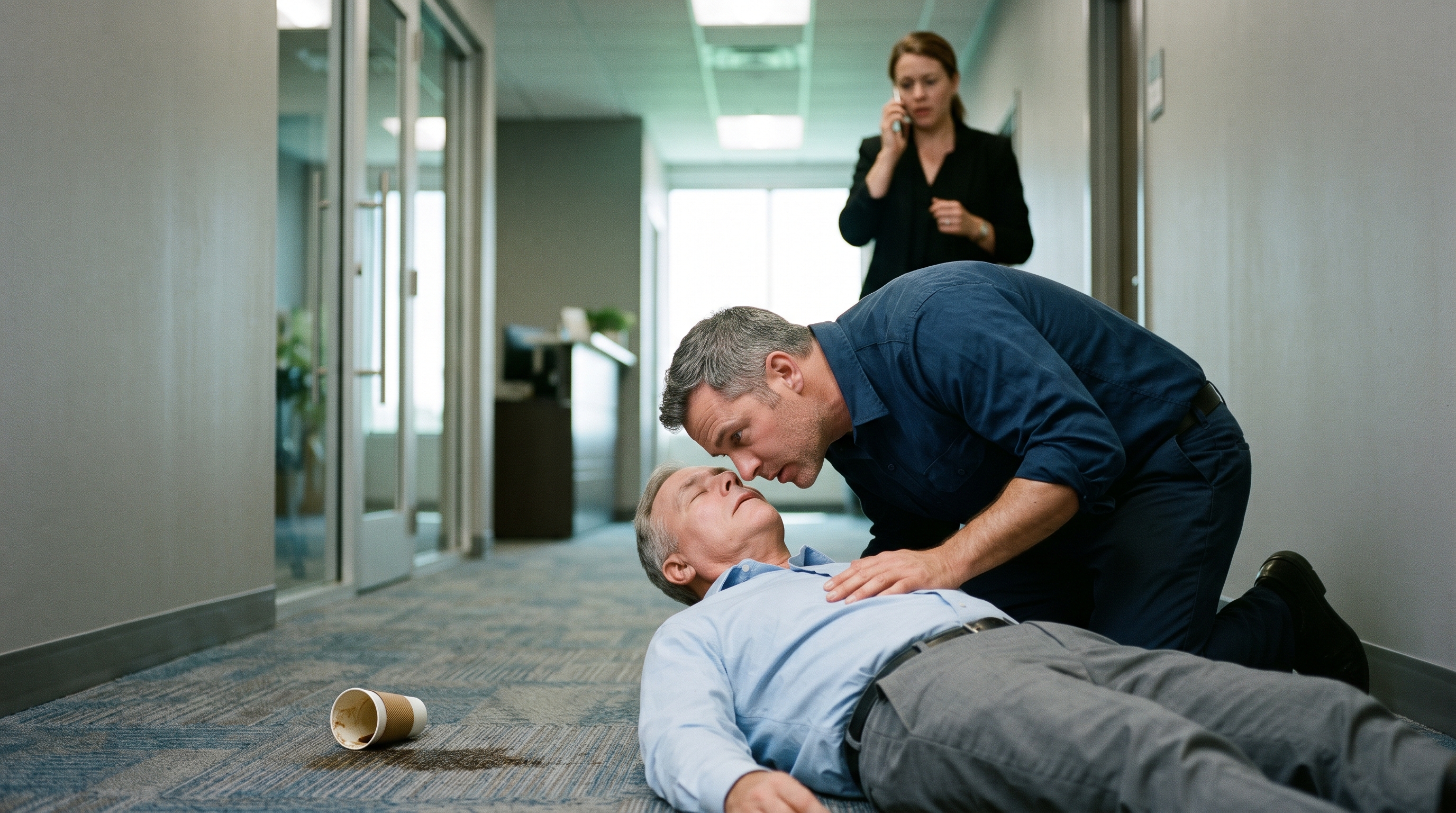
Someone drops in front of you at the gym or at a family dinner. Your mind goes straight to the wrist or the neck. That instinct is understandable, but it is not the best first move. This guide covers how to check for a pulse and, more to the point, what to check before it so you do not lose time.
How to Check for a Pulse: Why Breathing Comes First
Bystander guidance has moved away from pulse checks. A pulse can be faint, slow, or fast, and nervous hands miss it. Rescuers who spend 30 seconds hunting for one are 30 seconds late starting compressions.
Breathing is easier to read. The Red Cross CPR steps say to start CPR when someone is unresponsive and not breathing or only gasping. MedlinePlus agrees: gasping or gurgling is not normal breathing. Those slow, noisy gasps can look like breathing, and they are common in the first minutes of cardiac arrest.
So the working rule is simple. No response and no normal breathing means treat it as cardiac arrest.
How to Check for a Pulse and Breathing, Step by Step
Make sure the scene is safe first. Then work through these steps in order.
- Tap their shoulder firmly and shout, "Are you OK?" Do it on both sides.
- If there is no answer, shout for help. Ask one person to call 911 and another to bring an AED if one is nearby. If you are alone, call 911 on speaker.
- Roll them onto their back on a firm surface if they are not already there.
- Tilt the head back and lift the chin to open the airway.
- Look, listen, and feel for normal breathing for up to 10 seconds. Watch the chest rise, listen at their mouth, and feel for breath on your cheek.
- If breathing is absent or only gasping, begin compressions.
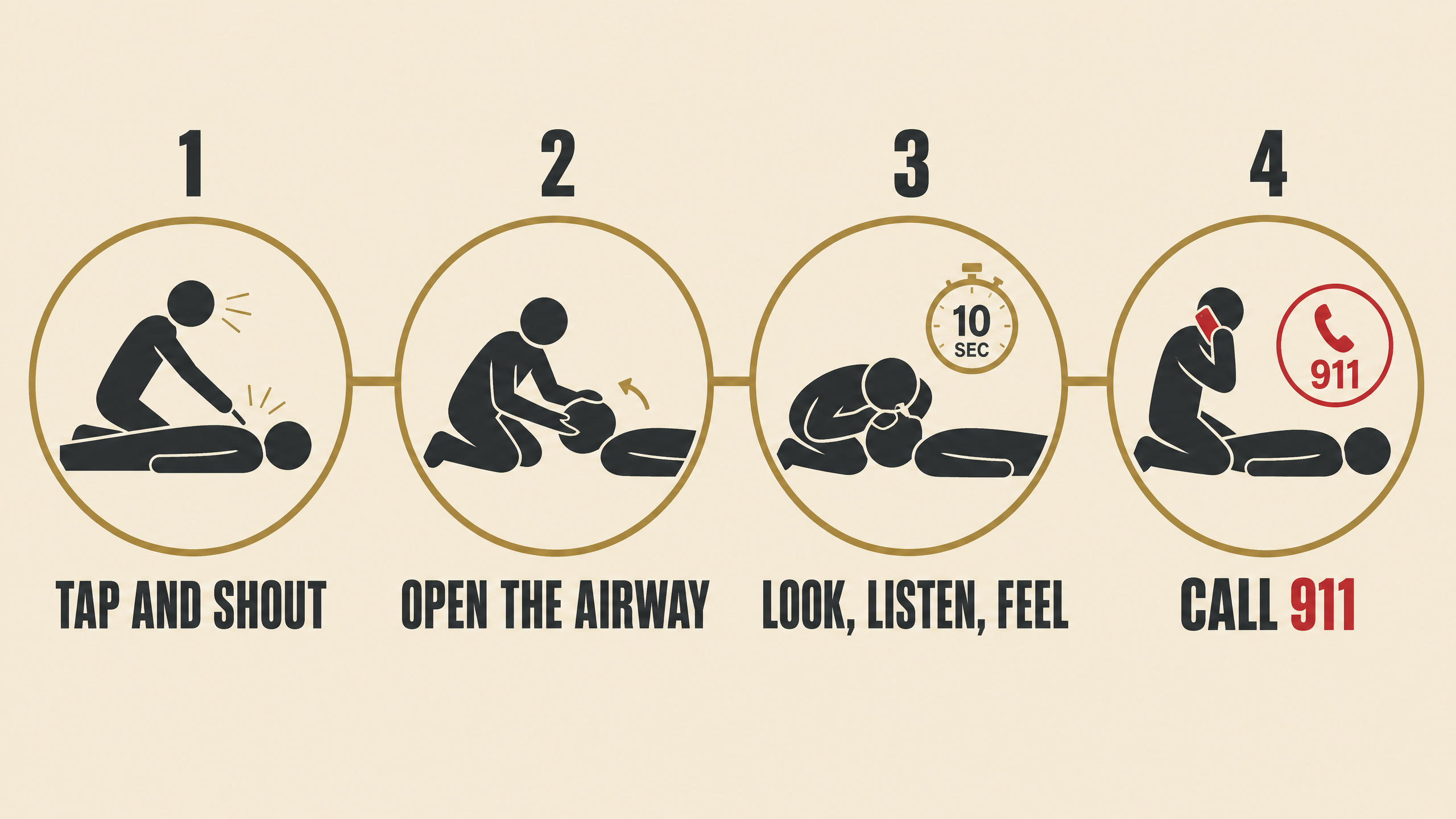
St John Ambulance gives the same advice in its unresponsive casualty guide: look, listen, and feel for up to 10 seconds, and ignore occasional, irregular gasps.
How to Check for a Pulse in the Neck (If You Are Trained)
If you have taken a CPR class and feel confident, you can add a pulse check. Use the carotid artery in the neck, not the wrist, because it stays strongest when blood pressure drops.
Place two fingers, not your thumb, on the middle of the neck, then slide them into the groove beside the windpipe on your side of the person. Press gently. Your own thumb has a pulse, and it can fool you.
Limit it to 10 seconds, the same window as the breathing check. If you are not sure you feel one, assume there is none and start CPR. A trained rescuer who is unsure should not wait.
You can do the breathing check and pulse check at the same time. That saves seconds, and it is how many healthcare providers do it.
What to Do Based on What You Find
Two outcomes matter here, and the flowchart shows both.
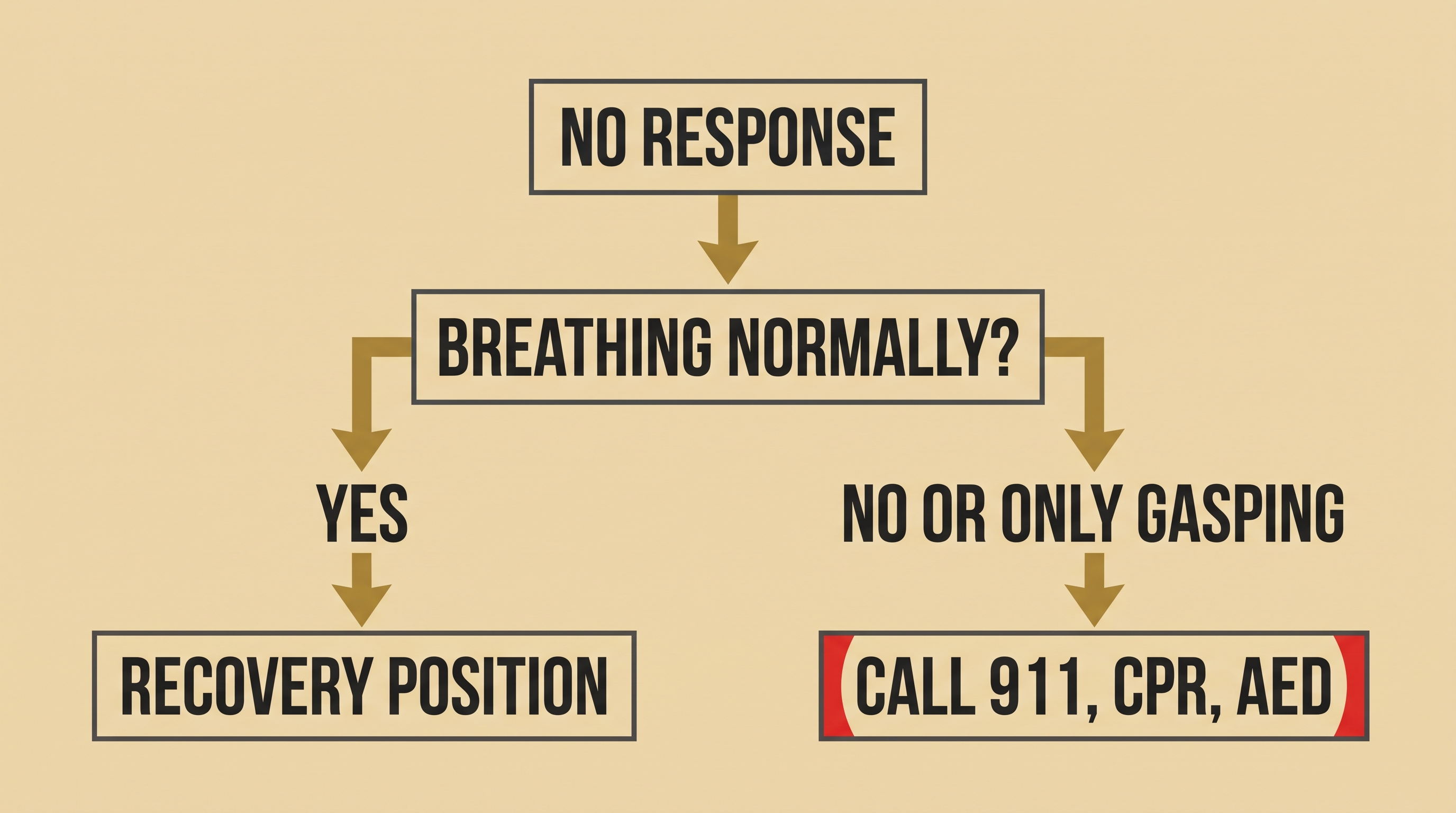
If they are breathing normally but will not wake, stay with them and call 911. Our guide to the recovery position shows how to roll them onto their side to keep the airway clear.
If they are not breathing normally, call 911 and push hard and fast in the center of the chest. Our article on hands-only CPR covers the pace and depth. When an AED arrives, turn it on and follow the voice prompts. We walk through that in how to use an AED.
Do not stop to confirm there is no pulse before you start. Chest compressions on a person who turns out to have a heartbeat are very unlikely to cause serious harm. Waiting on someone in cardiac arrest does.
Collapse Is Not Always Cardiac Arrest
Many people who go down are not in cardiac arrest. A faint usually ends within a minute or so, and the person starts to respond. Read our guide to fainting first aid for what that looks like. A heart attack can also come first, and it is not the same event; see heart attack vs. cardiac arrest for the difference.
The breathing check sorts these out. Someone who responds to your voice and breathes normally needs watching and a call to 911. Someone who does neither needs CPR now.
If you remember one thing, make it this. You do not need to find a pulse to save a life. You need to notice that something is wrong and act on it.
The first minutes decide how the next hour goes. See what's inside The 1stHour Trauma Kit, built for the moments before help arrives.
This content is for informational purposes only and does not constitute medical advice. Take a CPR course for hands-on practice, and call 911 in any emergency.


