Hip Fracture Symptoms: What to Look for After a Fall
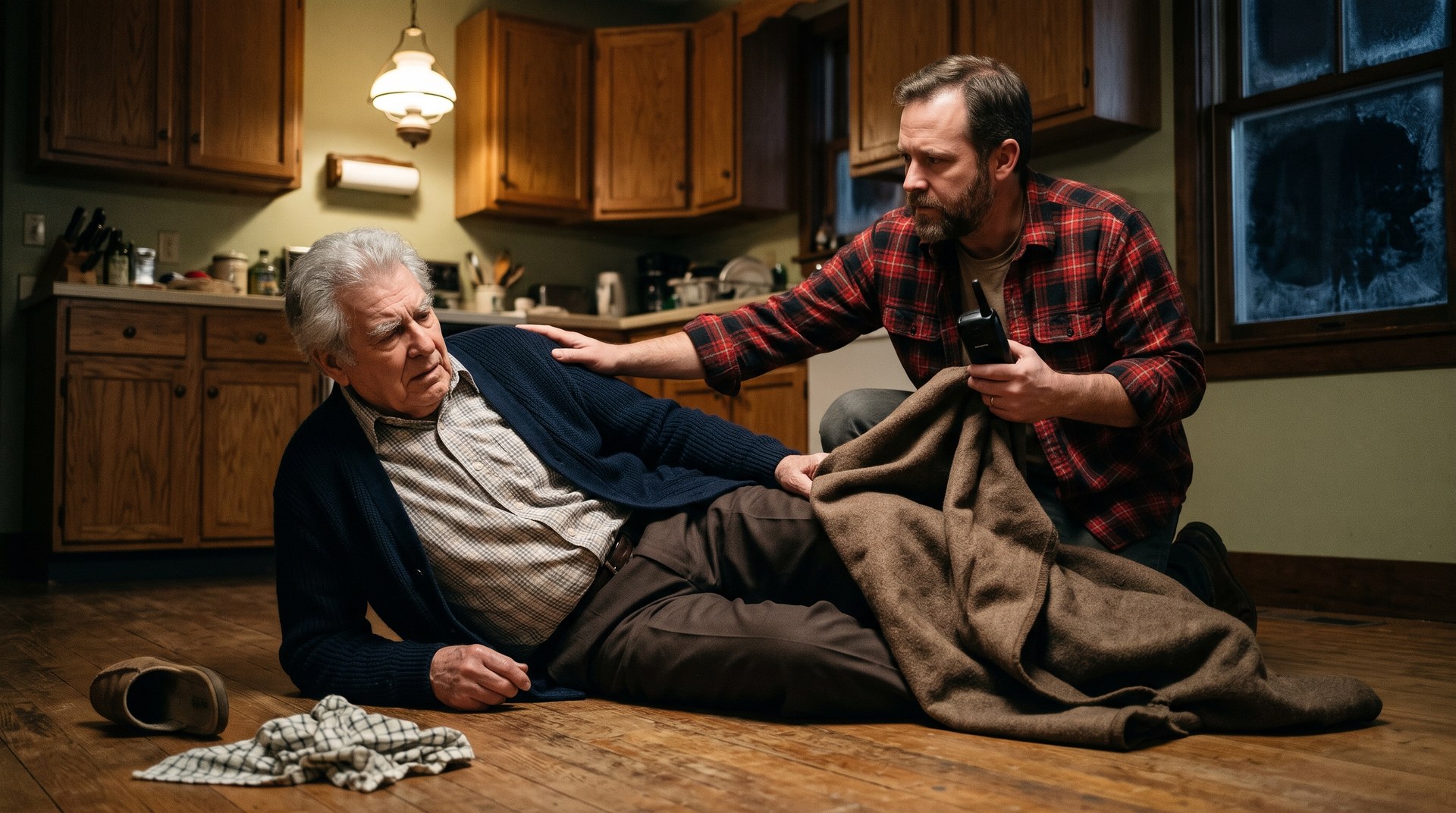
A fall at home usually ends with a bruise and a bit of embarrassment. Sometimes it ends with a broken hip, and the person on the floor isn't always sure which one it is. Neither are the people around them. This guide covers the hip fracture symptoms to look for, why a broken hip doesn't always stop someone from walking, who is most at risk, what to do in the first minutes if you think someone broke their hip, and why the hours after a fall matter as much as the fall itself.
The Classic Hip Fracture Symptoms
According to Mayo Clinic, the signs of a broken hip are:
- Not being able to get up from a fall, or not being able to walk.
- Severe pain in the hip or groin. Many people point to the groin or the front of the upper thigh rather than the side of the hip.
- A shorter leg on the injured side. Compare the heels. If one sits an inch or two higher than the other, take note.
- The leg turning outward. The foot and knee on the injured side often roll out to the side and stay there.
You may also see swelling and bruising around the hip and upper thigh, though bruising can take a day to show. Pain that gets much worse when the person tries to move the leg, roll over or lift the heel off the floor is another strong clue.
One more thing worth knowing: pain from a hip injury can travel. Some people feel it mostly in the knee. If an older adult falls and then complains about their knee, check the hip too.
Can You Walk With a Broken Hip?
Sometimes, yes. This is the trap.
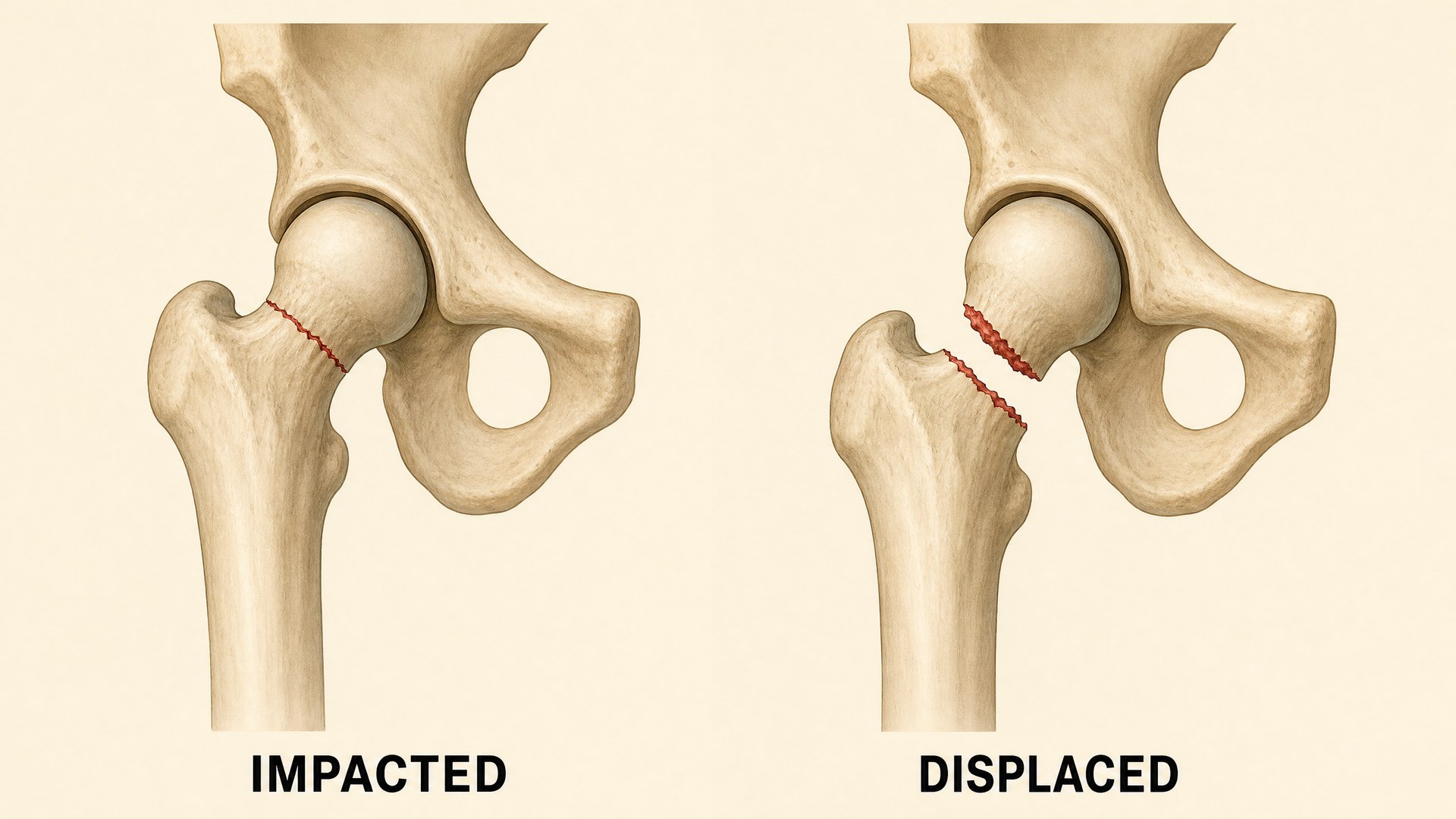
Most hip fractures are obvious. The Merck Manual notes that people with displaced fractures, where the broken ends of the bone have shifted, can't walk, have a lot of pain, and often have that shortened, turned-out leg.
But with an impacted fracture, the broken ends are jammed together. The bone is cracked but still more or less holding. Merck says these patients may be able to walk and have only mild pain and no visible deformity. So a person can get up, limp to the couch and insist they're fine, while carrying a fracture that can shift and become displaced with the next step.
It gets trickier. X-rays occasionally look normal, especially in people with severe osteoporosis. When a doctor still suspects a fracture after a normal X-ray, an MRI is usually the next test.
What this means for you: if someone has hip or groin pain after a fall that doesn't settle, or they're walking differently than they did that morning, they need to be checked the same day. "They walked, so it's not broken" is not a safe rule. Our guide on how to tell if a bone is broken covers the general warning signs for other bones.
Who Is Most at Risk
Hip fractures are mostly a problem of older adults and falls. The CDC reports that nearly 319,000 older people are hospitalized for hip fractures each year, and falls cause 88% of hip fracture emergency visits and hospital stays. More than one in four older adults falls each year, and less than half tell their doctor.
Risk climbs with:
- Age. Bones thin and balance slips as we get older.
- Being a woman. Mayo Clinic says women break a hip about three times as often as men, largely because bone loss speeds up after menopause.
- Osteoporosis. Weaker bones can break from a simple fall from standing height.
- Medications that cause dizziness or drowsiness, plus balance problems and poor vision.
- Low body weight and long periods of inactivity.
Younger adults break hips too, but usually from big forces like a car crash or a fall from a ladder. If that's the situation, see our fall from height first aid guide, since you'll also need to think about the neck and spine.
What to Do If You Think Someone Broke Their Hip
If the person is on the floor and can't get up, or getting up causes sharp hip or groin pain, treat it as a fracture until a doctor says otherwise.
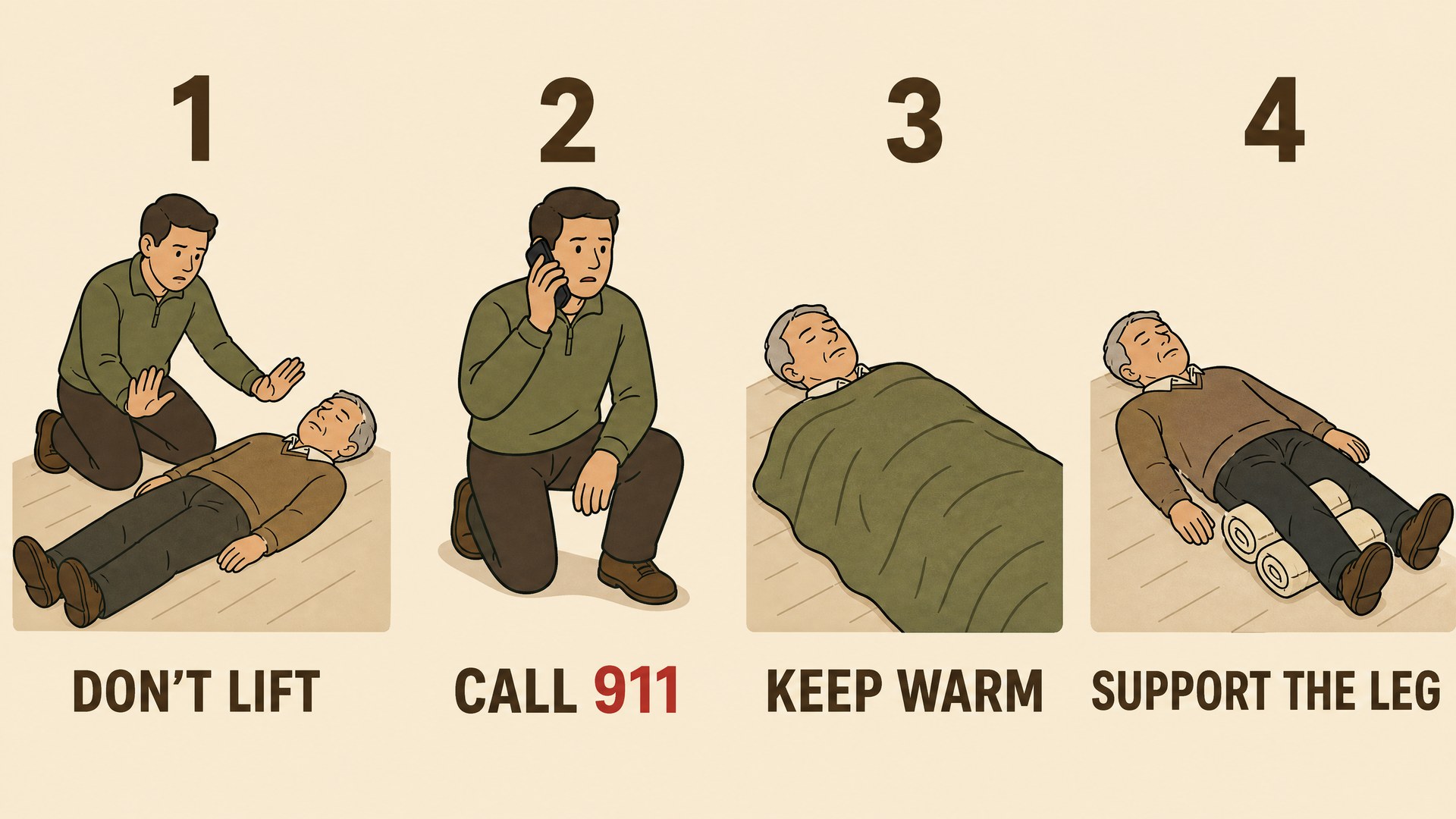
- Don't try to lift them or stand them up. Moving a broken hip hurts, and it can shift the bone. Leave them where they are unless they're in danger (fire, traffic, freezing water).
- Call 911. A suspected broken hip is a good reason for an ambulance. Paramedics have the equipment to move them safely and can give pain relief.
- Check for other injuries. Did they hit their head? Are they on blood thinners? Any confusion, vomiting or a headache that gets worse needs to go into the 911 call. Our guide to concussion warning signs lists what to watch.
- Keep them warm and comfortable. Floors are cold, and older adults lose heat fast. Slide a blanket over them and a folded towel or pillow under their head if it doesn't hurt.
- Support the leg the way they're holding it. Don't straighten it. Rolled towels or pillows along the outside of the leg can keep it from rolling further.
- Hold off on food and drink. A broken hip usually means surgery, often within a day or two, and an empty stomach can help with anesthesia. Small sips of water are a question for the dispatcher or paramedics.
- Gather their medication list. Grab the pill bottles or a written list, their ID and insurance card. If their phone has a medical ID set up, tell the paramedics.
Stay with them. Talk to them. A fall is frightening, and a calm person on the floor next to them helps more than you'd think.
Hip Fracture Symptoms Change Over Time: Why the First Hours Matter
A broken hip isn't usually life-threatening in the first hour. What makes it dangerous is what happens next, especially if the person lies on the floor for hours before anyone finds them.
Doctors call this a "long lie." Lying still on a hard floor can lead to dehydration, pressure sores, low body temperature and muscle breakdown. The longer it goes on, the harder recovery gets.
After the fracture itself, long stretches without moving carry their own risks. Mayo Clinic lists blood clots in the legs or lungs, bedsores, pneumonia and further muscle loss, which raises the chance of another fall. This is why hospitals aim to operate quickly and get patients up and moving soon after. Our guide to blood clot in leg symptoms covers the signs to watch for in the weeks after surgery.
If you have an older parent who lives alone, the long lie is the part to plan for. A phone they keep on them, a medical alert button, or a daily check-in call can turn a 12-hour wait on the floor into a 20-minute one.

After the ER: Recovery and Preventing the Next Fall
Most hip fractures are treated with surgery, either to pin the bone or to replace part of the joint. Physical therapy often starts within a day. Recovery takes months, and many people need a walker or cane for a while.
Once the fracture is dealt with, the work shifts to stopping the next fall:
- Ask the doctor to review medications that cause dizziness.
- Get a bone density test and talk about osteoporosis treatment.
- Clear floors of loose rugs and cords, add grab bars in the bathroom and night lights in the hallway.
- Wear shoes with grip around the house instead of socks.
- Keep up with balance and strength exercises.
A broken hip is the kind of emergency where the most useful thing you can do is stay calm, keep the person still and get help on the way. It also tends to happen on the same icy steps and slick bathroom floors that cause cuts, scrapes and head bumps. We built The 1stHour Trauma Kit so you have what you need for those first minutes, before the ambulance pulls up. See what's inside The 1stHour Trauma Kit and keep one where your family can find it.
This content is for informational purposes only and does not constitute medical advice. If you think someone has broken a hip, call 911 or seek emergency care.


