Dislocated Shoulder First Aid: What to Do Before You Get to the ER
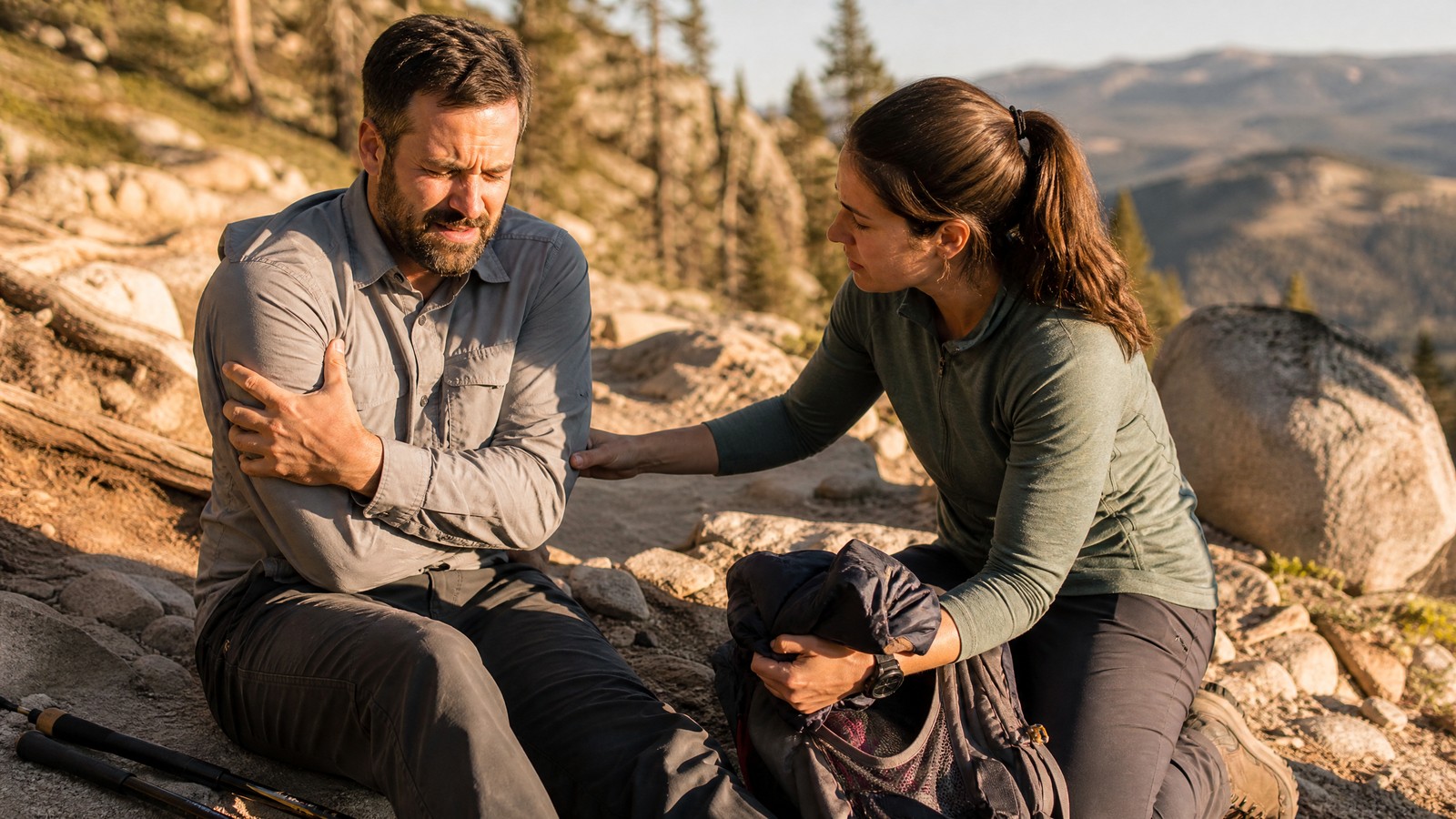
You went down hard on a trail, a ski slope, or a ladder, and now your arm hangs wrong. The shoulder looks squared off, and any movement sends a bolt of pain through it. Dislocated shoulder first aid comes down to a few calm moves: stop the arm from moving, check the hand, ice the joint, and get real care fast. Here is how to do each one, and what to leave alone.
How to Tell If Your Shoulder Is Dislocated
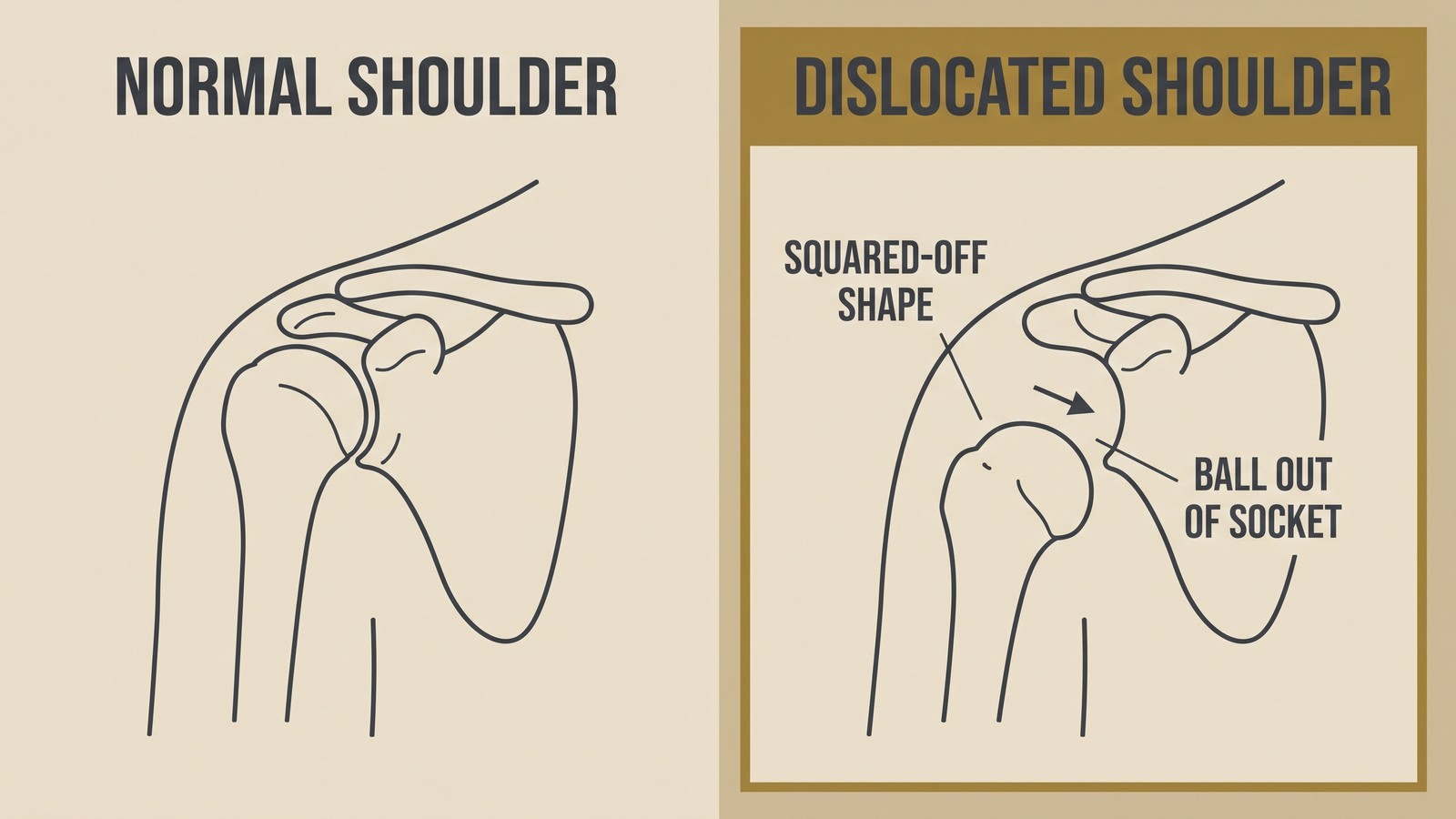
A dislocated shoulder means the ball of the upper arm bone has slipped out of its socket. The Mayo Clinic lists the signs: a joint that looks deformed, trouble moving it, sudden and severe pain, and swelling. Bruising and muscle spasms are common, and the spasms make the pain worse.
Look for a few things:
- A shoulder that looks squared off, with a visible bump or dent where the round contour should be.
- An arm held away from the body, with the other hand cradling it.
- Numbness, tingling, or weakness in the arm, hand, or fingers.
- Pain that jumps when you try to rotate or lift the arm.
A partial dislocation, called a subluxation, is harder to read. The bones may slide back on their own and the shoulder can look nearly normal, though it stays sore. Treat it the same way and get it checked.
Dislocated Shoulder First Aid: The Steps
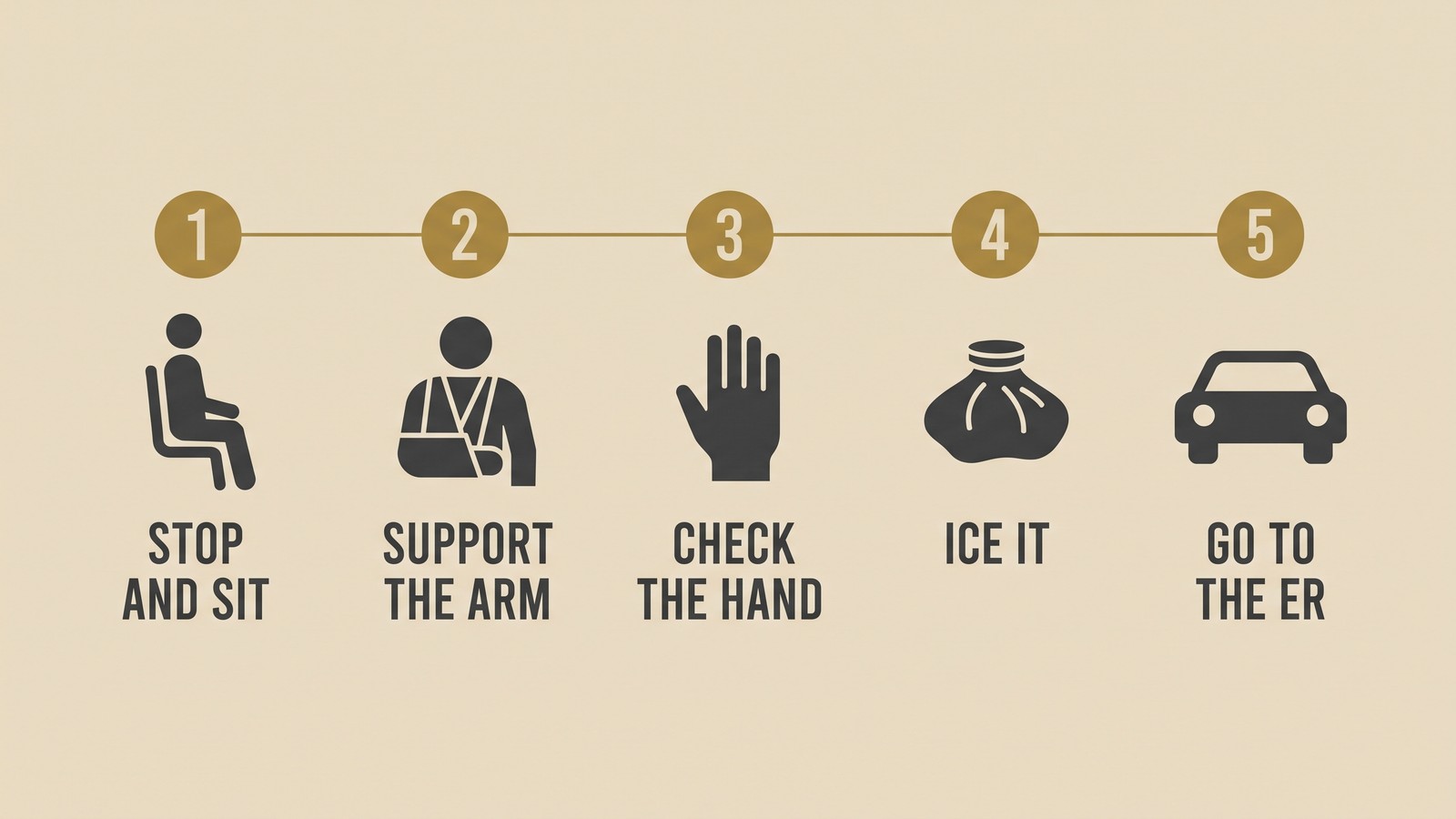
You do not need gear for this, though a sling and an ice pack make it easier. Work through these in order.
- Stop moving. Sit down or lie back so you do not fall again. Pain and adrenaline can make people faint.
- Leave the arm in the position you found it, or the one that hurts least. Do not try to straighten it.
- Support it. Let the arm rest close to your body and cushion it with a rolled jacket, a folded towel, or your other hand. If you have a sling, put it on. Our guide to making an arm sling from what you already have covers the improvised version.
- Check the hand. Look at the color of the fingers, feel whether they are warm, and ask if the person can feel a light touch. Recheck every ten minutes.
- Ice it. Wrap ice or a cold pack in a thin cloth and hold it on the front and top of the shoulder. Keep it on for about 15 to 20 minutes at a time, never directly on bare skin. Ice limits swelling and eases pain.
- Skip food and drink if you can. If surgery or sedation is needed, an empty stomach helps, and you will not know that until the ER decides.
- Get to the ER. A driver is better than driving yourself. Arm pain with one hand on the wheel is a bad combination.
Over-the-counter pain relievers such as ibuprofen can take the edge off if you have no reason to avoid them. They do not replace getting the joint put back.
Why You Should Never Pop It Back In Yourself
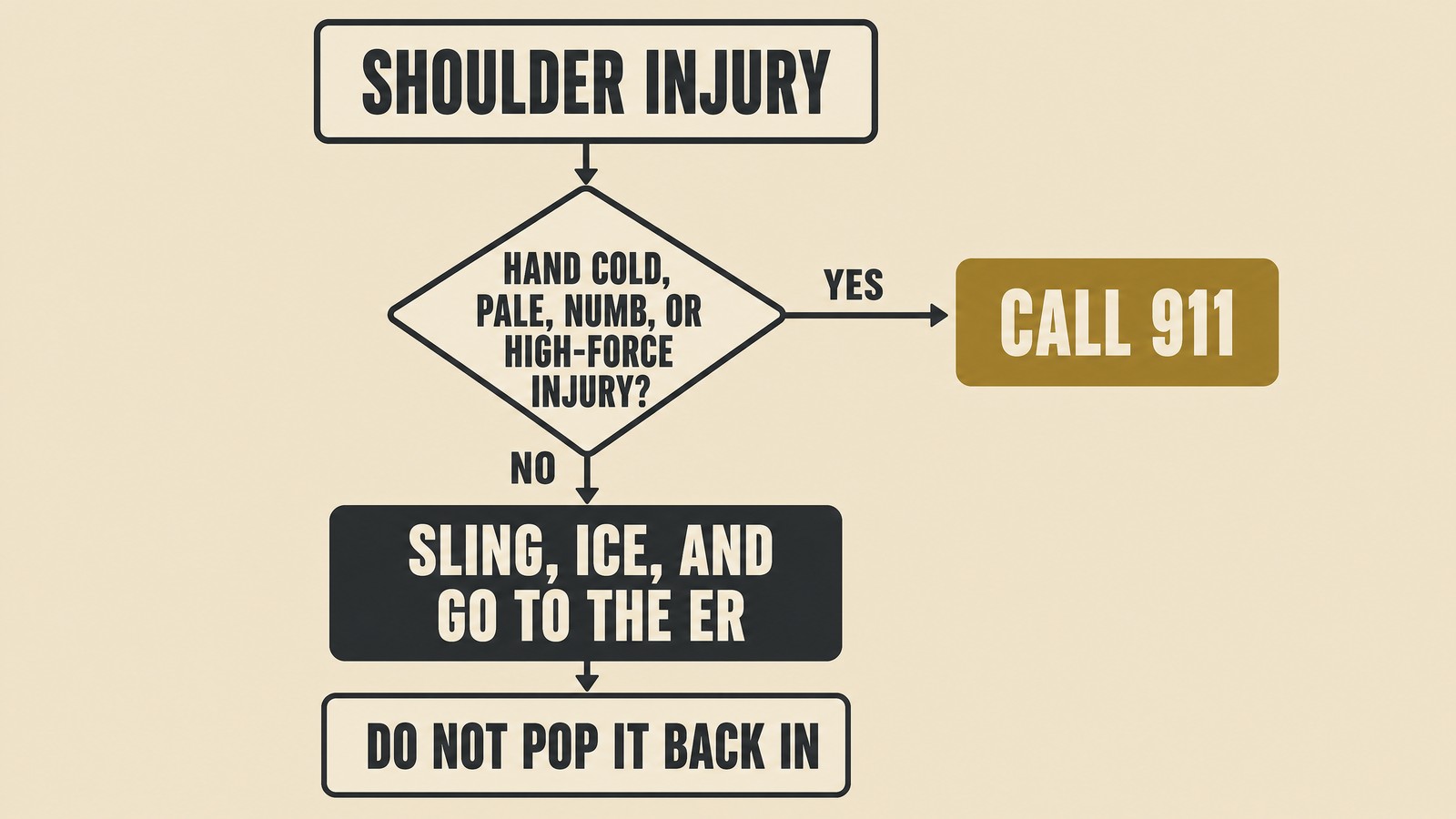
This is the part people want to skip, and it matters most. You will see videos of someone rolling a shoulder back into place. Do not copy them. The Mayo Clinic is blunt on this point: do not move the joint or force it back, because that can damage nearby nerves, blood vessels, and soft tissue. The Cleveland Clinic says only a trained health care provider should move the shoulder.
Think about what sits right behind that joint. A bundle of nerves runs to the arm and hand, and a major artery runs alongside. A bone out of place may already be pressing on them. A wrong twist can turn a fixable injury into a lasting one. There can also be a small fracture next to the socket that you cannot see or feel, and forcing the joint can make it worse.
At the ER, the team usually gives pain medicine, sometimes a sedative, and moves the arm slowly in a set pattern. It is quick and often painless when done right. Once the ball is back in the socket, the severe pain usually eases fast.
When to Call 911 for a Dislocated Shoulder
Most people with a dislocated shoulder can get a ride to the ER. Some cannot, and these signs change the plan. OrthoInfo, from the American Academy of Orthopaedic Surgeons, notes that an artery injury can leave the hand cool and white or purple, and that nerve injury can leave the arm numb and unable to move.
Call 911 if you see any of these:
- The hand or fingers are cold, pale, white, purple, or blue.
- No feeling in the arm or hand, or the arm will not move at all.
- The injury came from a car crash, a fall from height, or another high-force event, or there may be injuries to the neck, back, or head.
- The person is confused, faint, or short of breath.
- The skin is broken over the joint, or bone is showing.
- You are far from help and cannot get out on your own.
After a hard fall, a shoulder may not be the only thing that is hurt. Our post on falls from a ladder or roof covers how to check for the injuries that matter more than a sore arm.
What Happens at the ER and After
Expect an X-ray first. It confirms the dislocation and shows whether anything is chipped or broken. Then the shoulder is put back, a procedure called a reduction. After that you will wear a sling for a few weeks, and the Cleveland Clinic says full recovery usually takes a few months, including physical therapy.
Most people do not need surgery. It becomes an option when ligaments or other tissue are badly torn, or when the shoulder keeps coming out. A first dislocation raises the odds of a second. Shoulders are the most commonly dislocated joint, with roughly 10 out of 100,000 people in the US dislocating one each year, and the risk is highest between ages 15 and 30. Some studies found that more than 90 percent of athletes under 25 who dislocated a shoulder in a contact sport re-injured it later.
The practical takeaway: do the rehab. Going back to the climbing gym or the ski slope early is the usual way a second dislocation happens.
Dislocated Shoulder vs. Broken Collarbone or Separated Shoulder
Three injuries get mixed up after a fall onto the shoulder. A dislocated shoulder is the ball slipping out of the socket. A broken collarbone is a cracked bone along the top front of the shoulder, often with a bump you can see and feel. A separated shoulder is a torn ligament where the collarbone meets the shoulder blade, and the joint itself stays in place.
You cannot reliably tell them apart at the roadside, and you do not have to. The first aid is the same: support the arm, ice it, and get an X-ray. If you want to know more about the other injuries, see our guides on broken collarbone first aid and how to tell if a bone is broken. If you are far from care and need to immobilize more than the shoulder, how to splint a broken bone shows the method.
Injuries like this happen on the trail, the slope, and the weekend project, not in a clinic. Keep a sling, cold packs, and trauma supplies in the pack so the first hour goes your way. See what's inside The 1stHour Trauma Kit, built for the moments before help arrives.
This content is for informational purposes only and does not constitute medical advice. If you or someone else has a cold or numb hand, severe pain, or a high-force injury, call 911 or go to the nearest emergency room.


