Broken Collarbone Symptoms: First Aid After a Fall or Sports Hit
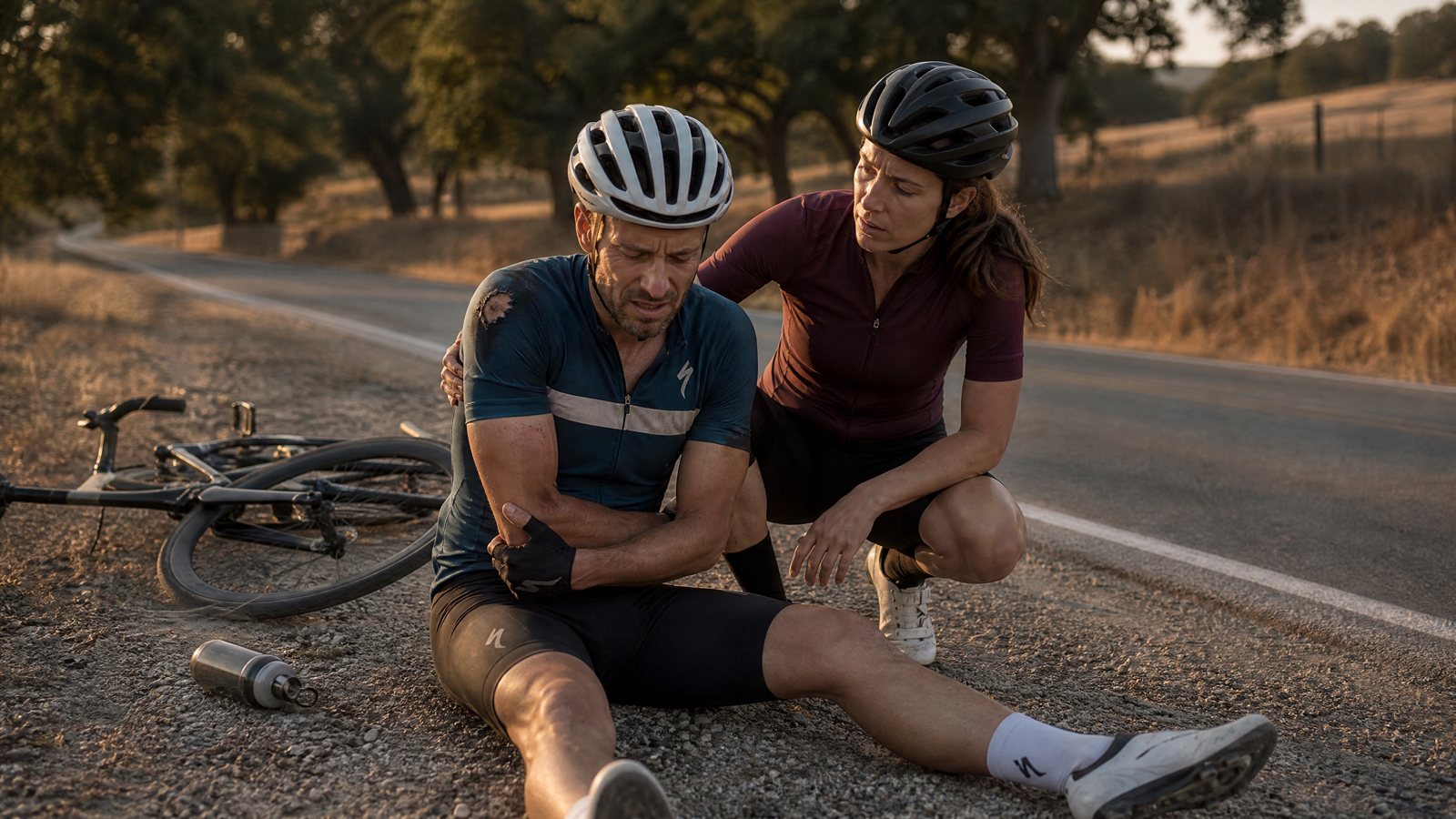
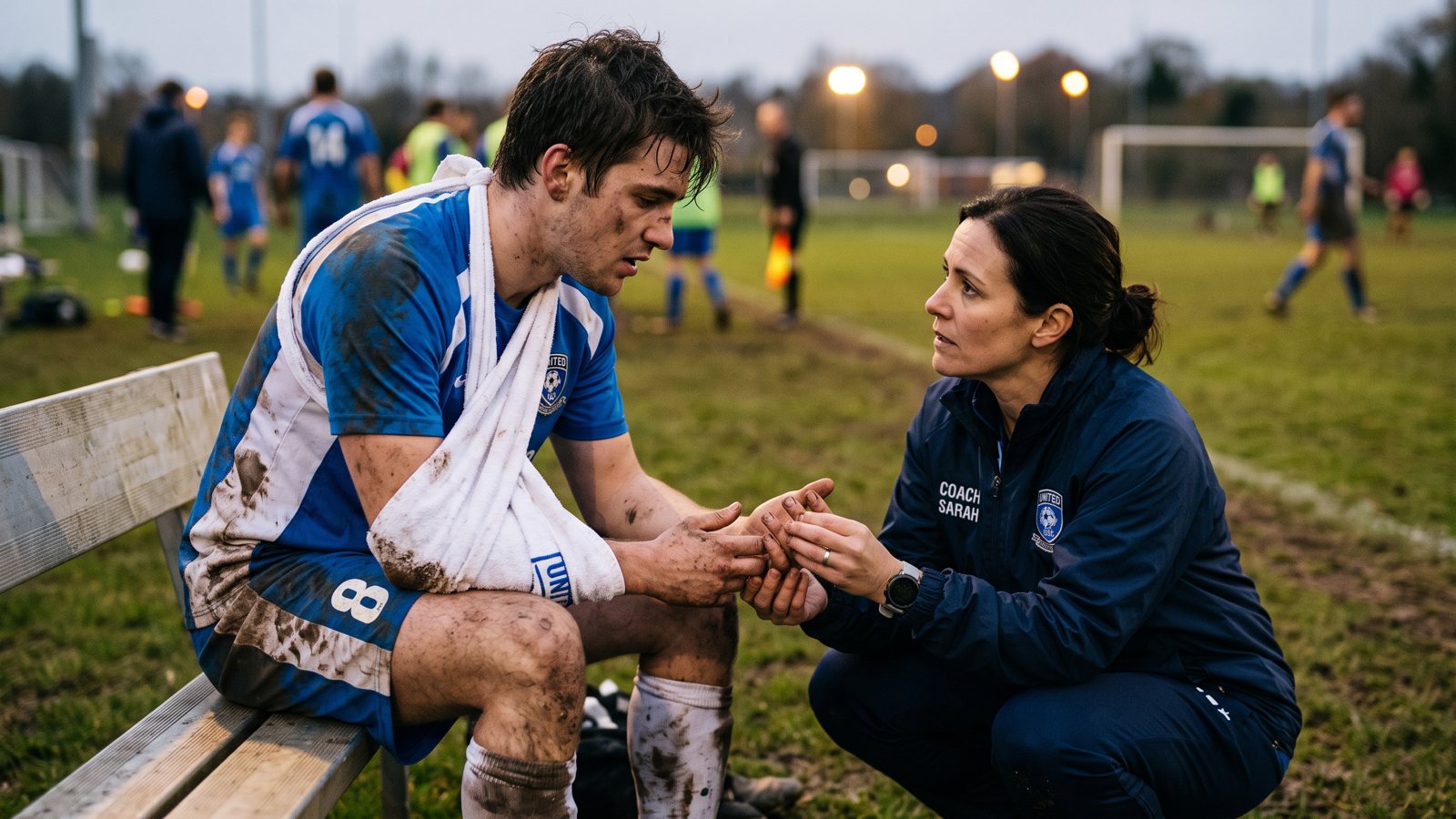
Someone goes over the handlebars, takes a hard hit on the field, or slips on the stairs and lands on their shoulder. They sit up holding one arm tight against their chest and won't let anyone touch it. That posture tells you a lot.
The collarbone is one of the most commonly broken bones there is. It sits right under the skin, it takes the force of almost every fall onto the shoulder, and it breaks more often in kids and teens than in adults. The good news is that most breaks heal well without surgery. What you do in the first hour decides how comfortable the next few weeks are, and whether you catch the rare break that needs more than a sling.
Broken Collarbone Symptoms to Look For
A broken collarbone rarely hides. The person usually knows right away that something is wrong, and they often heard or felt a snap when it happened. Here's what to look for:
- Sharp pain along the collarbone that gets much worse when they move the arm or shoulder
- A shoulder that sags down and forward compared to the other side
- A bump or step along the bone, sometimes an obvious deformity
- Swelling, bruising, or tenderness right over the collarbone
- A grinding or crackling feeling when they try to raise the arm
- Not being able to lift the arm at all because of pain
The "dropped shoulder" look is the one most people miss. Stand in front of the person and compare both sides. If one shoulder sits lower and rolls forward, and they're cradling that arm, treat it as a break until an X-ray says otherwise.
Kids who can't explain what hurts will often just refuse to move the arm. A toddler who stops using one arm after a fall needs to be seen, even without much swelling.
If you're not sure whether any bone is broken or just badly bruised, our guide on how to tell if a bone is broken walks through the general signs.
How a Collarbone Usually Breaks
The collarbone, or clavicle, is the long, thin bone that runs from the top of the breastbone out to the tip of the shoulder. It's the only bony link between your arm and the rest of your skeleton. Every time you catch yourself on an outstretched hand or land on your shoulder, that force travels straight into it.
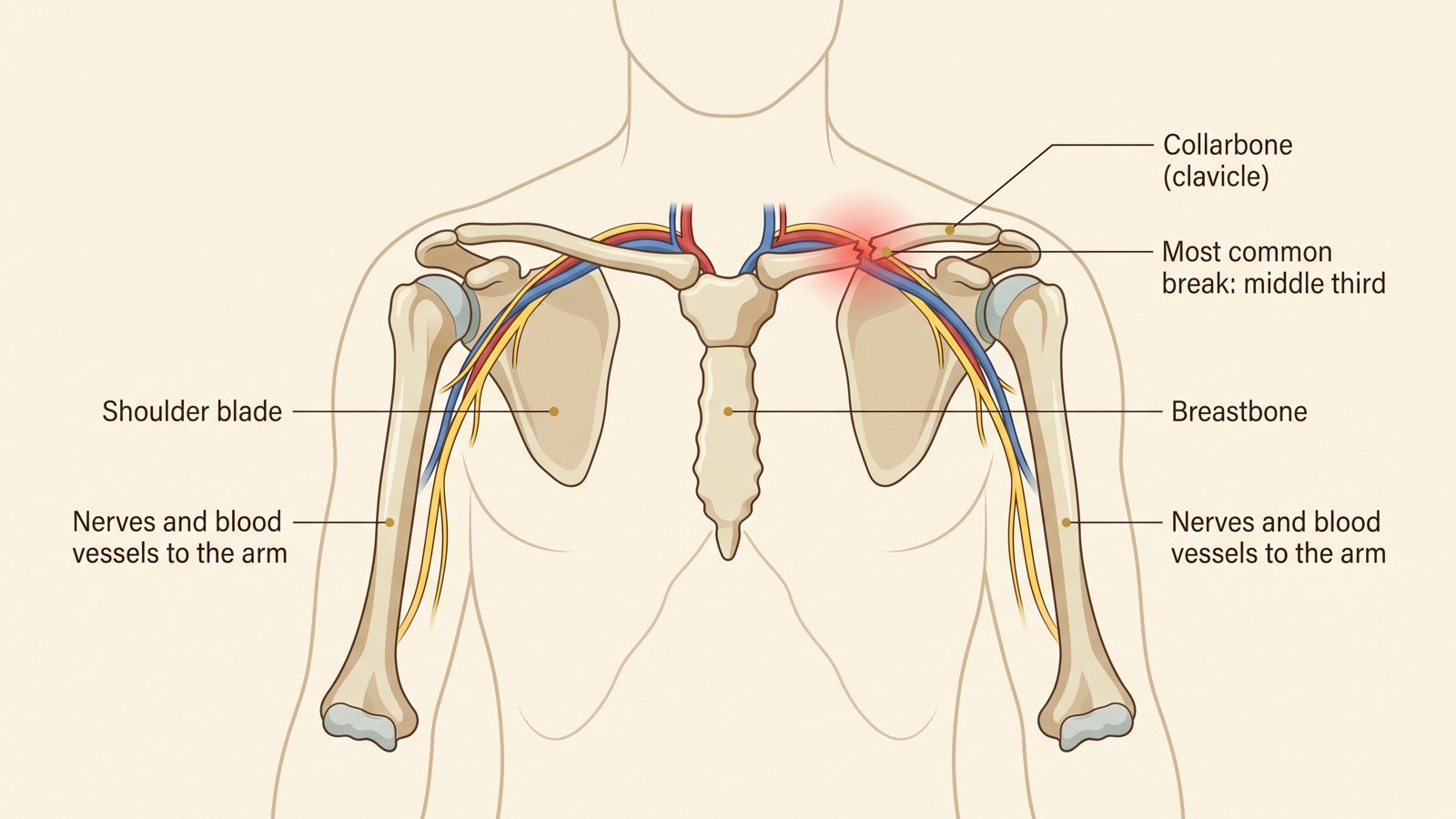
According to OrthoInfo from the American Academy of Orthopaedic Surgeons, collarbone breaks make up about 5% of all adult fractures. Most happen in the middle third of the bone, the thinnest part. The common causes are simple:
- A fall straight onto the side of the shoulder
- A fall onto an outstretched arm
- A direct hit in football, hockey, rugby, or wrestling
- Bike, motorcycle, and car crashes
Cyclists are a classic case. The bike stops, the rider doesn't, and the shoulder hits the pavement first.
The bone also sits right on top of major nerves and blood vessels that feed the arm. That's rarely a problem, but it's the reason you always check the hand, which we'll get to below.
Broken Collarbone First Aid in the First Hour
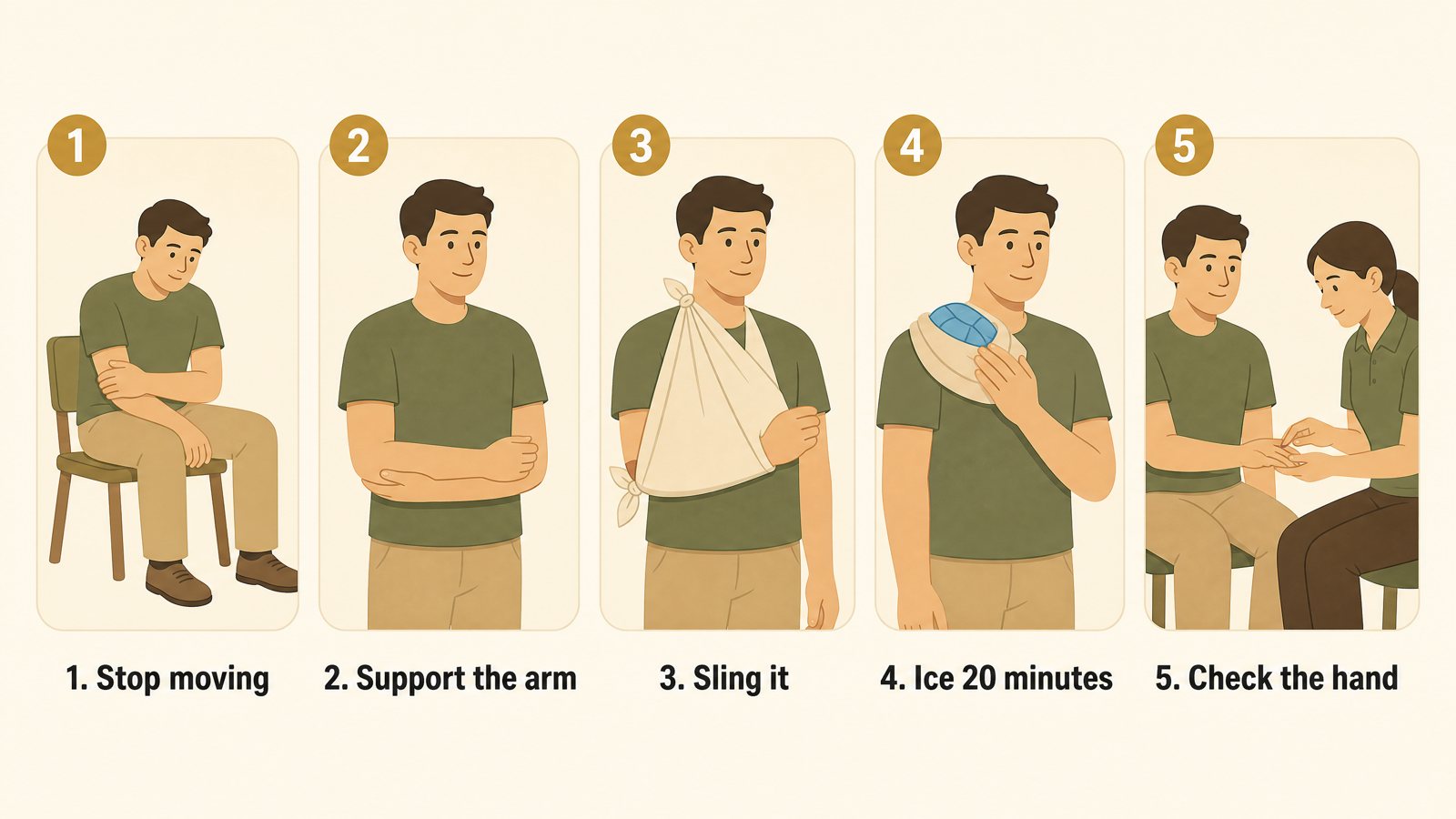
You can't set a collarbone in the field, and you shouldn't try. Your job is to keep the arm still, keep the pain down, and get the person to an X-ray. Here's the order that works:
- Stop the activity. No "shaking it off" and no going back into the game. Moving on a broken collarbone can shift the pieces further apart.
- Check for bigger problems first. If it was a high-speed crash or a big fall, look for head, neck, or chest injuries before you focus on the shoulder. If you suspect a neck injury, keep them still and call 911.
- Let them hold the arm where it's comfortable. Most people naturally hold the forearm across the belly with the elbow bent. Don't force it straight or pull it out to the side.
- Support the arm in a sling. A triangular bandage, a folded towel, or a jacket works. The sling should hold the elbow bent at about 90 degrees with the forearm across the body. Our step-by-step on how to make an arm sling covers several ways to do it with what you have.
- Ice it. Wrap an ice pack or a bag of frozen peas in a thin towel and hold it over the collarbone for about 20 minutes at a time.
- Check the hand. Feel for warmth, ask about tingling, and have them wiggle their fingers. Do this before and after you put on the sling.
- Get an X-ray the same day. An urgent care with X-ray or an ER can confirm the break and see whether the pieces have moved out of line.
Over-the-counter pain relievers like acetaminophen or ibuprofen are fine for most adults if they have no reason to avoid them. For kids, follow the dosing on the label for their weight.
Sling or Figure-Eight Brace?
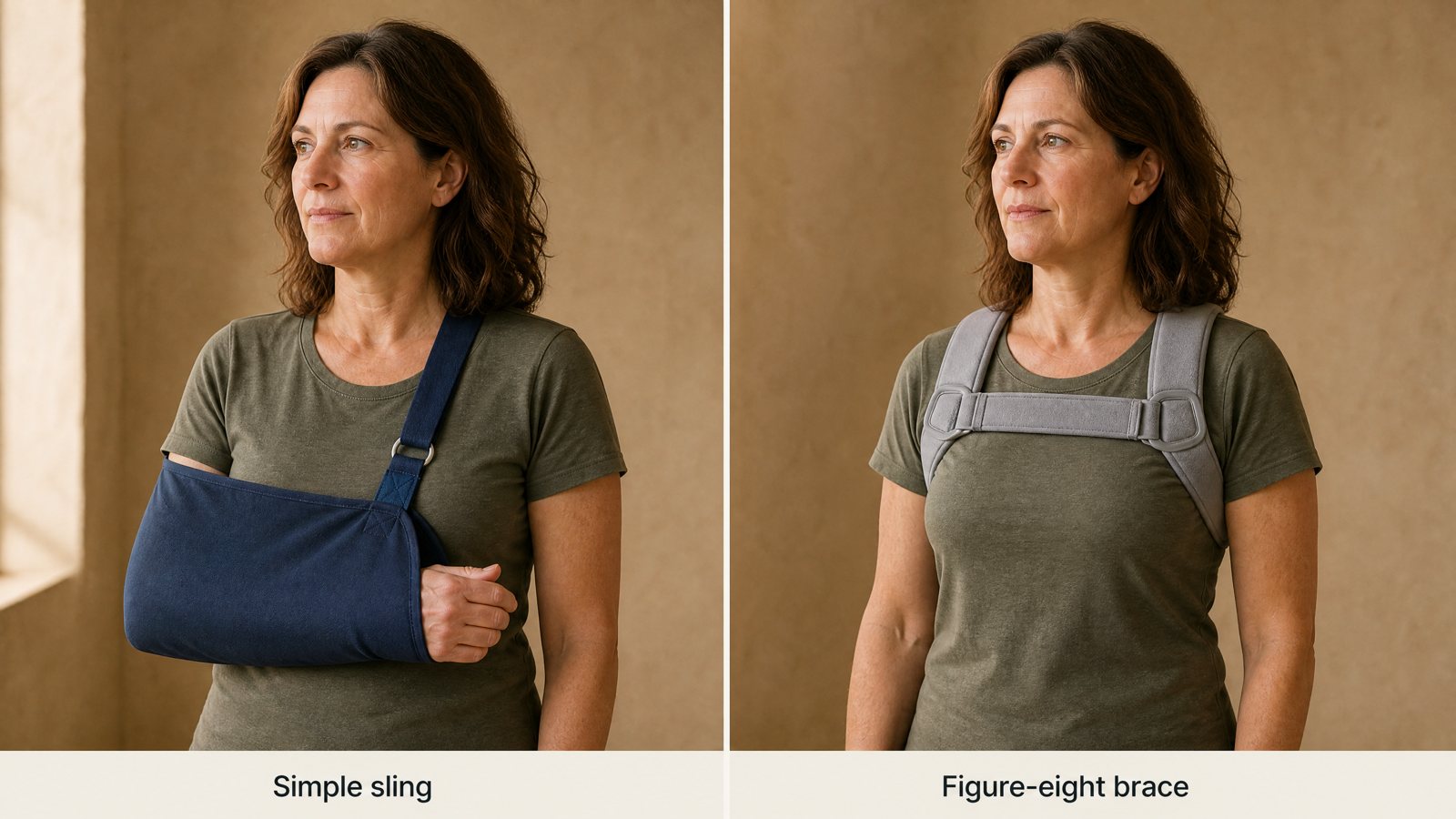
Some people remember the old figure-eight brace, a strap that loops around both shoulders and pulls them back. It was the standard for years, and you'll still see it in older first aid books.
Today, most orthopedic surgeons start with a simple sling. The AAOS clinical practice guideline on clavicle fractures recommends a sling over a figure-eight brace for breaks treated without surgery. Studies found healing is about the same with either one, and people find the sling more comfortable and easier to live with.
For first aid, that makes things easier. You don't need special gear. Any sling that holds the arm snug against the body and takes the weight off the shoulder does the job until a doctor decides on the long-term plan.
A few sling tips that make a real difference:
- Keep the hand slightly higher than the elbow so the fingers don't swell.
- Pad the knot where it sits on the neck. That spot gets sore fast.
- Leave the fingers showing so you can keep checking color and warmth.
Check the Hand Before and After You Sling It
Most broken collarbones don't injure anything else. Once in a while, a sharp end of the bone presses on the nerves or blood vessels that run just underneath it. Mayo Clinic advises getting immediate care for any numbness or coldness in the arm or hand.
Here's a quick check that takes less than a minute:
- Color. Compare both hands. The injured side shouldn't look pale, gray, or blue.
- Warmth. Touch both hands at the same time. One shouldn't feel noticeably colder.
- Feeling. Lightly touch each fingertip and ask if it feels normal. Ask about pins and needles.
- Movement. Have them wiggle their fingers and make a gentle fist.
Do this again after the sling goes on, and every so often on the drive in. A sling tied too tight can cause the same warning signs, so loosen it first if the hand changes. If the signs don't improve, don't wait.
When Broken Collarbone Symptoms Mean the ER, Not Urgent Care
Most collarbone breaks can go to an urgent care that has X-ray, or to an orthopedic walk-in clinic. Go straight to the ER, or call 911, if you see any of these:
- Numbness, tingling, weakness, or a cold, pale hand on the injured side
- A bone end pushing up the skin like a tent, or bone breaking through the skin
- Shortness of breath or chest pain, which can point to a lung or rib injury
- A high-energy injury like a car crash, a fall from a ladder, or a hard motorcycle wreck
- Signs of a head injury, such as confusion, vomiting, or a bad headache
Big falls and crashes rarely injure just one thing. If the person also has pain when they breathe, check our guide on broken rib first aid. If they hit their head, review the concussion warning signs before you decide to drive them yourself. For falls from a roof or ladder, our post on first aid after a fall from height covers what to check before anyone moves.
Mayo Clinic also notes that waiting too long to get a broken collarbone treated can lead to poor healing. Even if the pain settles down, get it looked at.
How Long a Broken Collarbone Takes to Heal
Healing depends a lot on age. Young kids often heal in a few weeks. Teens and adults usually take longer, and OrthoInfo notes that most people get back to their regular activities within about 3 months. Smoking and diabetes can slow it down.
Most people wear the sling for the first few weeks, then start gentle shoulder motion when the doctor clears it. Moving the hand, wrist, and elbow early helps keep the joints from getting stiff. Going back to contact sports or heavy lifting too soon can shift the bone before it's solid.
As the bone knits, a firm bump often forms over the break. That's normal. It usually shrinks with time, though a small bump may stay for good.
Surgery is only needed for a minority of breaks, usually when the pieces are badly out of line or overlapping. A doctor makes that call after the X-ray. Your part is getting the arm supported and the person seen.
A broken collarbone happens fast, on a trail, at a practice, or at the bottom of the stairs. Having first aid supplies in one place, instead of scattered across the house and the car, makes that first hour easier on everyone. See what's inside The 1stHour Trauma Kit and decide if it belongs in your bag, your trunk, or your garage.
This content is for informational purposes only and does not constitute medical advice. If you suspect a broken bone, get medical care promptly. Call 911 for numbness, a cold or pale hand, bone through the skin, trouble breathing, or any serious crash or fall.


