Chimney Fire: What to Do Right Now and How to Prevent the Next One
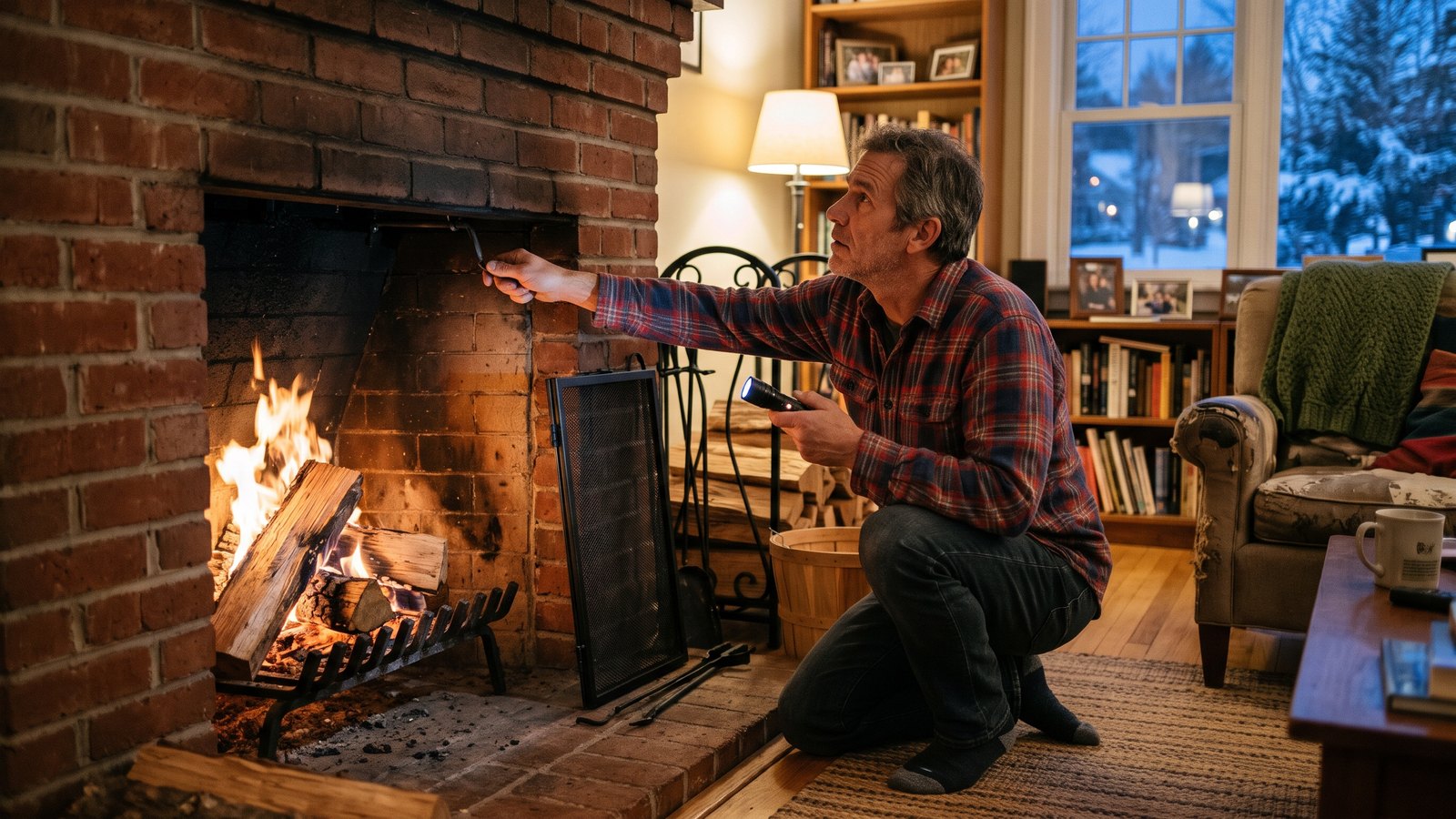
Most people who have a chimney fire describe the sound first. A low rumble that builds into a roar, like a freight train passing through the living room. Others hear loud cracking and popping from inside the wall. Either way, you have very little time to think, so it helps to know the plan before the fireplace is ever lit. This guide covers how to recognize a chimney fire, exactly what to do in the first minutes, what not to do, and the habits that keep creosote from building up in the first place.
How to Tell You Have a Chimney Fire
Some chimney fires are loud and obvious. The Chimney Safety Institute of America (CSIA) says homeowners often describe a low rumbling sound that reminds them of a freight train, along with dense smoke and an intense, hot smell. Flames or thick smoke may shoot from the top of the chimney.
Fire departments list the same warning signs. Watch and listen for:
- A loud roaring noise, or popping and cracking from the chimney or stovepipe
- Black smoke, sparks, or flames coming out of the top of the chimney
- Ash and burning debris landing on the roof or yard
- A wood stove or stovepipe that is vibrating, glowing, or much hotter than normal
- A strong smoke smell in other rooms or the attic
- A chimney wall that feels hot in a room away from the fireplace
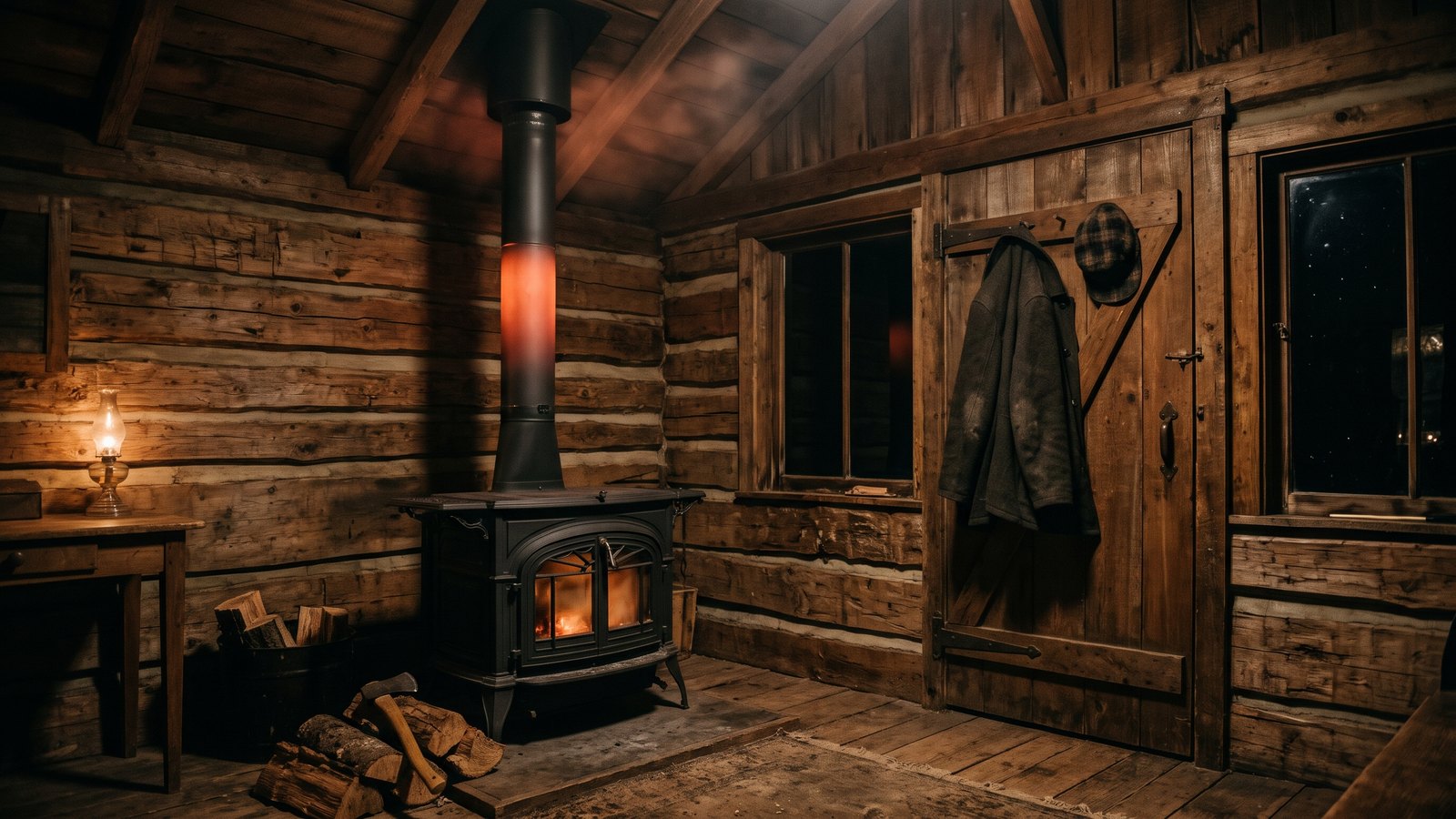
The Crystal Lakes Fire Department points out that it can be hard to tell at first whether a chimney fire has started. If you are not sure, treat it as one. A false alarm costs you a little embarrassment. A real chimney fire left alone can spread into the walls, attic, or roof.
Not every chimney fire announces itself. CSIA says most chimney fires go undetected. Slow-burning ones do not get enough air or fuel to be dramatic, but they still reach temperatures high enough to damage the chimney and nearby parts of the house. That is one reason annual inspections matter, which we cover below.
Chimney Fire: What to Do Right Now
If you hear the roar, see sparks from the top of the chimney, or notice a stovepipe glowing, act in this order:
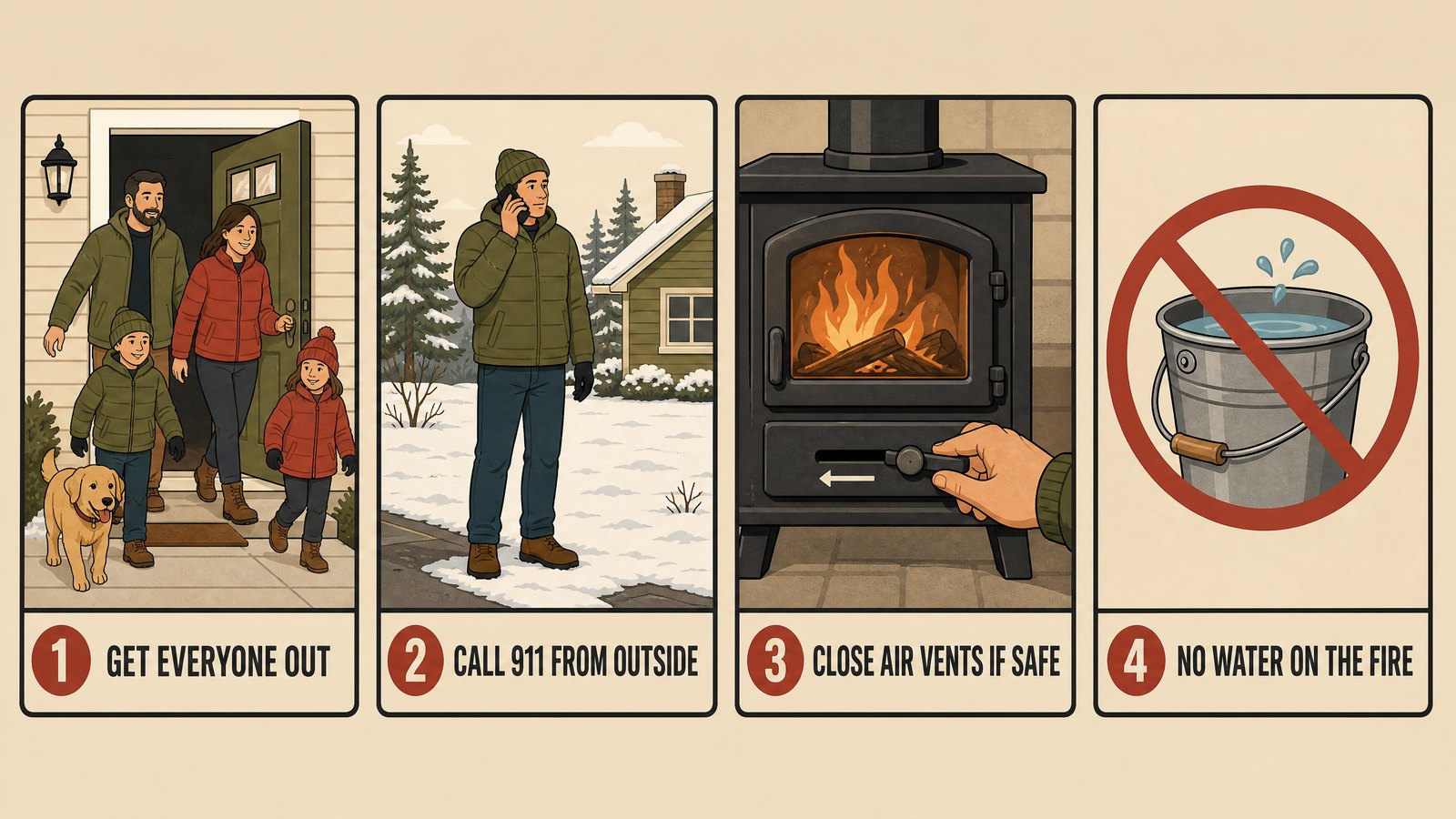
- Get everyone out, including pets. The Crystal Lakes Fire Department warns that a chimney fire can become a house fire with frightening speed. Close the door to the room on your way out if you can.
- Call 911. The Ebbetts Pass Fire District says to call 911 before you try to put anything out. Calling from outside is safer.
- Cut the air supply only if it takes seconds and you are not in danger. Fire departments advise closing the damper or the stove's air intake vents if it is safe, and keeping the door of an airtight stove shut. Less air means a weaker fire. Do not stay in the house to do this.
- Stay out and wait for firefighters. Meet them and tell them where the fireplace or stove is and whether anyone is still inside.
Call the fire department even if the fire seems to die down on its own. The Ebbetts Pass Fire District says to call 911 for any chimney or flue fire, even one that looks under control, because the fire may already have reached the walls, attic, or roof. The Crystal Lakes Fire Department adds that crews can use a thermal imaging camera to find heat hiding behind walls that you cannot see or feel.
If you already have a written house fire escape plan, this is the moment it pays off. Everyone knows the exits and the meeting spot, and nobody goes back inside.
What Not to Do During a Chimney Fire
A few instincts make a chimney fire worse.
Do not throw water into the firebox or down the chimney. The Ebbetts Pass Fire District says never use water, because a hot stove can crack. Hot masonry and flue tiles can also crack from sudden cooling, and the steam can burn you.
Do not climb onto the roof. A roof at night, in winter, near a burning chimney is a bad place to be. Let firefighters check it.
Do not open the stove door to see what is happening. Opening an airtight stove feeds the fire more air.
Do not go back inside for belongings. Smoke spreads faster than people expect.
Some fire departments mention chimney fire suppressant products that you toss into the firebox, and a small fire in a non-airtight stove might be slowed with a chemical extinguisher. If you choose to try either, call 911 first, only do it with a clear exit behind you, and leave if it does not work right away. Our guide on how to use a fire extinguisher covers the PASS method. If anyone gets burned, start cool running water on the burn and follow our burn first aid steps while you wait for help.
After a Chimney Fire: What to Do Before You Light Another
Do not use the fireplace or stove again until a professional has looked at it. CSIA recommends calling a certified chimney sweep for an evaluation any time you think a chimney fire has happened. The repair might be a few flue tiles, a new liner, or in bad cases a rebuilt chimney.
The damage is often hidden. According to CSIA, chimney fires in masonry chimneys can reach about 2,000 degrees Fahrenheit, hot enough to melt mortar, crack tiles, and make liners collapse. Those cracks can give the next fire a path to the wooden frame of your house. CSIA also says a factory-built metal chimney damaged by a chimney fire should not be used again and must be replaced.
Signs a sweep looks for after a suspected fire include puffy or honeycombed creosote, a warped damper or metal chimney parts, cracked or collapsed flue tiles, a discolored rain cap, creosote flakes on the roof or ground, and smoke leaking through mortar joints. If you spot any of these, even without remembering a dramatic fire, book an inspection.
Smoke and soot inside the house also mean it is a good time to check your alarms. Test your smoke alarms, and know what to do if your carbon monoxide alarm goes off. A cracked flue can leak carbon monoxide into the house long after the fire is out.
Why Chimney Fires Start: Creosote
Almost every chimney fire comes back to creosote. CSIA explains that it forms when smoke cools and condenses on the inside of the flue. It can be crusty and flaky, sticky and tar-like, or shiny and hard, and it is highly combustible. A single chimney often has all three kinds.
The Crystal Lakes Fire Department describes how creosote goes from flaky and easy to remove to something close to concentrated fuel. A spark or enough radiant heat can ignite it, and once a chimney has caught fire it can be hard to put out.
CSIA names three conditions that speed up creosote buildup:
- Restricted air. Closing glass doors, not opening the damper wide enough, or shutting the stove's air inlets too soon or too far.
- Unseasoned wood. Wet wood burns cooler, so the smoke condenses more.
- A cool chimney. Overloading the firebox to make a fire last all night keeps temperatures low and smoke lingering. Uninsulated chimneys run cooler too.
How to Prevent a Chimney Fire
CSIA puts it simply: clean chimneys don't catch fire. Prevention is mostly a few habits and one appointment a year.
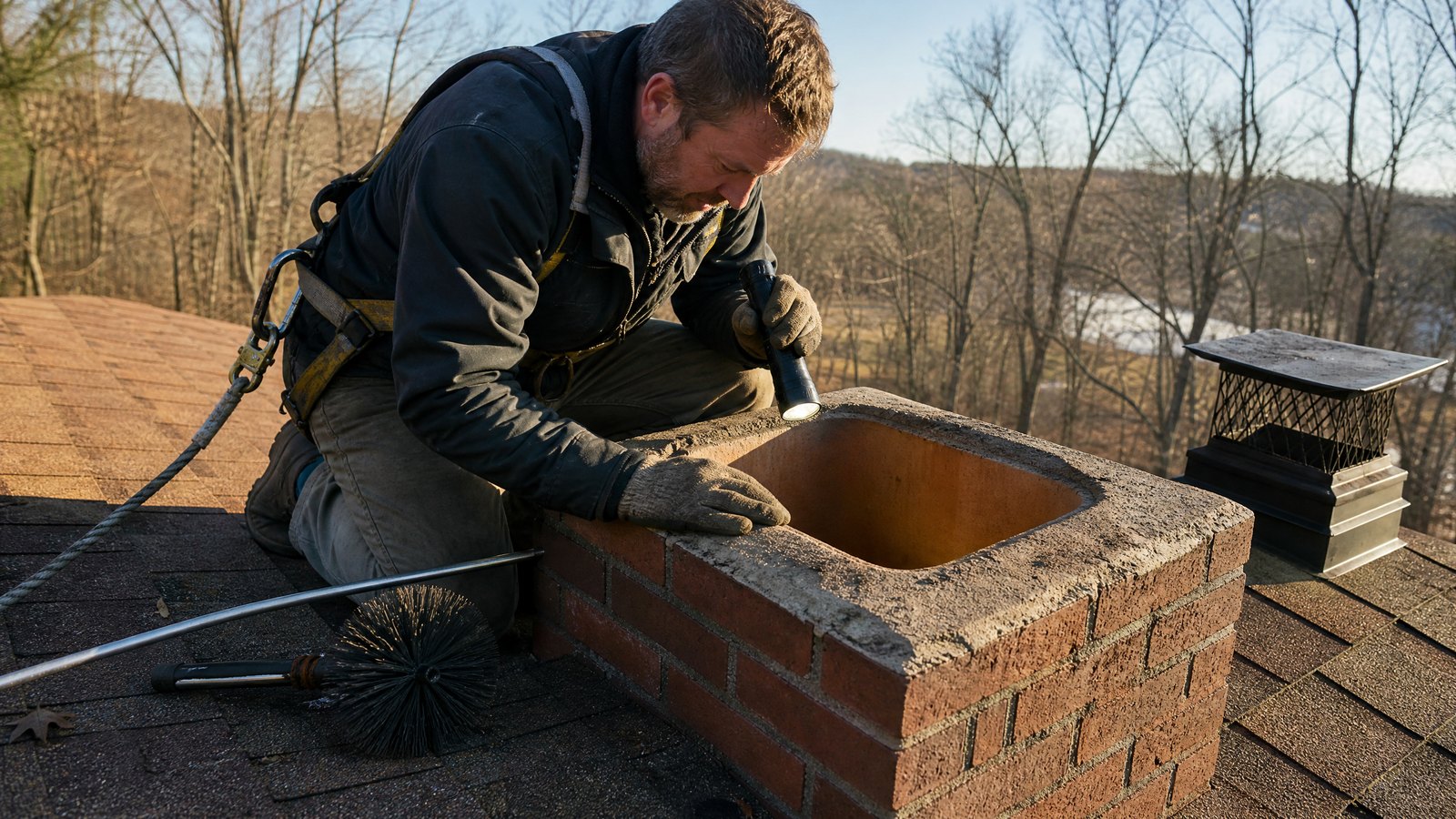
Get an annual inspection. CSIA recommends a yearly inspection by a certified chimney sweep, and the Crystal Lakes Fire Department strongly recommends annual cleaning and inspection. The department also notes that creosote-removing logs and sprays are not a substitute for a real cleaning.
Burn seasoned wood. The Crystal Lakes Fire Department recommends letting firewood dry for at least six months. Seasoned wood is lighter, often has cracks on the ends, and sounds hollow when two pieces knock together. Skip trash, cardboard, and wrapping paper.
Build small, hot fires. The same department says to build hot, clean-burning fires instead of slow, smoldering ones. Open the damper before you light, keep the stove's air intake at least partly open, and warm the flue first with a bit of kindling or newspaper until smoke rises straight up. If the fire smolders or the glass on the stove door soots up fast, it is not burning hot enough.
Keep the chimney top in good shape. The Ebbetts Pass Fire District lists loose or missing caps and screens, cracks, and loose mortar as ways fire can escape the chimney. Ask your sweep to check all of them.
Put the fire out before bed. Use a screen in front of an open fireplace, keep the hearth clear, and never leave a fire burning when you go to sleep or leave the house. The same rule applies to other heat sources, and our space heater safety tips cover the rest of the winter list.
If you lean on your fireplace or wood stove during power outages, plan for the rest of that situation too. Our guide to portable generator safety explains how to run a generator without bringing carbon monoxide into the house.
A fireplace should be the best part of a cold night. Knowing the warning signs and the first steps takes five minutes, and the first hour of any emergency goes better when you are ready for it. See what's inside The 1stHour Trauma Kit, built for the moments before help arrives.
This content is for informational purposes only and does not constitute medical or safety advice. In an emergency, call 911 immediately. Follow your stove or fireplace manufacturer's instructions and guidance from your local fire department.


