Space Heater Safety Tips: How to Use One Without Starting a Fire
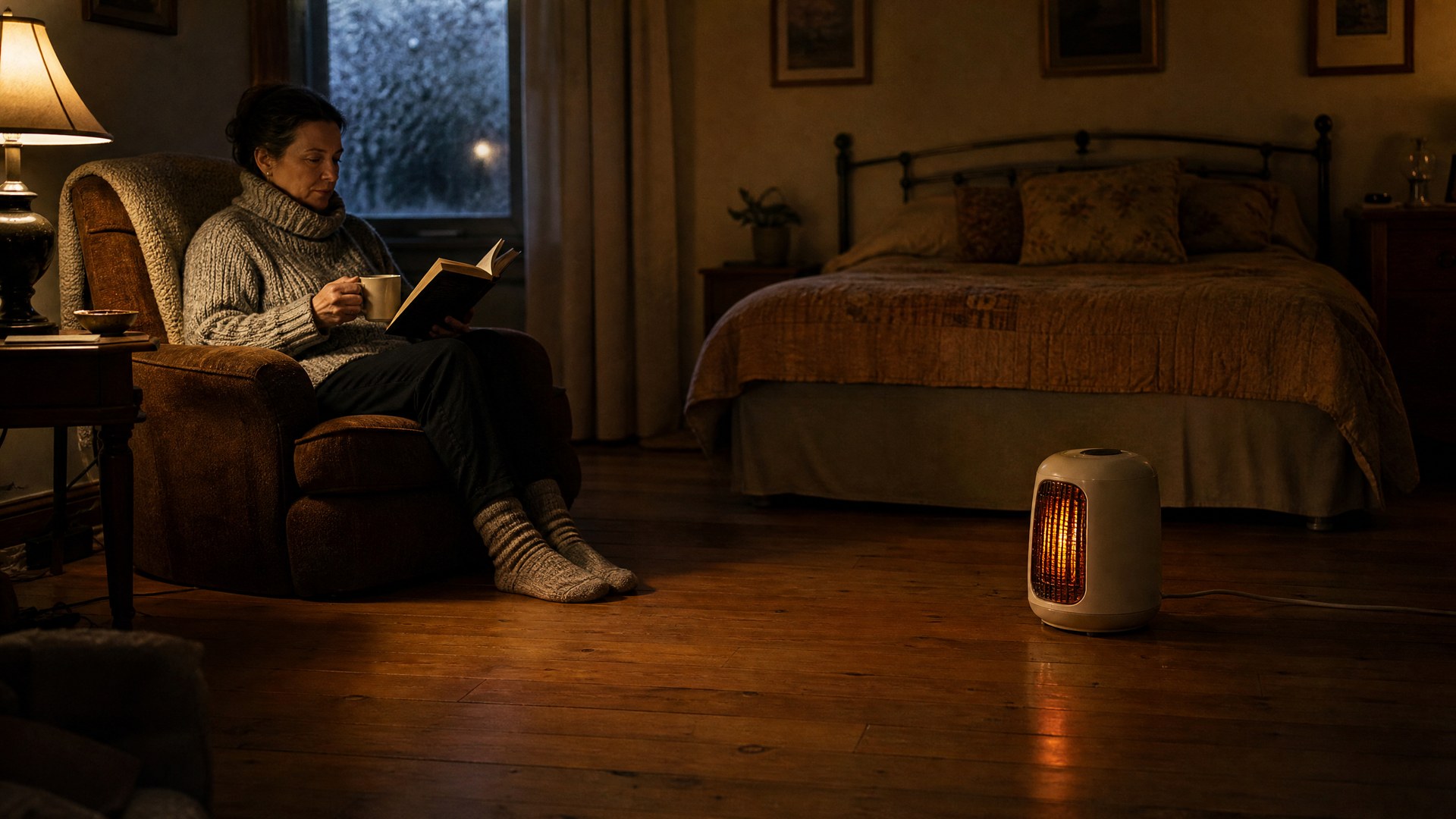
A space heater is the fastest way to warm a cold bedroom or a drafty home office. It is also a small appliance pulling a lot of power and running hot for hours, often a few inches from a bed, a couch, or a curtain. These space heater safety tips come from fire departments and extension safety specialists, and they cover where to put the heater, what to plug it into, which features to look for, and what to do in the first minutes if something goes wrong.
Why Space Heaters Cause So Many Winter Fires
Heating is the second leading cause of home fires and home fire injuries in the U.S., and the third leading cause of home fire deaths, according to the San Jose Fire Department. The department notes that most home heating fire deaths involve stationary or portable space heaters.
West Virginia University Extension cites U.S. Consumer Product Safety Commission estimates of about 1,700 residential fires a year associated with portable heaters, and an average of 70 deaths and 160 injuries a year from space heater accidents.
The cause is usually not a broken heater. WVU Extension says a combustible object sitting too close to the heater is the main reason these fires happen. A blanket slides off the bed. A curtain drifts in a draft. Someone drapes wet socks over the top to dry. The heater does exactly what it was built to do, and the thing next to it catches.
That is good news, in a way. It means most space heater fires are preventable with a few habits.
Space Heater Safety Tips: The Three-Foot Rule
Keep everything that can burn at least three feet from the heater. Both the San Jose Fire Department and WVU Extension use the same number. That includes bedding, clothing, curtains, furniture, paper, and rugs that bunch up.
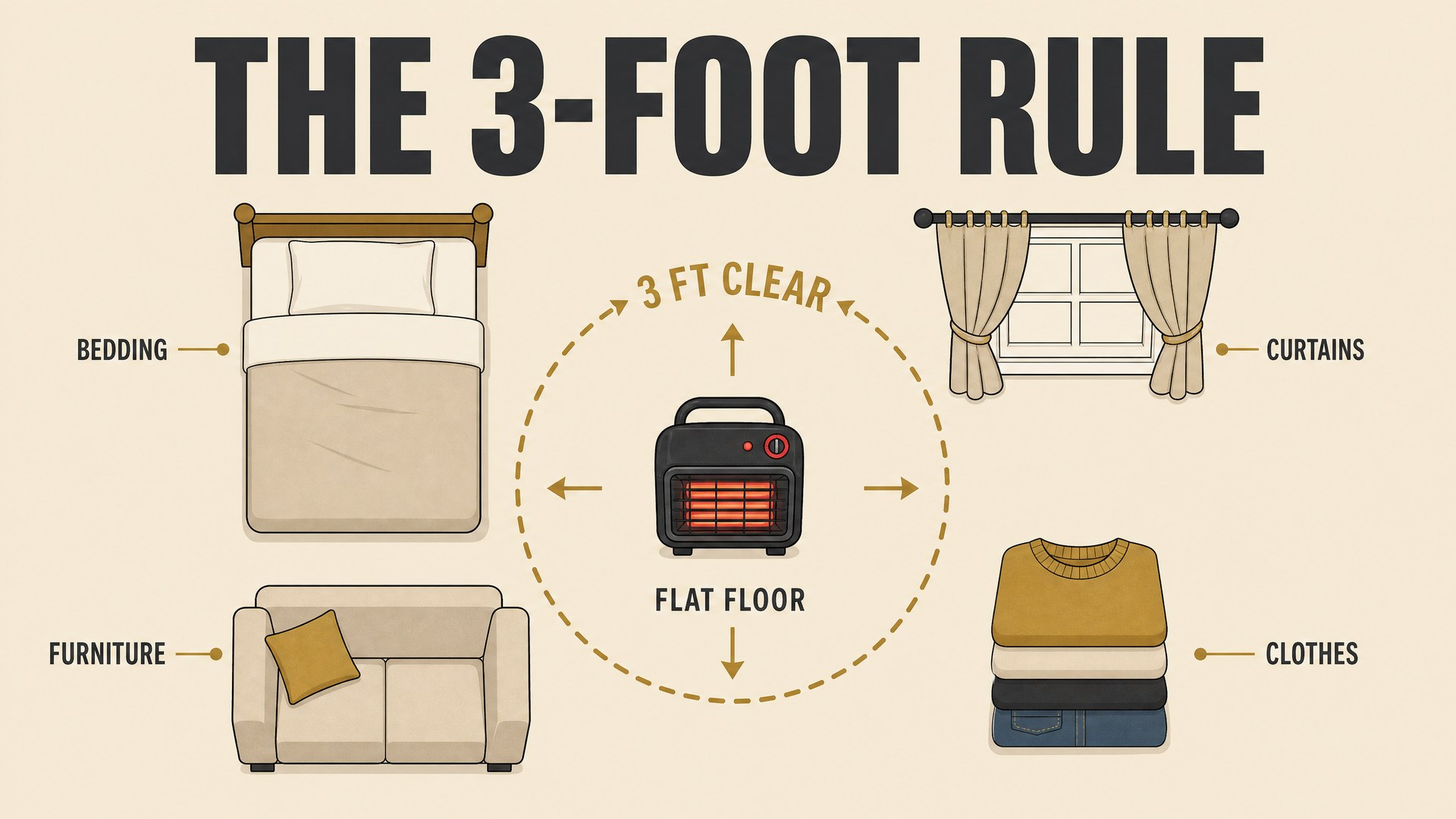
Three feet is farther than it looks. Measure it once with a tape and you will probably move the heater. A quick way to check: if you can touch the heater and the bed at the same time while standing between them, it is too close.
The same three feet applies to people. The San Jose Fire Department recommends a three-foot "kid-free zone" around portable heaters, and WVU Extension warns that heater surfaces can cause serious burns. Keep pets back too. A dog bed parked next to a heater is a common sight and a bad idea.
Placement matters as well. The San Jose Fire Department says space heaters belong on a solid, flat surface on the floor, not on a table or a shelf. Keep the cord out of walkways. WVU Extension points out that a tripped-over cord can knock a heater over.
Space Heater Safety Tips for Outlets and Cords
This is the space heater safety tip people skip most often, and it is the one that starts fires at the outlet instead of across the room.
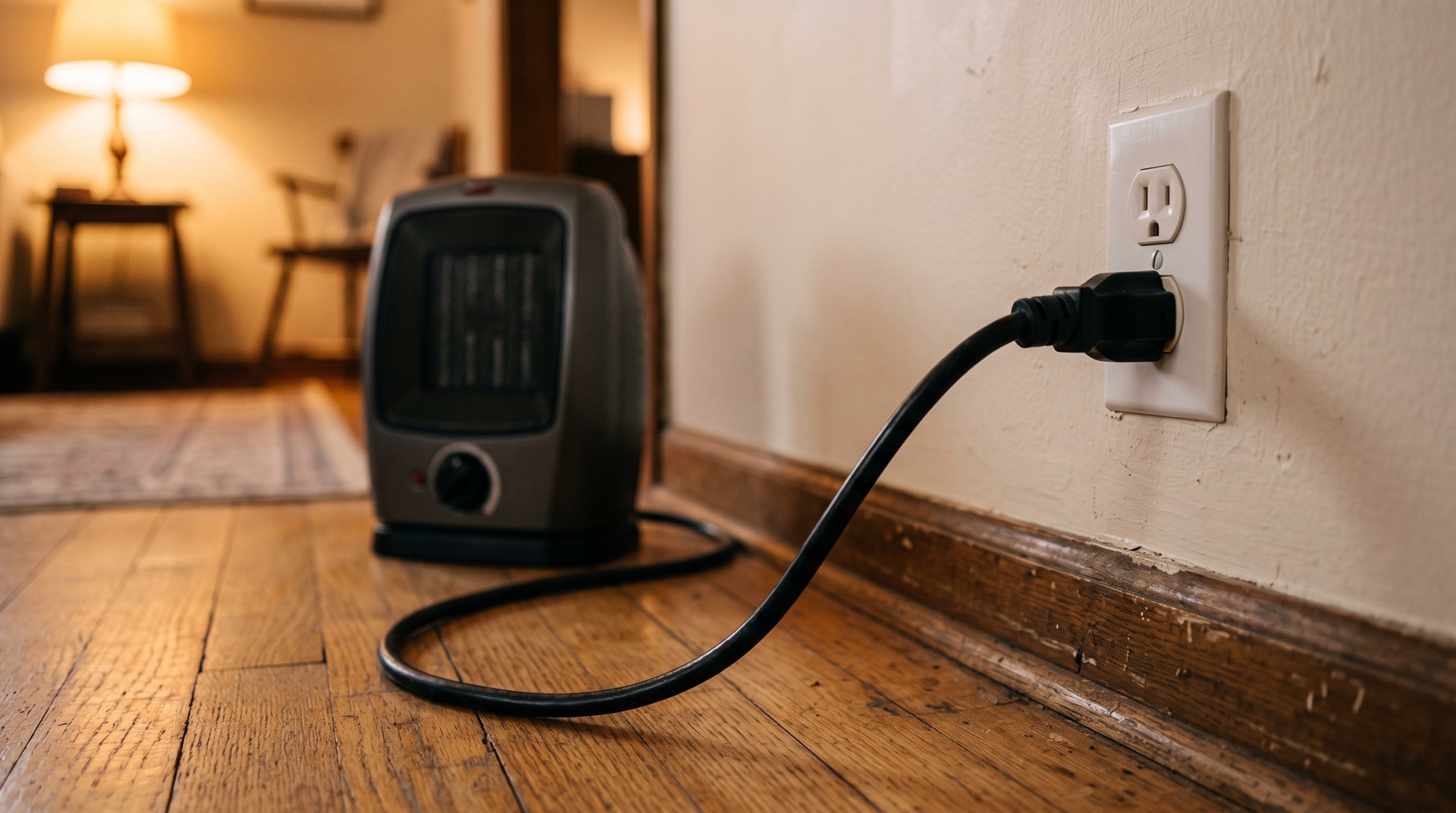
A space heater draws far more power than a lamp or a phone charger. Extension cords and power strips are not built to carry that load for hours, and they can overheat. The San Jose Fire Department says to plug heating equipment directly into a wall outlet and never use an extension cord or power strip. WVU Extension says the same, adding a three-prong outlet as the better choice.
A few more habits help:
- Do not plug anything else into the same circuit as the heater. The San Jose Fire Department warns it can cause overheating.
- Check the cord and plug before each season. If the cord is frayed or cracked, or the plug is loose, stop using the heater and replace it. Do not tape or repair the cord yourself.
- Feel the plug after the heater has run for a while. Warm is normal. Too hot to hold, or a plug that looks melted or brown, means stop using it.
If the outlet itself feels hot or has scorch marks, stop using that outlet until an electrician has looked at it.
Features Worth Paying For
If you are buying a new heater, two features matter more than anything on the box about efficiency.
Tip-over protection. WVU Extension notes that most new electric models have a tip switch that turns the heater off if it falls over. This one matters in homes with kids, pets, or anyone who might bump it in the dark.
Automatic shutoff. The San Jose Fire Department recommends heaters with automatic shut-off and tip-over protection. Thermostatic controls help too, so the heater cycles instead of running full blast all night.
Also check that the heating element is covered by a guard. WVU Extension calls this out specifically. Read the manual and the warning labels before you use it, even if you have owned space heaters for years. Models differ.
Fuel-burning heaters, like kerosene or propane units, carry another risk. They burn fuel indoors, and that can produce carbon monoxide. Use only the fuel the manufacturer specifies, follow its ventilation rules exactly, and have working carbon monoxide alarms. Learn the carbon monoxide poisoning symptoms so you can recognize them early, because headache, dizziness, and nausea are easy to blame on something else. WVU Extension notes that portable kerosene heaters are illegal in many states, so check your local rules.
Turn It Off When You Leave or Go to Sleep
A space heater is meant to be used while someone is awake and in the room.
WVU Extension says never fall asleep with a space heater on and never leave one running in an empty room. The San Jose Fire Department says to turn portable heaters off when you leave the room or go to bed, and to unplug them when not in use.
We get why this is hard. The whole point of a heater in the bedroom is a warm bedroom. A better plan is to run it before bed, then switch it off and rely on extra blankets once you lie down. If the room is too cold to sleep in without a heater running, that is a sign of a bigger heating problem worth fixing.
Two other habits belong here. Never use a space heater to dry clothes, towels, or shoes. And never use your oven to heat your home. The San Jose Fire Department lists both.
If a Space Heater Smells Hot, Sparks, or Catches Fire
A burning smell the first time you run a heater each season can be dust burning off. A hot plastic smell, smoke, sparks, or any scorch mark is different. Treat it as a warning.
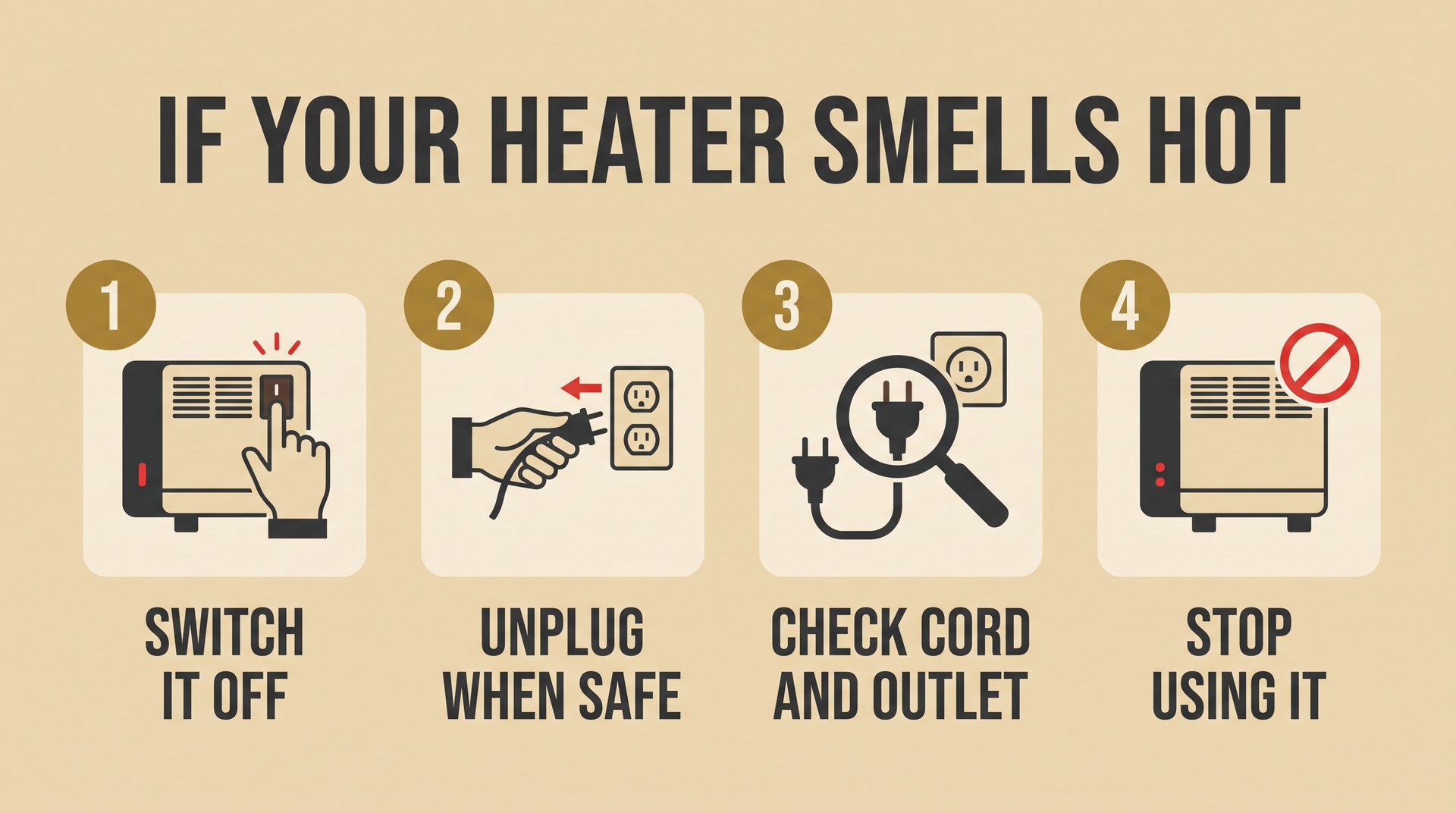
If the heater smells hot or something near it is scorched:
- Switch the heater off. Use the switch on the unit if you can reach it without touching anything hot.
- Unplug it once it is safe to do so. Pull by the plug, not the cord.
- Check the plug, cord, and outlet. Look for melting, browning, or a cord that is hot along its length.
- Do not use it again until you know the cause. If the plug or outlet is damaged, replace the heater and have the outlet checked.
If there are flames:
- Get everyone out and close the door behind you. A closed door slows smoke and fire.
- Call 911 from outside.
- Only fight a small fire if you can do it safely, with a clear way out behind you. Use an extinguisher, never water on an electrical appliance. Our guide on how to use a fire extinguisher walks through the PASS method.
If the fire is bigger than a wastebasket, or smoke is filling the room, leave. Follow your house fire escape plan, and do not go back in for anything. For anyone burned, start cool running water right away and use our burn first aid steps while you wait for help.
Finally, make sure your alarms work. The San Jose Fire Department recommends testing smoke alarms and carbon monoxide alarms at least once a month.
A space heater should make a cold night easier, not riskier. The habits above take about five minutes to set up, and the first hour of any emergency goes better when you are ready for it. See what's inside The 1stHour Trauma Kit, built for the moments before help arrives.
This content is for informational purposes only and does not constitute medical or safety advice. In an emergency, call 911 immediately. Always follow your heater manufacturer's instructions and guidance from your local fire department.


