Broken Toe First Aid: Buddy-Taping and When It's More Than a Stub
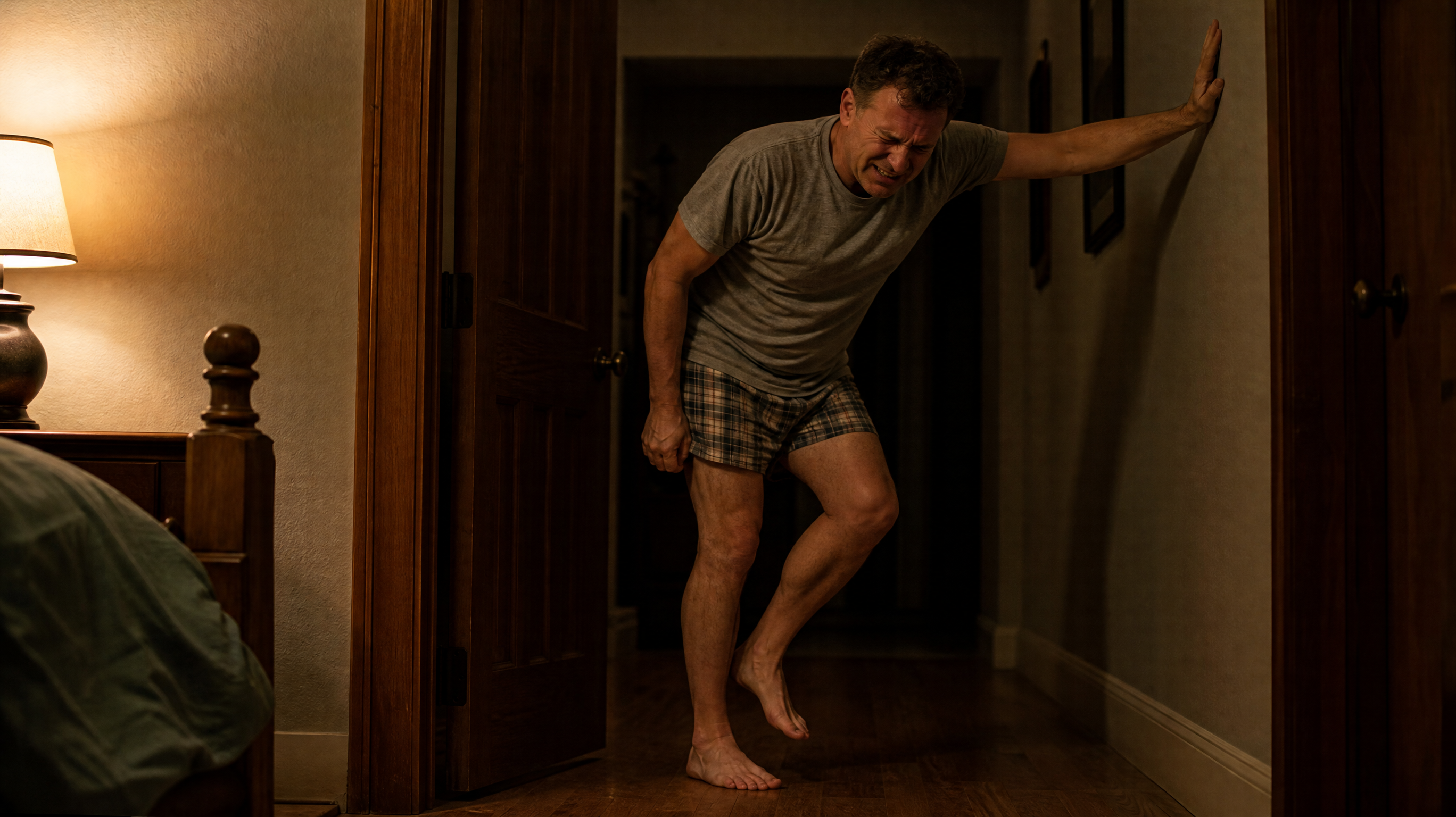
It happens in the dark, usually. You are walking to the kitchen, the bedpost jumps out, and a white-hot pain shoots up from your foot. Then comes the question every person asks while hopping on one leg: stubbed or broken? Broken toe first aid is simple, and most breaks heal without surgery. The skill is knowing which toes you can handle at home and which ones need an X-ray. Here is how to sort that out, what to do in the first hour, and how to tape a toe properly.
Stubbed Toe or Broken Toe: How to Tell
A badly stubbed toe and a broken toe feel alike at first. According to the NHS, a broken toe is usually painful, swollen, bruised or red, and hard to walk on. The Cleveland Clinic adds that you may not be able to bend the toe, and you may see bruising under the toenail or a toe that looks crooked.
Here is the part that surprises people: for most small toes, the home treatment is the same whether the bone is cracked or just bruised. That is why the NHS does not push everyone to get an X-ray.
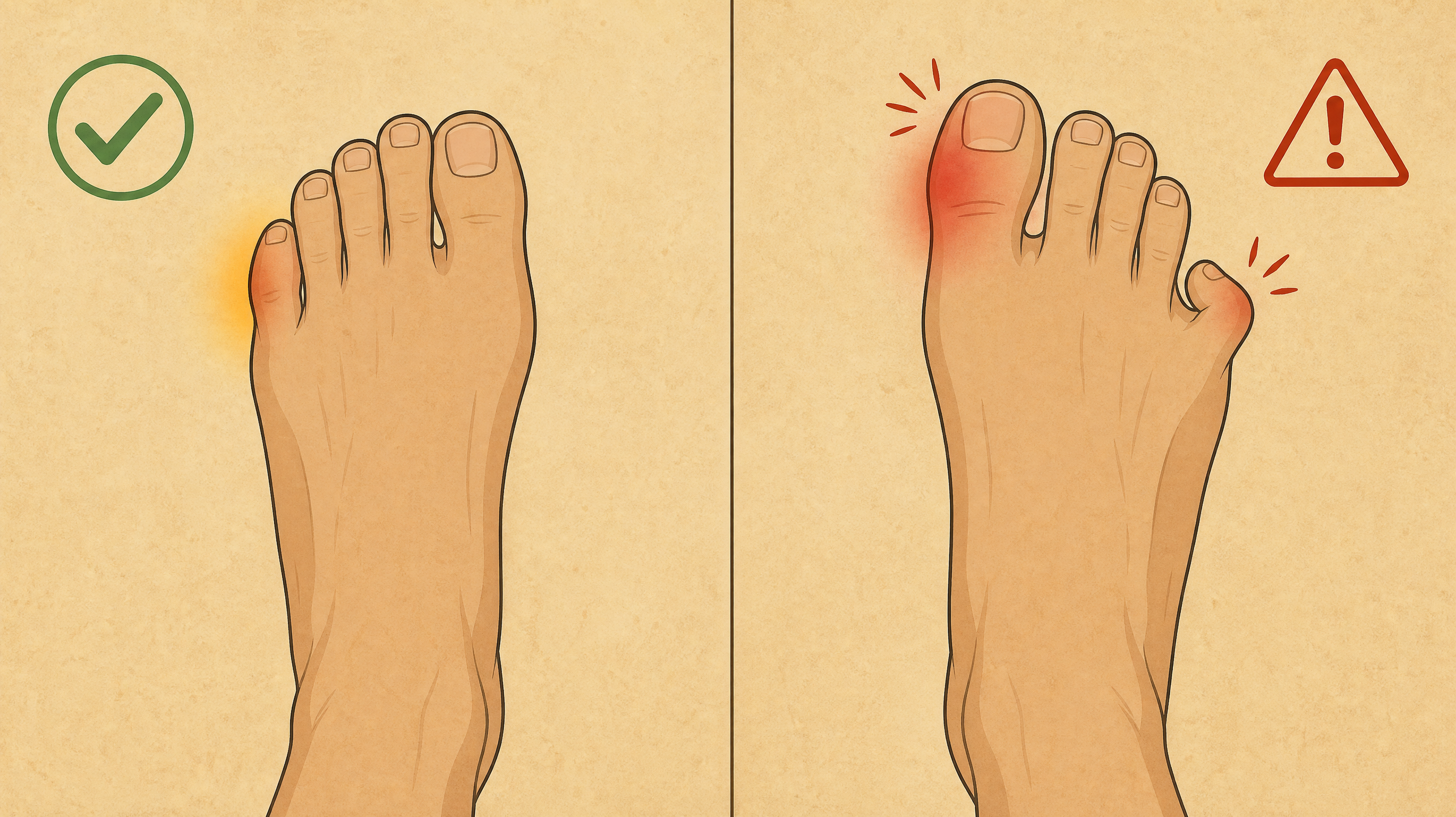
What matters is the pattern. Pain that settles over a few hours, a toe that points the right way, and normal feeling point toward a bruise or a simple crack. A toe that is bent out of line, a lot of swelling that keeps growing, or any change in feeling points the other way. If you are unsure, our guide on how to tell if a bone is broken covers the general signs that apply to any limb.
Broken Toe First Aid in the First Hour
Start with the basics. The first hour sets up the next two weeks.
- Stop and sit down. Get weight off the foot. Walking on it can make the swelling worse and may shift a cracked bone.
- Look at the toe. Check the angle, the skin, and the nail. If a bone is poking through the skin or the toe points the wrong way, skip to the red flags below.
- Ice it for 20 minutes. Wrap an ice pack or a bag of frozen peas in a towel. The NHS warns against putting ice directly on the skin.
- Raise the foot. Rest it on pillows so the toes sit above the level of your heart. Gravity keeps swelling down.
- Take pain relief as directed. Ibuprofen or paracetamol are the ones the NHS names. Follow the label and check with a pharmacist if you take other medicines.
- Clean any small cut. Rinse with clean water and cover it with a sterile dressing. A deeper cut is a different problem, and our piece on whether a cut needs stitches can help you decide.
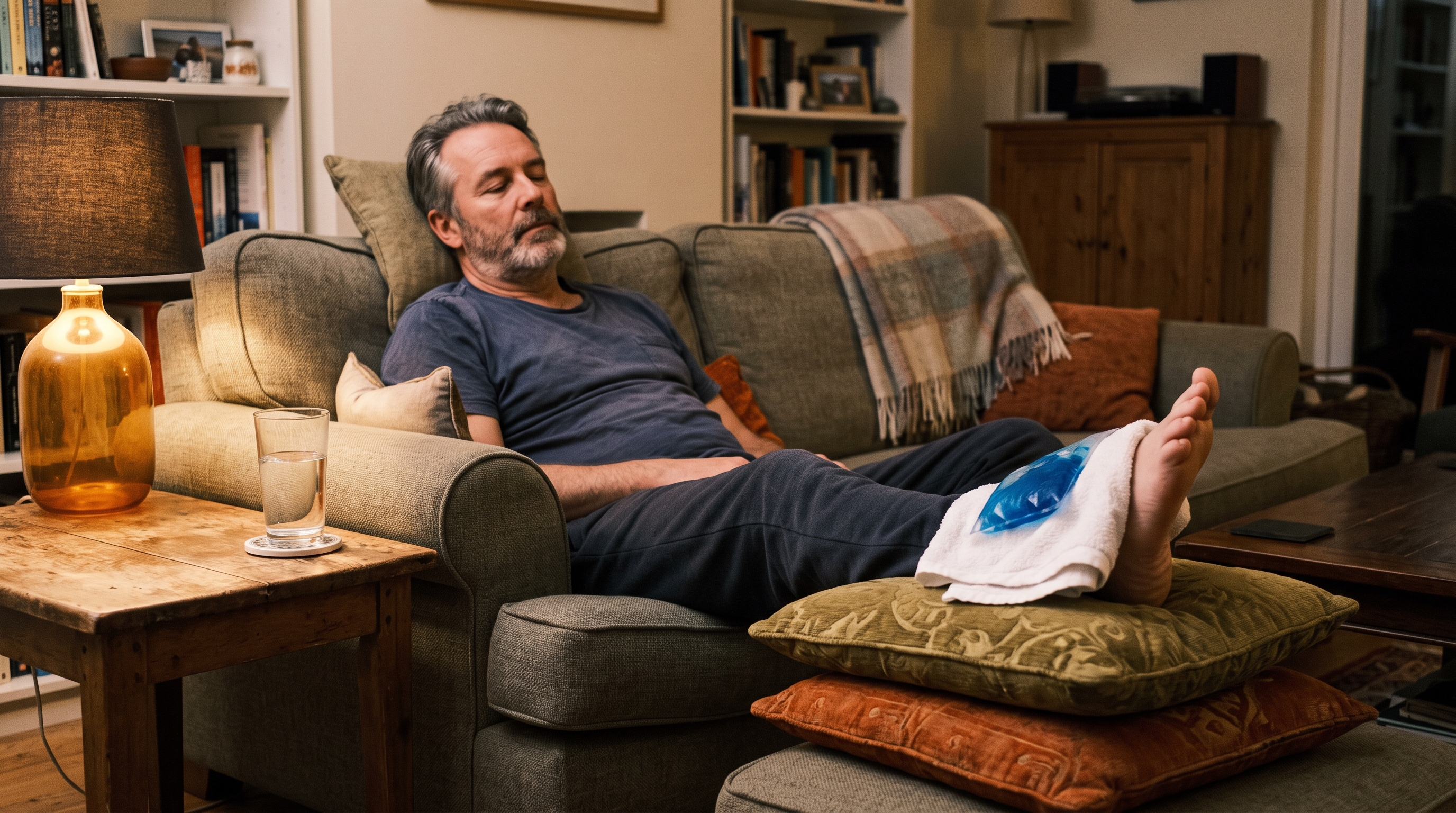
Repeat the ice a few times a day for the first couple of days while the swelling peaks.
Broken Toe First Aid: How to Buddy-Tape the Toe
Buddy taping means fastening the injured toe to the healthy toe beside it, so the good toe acts as a splint. The Cleveland Clinic says it relieves pain and keeps the toe stable. The NHS suggests keeping the toes taped for two to three weeks. It is a gentler cousin of what we describe in how to splint a broken bone when help is far away.
Do this only when the toe points straight and it is not the big toe. If the toe is crooked, do not try to straighten it yourself and do not tape it in that position.
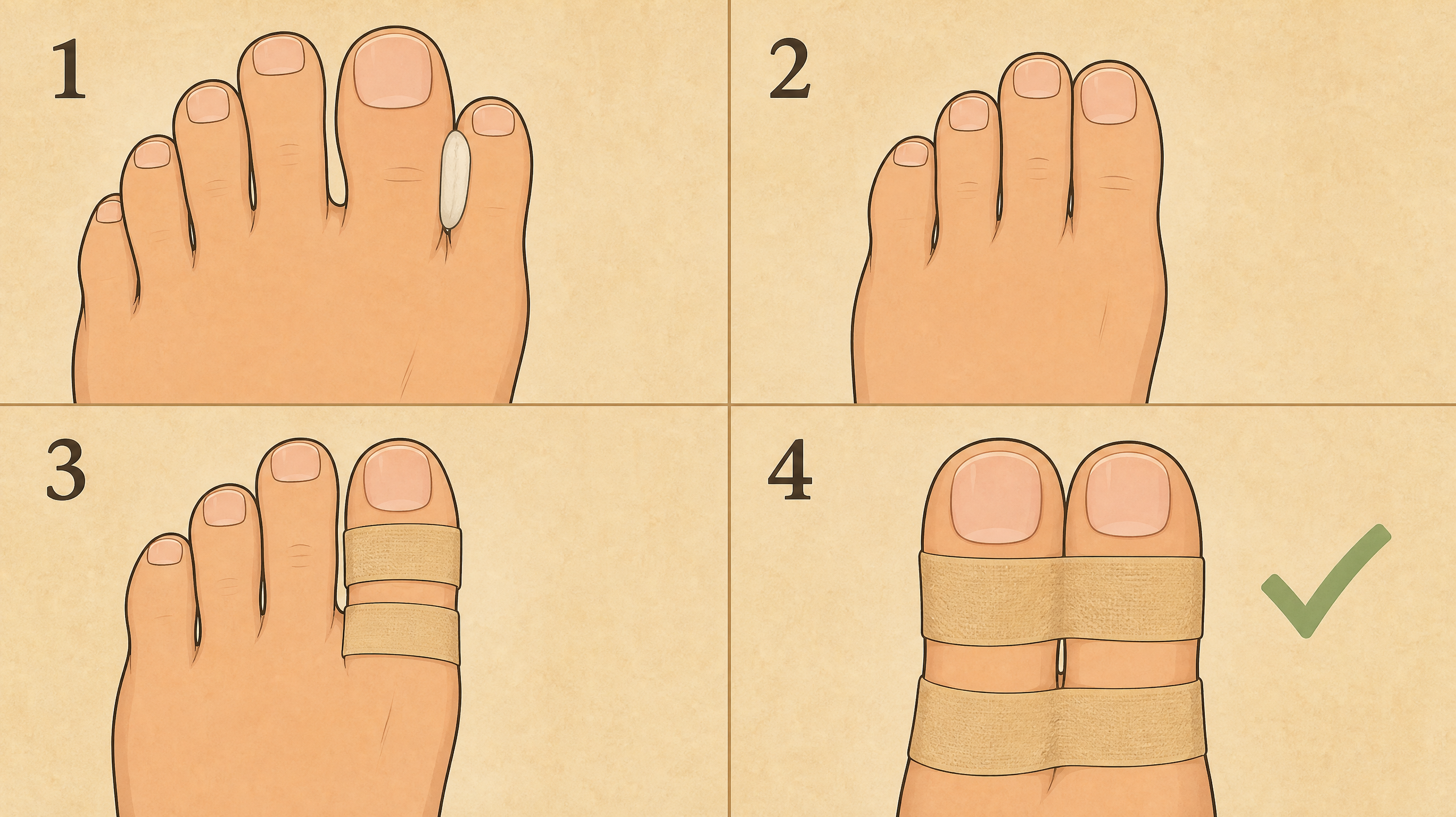
- Pad between the toes. Put a small piece of cotton wool or gauze between them. This keeps the skin from rubbing and getting damp.
- Line the toes up. Rest the injured toe against its healthy neighbor, with the tips level.
- Wrap with medical tape. Make one or two loose wraps around both toes, one below and one above the injured joint. Snug is right. Tight is wrong.
- Check the circulation. The toe tips should stay pink and warm, with normal feeling. If they turn pale, blue, cold, or tingly, take the tape off right away.
- Change the padding daily. Dry the skin and replace the cotton if it gets wet or sweaty.
Signs You Need Care Today, Not Next Week
Some toe injuries should not wait. Go to an urgent care center or an emergency department if you see any of these. The NHS lists several, and the Cleveland Clinic adds a few more:
- The toe is bent or pointing at an odd angle
- A bone is visible or sticking through the skin
- The wound is open, deep, or bleeding
- You have tingling, numbness, or a change in feeling
- The swelling and pain keep getting worse instead of settling
- You have a fever or chills, or red streaks spreading from the toe
A toe that turns pale, blue, or cold is also a sign that blood flow is cut off, and that is an emergency. If you have diabetes, the NHS says to get any foot injury checked by a doctor, even a minor-looking one, because reduced feeling and slower healing can hide a bigger problem.
You may also see a dark bruise under the toenail with throbbing pain. That is blood trapped under the nail, and it can be very sore. A clinician can relieve the pressure safely. Do not try to drill or pierce the nail yourself.
The Big Toe Is a Different Case
The big toe carries a large share of your body weight every time you push off to walk. A break there is more likely to affect how you walk for months if it heals badly. The NHS advises going to the emergency department for a suspected broken big toe, and it says not to use buddy taping on it.
So if the big toe is the one you hit, treat it as a medical visit even when it looks mild. Keep off it, ice it, raise it, and get it examined the same day if you can.
Healing, Shoes, and When to Go Back
Most broken toes mend on their own. The NHS says they usually heal within four to six weeks, though it can sometimes take several months. The Cleveland Clinic gives a range of six to eight weeks, and notes that swelling can linger.
While you heal, wear wide, flat, comfortable shoes with a stiff sole, which limits how much the toes bend. Skip tight or pointed shoes. Hold off on sports until the pain is gone, and the NHS suggests waiting around six weeks. If you walk for a living, ask your doctor about a stiff-soled boot or surgical shoe.
See a doctor if the pain and swelling are still there after five days, or if walking is still hard after six weeks. Left alone, a poorly healed toe can leave you with chronic pain, a deformity, or arthritis, according to the Cleveland Clinic.
A little prep makes the next stubbed toe less of a scramble. A real tape roll, cotton pads, and cold packs belong in your home first aid kit, not buried in a drawer. And if you are dealing with an injured ankle too, our comparison of sprained ankle vs broken ankle will help you tell them apart.
Most toe injuries are not emergencies, but the first hour sets the tone for everything after it. See what's inside The 1stHour Trauma Kit, gear and guidance built for the first hour of whatever happens next.
This content is for informational purposes only and does not constitute medical advice. If you suspect a broken bone, especially the big toe, or you have numbness, an open wound, or diabetes, seek prompt medical care.


