What to Do During a Tornado Warning: The Next 10 Minutes
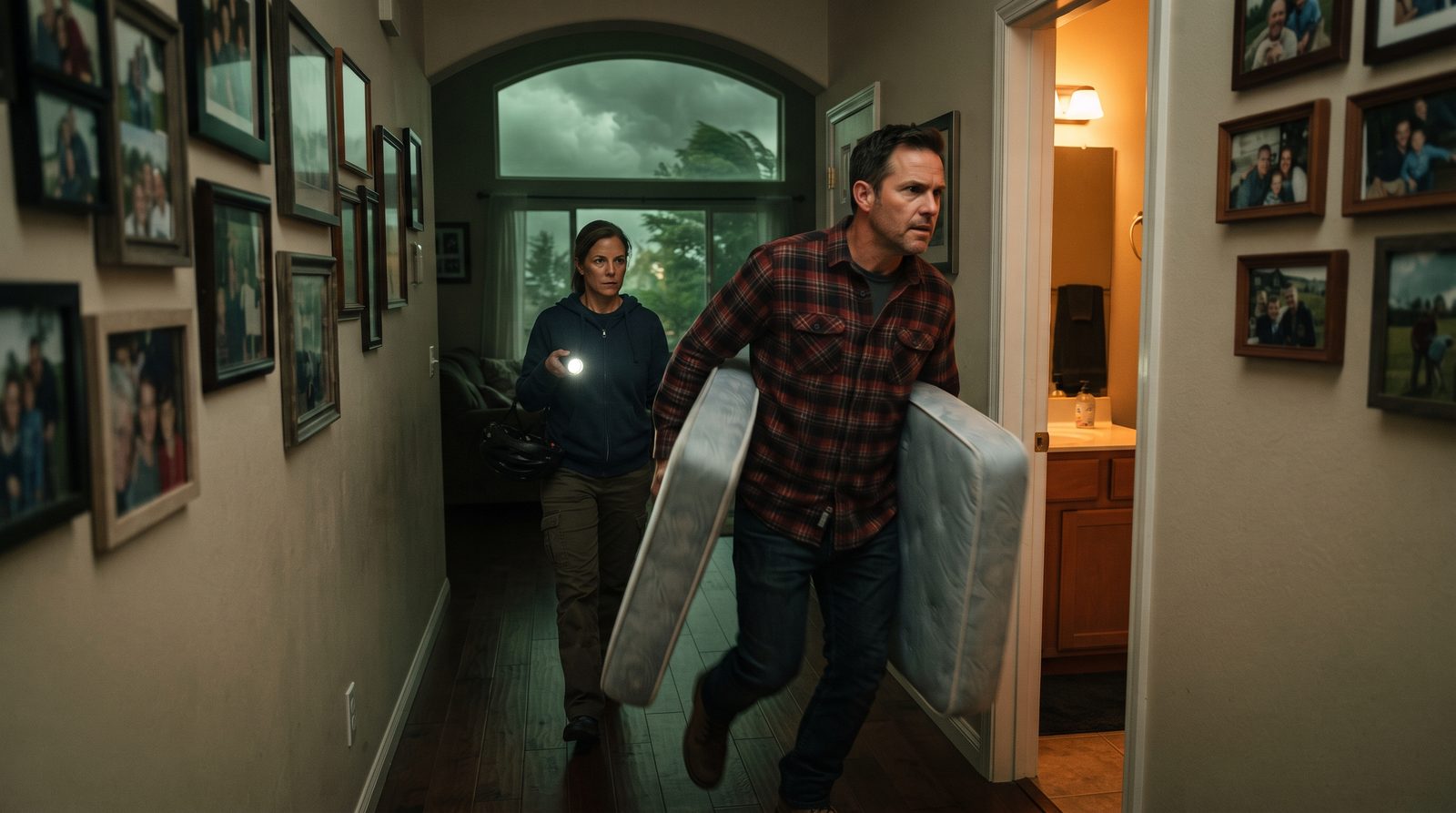
The siren just started, or your phone lit up with a warning, and your brain is already arguing with itself. Is this real? Do we have time? Where do we even go? Knowing what to do during a tornado comes down to decisions you make in the first sixty seconds, because the average warning gives you about 13 minutes before the storm arrives, and some give far less. This guide walks through exactly where to go, what to do if you have no basement, and why the first hour after the tornado passes hurts almost as many people as the tornado itself.
What to Do During a Tornado: Location Decides Everything
Tornado deaths follow a pattern, and it isn't random. People die in cars, in mobile homes, and in rooms with windows. People survive in basements and small interior rooms. Almost everything else about tornado safety is a footnote to that one fact.
The rule is simple: put as many walls as possible between you and the outside, and get as low as you can. Every wall a piece of flying lumber has to punch through slows it down. A basement or dedicated storm shelter is best. If you have one, go there now and get under something sturdy, like a workbench or the stairs, away from anything heavy that could topple onto you.
The CDC's tornado guidance is blunt about windows: an exploding window can injure or kill. Forget the old advice about opening windows to "equalize pressure." That myth wastes time you don't have and puts you next to the most dangerous thing in the house.
Most tornado casualties come from flying debris hitting the head and neck. Cover yours with whatever is close: a mattress dragged into the bathroom, couch cushions, heavy blankets. If there's a bike or sports helmet within reach, put it on. It looks ridiculous. It also works.
Tornado Watch vs. Tornado Warning: Which Clock You're On
These two words get mixed up constantly, and the confusion costs people their entire head start.
A tornado watch means conditions are right for tornadoes to form. It often covers a big chunk of a state and can last for hours. A watch is your preparation window: know where your shelter spot is, put shoes on, charge your phone, move the helmet and flashlight to the shelter room. If you built a family emergency plan, this is when it earns its keep.
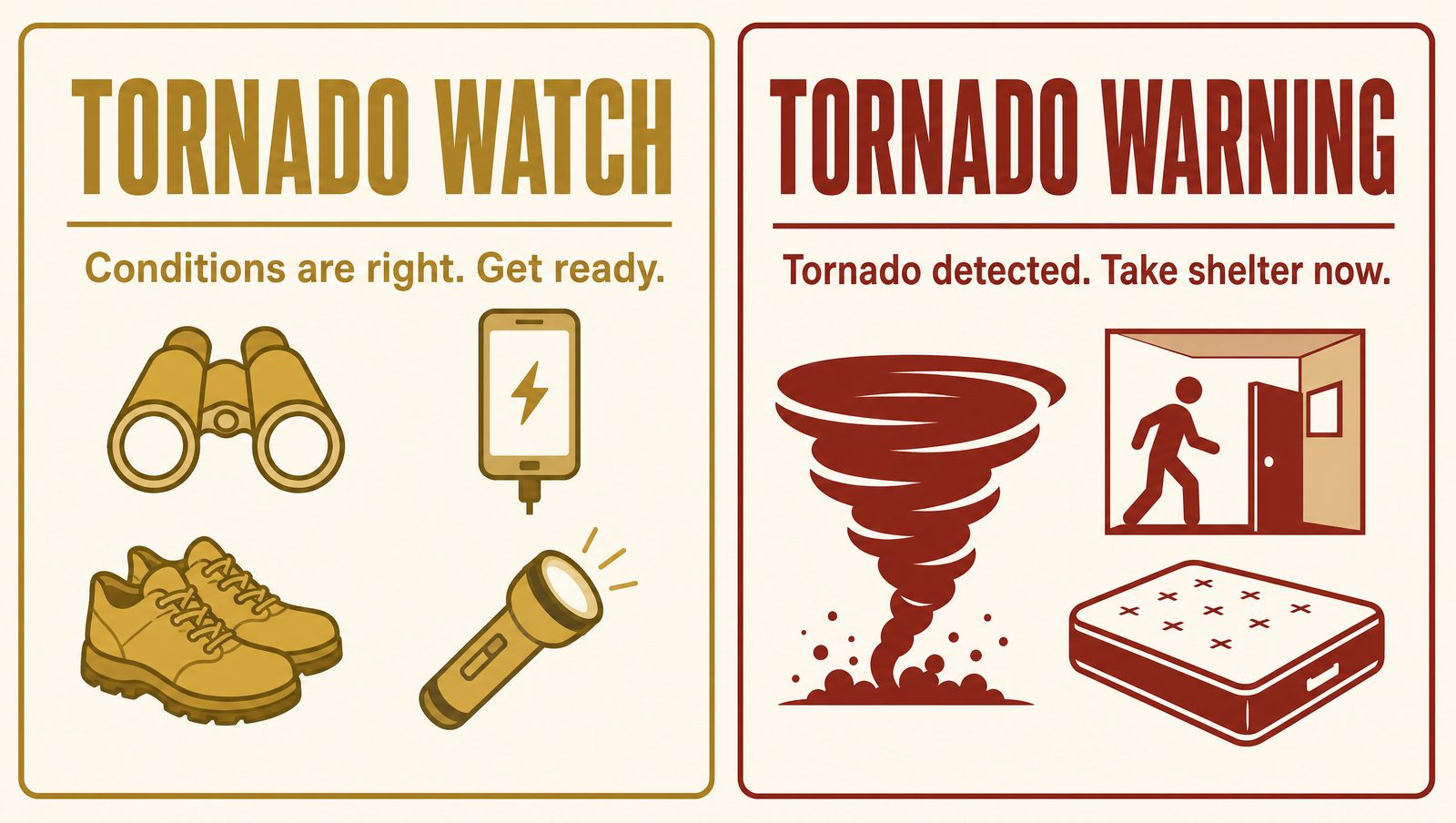
A tornado warning means a tornado has been spotted or radar shows one forming. The clock is now running. According to NOAA, the average lead time on a tornado warning is about 13 minutes. That's an average. Some warnings give you twenty minutes, some give you five. When the warning hits, you move to shelter immediately. You don't step outside to look at the sky, and you don't spend eight of your thirteen minutes filming the wall cloud for your group chat.
No Basement? Where to Shelter Anyway
Most homes in tornado-prone parts of the country don't have basements, and people survive violent tornadoes in them every year. The order of preference goes like this.
First choice: a small interior room on the lowest floor with no windows. Bathrooms are often good because the plumbing in the walls adds structure, and the tub gives you a low, anchored place to crouch. Closets and interior hallways work too. What matters is small, low, centered, and windowless.
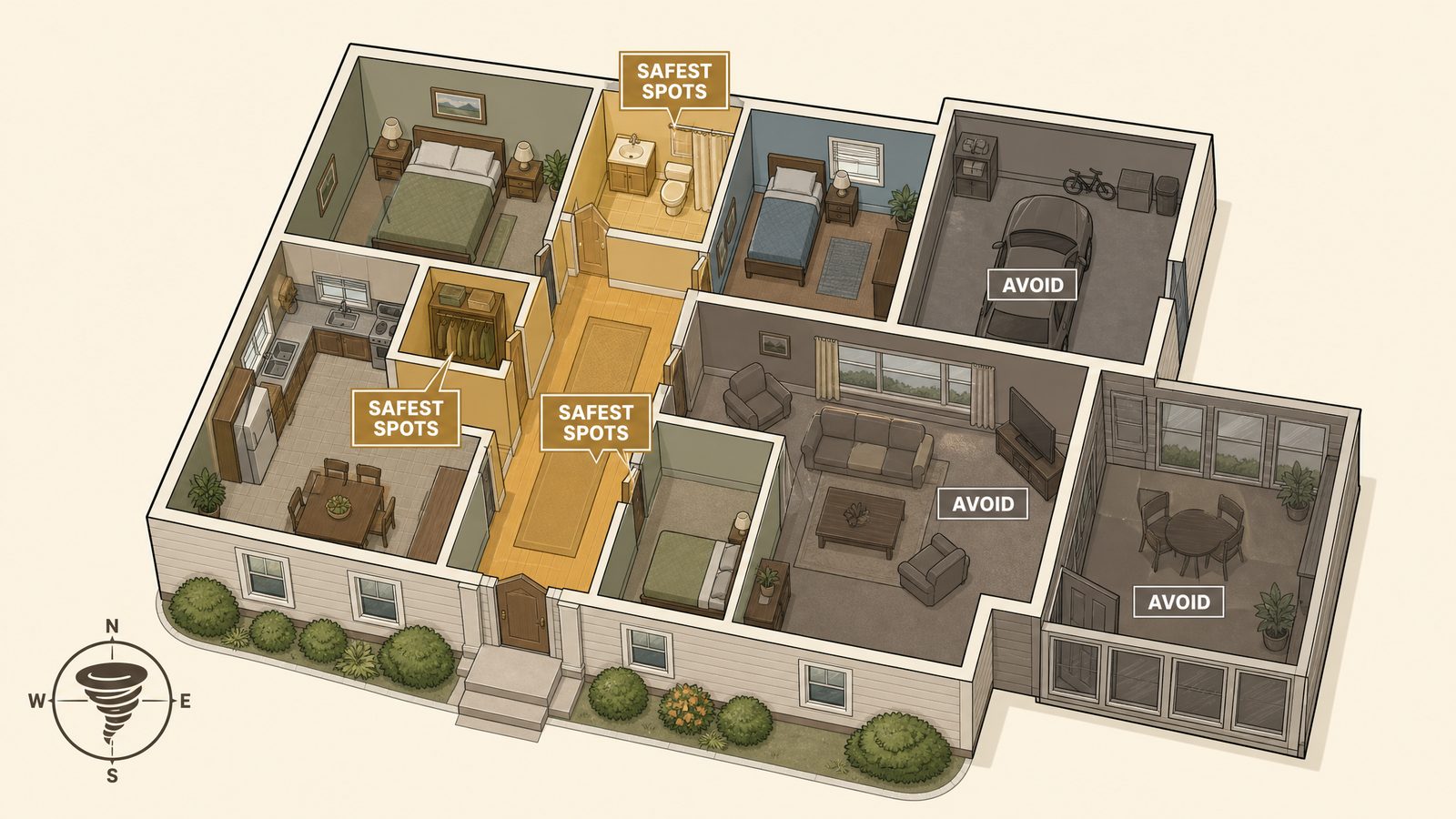
Second choice: any interior space away from exterior walls. Under a heavy table, under the stairs, in the innermost corner of the house. Grab that mattress on the way.
What doesn't count as shelter: garages, sunrooms, large open rooms like living rooms with picture windows, and anywhere upstairs. Upper floors take the worst of the wind, and a top-floor bathroom is nowhere near as safe as a ground-floor one.
If you live where tornadoes are a regular visitor, walk your house this week and pick the spot before you ever need it. Deciding at 2 a.m. with the siren running is how people end up standing in the hallway debating while the window glass starts to rattle.
Mobile Homes, Cars, and the Overpass Myth
Here's the hard truth about mobile and manufactured homes: they don't survive direct tornado hits, even when tied down. If you live in one, your plan can't be "shelter in place." Identify a sturdy building you can reach in under a few minutes, a neighbor's house, a community shelter, a church, and leave the moment a warning is issued. This is the one situation where getting in the car during a tornado warning is the right call, as long as you go early.
If you're caught driving with a tornado visible and distant, driving away at right angles to its path can work. If it's close, get out of the car and into a building, or as a last resort, into a ditch (more on that below). A car in tornado winds is a tumbling metal box.
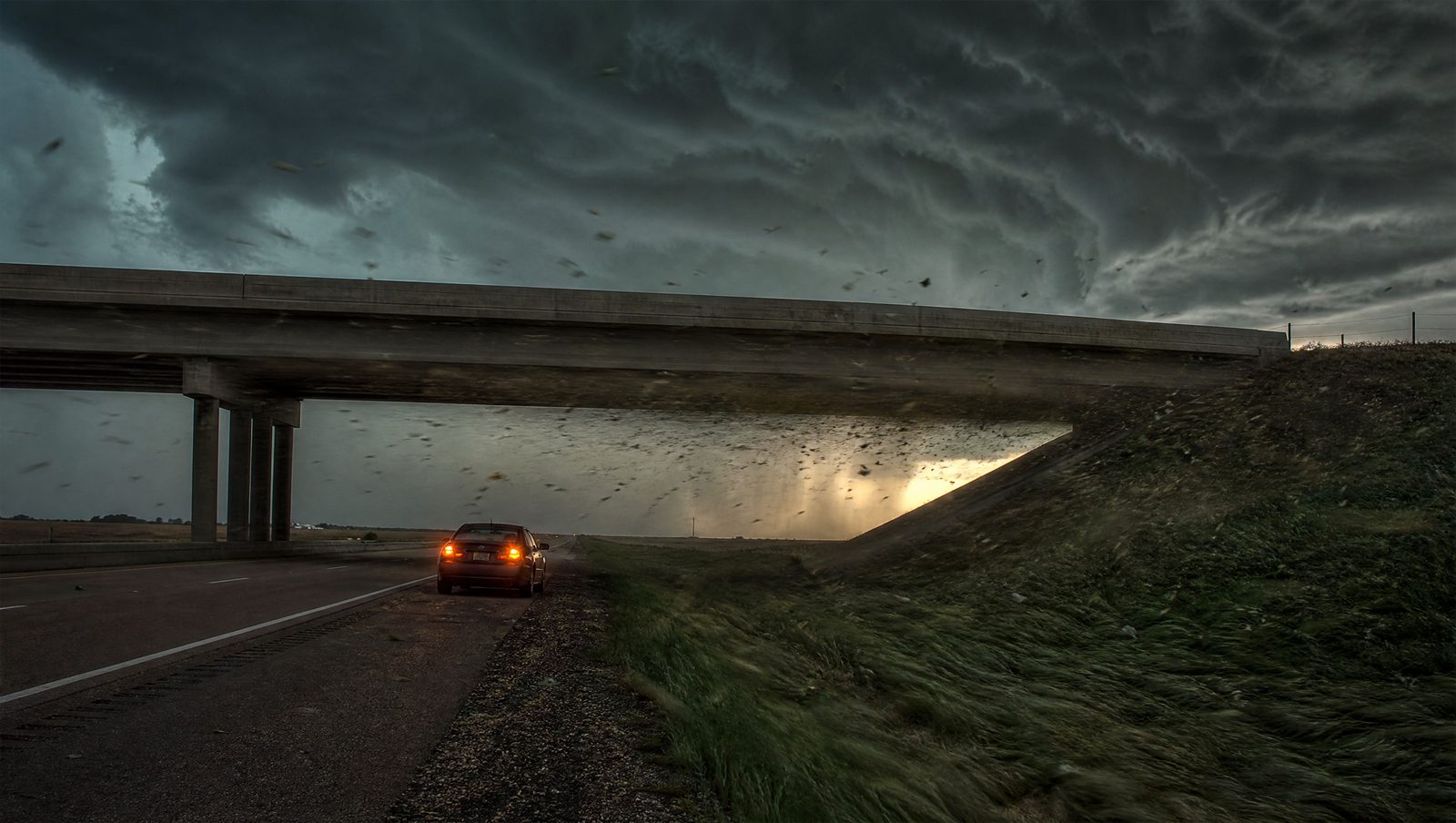
And then there's the overpass. A famous 1991 news video of a crew riding out a weak tornado under a Kansas overpass convinced a generation of drivers that overpasses are shelters. The National Weather Service's analysis of the May 3, 1999 Oklahoma outbreak showed the opposite: the space under an overpass acts like a wind tunnel, funneling debris at higher speeds right through where people crouch. People sheltering under overpasses died in that outbreak. Stopping under one also stalls traffic behind you, trapping other drivers in the storm's path. Keep driving or get low in a ditch. Never climb up under the girders.
What to Do During a Tornado If You're Caught Outside
Sometimes there's no building. You're on a trail, at a job site, in open country. Your goals shrink to two things: get as low as the terrain allows, and protect your head.
Find a ditch, culvert, or any depression in the ground, lie flat on your face, and lace your fingers over the back of your head and neck. Stay away from trees, which shed branches like shrapnel, and away from cars, which the wind can roll onto you. If you're near your vehicle and the tornado is nearly on you, some meteorologists suggest staying buckled inside with your head below window level as an alternative to open ground. Neither option is good. The ditch beats the car if it's genuinely lower than the roadway.
Don't try to outrun a tornado on foot, and don't assume you know its direction. Tornadoes can move at highway speeds and change course. Low and covered beats fast and exposed.
The First Hour After: When Half the Injuries Happen
The tornado passes, the roar fades, and everyone climbs out to look. This is where a second wave of injuries starts. A CDC study of one Illinois tornado found that half of all tornado-related injuries happened after the storm, during rescue attempts and cleanup, and nearly a third of those came from stepping on nails.
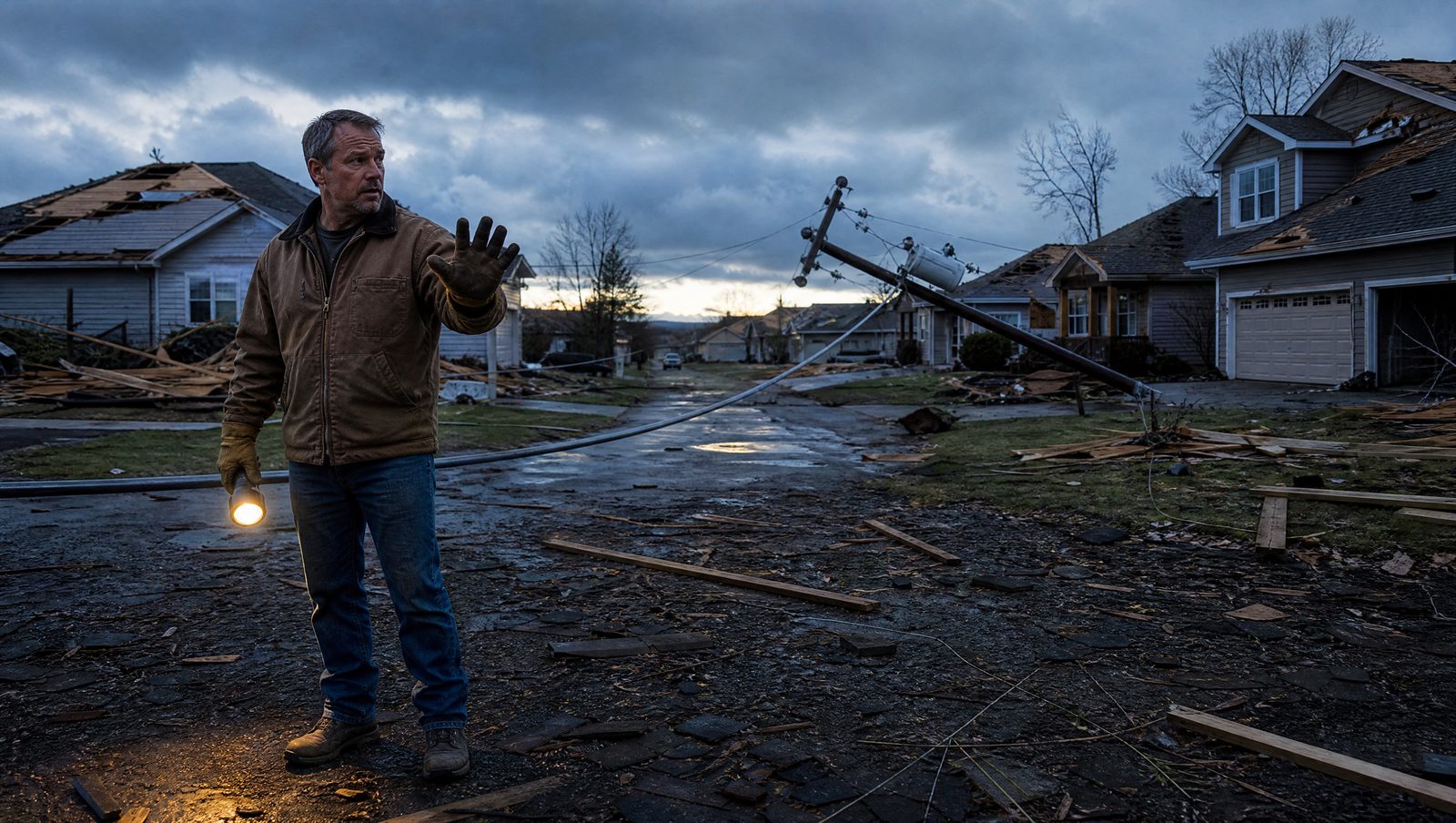
So before you rush out: put on the thickest-soled shoes you own, long pants, and gloves. Assume every downed line is live and stay well away. If you smell gas or hear hissing, get everyone out, shut off the main valve outside if you can reach it safely, and let the utility company be the ones to turn it back on.
If the power is out across the area, run your generator outside only, at least 20 feet from any window or door. Carbon monoxide from generators kills people in the days after storms who survived the storm itself. Our power outage emergency plan covers that first hour without electricity room by room.
Check on neighbors, especially anyone elderly or living alone, but leave heavily damaged structures to trained rescuers. Walls that survived the tornado don't always survive somebody prying at the debris pile leaning against them. And if a hurricane or derecho season is what usually threatens your area instead, the same shelter-and-aftermath thinking applies; our hurricane prep checklist covers that version of the clock.
Storm aftermath is cut hands, punctured feet, and bleeding that needs pressure right now, usually while the roads are blocked and help is stretched thin. That's the exact window the 1stHour Trauma Kit was assembled for: pressure dressings, gauze, gloves, and trauma shears in one grab bag you can keep in your shelter spot. If your supplies are scattered across three junk drawers, start with our home first aid kit checklist and build from there.
This content is for informational purposes only and does not constitute medical advice. In a tornado emergency, follow official warnings from the National Weather Service and local authorities, and call 911 for injuries.


