Sun Poisoning vs. Sunburn: How to Tell Which One You Have
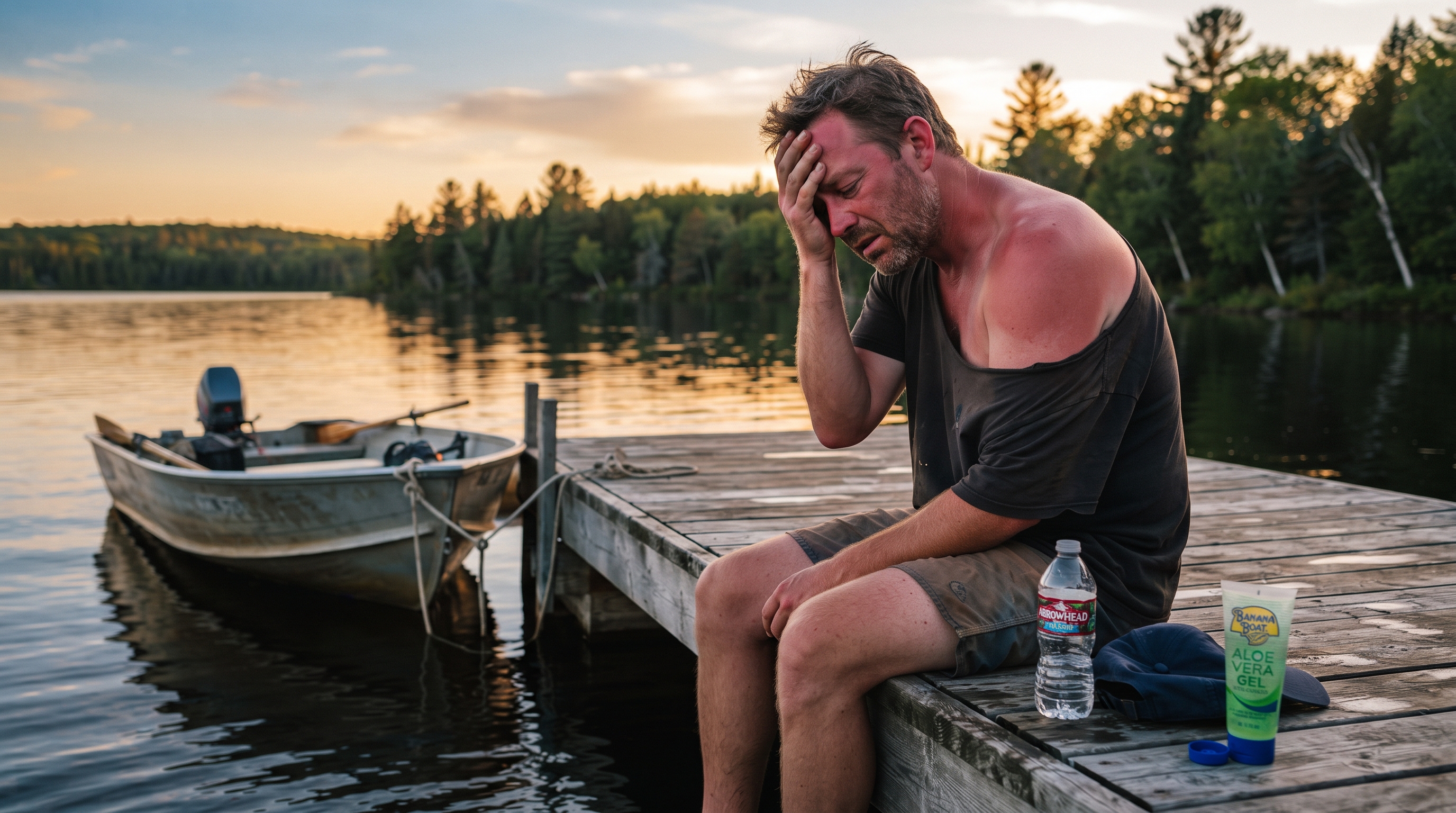
You came in from a long day on the water or the trail, and your shoulders look like boiled lobster. Then the evening goes sideways: chills, a pounding headache, a stomach that will not settle. Is that just a bad burn, or are those sun poisoning symptoms? Here is how to tell the difference, what to do first, and the signs that mean you should stop treating it at home.
Sun Poisoning vs. Sunburn: What Is the Difference
Sun poisoning is not a formal medical diagnosis. As the Cleveland Clinic explains, it is a nickname for a severe sunburn that lasts longer and causes symptoms beyond the skin. Nothing is actually poisoning you. Your skin took more ultraviolet damage than it could handle, and your body is reacting to it.
The line between the two is simple. Sunburn stays on the surface. Sun poisoning pulls in the rest of you.
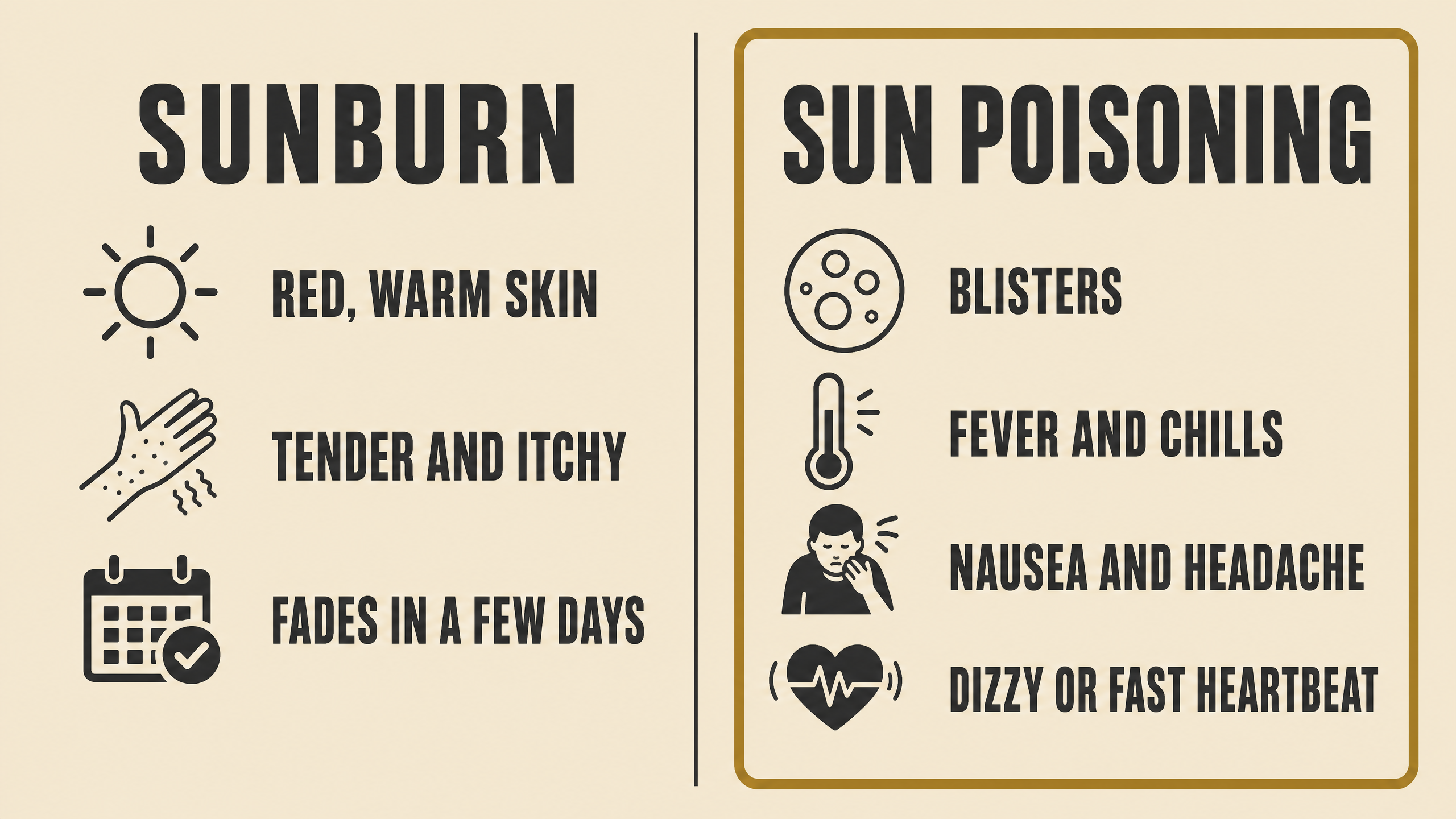
- Sunburn: redness, warmth, tenderness, mild swelling, and itching that fade within a few days.
- Sun poisoning: blisters, intense pain or itching, plus headache, nausea, fever, chills, dizziness, fatigue, or a fast heartbeat.
Think of it as a scale. A mild burn at one end, a burn that blisters and makes you feel ill at the other. If you are not sure where you sit, the whole-body symptoms are the tiebreaker.
Sun Poisoning Symptoms to Watch For
Skin symptoms usually show up within a few hours of the exposure and peak around a day later. The sick-all-over feeling can arrive the same evening or the next morning. Watch for these:
- Blisters, especially large ones or blisters across the shoulders, back, or face.
- Skin pain that is far worse than a normal burn, or itching that keeps you awake.
- Headache, nausea, or vomiting.
- Fever or shaking chills.
- Dizziness, or feeling faint when you stand up.
- Unusual tiredness, or a heart that feels like it is racing.
- Very dry mouth, little urine, or dark urine.
Take the last one seriously. A big burn pulls fluid to the skin and away from the rest of the body, and you were probably sweating all day on top of it. Dehydration is the quiet problem that turns a miserable night into a medical one. Our guide to signs of dehydration in adults lists what to look for.
When Sun Poisoning Symptoms Mean the ER
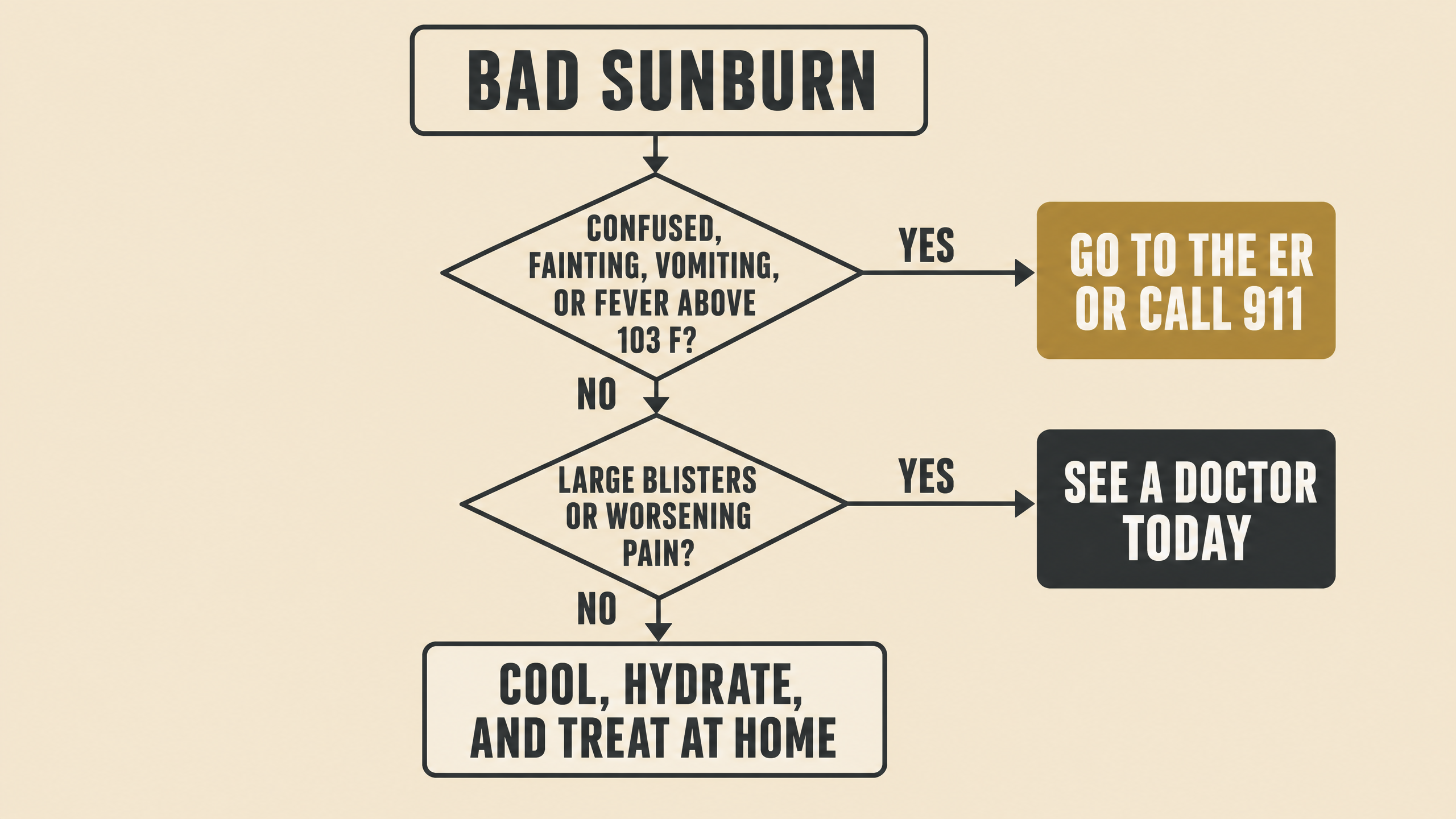
Most sunburns are a home-care problem. These are not. The Mayo Clinic advises emergency care for a fever above 103 F with vomiting, confusion, signs of dehydration, or cold skin with dizziness or fainting. The Cleveland Clinic adds a rapid heartbeat and signs of heatstroke to that list.
Go to the ER or call 911 if you notice any of these:
- Confusion, odd behavior, or trouble staying awake.
- Fainting or near fainting.
- A fever above 103 F, or any fever with repeated vomiting.
- Cold, clammy skin with dizziness.
- Hot, dry skin and a very high body temperature, which suggests heatstroke.
- A heartbeat that stays fast while you rest.
- Little or no urine for many hours.
See a doctor the same day for blisters on the face, hands, or genitals, large blisters, eye pain or vision changes, or any blister that shows pus, spreading redness, or red streaks. The same goes for pain that is getting worse after a day or two instead of better.
What to Do at Home for Sun Poisoning and Sunburn
If you have a burn and none of the red flags above, you can care for it at home. Start as soon as you notice it.
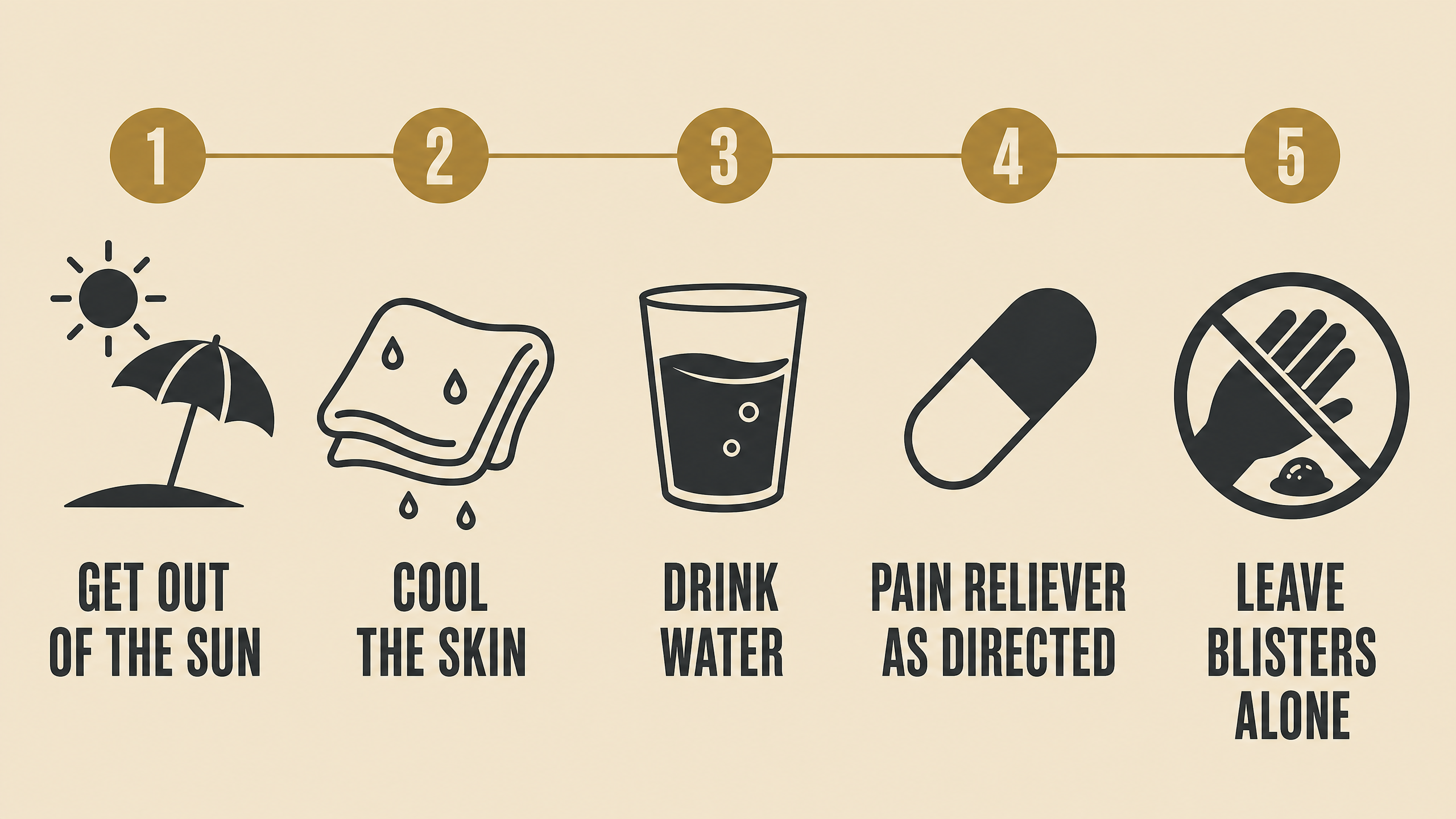
- Get out of the sun, fully. Shade is not enough on the first night. Go indoors.
- Cool the skin with a clean towel soaked in cool tap water, or take a cool bath. Ten minutes, several times a day, works well.
- Take ibuprofen or acetaminophen as directed on the label. It helps with pain and swelling.
- Drink water through the evening and the next day. Add an electrolyte drink if you were sweating hard.
- Moisturize with aloe vera or a plain lotion. Chilling it first feels good. Skip products with alcohol.
- For itching and redness, 1 percent hydrocortisone cream can help, used as the package directs.
- Leave blisters alone. They are a bandage your body made. Do not pop them or pick at peeling skin.
If a blister breaks on its own, wash it gently with mild soap and water, apply an antibiotic ointment, and cover it with a nonstick bandage. Skip numbing creams with benzocaine or lidocaine. They can irritate burned skin. Wear loose, soft clothing and keep the area out of the sun until it heals. For more on how burns are graded and treated, see our burn first aid guide.
The Other Kind of Sun Poisoning: Sun Rash
Some people use "sun poisoning" for something different. Within minutes to hours of sun exposure, they get an itchy rash of small red bumps, patches, or hives on the chest, arms, or legs, even after only a short time outside. This is a reaction to sunlight, often called a sun allergy, and the most common form is polymorphic light eruption. It can happen to people who are otherwise careful about sunburn.
Certain medications and skin products can make skin more sensitive to light. If you get a rash after a short time in the sun, or you started a new prescription recently, ask your doctor or pharmacist. A rash with fever, swelling of the face, or trouble breathing is an emergency.
How Heat Illness Hides Inside a Bad Burn
A day of heavy sun is also a day of heat. Headache, nausea, dizziness, and exhaustion after a long afternoon outside can come from the burn, from heat illness, or from both at once. The treatment overlaps: get cool, get out of the sun, and rehydrate. The difference is the stakes. If you stop sweating, your skin turns hot and dry, or you get confused, treat it as heat stroke and call 911. Our post on heat exhaustion vs. heat stroke shows how to tell them apart in the first minutes.
One more trap: drinking only water for many hours on a long, sweaty day can dilute sodium. If you feel confused or nauseated after downing huge amounts of plain water, read about hyponatremia symptoms.
Finally, a burn like this is a sign that your sun plan failed. Next time, use a broad-spectrum SPF 30 or higher, reapply every two hours and after swimming, wear a hat and long sleeves, and take real breaks in the shade. A bad burn in childhood or adulthood raises long-term skin cancer risk, so it is worth getting right.
Plan for the day outdoors the way you would plan for any emergency, with a kit in the pack and a plan in your head. See what's inside The 1stHour Trauma Kit, gear and guidance built for the first hour of whatever happens next.
This content is for informational purposes only and does not constitute medical advice. If you or someone else is confused, fainting, vomiting repeatedly, or has a very high fever, call 911 or go to the nearest emergency room.


