Hyponatremia Symptoms: When Too Much Water Turns Dangerous
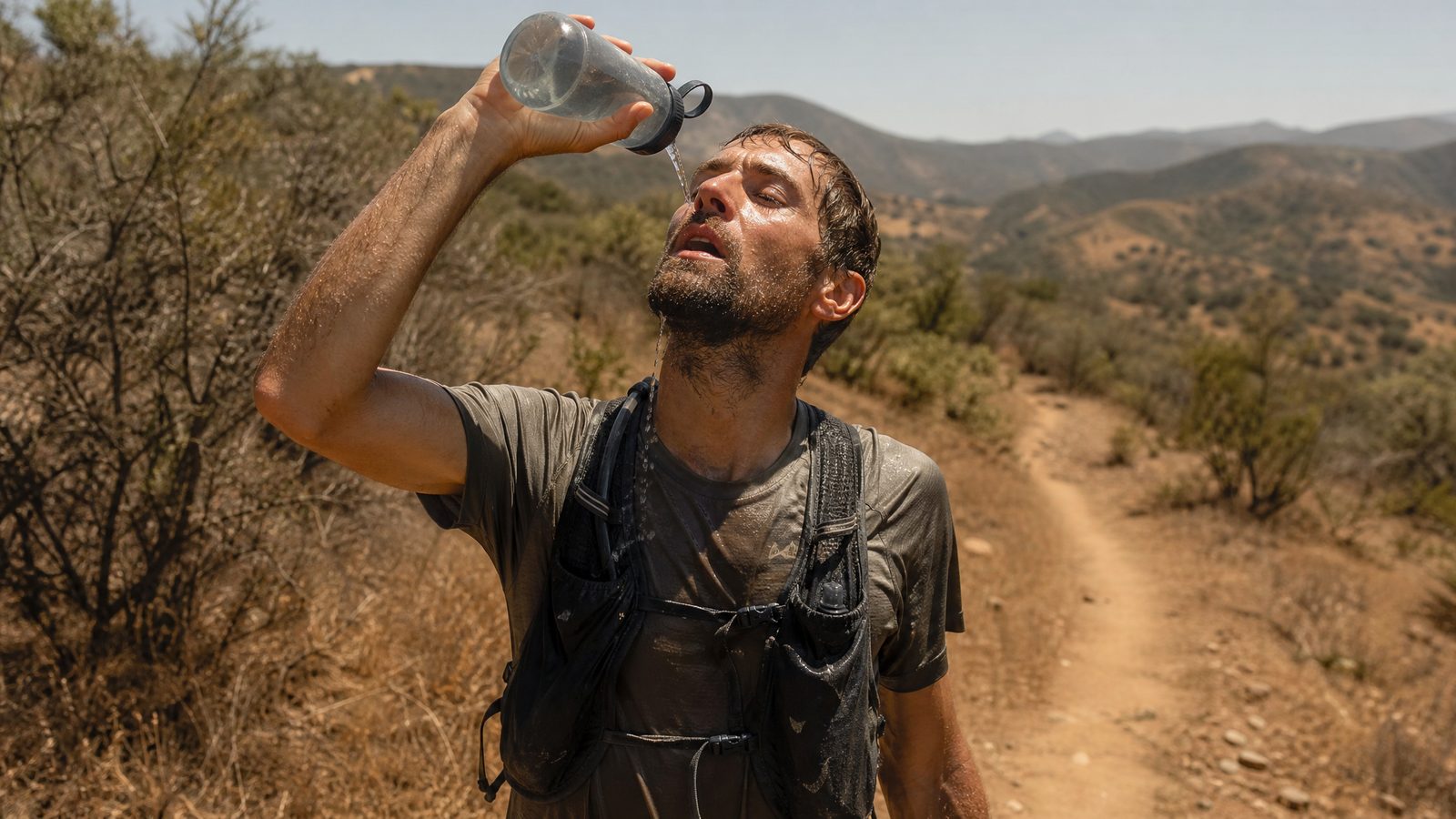
Most people worry about drinking too little water. Hikers pack extra bottles, runners carry hydration packs, and parents remind their kids to sip constantly on hot days. That instinct is usually right, but it has a blind spot.
Drink enough plain water over enough hours, especially during a long run, a hot job site shift, or a full day on the trail, and you can dilute the sodium in your blood. Your brain and muscles stop working the way they're supposed to. This is hyponatremia, and it hits people who did everything they thought was responsible.
What Hyponatremia Actually Is
Hyponatremia means your blood sodium has dropped below 135 milliequivalents per liter, according to the Cleveland Clinic. Sodium isn't just a seasoning. It controls how water moves in and out of your cells. Your body needs a tight balance of the two to function.
When you take in more water than your kidneys can clear, that balance tips. The same thing happens if you lose sodium through sweat without replacing it. Water follows the diluted sodium into your cells, and those cells swell.
Most cases outside a hospital setting fall under what's called exercise-associated hyponatremia, or EAH. It happens during or up to 24 hours after sustained physical activity. This is most common when that activity runs past two hours or happens in the heat, per NCBI's clinical review on the condition.
Some people call it "water intoxication," which is accurate but makes it sound rarer than it is. It isn't rare. It's a known risk in any activity where people are told to drink early and often.
The Early Hyponatremia Symptoms Most People Miss
Mild hyponatremia symptoms look a lot like ordinary fatigue, which is exactly why they get ignored. Watch for:
- Headache that doesn't fit the effort
- Nausea, sometimes with vomiting
- Lightheadedness or a foggy, off feeling
- Muscle cramps or general weakness
- Irritability or a short temper that isn't like the person
- Swelling in the hands, ankles, or face
- Noticeably less urine, or urine that stays clear when it should be concentrating
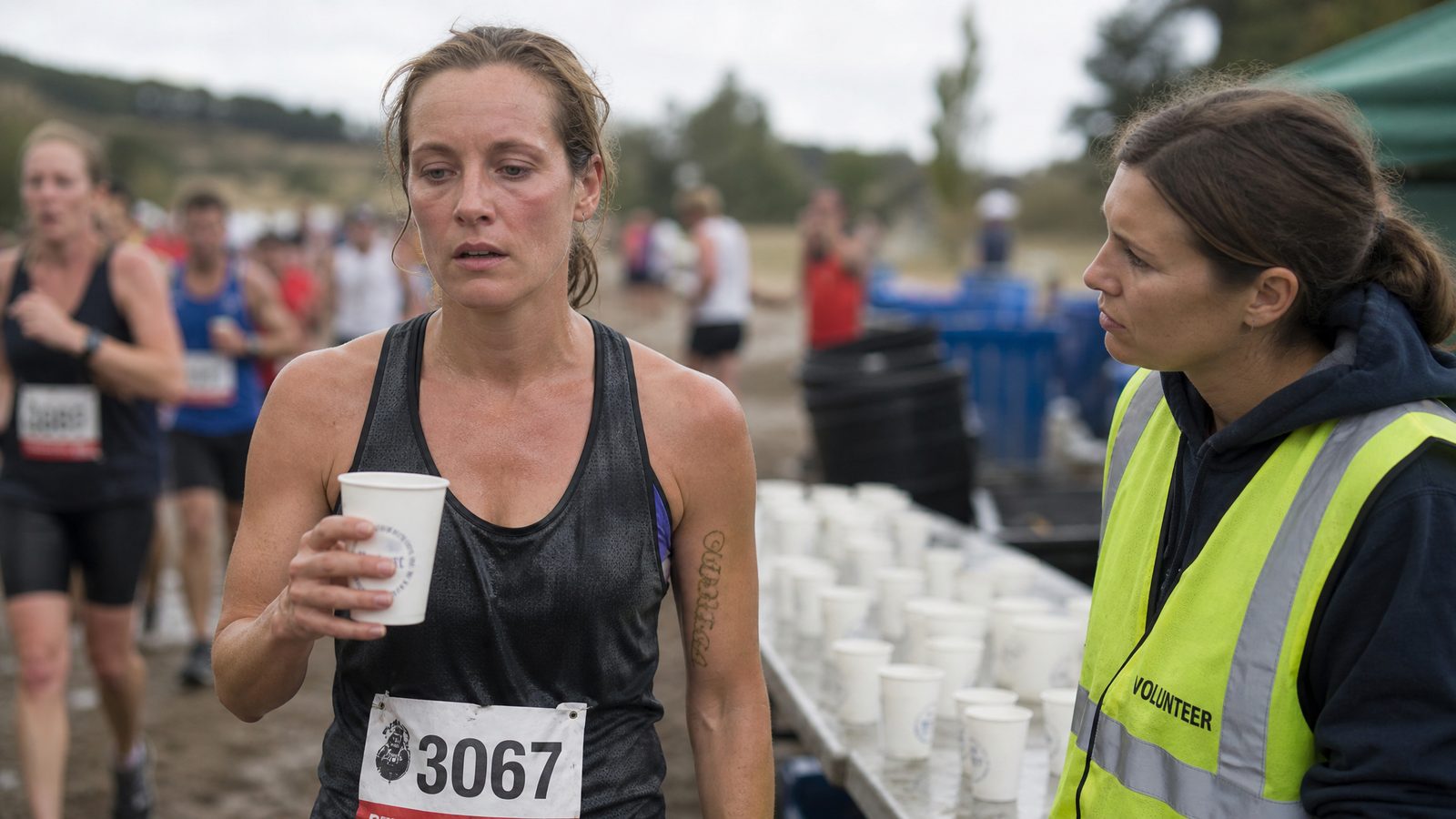
None of these scream emergency on their own. That's the problem. A runner at mile 20 who feels nauseous and foggy usually assumes they're just gassed and reaches for the water bottle, which makes things worse.
When Hyponatremia Symptoms Turn Severe
Severe hyponatremia is a different category and it moves fast. The signs of overhydration escalating into something dangerous include confusion or disorientation that a friend or teammate would notice before the person does, vomiting that won't stop, seizures, difficulty staying awake, and labored breathing. These come from swelling in brain tissue, which has nowhere to expand inside the skull.
Call 911 if someone who has been drinking heavily during long exercise becomes confused, has a seizure, or is hard to wake up. Do not give them more water or a sports drink while you wait.
If they're conscious and able to swallow safely, salty foods can help in a genuinely mild case. A few bouillon cubes dissolved in a small amount of water, or salted pretzels, both work. But anyone showing neurological symptoms needs emergency care and IV sodium correction, not a snack.
Why This Happens to Endurance Athletes and Outdoor Workers
Two things happen at once during long exertion. First, people drink hypotonic fluids like plain water on a schedule instead of by thirst, often because they were told to "stay ahead of dehydration."
Second, exertion itself can trigger your body to release a hormone called antidiuretic hormone, even when it shouldn't. That makes your kidneys hold onto water instead of getting rid of the excess. Combine those two and sodium gets diluted no matter how much you're sweating.
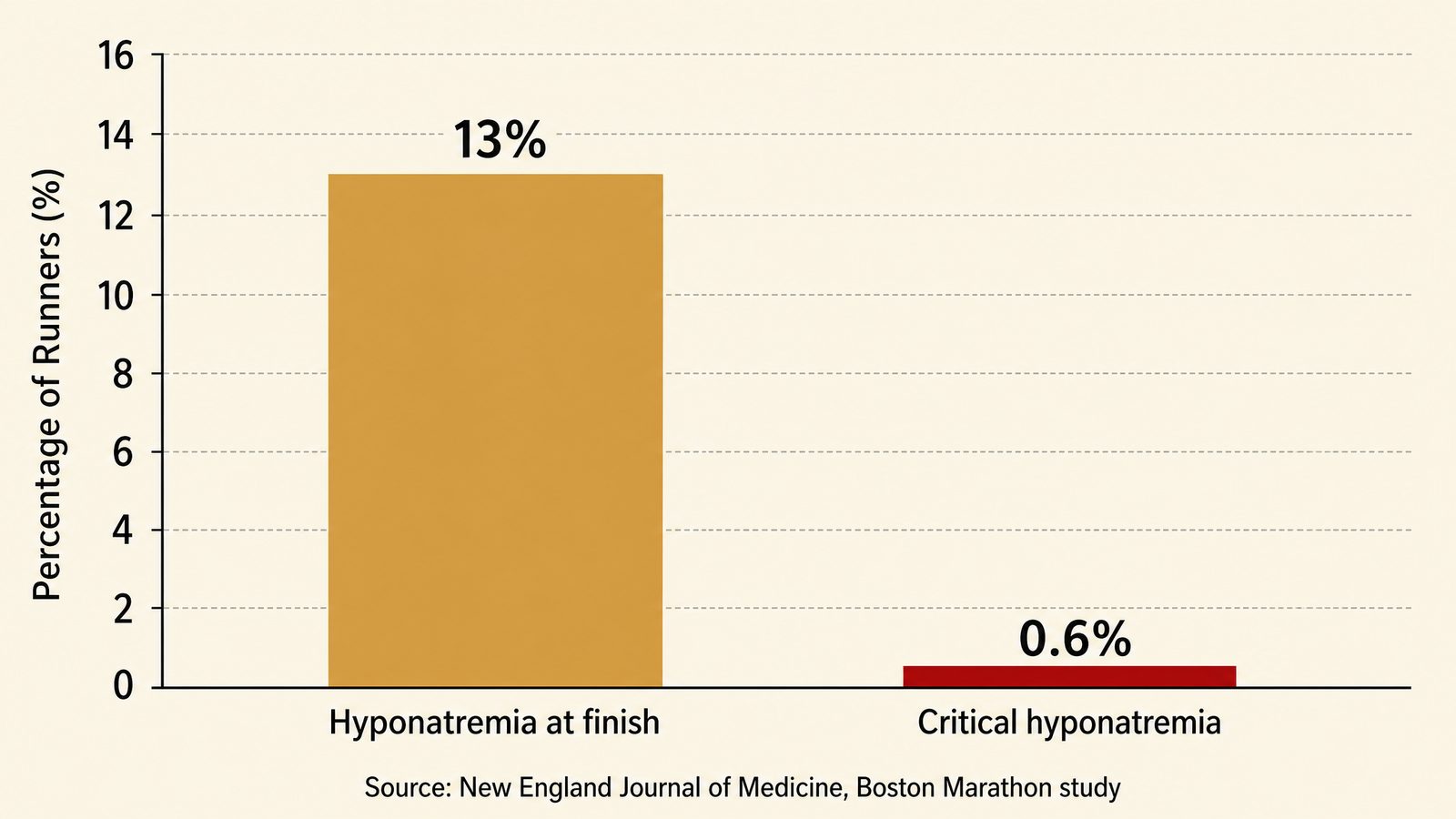
A well-known 2005 study of Boston Marathon finishers published in the New England Journal of Medicine found that 13 percent had hyponatremia at the finish line, and 0.6 percent had a critical level. The strongest predictors weren't fitness or experience.
They were finishing in more than four hours and gaining weight during the race, which only happens if fluid intake outpaced fluid loss. Long-distance backpackers, ultramarathoners, triathletes, and anyone working a physical job through a heat wave face the same setup.
Hyponatremia vs. Dehydration and Heat Illness
Here's what makes hyponatremia genuinely risky for a bystander to manage. It can look almost identical to dehydration and heat exhaustion. The treatment for one can actively harm someone with the other.
A dehydrated person is often thirsty, has dry mucous membranes, and their heart rate climbs. A person with hyponatremia may show none of that. If you check out signs of dehydration adults miss, you'll notice the two conditions share nausea, headache, and weakness almost point for point.
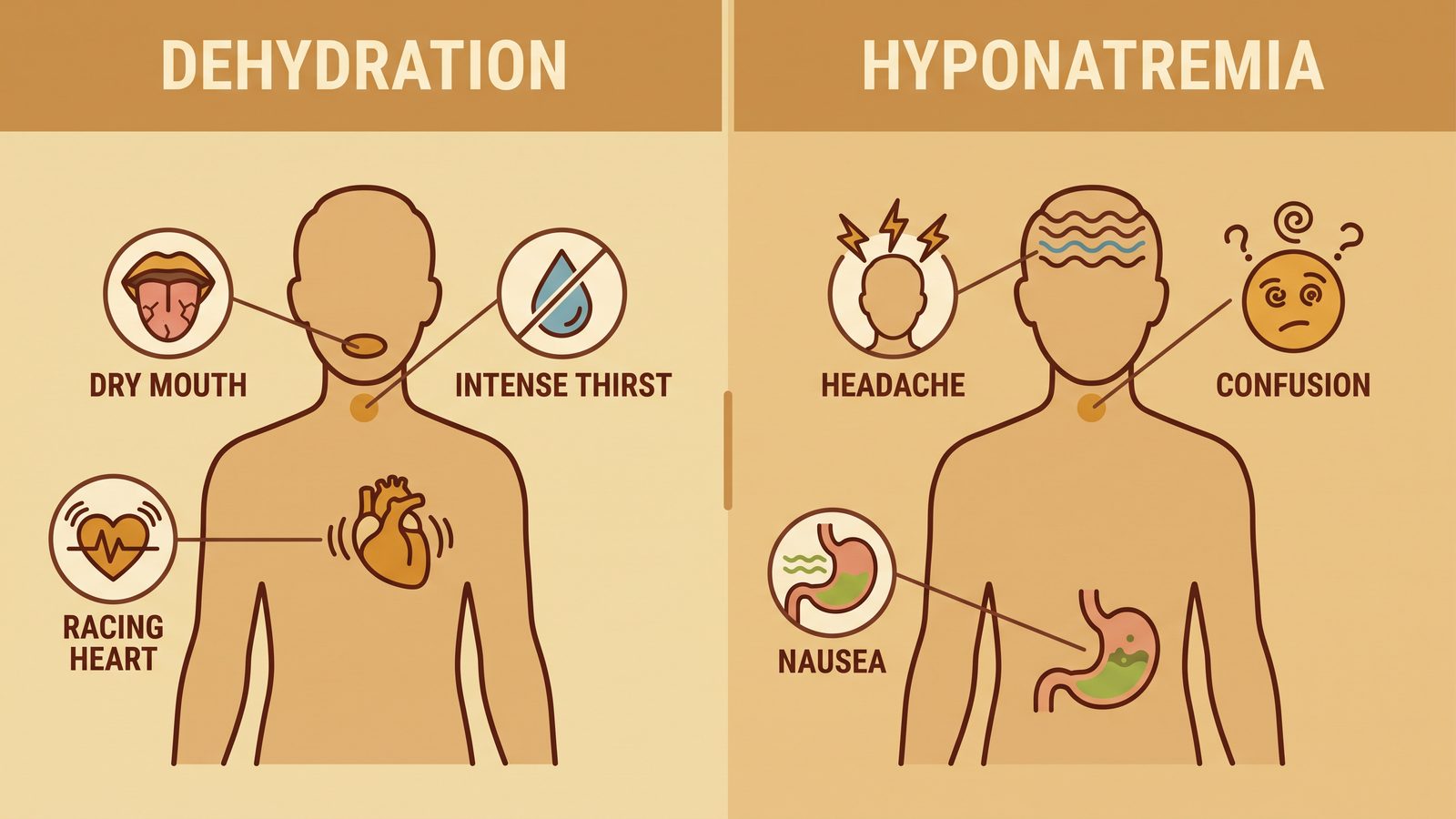
The same overlap exists with heat exhaustion vs. heat stroke. Giving someone with hyponatremia more fluids, which is the standard first response to both dehydration and heat illness, pushes their sodium lower and can turn a mild case into a medical emergency. This is exactly why race medical staff ask specific questions about how much someone has been drinking before handing over more fluids.
If you're the one making that call on a trail or a job site with no medical staff around, treat any confused or seriously unwell person after long exertion the same way. Stop giving fluids and call for help rather than guess.
What to Do in the First Hour
If you or someone with you has been sweating and drinking heavily for hours and starts feeling off, stop drinking plain water immediately. Switch to something with electrolytes if it's mild, or salty food if that's what's on hand. Sit down, cool off if it's hot, and pay attention to whether symptoms improve or get worse over the next 20 to 30 minutes.
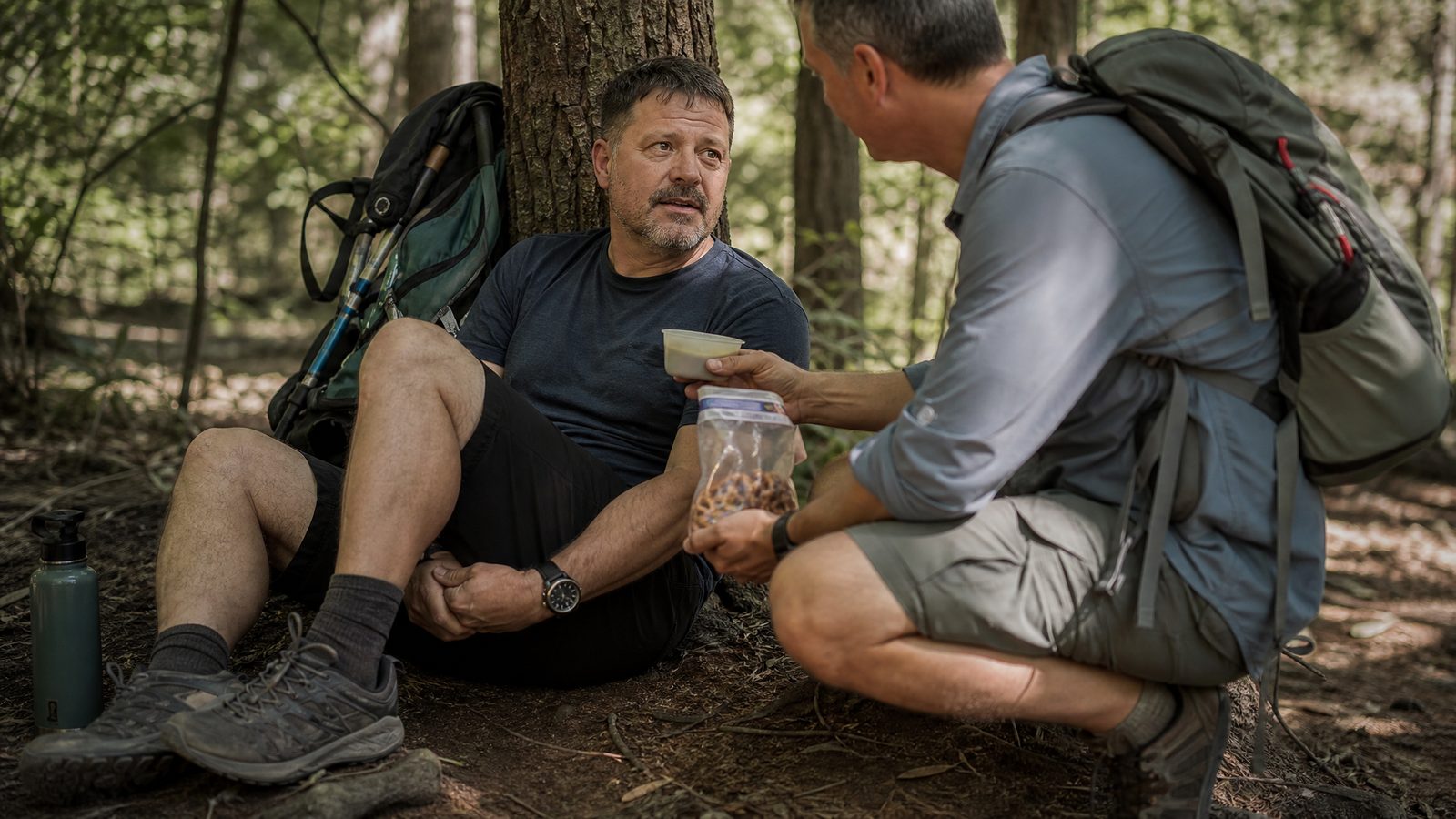
Treat any confusion, seizure, or trouble staying alert as a 911 call, full stop. Hospitals correct severe hyponatremia carefully with hypertonic saline, because fixing sodium levels too fast carries its own risk of brain injury. That part isn't something to attempt at home. Your job in the first hour is recognizing what's happening, stopping the thing that's causing it, and getting the person to people who can treat it safely.
Overexertion doesn't stop at hyponatremia. Muscles pushed past their limit can break down in ways that show up hours later, which is exactly what happens with rhabdomyolysis after a hard workout. It's worth knowing both, because the same long, hot, physically demanding day can trigger either one.
Most of what you need in that first hour is judgment, not gear. But a stocked kit that includes things like electrolyte packets and a way to check on someone's basic vitals means you're not improvising with whatever's in your car. The 1stHour Trauma Kit is built for exactly this kind of moment, when you need to act fast and correctly before help arrives.
This content is for informational purposes only and does not constitute medical advice. If you suspect hyponatremia or any medical emergency, call 911 or seek immediate medical attention.


