How to Stay Warm Without Power: A First-Hour Plan
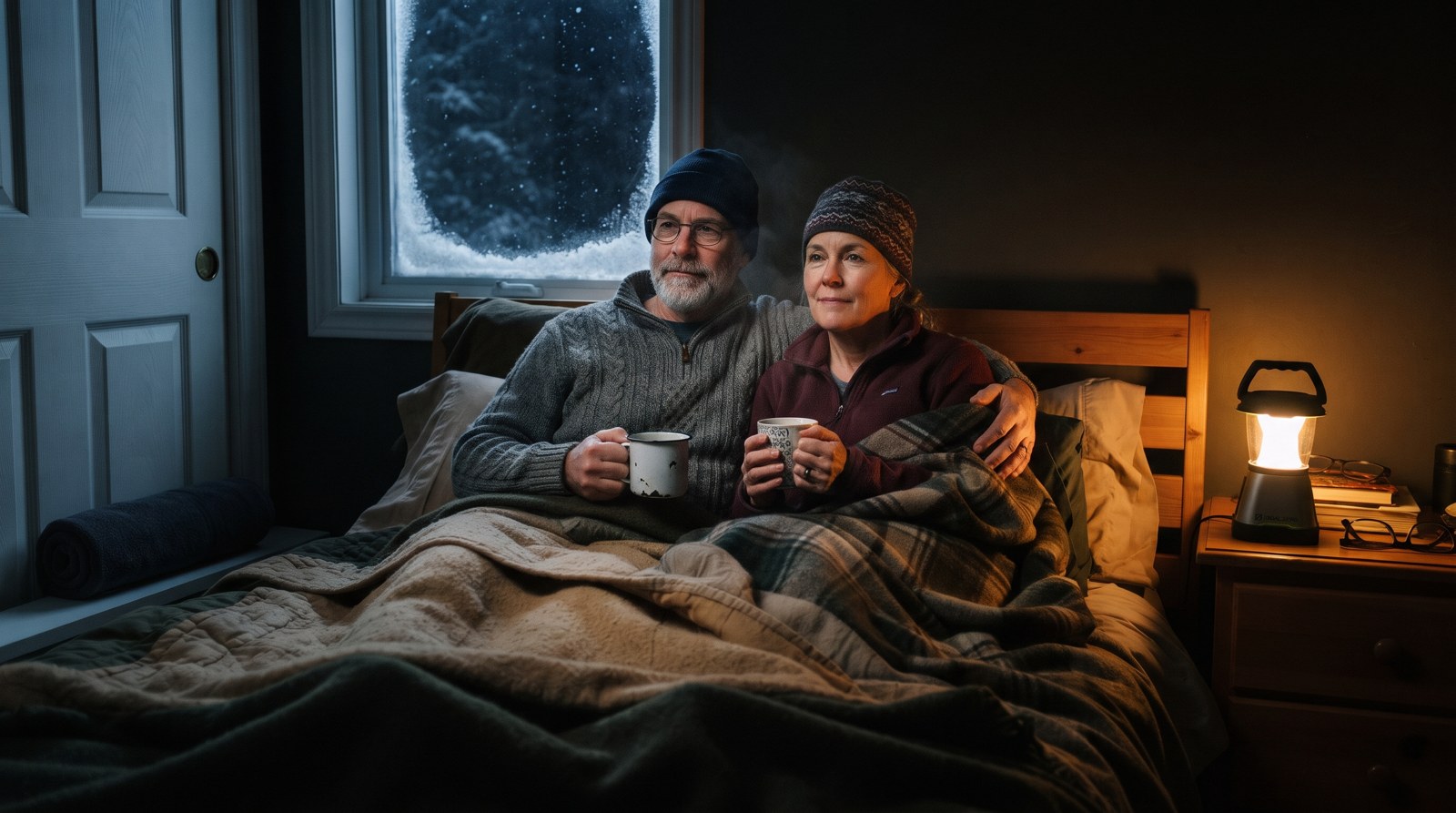
The lights flicker, the furnace goes quiet, and the house starts ticking as it cools. If it's an ice storm, the crews might be days out. Most people's first instinct is to wait it out under a blanket and hope. A better move is to spend the first hour setting up, while the house still holds its heat. This guide covers how to stay warm without power, step by step: how to build one warm room, which heat sources are safe, the ones that kill people every winter, the hypothermia signs to watch for, and the point where staying home stops making sense.
How Fast a House Gets Cold (and Who It Hits First)
A well-insulated house can hold a livable temperature for many hours after the heat cuts out. An older, drafty one can feel cold by evening. Wind, how cold it is outside, how many windows you have and whether the sun is out all change the math. You won't know in advance how long you have, which is why the first hour matters.
Not everyone handles a cold house the same way. The people who get into trouble first are older adults, babies, anyone with heart or circulation problems, and anyone living alone who might not notice they're getting confused. Hypothermia doesn't need freezing temperatures. Someone who stays chilled for hours in a cold room, especially if they're sitting still, can slide into it well above 32°F.
If someone in your house falls into one of those groups, plan around them from the start. They get the warmest spot, the most layers and the first ride out if things get worse.
The First Hour: How to Stay Warm Without Power
Here's the order we'd work in once you know the outage isn't a quick blip.
- Check the outage and report it. Look at your utility's outage map or call it in. Note the estimated restore time, but don't plan around it.
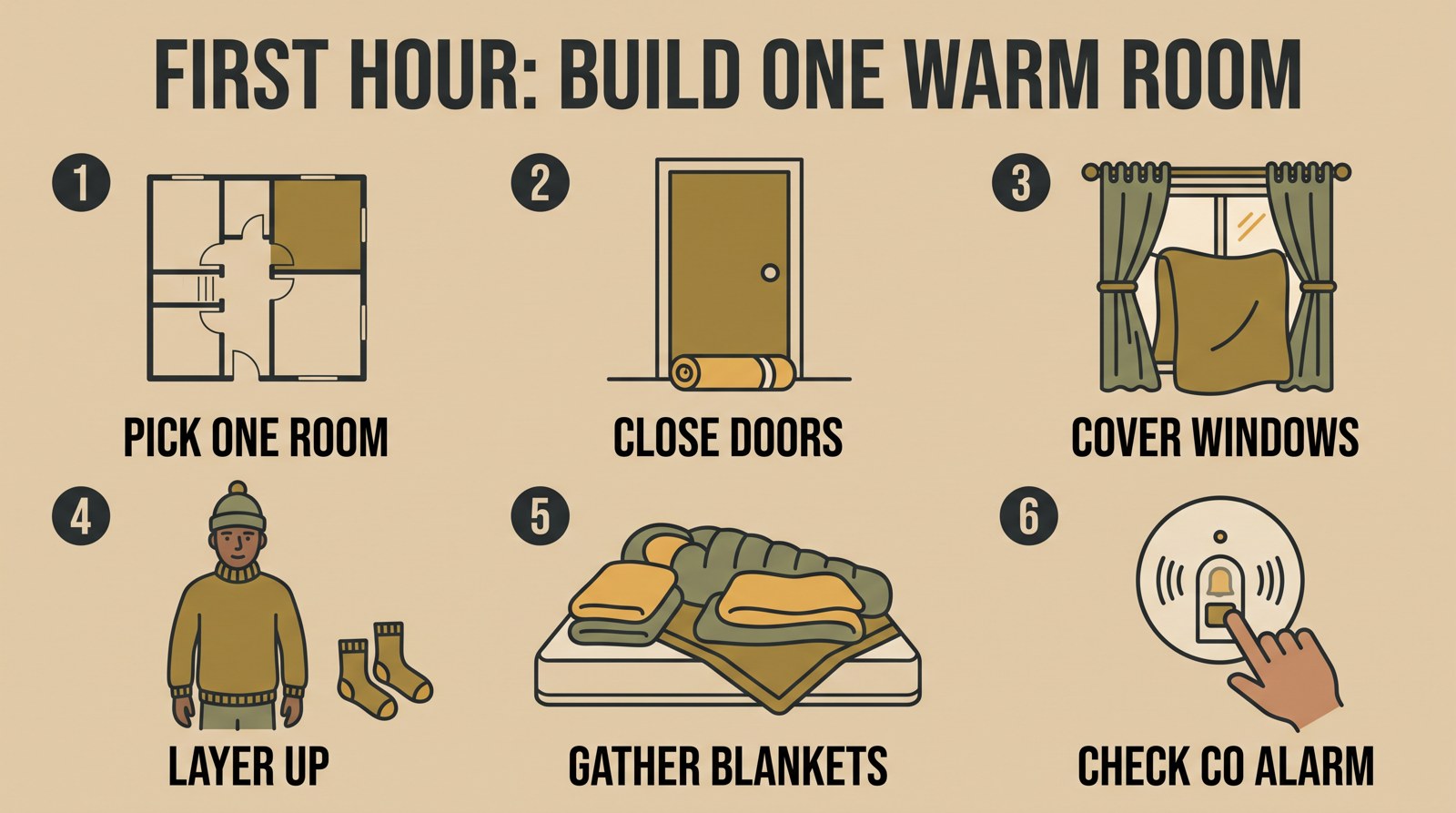
- Pick one room. Choose a small room near the middle of the house, with few windows and ideally on the south side. A room you can close a door on works best. Bedrooms and dens are good choices; a big open kitchen is not.
- Close the rest of the house. Shut doors to rooms you aren't using. Roll towels against the bottoms of doors to block drafts.
- Cover the windows. Close curtains and blinds, especially at night. Hang a blanket over a big window if you need to. If the sun is out, open south-facing curtains during the day and close them as soon as it drops.
- Layer up before you feel cold. Thin layers, then a warm sweater, then a coat if needed. Add a hat and wool socks. Swap anything damp for something dry.
- Gather bedding. Pile blankets, comforters and sleeping bags in the warm room. The CDC lists extra blankets, sleeping bags and warm winter coats among the heat sources to have on hand for an outage.
- Eat and drink. Your body makes heat by burning food. Eat a snack and drink something warm if you can heat it safely. Skip alcohol, which makes you feel warmer while your body loses heat faster.
- Protect the pipes. Let faucets on outside walls drip. Our guide on frozen pipes covers what to do before and after they freeze.
- Check your CO alarm. Make sure every carbon monoxide alarm has working batteries. Plug-in alarms without battery backup stop working when the power goes out.
For the bigger picture, our power outage emergency plan walks through food, water, medications and communication.
How to Heat a Room Without Electricity, Safely
Once you've set up your room, keeping it warm is mostly about trapping the heat you already have.
Body heat counts. Several people in one small room warm it up noticeably. Bring pets in too. Sleep close together under shared blankets. A small tent or a blanket fort pitched over a bed traps even more.
Insulate yourself from the floor. Cold floors pull heat out of you fast. Sit and sleep on a mattress, couch cushions or a stack of blankets instead of the bare floor.
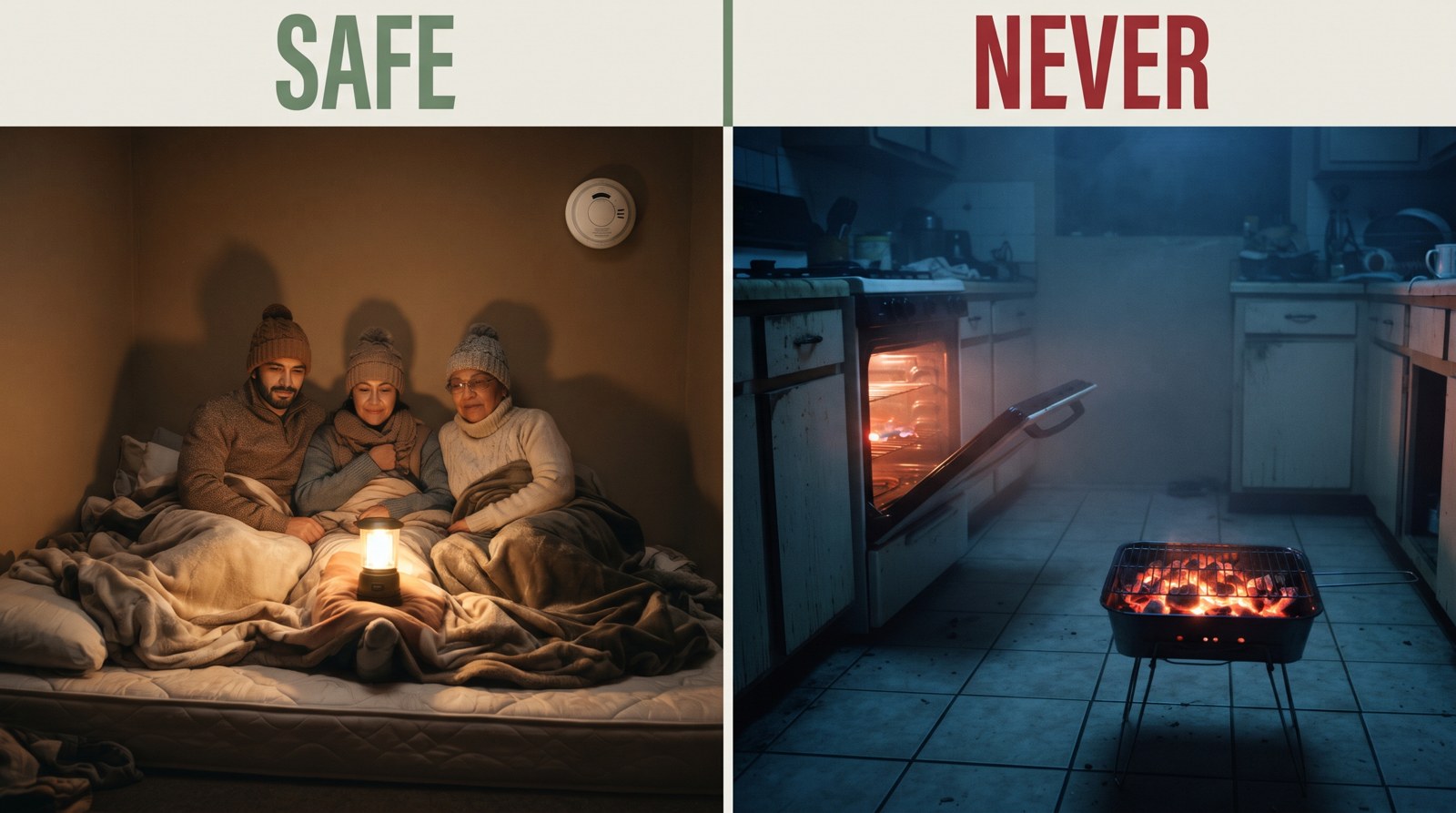
Use heat sources made for indoor use. A fireplace or wood stove that has been inspected and is vented properly is fine. So is a fuel-burning heater specifically labeled for indoor use, used exactly as the instructions say, with a working CO alarm nearby. Battery-powered heated vests and chemical hand warmers help too.
If you have a generator, use it outside and run power in. A small electric space heater plugged into a heavy-duty extension cord from a generator sitting well away from the house is a safe setup. Our portable generator safety guide covers placement and cords.
Candles add a little light and almost no heat, and they start fires. Use flashlights and lanterns that run on batteries.
Heat Sources That Kill: Never Use These Indoors
This is the part of a winter outage that sends people to the hospital or worse. Carbon monoxide has no smell or color, and it builds up quickly in a closed-up house.
The CDC is direct about this: never use a gas range or oven to heat a home, and never use a charcoal grill, hibachi, lantern or portable camping stove inside a home, tent or camper.
Generators are the biggest danger. According to the Consumer Product Safety Commission, an average of nearly 100 people die in the U.S. each year from carbon monoxide poisoning from portable generators. The CPSC says to run them outside only, at least 20 feet from the house, and never in a garage, basement, shed, carport or on a porch. Opening a window or the garage door does not let out enough CO.
Never use these for heat indoors:
- A gas oven or stovetop
- A charcoal or gas grill
- A camp stove or propane heater not labeled for indoor use
- A generator, even in an attached garage
- A car running in the garage
Know the signs of CO poisoning: headache, dizziness, nausea, weakness and confusion, often in several people at once. If you suspect it, get everyone outside into fresh air and call 911. Our guide on carbon monoxide poisoning symptoms goes deeper.
Hypothermia Signs to Watch for in a Cold House
Hypothermia sneaks up on people indoors because it happens slowly. The person who's getting cold is often the last to notice, since confusion is one of the symptoms.
The CDC lists these warning signs in adults:
- Shivering
- Exhaustion or feeling very tired
- Confusion or memory loss
- Fumbling hands
- Slurred speech
- Drowsiness
In babies, look for bright red, cold skin and very low energy.
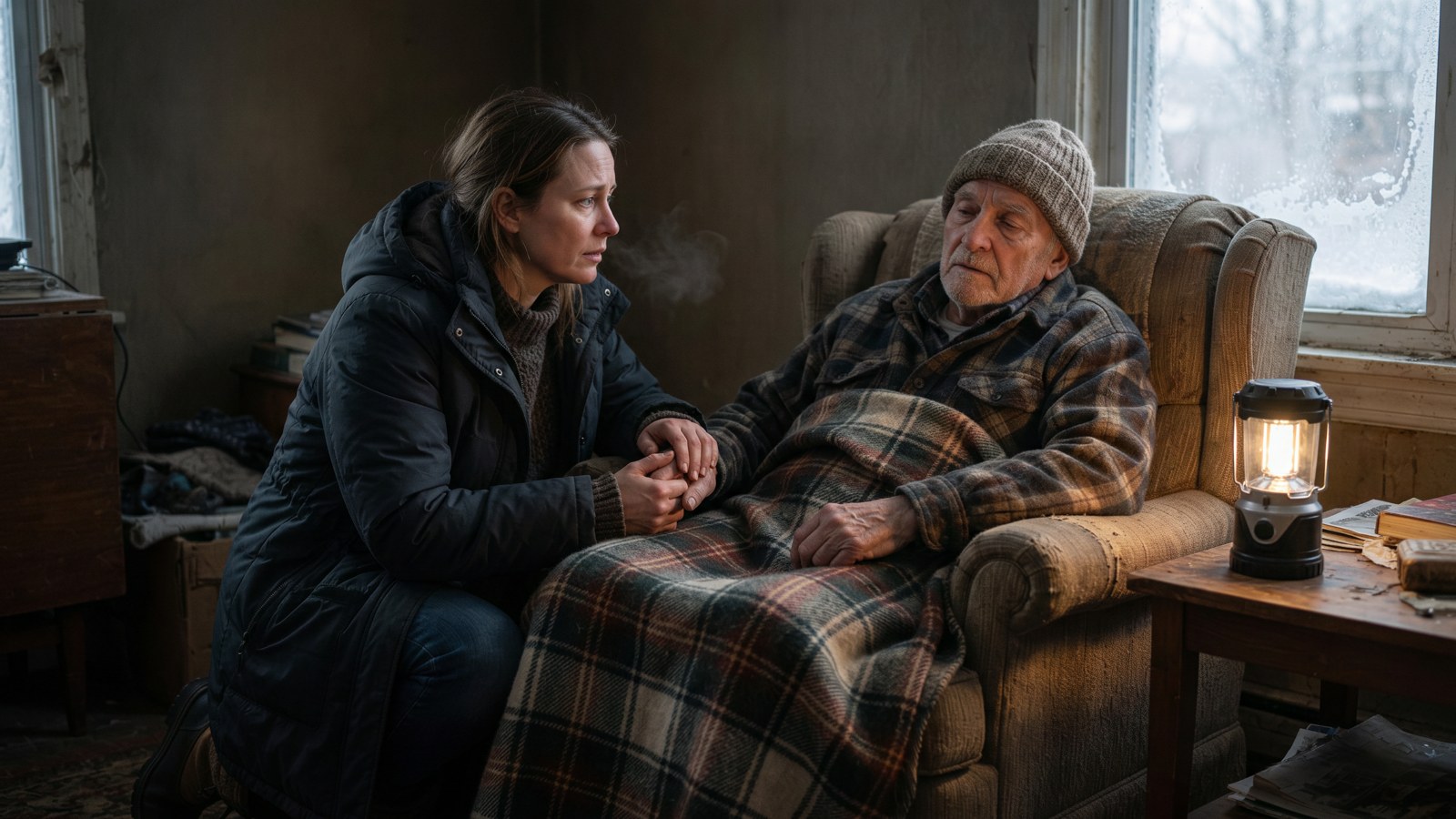
Check on each other every hour or so, especially older relatives and anyone living alone. Ask simple questions. If someone is mumbling, stumbling or can't keep up a conversation, take it seriously.
If you see these signs, get the person into the warmest spot you have and replace any wet clothing. Warm the center of the body first: chest, neck, head and groin. Give warm, sweet drinks if they're awake and can swallow, but no alcohol. If their temperature is below 95°F, the CDC says to get medical attention immediately. Call 911 if they're confused, very drowsy or unresponsive. Our hypothermia first aid guide covers the steps in detail.
When to Stay Warm Without Power at Home, and When to Leave
Staying home is often the right call for a short outage. It stops being the right call when the house is losing the battle. Leave for a warming center, a community shelter or a friend's or relative's home with power if:
- Your warm room keeps getting colder and you have no safe way to heat it
- Anyone shows signs of hypothermia, even mild ones
- Someone relies on powered medical equipment and the batteries are running low
- You're caring for a baby or a frail older adult and can't keep them warm
- The outage is expected to last days, not hours
- Your CO alarm goes off, or anyone has symptoms of CO poisoning
The CDC recommends seeking shelter with friends or at a community shelter when it's too cold at home. Your city or county website, local news or 211 can point you to warming centers. Before you go, shut off the main water valve and drain the pipes if the house could drop below freezing, and leave a note or text someone where you're headed.
A winter outage can stack up problems fast: cold, falls on the ice, cuts from storm cleanup and slow response times. We built The 1stHour Trauma Kit for the gap between something going wrong and help arriving. See what's inside The 1stHour Trauma Kit and keep it with your flashlights and blankets this winter.
This content is for informational purposes only and does not constitute medical advice. If someone shows signs of hypothermia or carbon monoxide poisoning, call 911.


