Shingles Symptoms: The Early Signs and Why the First 72 Hours Matter
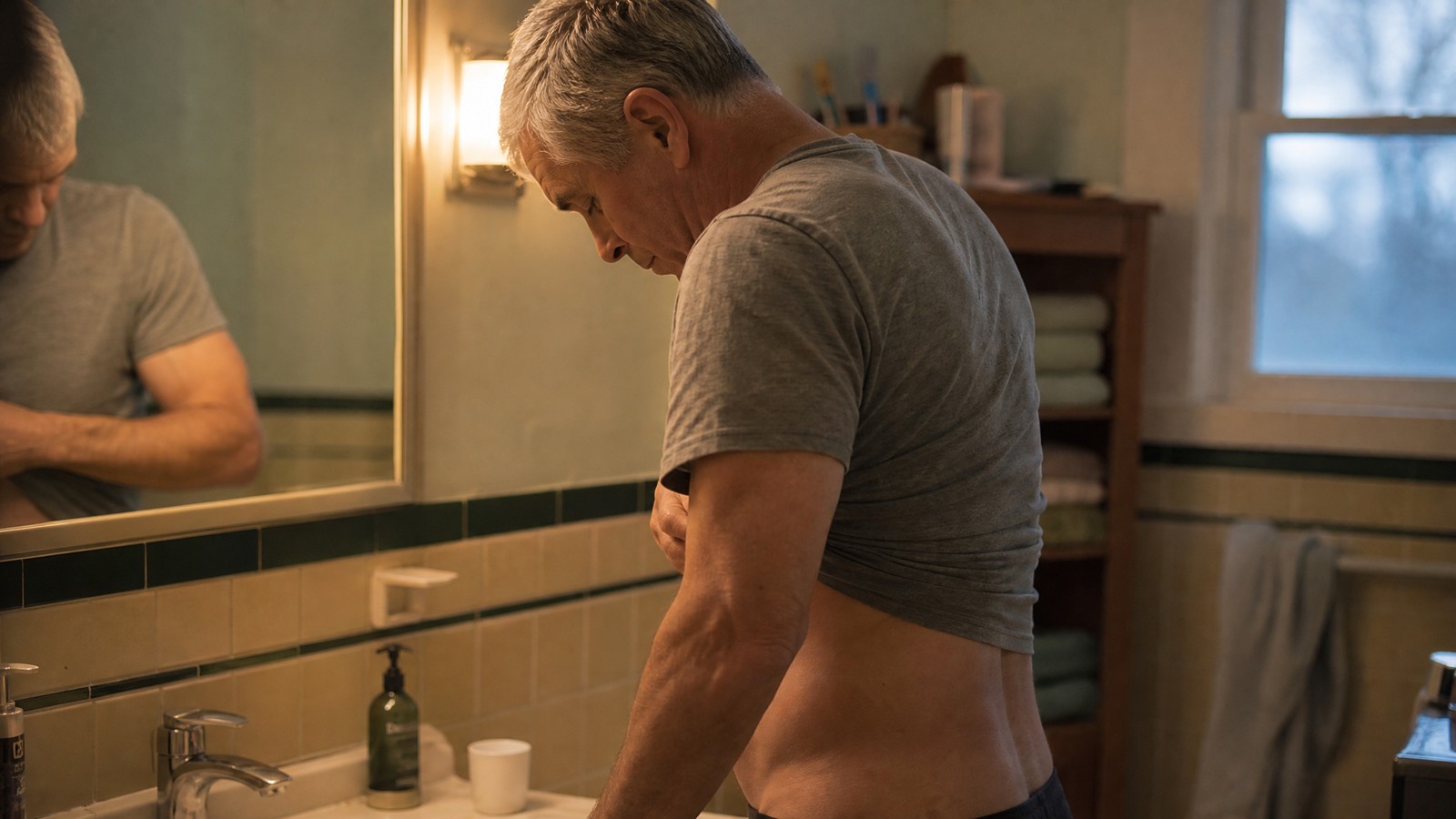
You wake up with a sore, burning patch along your ribs. Nothing is on the skin. You blame a pulled muscle, a bad mattress, or the way you slept. Two days later a band of small blisters shows up in exactly that spot. That is the usual shingles story, and the lost days matter. Here is what the early symptoms look like, why the 72-hour window exists, and which versions are urgent.
Early Shingles Symptoms Before the Rash Shows Up
Shingles is the chickenpox virus waking up again. If you had chickenpox as a kid, the virus never left. It sleeps in your nerve roots for decades, and for reasons that include age, illness, and stress, it can reactivate and travel along a single nerve to the skin.
That is why the first symptoms are nerve symptoms. According to the CDC, many people feel pain, itching, or tingling in the area where the rash will appear, often several days before it does. Some also get a fever, a headache, or an unusual wiped-out feeling.
The clue is the pattern. The sensation sits on one side of the body, in one strip. It might feel like burning, a deep ache, an electric zing, or skin so sensitive that a shirt hurts. If a patch of one-sided pain has no obvious cause, keep shingles on your list.
Shingles Symptoms on the Skin: What the Rash Looks Like
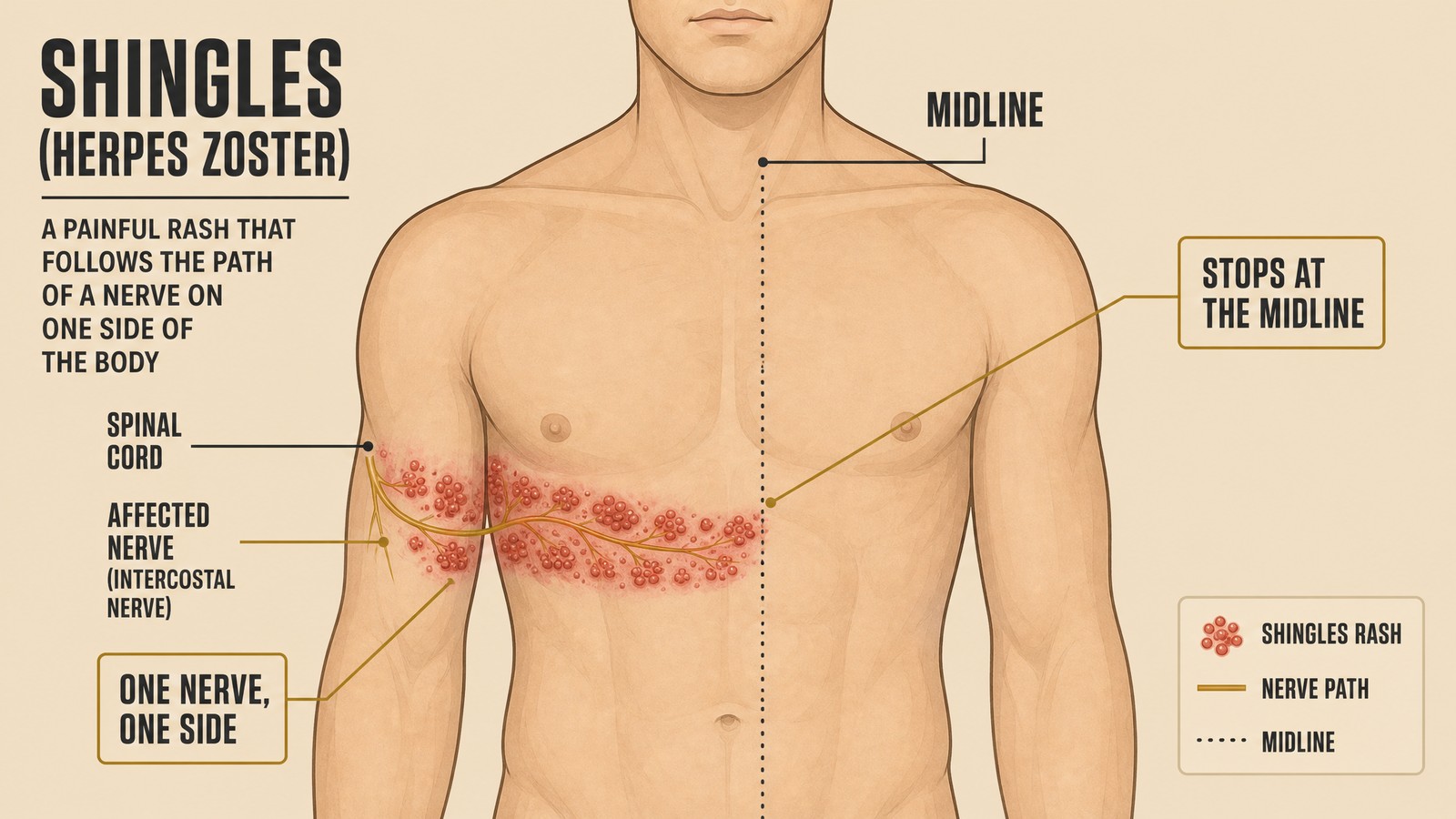
The rash usually arrives one to five days after the first pain. It begins as red patches, then turns into clusters of small fluid-filled blisters. The CDC says the blisters typically scab over in 7 to 10 days, and the rash generally clears in two to four weeks.
Three features separate shingles from most other rashes:
- It follows a band or stripe on one side of the body, most often the torso, and stops at the midline.
- The skin is painful, burning, or very tender, not just itchy.
- The blisters come in clusters, rather than scattered single spots.
It can also show up on the face, the neck, or an arm or leg. Poison ivy and shingles can look alike in the first day or two, but poison ivy is itchy and shows up where plants touched you, often in streaks or patches on both sides. If you want to compare, our post on poison ivy rash treatment covers what that rash looks like.
Why the First 72 Hours Matter
Shingles is treated with antiviral pills such as acyclovir, valacyclovir, or famciclovir. They do not cure the virus, but they can shorten the episode and lower the odds of lingering nerve pain. They work best when you start them within about 72 hours of the rash appearing.
That window is short. Many people spend the first two days guessing, waiting, or trying a cream. Then they call the doctor on day three and the clinic is booked until Monday.
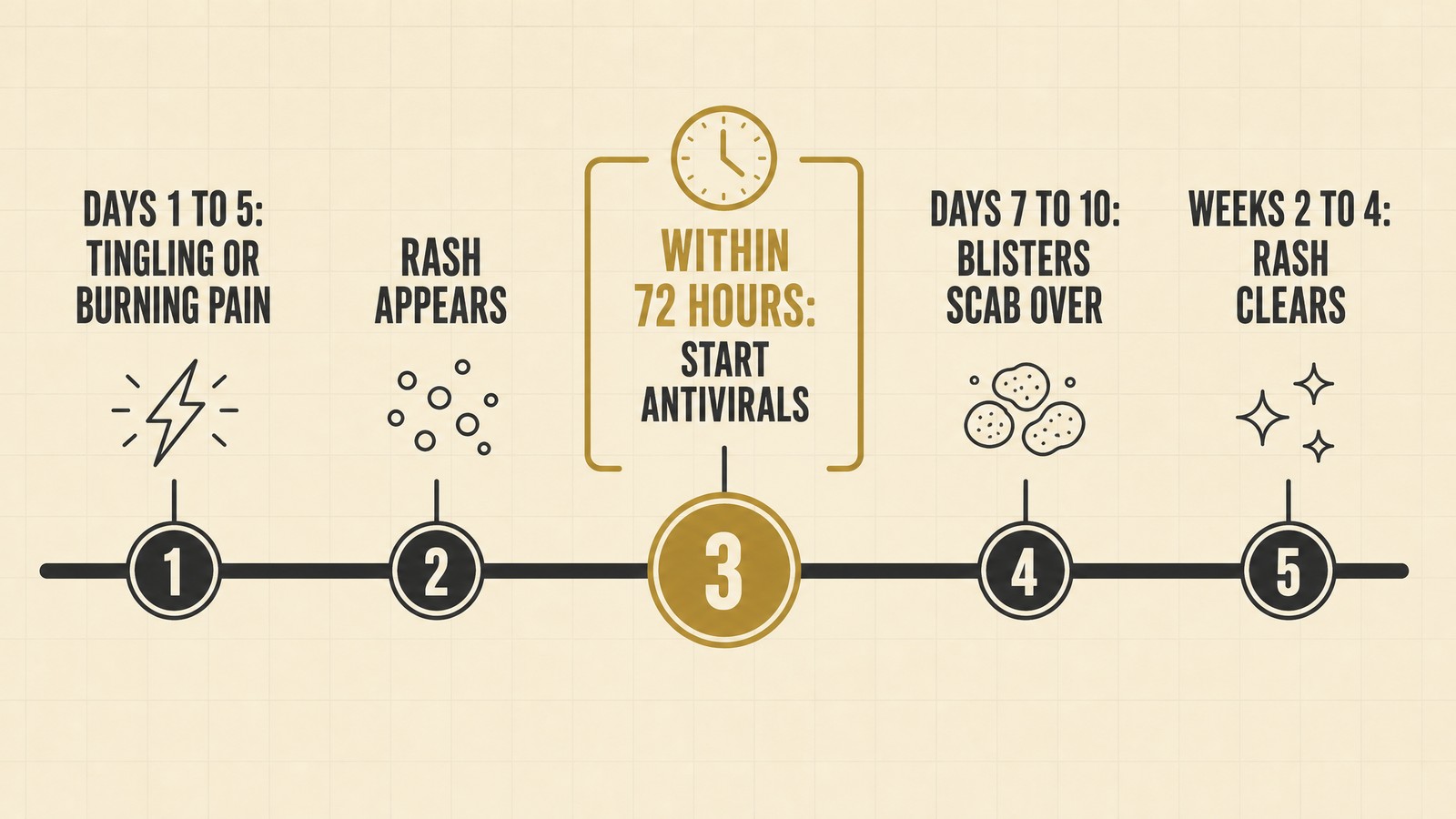
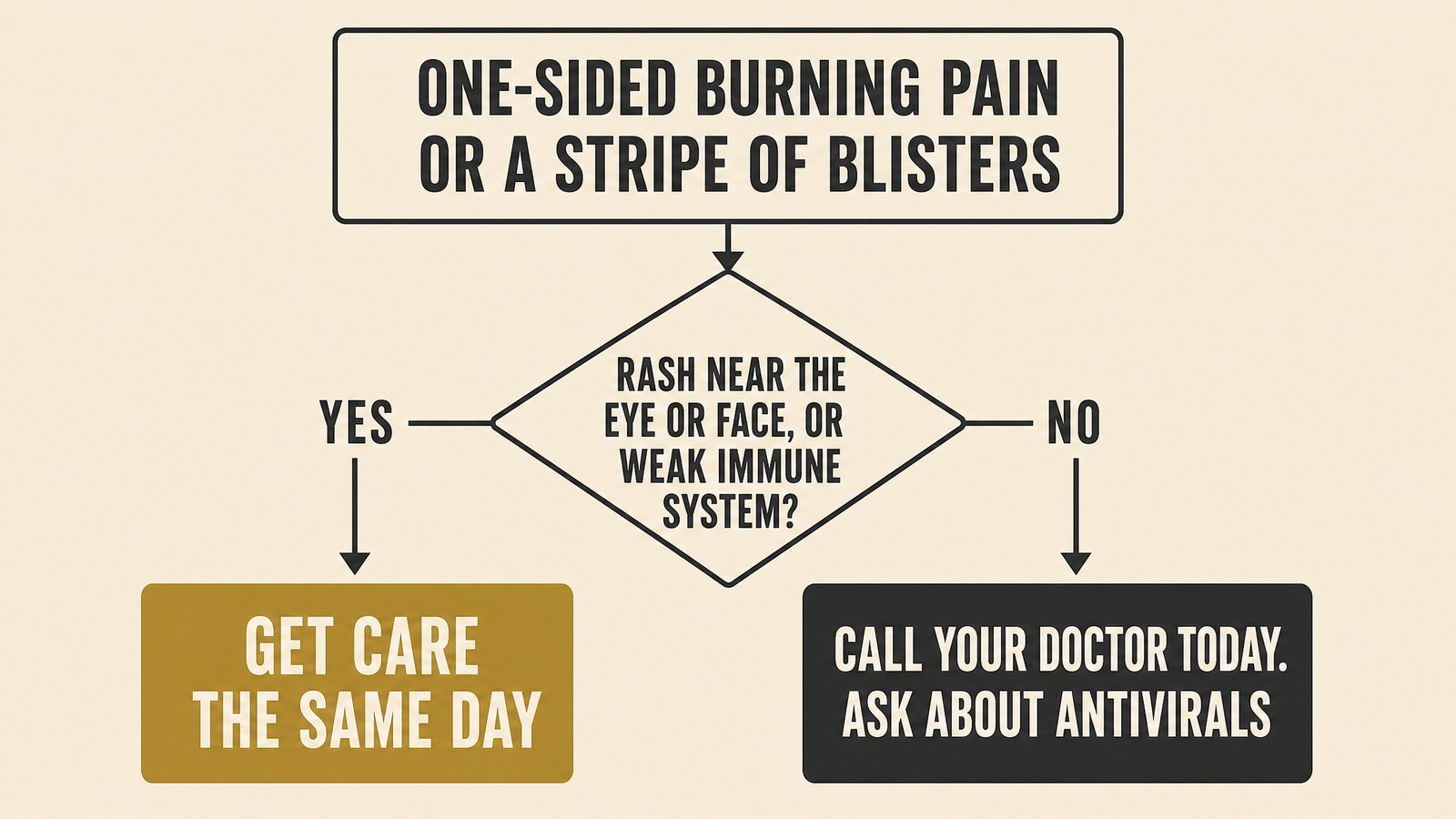
The practical move is simple. If you have one-sided burning pain, or a stripe of blisters you cannot explain, call your doctor or an urgent care clinic the same day and say the word "shingles." Do not wait to see if it gets worse. If you are past 72 hours, still go. Treatment can still help, especially for severe pain, a rash on the face, or a weak immune system.
Shingles Near the Eye or Face: Treat It as Urgent
Most shingles episodes are painful but manageable. A few are not.
A rash on the forehead, around one eye, or on the tip of the nose can mean the virus has reached the nerve that supplies the eye. This is called herpes zoster ophthalmicus. It can cause inflammation inside the eye and permanent vision damage, and it needs same-day care. An eye that is red, painful, or sensitive to light, or any new blurry vision, makes it more urgent. Our post on sudden vision loss explains how fast eye problems can move.
Blisters in or around the ear, with ear pain, hearing changes, or a drooping face, point to a related problem that also needs prompt treatment. A drooping face with arm weakness or slurred speech is a stroke until proven otherwise, so use the checks in our FAST stroke guide and call 911.
Go to urgent care or the ER the same day if any of these apply:
- The rash is near an eye, on the nose tip, or on the forehead.
- You have a weak immune system from cancer treatment, steroids, or an immune condition.
- The pain is severe, or the rash is spreading well beyond one strip.
- You feel confused, feverish, or very unwell.
One more trap: shingles on the chest or ribs can cause one-sided chest pain before any rash. If the pain comes with shortness of breath, sweating, or pressure, call 911 first and sort out the cause later. Our guide to chest pain that is not a heart attack covers how doctors tell the difference.
What to Do at Home While You Wait to Be Seen
Home care will not replace antivirals, but it makes the days more bearable.
Keep the rash clean and dry. Cool, damp compresses can ease the burn for 15 to 20 minutes at a time. Wear loose, soft clothing over the area. Try not to scratch or pop the blisters, since that raises the chance of a skin infection and scarring. Over-the-counter pain relievers can help if they are safe for you, so follow the label or ask a pharmacist. Rest is not optional. People who push through usually feel worse.
Is Shingles Contagious? How to Lower Your Risk
You cannot catch shingles from someone else. But the fluid in the blisters carries the chickenpox virus, and a person who has never had chickenpox or the vaccine can catch chickenpox from it. Until the blisters crust over, keep the rash covered, wash your hands often, and stay away from newborns, pregnant women who have not had chickenpox, and anyone with a weak immune system.
Shingles can come back, and the pain can outlast the rash. When nerve pain lingers for months after the blisters heal, it is called postherpetic neuralgia, and it is more common as people get older. The best defense is the shingles vaccine. The CDC recommends two doses of Shingrix for adults 50 and older, and for some younger adults with weakened immune systems. Ask your doctor or pharmacist, even if you have already had shingles once. The National Institute on Aging and the American Academy of Dermatology both have plain-language overviews if you want to read more.
Shingles is a reminder that early symptoms are easy to talk yourself out of. See what's inside The 1stHour Trauma Kit, gear and guidance built for the first hour of whatever happens next.
This content is for informational purposes only and does not constitute medical advice. If you think you have shingles, contact a doctor promptly. If you have a rash near your eye, chest pain with shortness of breath, or signs of a stroke, call 911 or go to the nearest emergency room.


