Jellyfish Sting First Aid: What Actually Works (Not Urine)
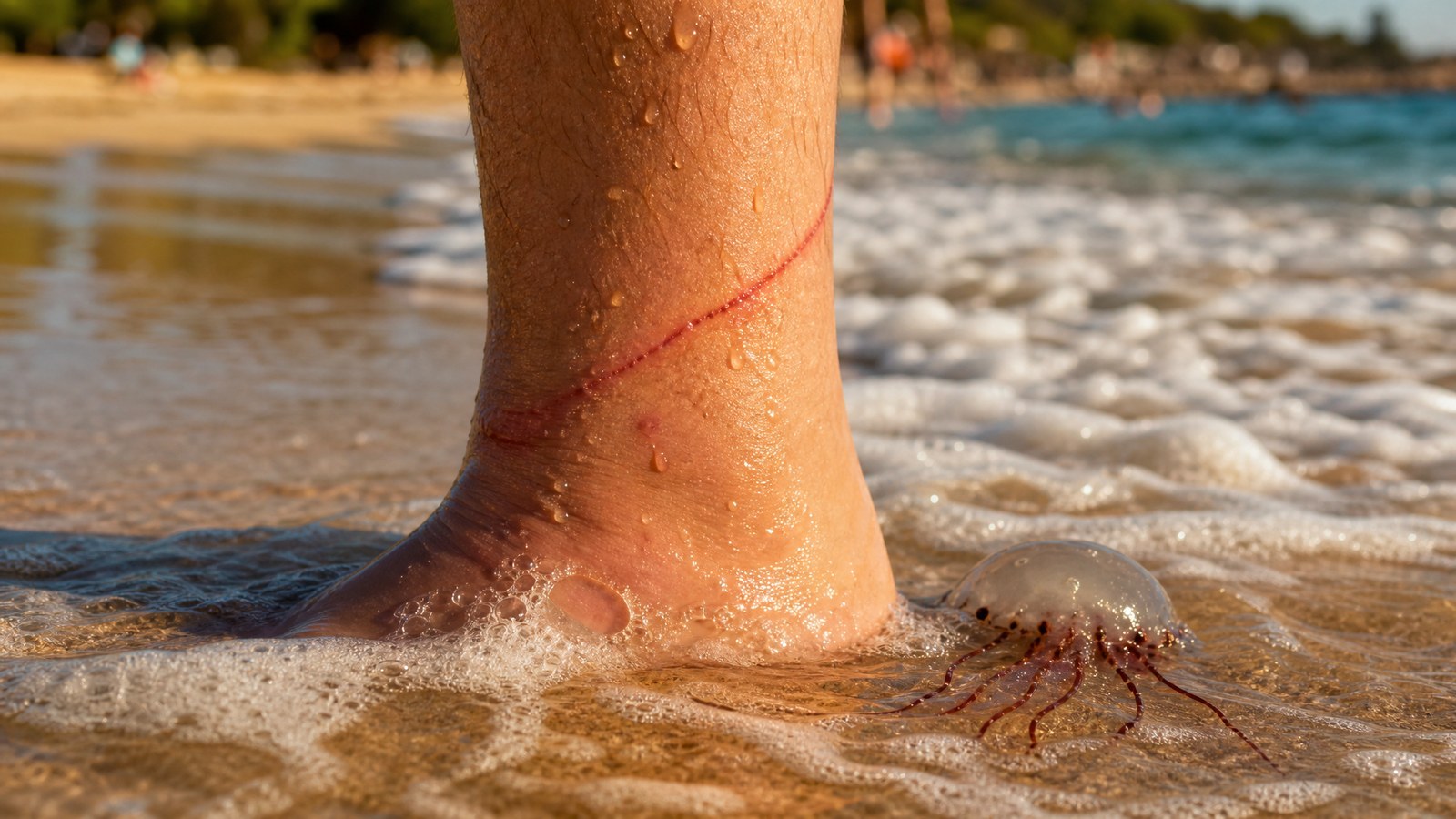
Everyone has heard the beach advice. Somebody gets stung, a friend offers to help, and things get awkward fast. The trouble is that the famous fix is wrong, and the wrong fixes can make a sting hurt more. Good jellyfish sting first aid is boring and specific: remove what is still stuck to the skin, use heat, and watch for signs that this is bigger than a sore patch of skin. This guide walks through the steps in order, explains why the urine myth refuses to die, and lists the red flags that change the plan.
What a Jellyfish Sting Does to Your Skin
A jellyfish tentacle is covered in thousands of tiny stinging cells. Each one holds a coiled, venom-loaded thread that fires on contact. Brush a tentacle and the threads shoot into your skin. That is why a sting often leaves a raised, whip-like line of red welts, along with burning pain and swelling.
Here is the part people miss. The cells keep working after the jellyfish is gone. A tentacle torn off in the surf, or a dead jellyfish on the sand, can still sting. Pieces stuck to your skin can keep firing until someone takes them off, and the wrong move can set off more of them.
Most stings in North American waters hurt a lot and then settle. Pain, redness, itching, and swelling are typical. A small number of species cause body-wide reactions, and that is why the second half of this guide matters.
Jellyfish Sting Treatment Steps, in Order
Work through these quickly and calmly. Getting the order right matters more than speed.
- Get everyone out of the water. A person who is in pain can panic, and a swimmer who panics can go under. If someone is struggling, see our guide on how to help a drowning person first.
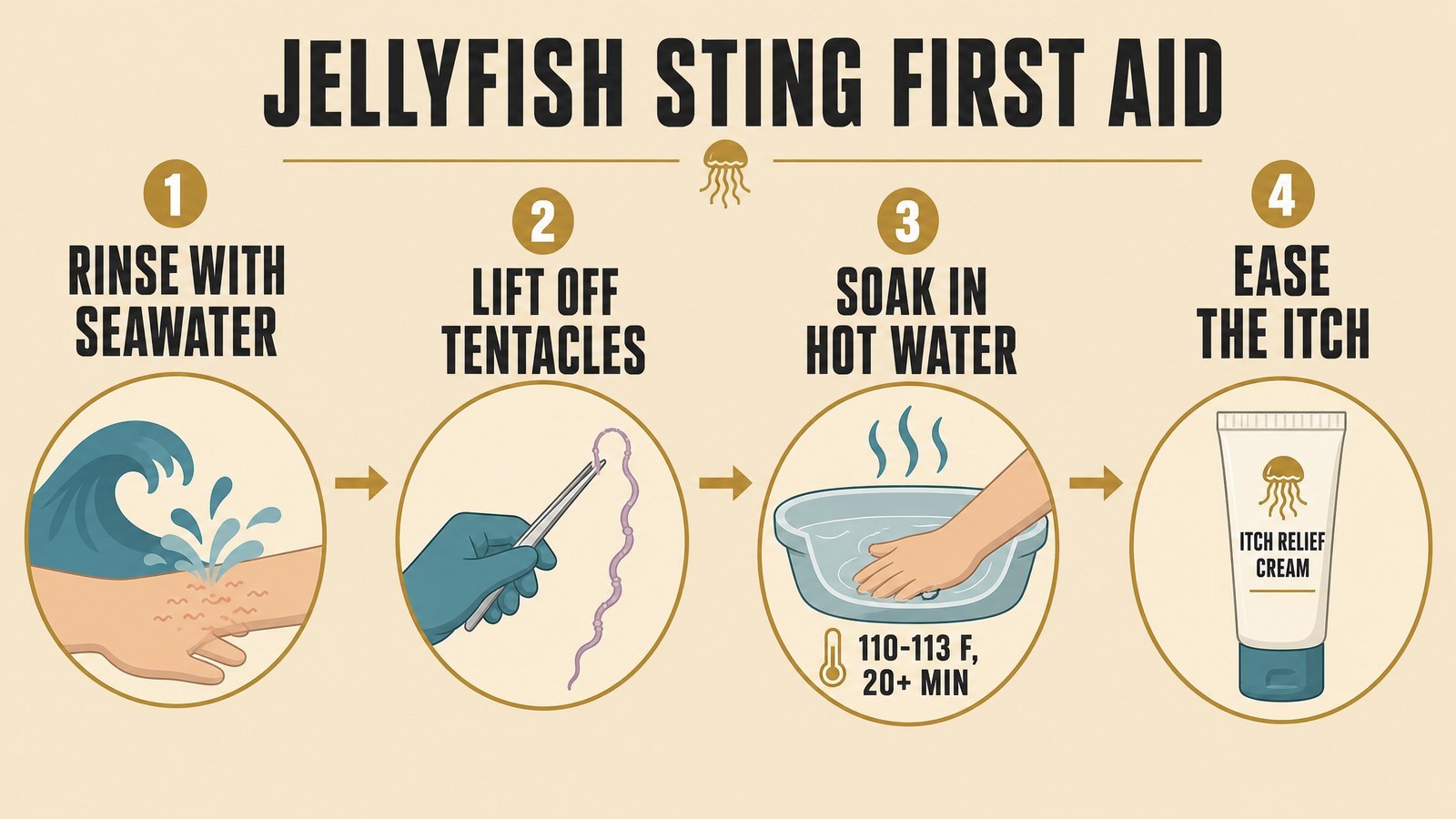
- Rinse the area with seawater. Do not use fresh water. Do not rub.
- Remove tentacles. Use a gloved hand, a hand wrapped in a plastic bag or towel, a blunt stick, or a plastic utensil, as the American Red Cross advises. Fine tweezers work for individual strands. Scraping gently with the edge of a credit card can lift stuck barbs.
- Soak the sting in hot water. The Mayo Clinic recommends water at 110 to 113°F (43 to 45°C), hot but not scalding, for as long as it takes the pain to ease, which can run 20 to 45 minutes. The Red Cross says at least 20 minutes.
- If you can't soak it, use a chemical heat pack wrapped in a towel, or a hot shower. Keep the temperature tolerable.
- Finish with pain relief. The Red Cross suggests lidocaine gel if you have it. Mayo Clinic lists 0.5 to 1 percent hydrocortisone cream twice a day for itching and irritation.
Test the water with a part of your body that isn't stung. Stung skin may feel pain differently, and you don't want to add a scald to a sting.
Jellyfish Sting Treatment Myths: Urine, Fresh Water, and Rubbing
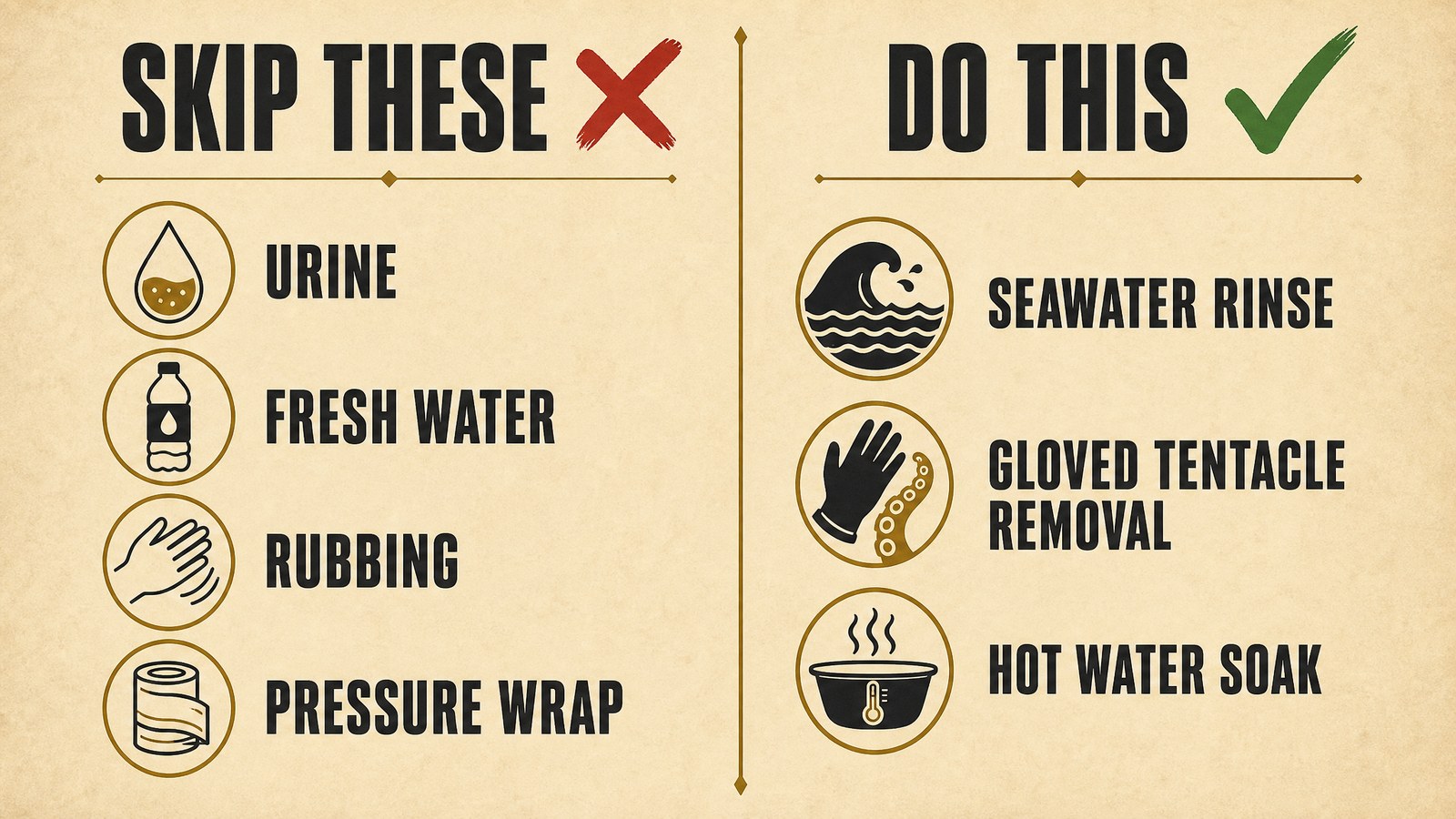
The urine story has a few versions, and none of them hold up. The Cleveland Clinic says urine can make pain worse. It does not contain enough ammonia to neutralize venom, and the stream itself can move the barbs and release more venom. Add the fact that you are now treating a wound with a bodily fluid, and the idea gets worse, not better.
Fresh water is the myth people don't realize is a myth. Rinsing with a hose or a bottle of drinking water feels logical. According to the Cleveland Clinic, fresh water can make the stinging cells activate and worsen the sting. Seawater is the right rinse.
Here is what to skip:
- Urine
- Fresh water, including bottled water and beach showers, until the tentacles are off
- Rubbing the area with a towel or sand
- Pressure bandages or tight wraps
- Meat tenderizer, ammonia, and alcohol
- Ice or cold water as the main treatment, since Mayo Clinic lists cold water among the things to avoid
Ice packs show up in some guidance as a way to dull pain after tentacles are removed. Heat is the better first choice.
Vinegar: Right for Some Stings, Wrong for Others
Vinegar is the one item in jellyfish first aid where the answer depends on what stung you. The Cleveland Clinic notes it works well for box jellyfish and compass jellyfish stings. For a Portuguese man-of-war, it has the opposite effect and can release more venom.
A man-of-war isn't a true jellyfish, but it gets lumped in with them on the beach. It has a gas-filled float, often blue or purple, sitting on the surface with long tentacles trailing underneath. If you saw that float, skip the vinegar.
If you don't know what stung you, skip it, and go to the seawater rinse and the hot soak. Note that the Red Cross steps leave vinegar out entirely. Lifeguards and local health departments in your area know the local species, so follow their guidance when they give it.
Jellyfish Sting Treatment: When It Is an Emergency
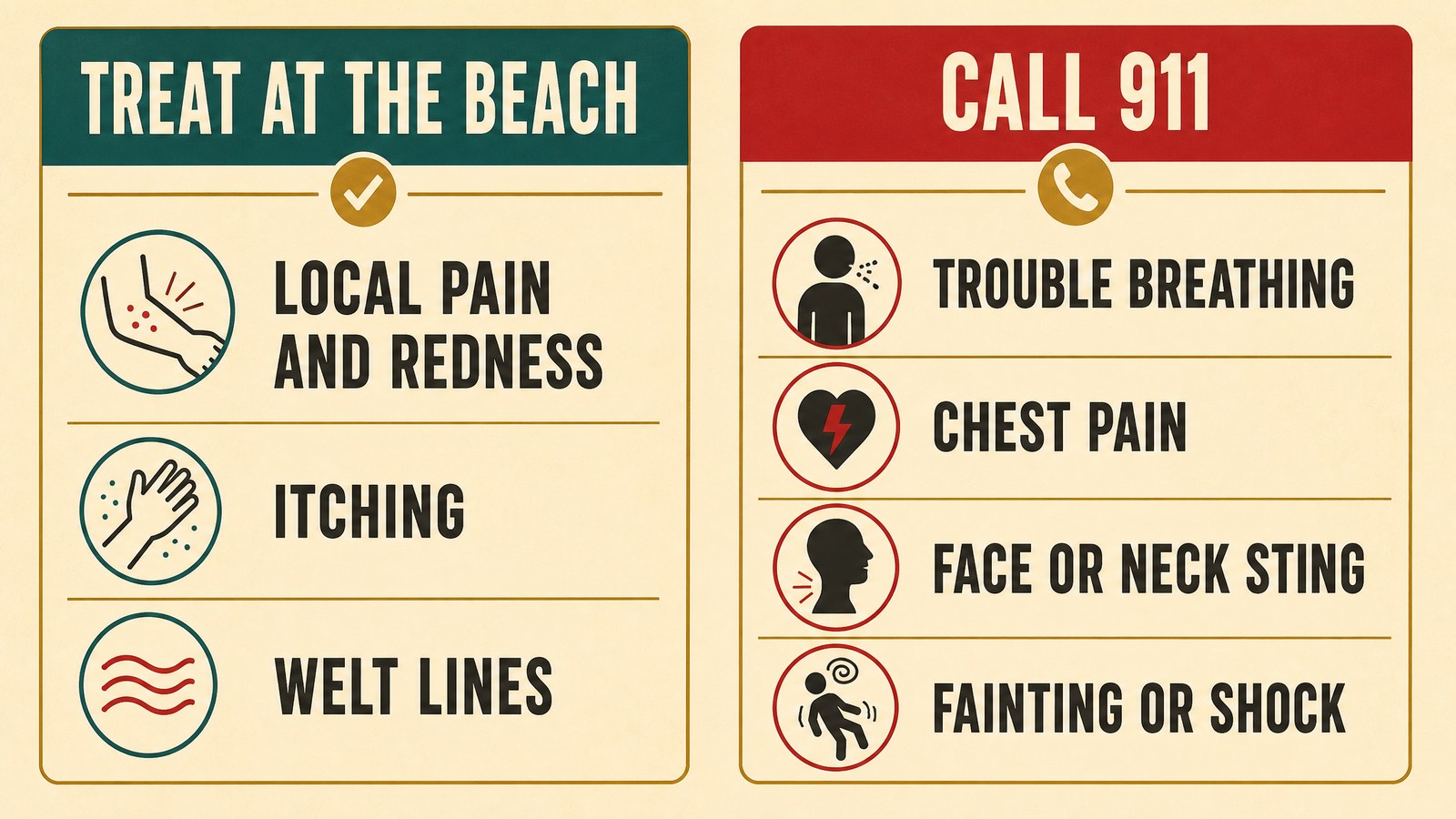
Most stings stay local. Some don't. Call 911 for any of these:
- Trouble breathing, wheezing, or swelling of the lips, tongue, or throat
- Chest pain or an abnormal heart rate
- Signs of shock, such as pale clammy skin, confusion, or fainting
- A sting on the face or neck
- A sting near or in the eye, which Mayo Clinic says generally needs immediate care
- Nausea or vomiting, abdominal pain, muscle cramps, or heavy sweating
- A known box jellyfish sting, since antivenom exists only for that species
- A history of severe allergic reactions to marine life
- A sting from an animal you can't identify
If someone develops hives, a swollen throat, or dizziness minutes after a sting, treat it as an allergic reaction. Our guide to anaphylaxis first aid covers what to do while you wait for help. The same logic applies to other stings, and our post on bee sting first aid walks through the allergic reaction timeline.
Aftercare and Beach Prevention
For a mild sting, expect pain to ease over hours and itching to hang around for a few days. Wash the area gently once the pain settles. Keep an eye on it for infection, which looks like spreading redness, warmth, pus, or fever. Some people get a delayed rash days later, so don't be alarmed by a second round of itching.
A few habits cut your odds of getting stung:
- Check for posted jellyfish warnings and flags before you swim
- Wear a rash guard or thin wetsuit in waters known for jellyfish
- Shuffle your feet in shallow water so you don't step on one
- Never touch a jellyfish washed up on shore, dead or alive
A small beach kit helps. Pack a pair of disposable gloves, tweezers, a plastic bag, hydrocortisone cream, and a thermos of hot water if the beach has no showers. Our home first aid kit checklist covers the basics that belong in any bag.
Beach days and boat trips put you minutes from help on a good day and much further on a bad one. See what's inside The 1stHour Trauma Kit, gear and guidance built for the first hour of whatever happens next.
This content is for informational purposes only and does not constitute medical advice. If you suspect a serious reaction to a sting, call 911 or seek care from a medical professional.


