How to Shut Off Utilities in an Emergency
A pipe bursts in the basement at 2 a.m. An earthquake rattles the house and you catch a whiff of rotten eggs. Floodwater is creeping toward the outlets. In each case, the fastest way to limit the damage is a valve or a switch somewhere in your house, and most people have no idea where theirs are. Knowing how to shut off utilities in an emergency takes about 15 minutes to learn and can save you a flooded house, a fire or worse. This guide covers when to shut each one off, where the shutoffs usually are, the tools you need, and when to skip the valve and get out.
When to Shut Off Utilities in an Emergency (and When to Leave)
Shutting off a utility is a damage-control move. It isn't something you do every time the lights flicker or a storm warning pops up.
Gas: Turning off the gas is rarely needed, and restoring it takes a visit from the utility. SoCalGas tells customers not to turn off the meter unless they smell gas, hear it escaping or see other signs of a leak, and only if it's safe to do so. If the smell is strong or you hear a loud hiss inside, don't stop to find a wrench. Get everyone out first.
Water: Shut it off for a burst or leaking pipe, a failed water heater, a broken fixture you can't isolate, or when you're leaving a house that may freeze.
Electricity: Shut it off if you see sparks or arcing, smell burning from an outlet or the panel, have water coming in near wiring, or before you evacuate for a flood. Skip it if reaching the panel means wading through water. Leave and call the utility instead.
The order matters when more than one thing is wrong. People come first, then gas, then electricity, then water.
How to Turn Off the Gas at the Meter
If you smell gas, start with our guide on what to do if you smell gas. The short version: don't flip light switches, don't use your phone inside, don't light anything, and get outside.
If it's safe to stay near the meter long enough to shut it off, here's how:
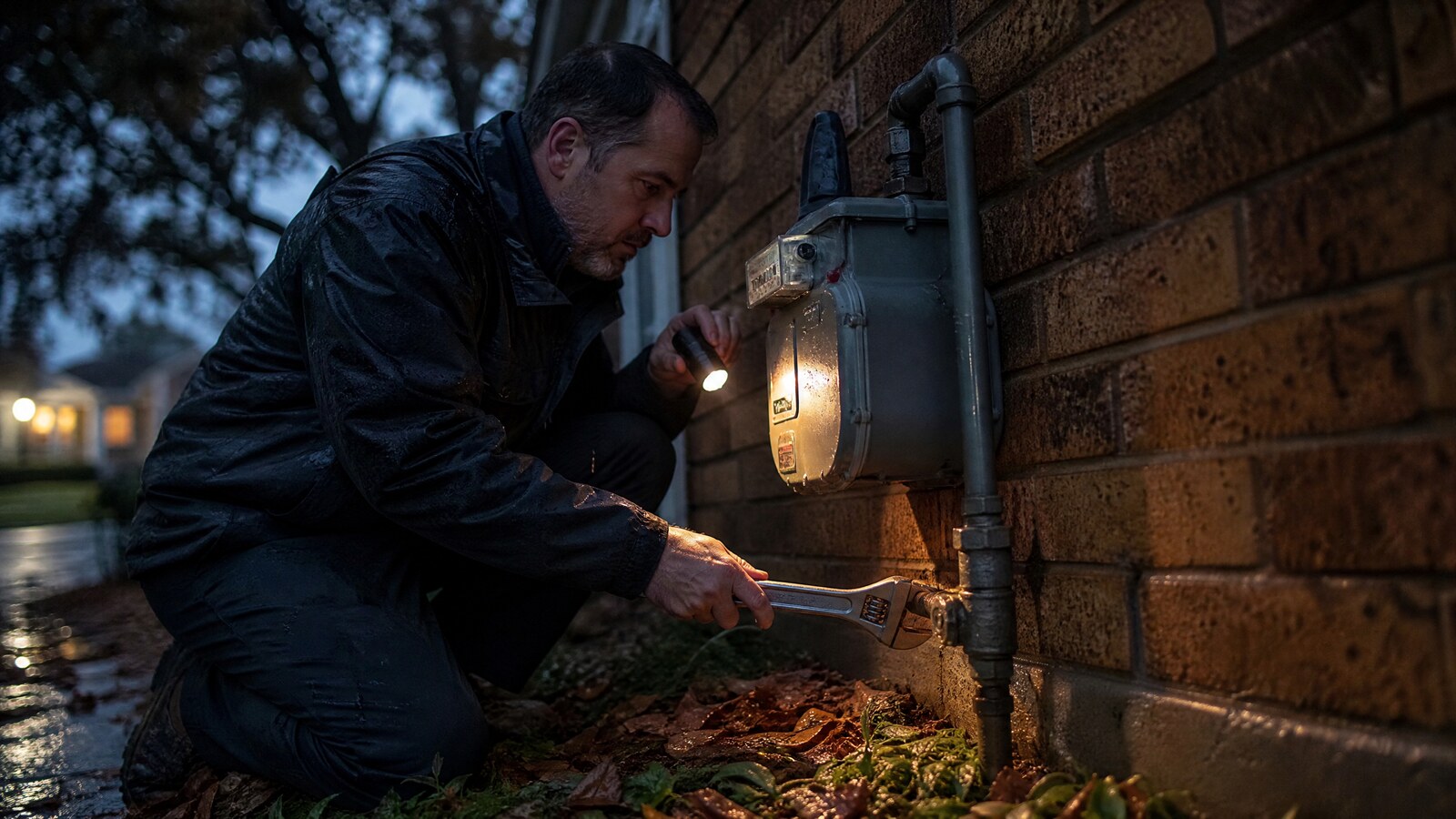
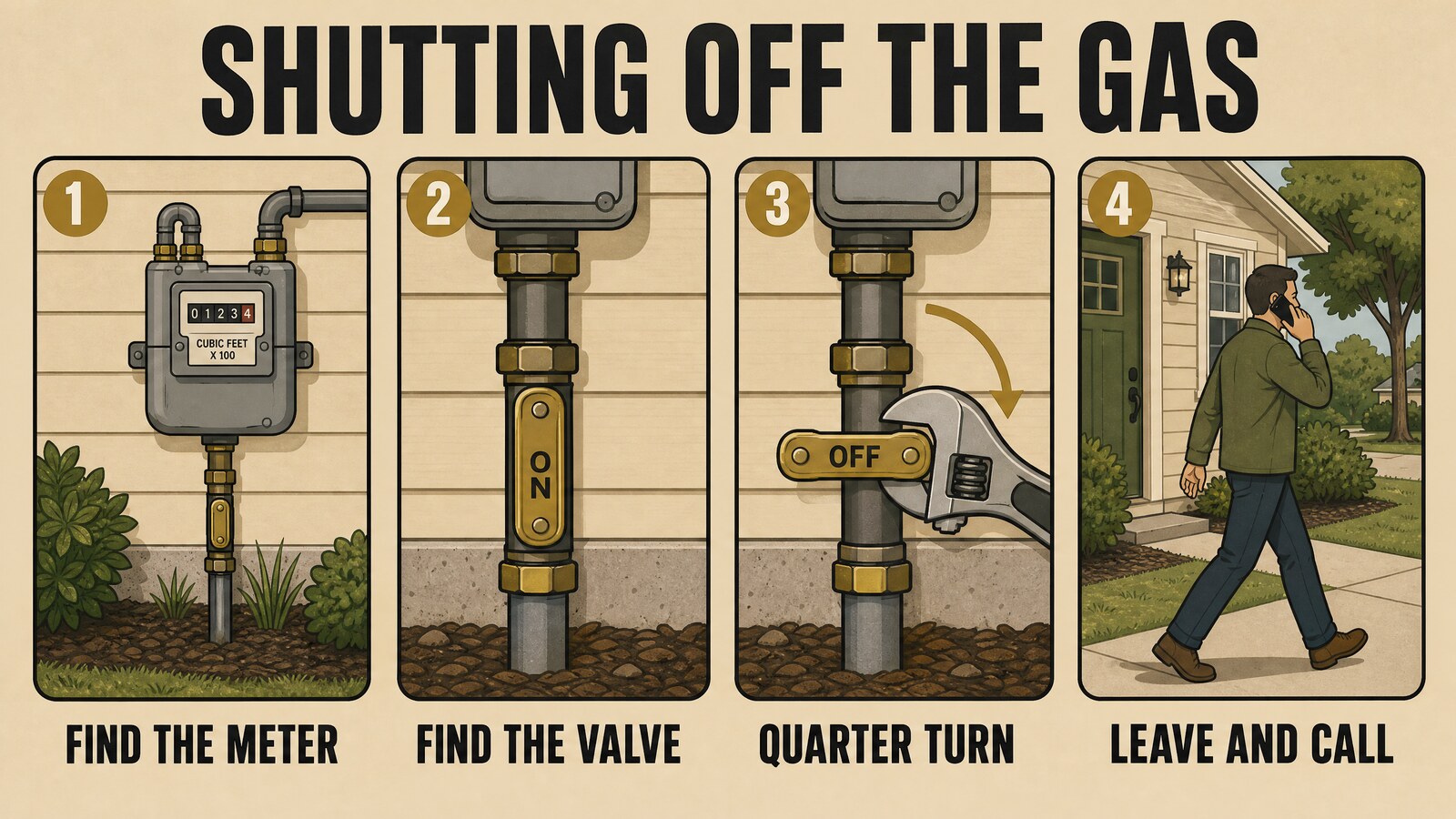
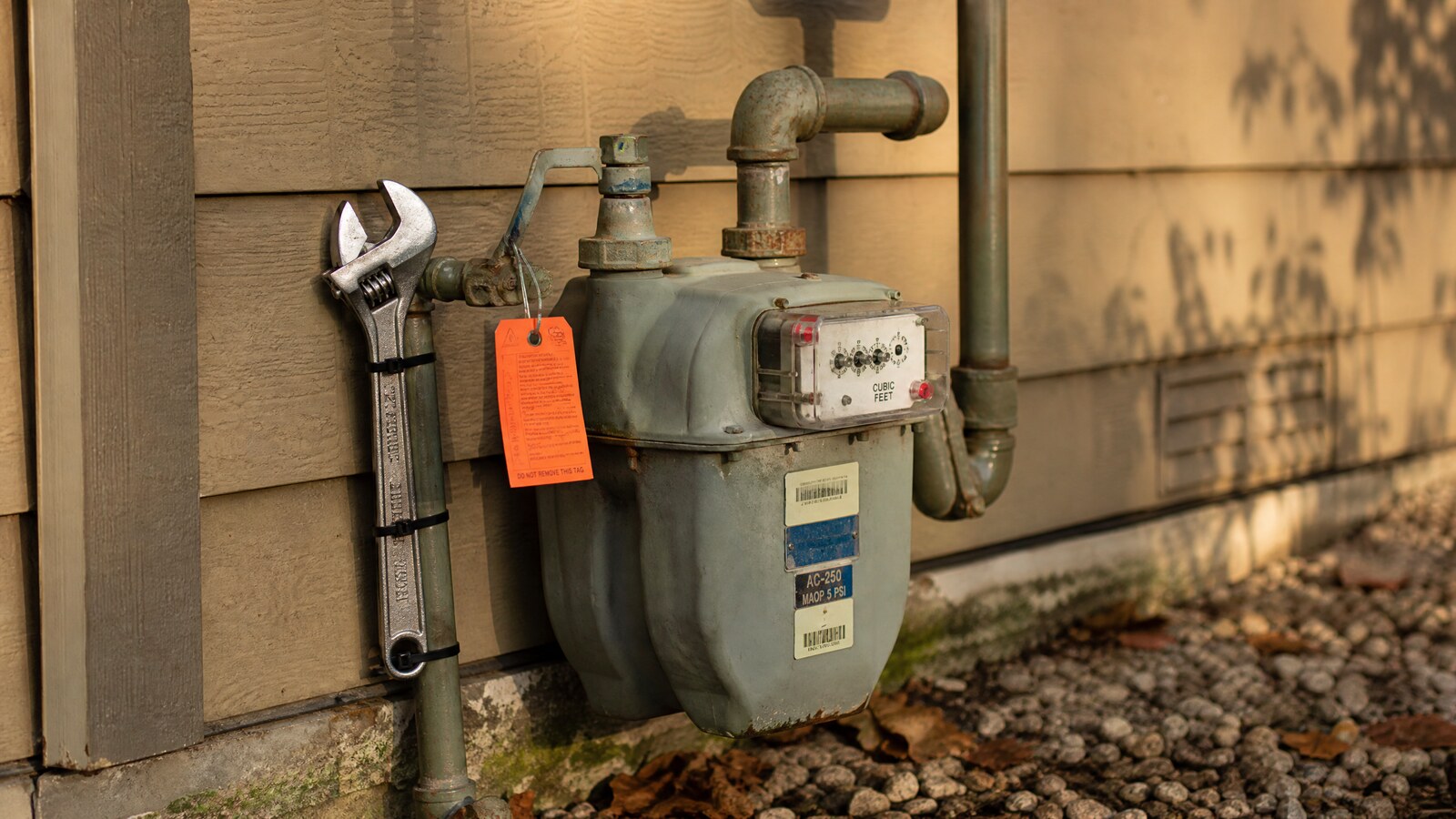
- Find the meter. It's usually outside, on the side or front of the house, sometimes in a basement or utility closet. Look for the pipe coming up out of the ground into the meter.
- Find the shutoff valve. It sits on that pipe, a few inches above the ground, before the meter. It has a small rectangular tab with a hole in it.
- Turn it a quarter turn. Use a 12-inch or larger adjustable wrench or a gas shutoff tool. Turn the tab a quarter turn in either direction until it sits crosswise to the pipe. When the tab runs the same way as the pipe, the gas is on. Crosswise means off.
- Get away and call. Call 911 and the gas company from a safe distance outside.
Then leave it off. Never turn the gas back on yourself. A trained technician has to check for leaks and relight every pilot light, which is why the SoCalGas shutoff guide and most utilities say to call them to restore service.
How to Shut Off the Main Water Valve
A burst pipe can dump hundreds of gallons into a house in an hour. Every minute you spend hunting for the valve is more water on the floor.
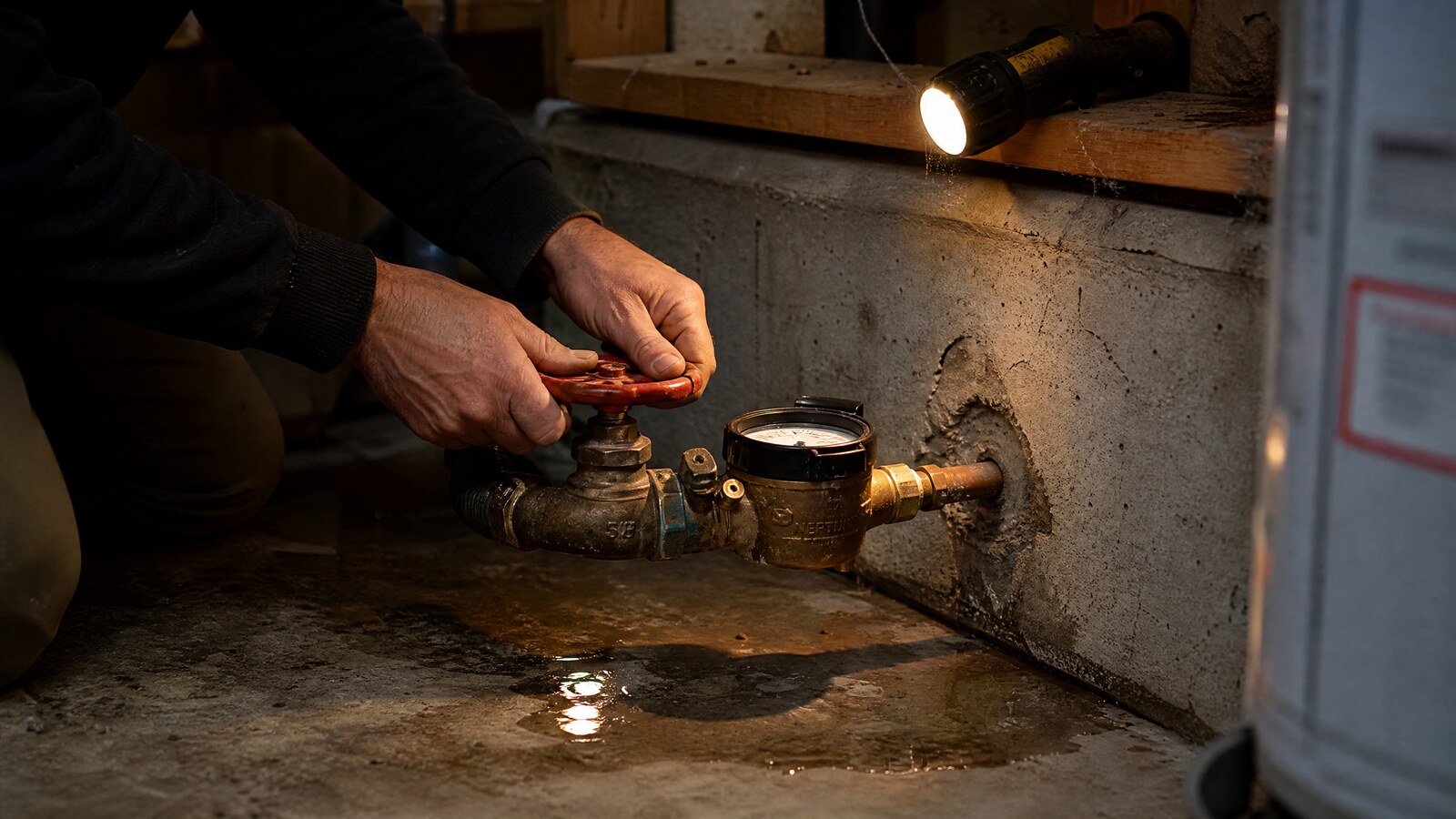
Where it usually is: In colder climates, the main valve is usually inside, where the water line comes through the foundation: a basement wall, a crawl space, a utility room or near the water heater. In warmer climates, it's often outside near the water meter, on an exterior wall or in a box near the street.
How to close it: Most main valves are one of two types.
- Gate valve (round wheel): Turn it clockwise until it stops. It can take several full turns. Older ones can be stiff, so use steady pressure, not a hammer.
- Ball valve (lever handle): Turn the lever a quarter turn so it sits crosswise to the pipe.
If the inside valve is broken or you can't find it, there's usually another shutoff at the meter or curb box. That one may need a special meter key. The San Mateo County utility guide points out that these valves are often marked with a red or yellow wheel, and you turn them clockwise to shut off.
After the water is off, open a faucet on the lowest floor to drain the pressure out of the lines. If you're dealing with ice, our guide on frozen pipes covers what to do before and after a pipe bursts.
How to Shut Off the Electricity at the Breaker Panel
The breaker panel (or fuse box in older homes) is usually in a garage, basement, utility room or on an outside wall. The main breaker is the large switch at the top or set apart from the rest, often labeled with a number like 100 or 200.
To shut off the power:
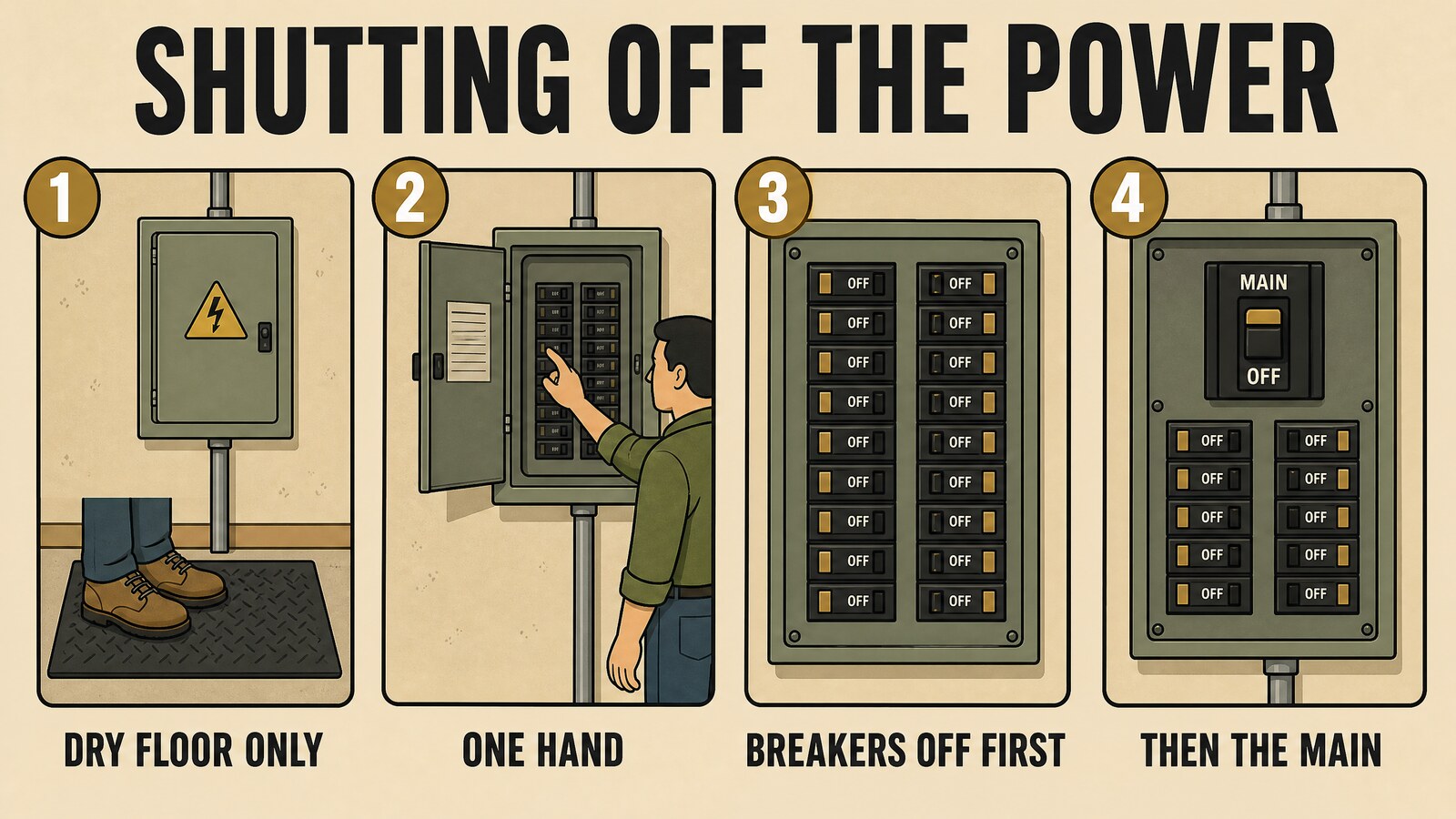
- Check where you're standing. If the floor around the panel is wet, or the panel itself is wet, don't touch it. Stay out of the water, get out and call the utility to cut power at the meter.
- Use one hand and dry footing. Stand on something dry. Keep your other hand at your side.
- Flip the individual breakers off first. Switching off the branch circuits before the main cuts down on the surge and arcing at the main, which is the order State Farm recommends.
- Then flip the main breaker off. For fuses, pull the main fuse block out by its handle.
If you see someone who's been shocked and is still touching the source, don't grab them. Cut the power first. Our electrical shock first aid guide walks through what to do next.
After the Emergency: Turning Utilities Back On
Bringing things back up is where people get hurt a second time.
Gas: Call the utility. Don't do it yourself, even if you're handy and the smell is gone.
Water: Open the main slowly, a little at a time, and check under sinks and around the heater for new leaks. Let faucets run until the air sputters out.
Electricity: Make sure everything is dry. If the panel, outlets or appliances got wet in a flood, have an electrician check them before you turn the main back on. Then switch the main on first and the individual breakers one at a time.
Do This Now: Practice How to Shut Off Utilities in an Emergency
The worst time to learn where your shutoffs are is in the dark with water spraying. Take 15 minutes this weekend.
- Walk the house and find the gas meter valve, the main water valve and the breaker panel.
- Label them with bright tape or a tag.
- Hang a 12-inch adjustable wrench or a gas shutoff tool right next to the gas meter, or zip-tie it to the pipe.
- Make sure the water valve actually turns. A seized valve is better discovered on a quiet Saturday.
- Keep a flashlight near the breaker panel.
- Show every adult and teen in the house where each one is.
Add the locations to your power outage emergency plan. If you live in earthquake country, pair this with our guide on surviving the first 60 seconds of an earthquake, since damaged gas lines after a quake are one of the main reasons to know your meter.
Shutting off a valve protects the house. When the emergency hurts someone, from a cut on broken glass to a fall on a wet basement floor, you need a different kind of preparation. We built The 1stHour Trauma Kit for the gap between something going wrong and help arriving. See what's inside The 1stHour Trauma Kit and keep it where you keep the flashlight and the wrench.
This content is for informational purposes only and does not replace instructions from your utility company or emergency services. If you smell gas, leave the building and call 911 or your gas company from outside.


