Food Poisoning vs Stomach Flu: How to Tell Them Apart

It is two in the morning, you have been on the bathroom floor for an hour, and somewhere in the back of your mind you are running the tape on what you ate. The shrimp? The gas station sandwich? Or was it your nephew, who had this exact thing on Sunday?
Most people want the answer because they want someone to blame. That is fair. But the reason it actually matters is narrower than that. If it is a stomach bug, everyone you live with is about to get it and you need to change how you handle the bathroom and the kitchen. If it is food poisoning, nobody else is at risk unless they ate the same thing. And in a small number of cases, neither label is the right one and what you have needs a doctor tonight.
Here is how to tell.
Food Poisoning vs Stomach Flu: The Fastest Way to Tell
Three questions get you most of the way there.
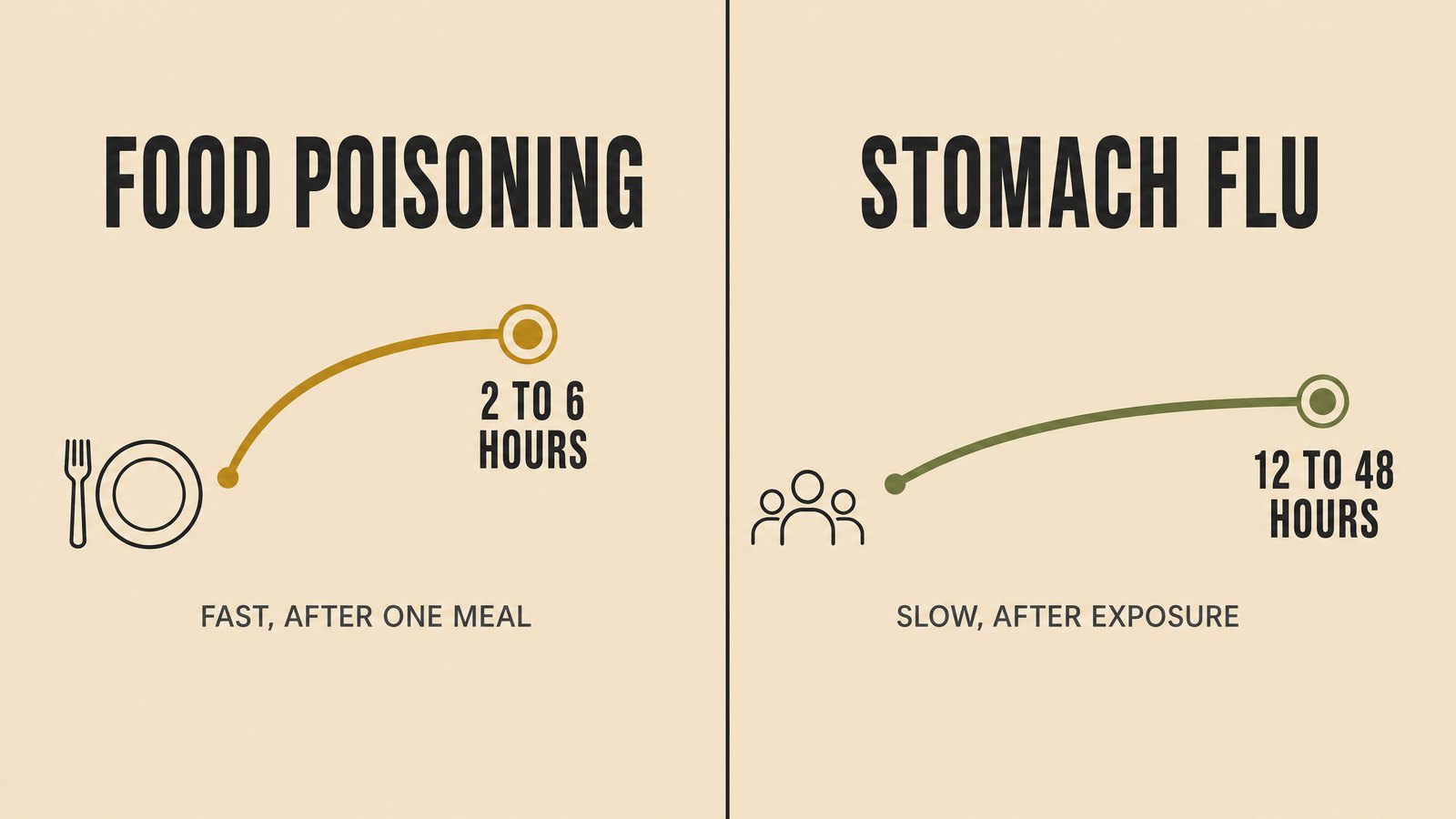
How long after eating did it start? This is the strongest signal you have. Food poisoning is fast. Symptoms typically show up two to six hours after the meal that caused it, sometimes sooner. Stomach flu does not work that way. Viruses need time to replicate before you feel anything, so the gap between exposure and symptoms runs 12 to 48 hours according to the CDC. If you were fine at dinner and doubled over by ten, look at dinner. If you cannot connect it to any single meal, look at who you have been around.
Did anyone else who ate that meal get sick? Food poisoning tends to arrive in clusters that share a table. Four people at a barbecue, three of them sick by midnight, and the fourth one skipped the potato salad. That pattern is close to a confession. Stomach flu clusters too, but it spreads on a different clock. One person Monday, another Wednesday, a third over the weekend.
Do you have a fever and body aches, or just gut symptoms? Food poisoning is mostly a gut event. Stomach flu is a whole-body one. Chills, a low-grade fever, headache, and muscles that ache for no reason all lean viral.
None of these is definitive on its own. Together they are usually enough.
What Food Poisoning Symptoms Actually Look Like
Food poisoning comes on hard and fast, and vomiting usually leads. Your body has identified something it wants out and it is not interested in negotiating. Along with that you get cramping, nausea that arrives in waves, and diarrhea that shows up either alongside the vomiting or shortly after.
The course is short. Most food poisoning is finished in 24 to 48 hours. It is a miserable day, not a miserable week.
There is one wrinkle worth knowing. Not every foodborne illness runs on the fast clock. Some bacteria have longer incubation periods, and a few can take a day or more to make you sick. So a slow onset does not rule out food poisoning. It just makes it less likely, and it makes the meal you ate three hours ago a much better suspect than the one you ate three days ago.
Fever is possible with food poisoning but it is usually mild or absent. A high fever changes the picture, and we will get to that below.
What Stomach Flu Looks Like Instead
"Stomach flu" is a bad name. It has nothing to do with influenza. What people mean is viral gastroenteritis, and in adults that usually means norovirus.
Norovirus symptoms start 12 to 48 hours after you were exposed, which is why nobody can ever pin down where they got it. You get vomiting and watery, non-bloody diarrhea, plus abdominal cramps and nausea. On top of that, the systemic stuff: chills, headache, muscle aches, a low-grade fever, and a level of tiredness that feels disproportionate to a stomach problem.
Most people recover in one to three days. Young children, older adults, and anyone already dealing with another illness can run longer, four to six days in some cases.

The part that matters most for everyone else in your house is that norovirus is aggressively contagious. It spreads through contaminated surfaces, shared food, and close contact, and it survives on hard surfaces longer than you would like. If this is what you have, the person doing the caretaking should be washing hands with soap and water rather than relying on hand sanitizer, and the bathroom needs a bleach-based cleaner rather than a wipe.
Side by Side: Food Poisoning vs Stomach Flu Symptoms
| Food poisoning | Stomach flu (norovirus) | |
|---|---|---|
| Onset after exposure | 2 to 6 hours, usually | 12 to 48 hours |
| First symptom | Usually vomiting, sudden | Vomiting or diarrhea, building |
| Fever | Mild or none | Common, low-grade |
| Body aches and chills | Uncommon | Common |
| Typical duration | 24 to 48 hours | 1 to 3 days, sometimes longer |
| Who else gets sick | People who ate the same food, same night | Household and contacts, spread over days |
| Contagious | No, unless they eat it too | Yes, very |
Read the table as a set of leanings, not a checklist. Real illness is messier than a grid.
How Long Does Food Poisoning Last Compared to a Stomach Bug
Duration is a useful tell, but you only get it in hindsight, which limits how much good it does you at two in the morning.
Still, it is worth tracking. Food poisoning that has not started easing by hour 48 is behaving oddly. A stomach bug that is still going strong on day four is also behaving oddly, unless you are in one of the groups that tends to run longer. In both cases the useful move is not to re-litigate the diagnosis. It is to look at how much fluid you have lost and whether any red flags have appeared.
That is the honest version of this whole comparison. Knowing which one you have changes what you tell your family and how carefully you clean the bathroom. It does not change the treatment much. Both come down to fluids, rest, and knowing the line where home care stops being enough.
The Dehydration Threshold That Turns Either One Into a Call
Vomiting and diarrhea both take fluid out faster than most people replace it, and dehydration is what actually sends people to the hospital from either illness. It is the complication, not the infection, that does the damage.
Watch for these:
- You are barely urinating, or your urine is dark and concentrated
- Dry mouth and throat that drinking does not fix
- Dizziness or lightheadedness when you stand up
- Weakness or confusion that was not there earlier
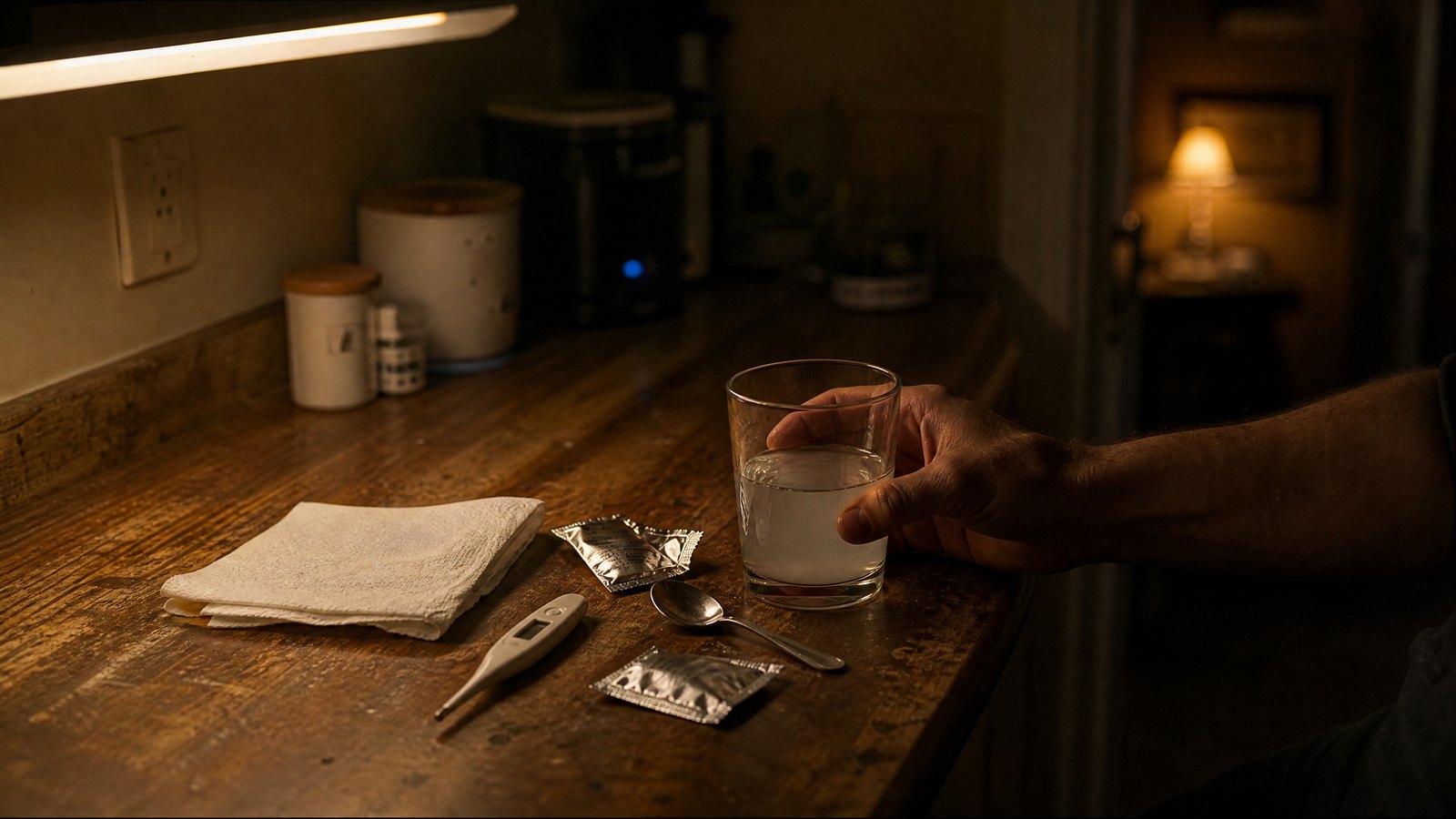
Sports drinks and other caffeine-free, alcohol-free drinks help with mild dehydration. Over-the-counter oral rehydration solutions are better, because they are formulated with the right salt and sugar ratio for absorption. Small sips at short intervals stay down better than a full glass, which tends to come right back up.
The people who slide into trouble fastest are older adults, young children, and anyone with a chronic condition. Older adults in particular lose the thirst signal that would normally warn them, which is why dehydration creeps up on adults who feel like they are handling it fine.
If you cannot keep any liquid down for more than a few hours, you are past the point where home care works. That is a call, not a wait.
Red Flags: When to See a Doctor for a Stomach Bug
Some symptoms mean the question of food poisoning versus stomach flu stops mattering. Per the CDC, get medical care for any of these:
- Blood in your stool or vomit. Not a wait-and-see symptom, in either illness.
- Fever above 102°F. Especially paired with feeling more tired and achy than the illness seems to warrant.
- Diarrhea lasting more than three days.
- Signs of dehydration that are not improving with fluids, or an inability to keep fluids down at all.
- Neurological symptoms. Blurred vision, muscle weakness, tingling, or trouble swallowing are not normal features of either illness and can point to something more serious.
One practical warning that gets missed: skip the anti-diarrheal medication if you have a high fever or blood in your stool. Slowing things down keeps whatever is causing the problem in your system longer and can make the illness worse.
Two other conditions get mistaken for a bad stomach bug early on. Pain that starts around your navel and migrates to the lower right, worsening over hours, is the classic pattern for appendicitis. And an infection that produces confusion, a racing heart, shortness of breath, and clammy skin alongside the gut symptoms is a possible sepsis picture, which is a 911 call. Both are far less common than a stomach bug. Both are also worth recognizing, because the cost of missing them is high.
Most stomach illness resolves on its own, which is exactly why the useful preparation is small: oral rehydration packets, a working thermometer, and a plan for who checks on whom. Our home first aid kit checklist covers what belongs in a kit you can actually reach at two in the morning, and The 1stHour Trauma Kit handles the injuries that give you far less time to think.
This content is for informational purposes only and does not constitute medical advice. If you are concerned about your symptoms or someone else's, contact a healthcare provider. Do not use this article to rule out appendicitis, sepsis, bowel obstruction or any other cause of severe abdominal symptoms. Seek emergency care when in doubt.


