Christmas Tree Fire Safety: How to Prevent It and What to Do
Most years the tree is the best thing in the room. It's also a big pile of fuel sitting next to outlets, extension cords and, in a lot of homes, a fireplace or space heater. Christmas tree fires aren't common, but when one starts it moves faster than almost any other house fire you'll see. This guide covers why a dry tree is the real problem, how to pick and water one, where to put it, which lights and cords to trust, what to do in the first minute if it ignites, and when it's time to take it down.
Why a Dry Christmas Tree Is a Fire Hazard
The NIST Fire Research Division estimates that U.S. fire departments respond to about 210 home fires involving Christmas trees each year. Those fires cause an average of 6 deaths, 16 injuries and $16.2 million in property damage annually.
What makes them dangerous is speed. NIST burned two trees side by side with the same ignition source. The one kept in a stand full of water didn't ignite. The dry one went up. Dry needles and thin branches catch fast, and once the whole tree is burning, the heat can ignite curtains, furniture and the ceiling in well under a minute.
The North Carolina Office of State Fire Marshal breaks down where these fires come from. Electrical problems cause nearly half. Heat sources too close to the tree, like candles and heating equipment, cause 22%. Three out of four happen in December or January, and two in five start in the living room.
So the job is simple to describe. Keep the tree wet, keep heat away from it and keep the electrical side in good shape.
Christmas Tree Fire Safety Starts at the Lot
You can't water a dead tree back to life, so start with a fresh one.
- Check the needles. They should be green and bend without snapping. Run your hand along a branch. A few loose needles is normal. A shower of them isn't.
- Feel the trunk. A fresh cut trunk is sticky with sap.
- Give it a shake. If a lot of needles fall, pick another tree.
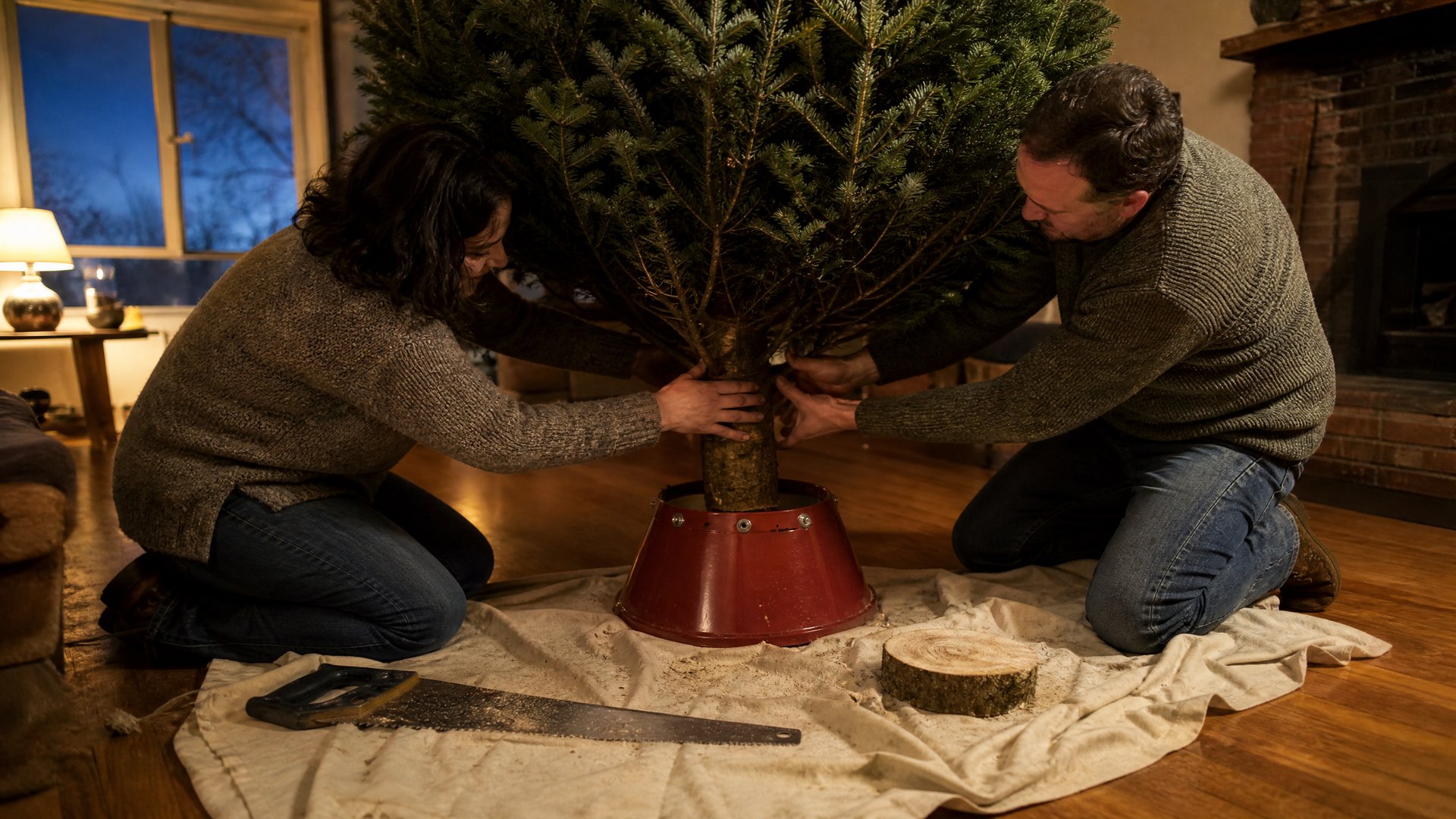
Before the tree goes into the stand, cut about 1 to 2 inches off the base of the trunk. NIST notes that a cut surface left to dry draws up less water, so make the cut right before you set it up. If you can't set it up the same day, stand the freshly cut trunk in a bucket of water outside until you can.
Use a stand that holds plenty of water for the size of your tree. A small stand under a big tree can run dry in a day.
Watering: The Habit That Matters Most
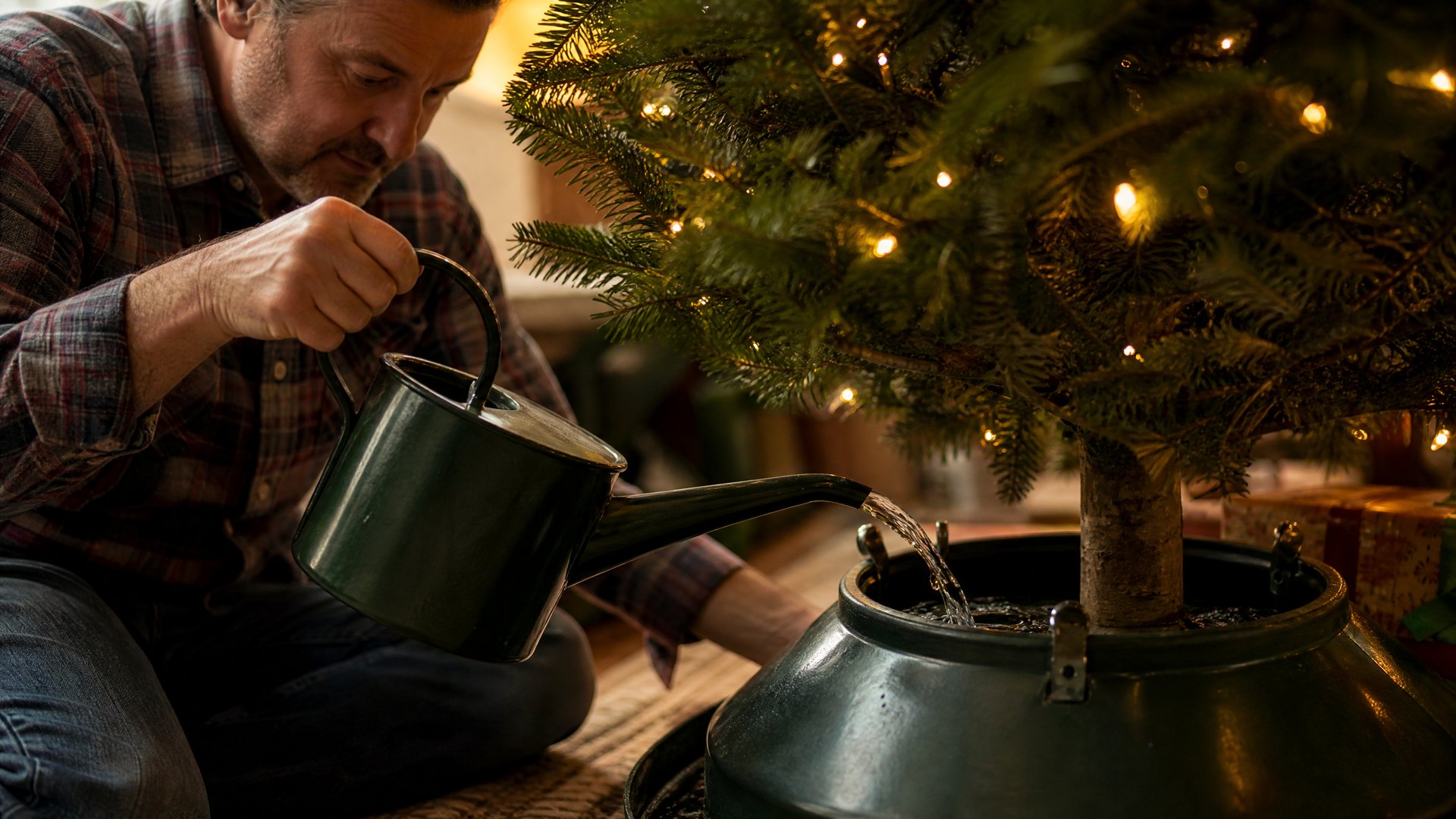
If you only remember one part of this guide, make it this one. Check the water level in the stand every day and keep it above the base of the trunk.
A fresh tree drinks a lot, especially in the first week. It's common to add water once or even twice a day early on. Once the water drops below the cut, the trunk can seal over with sap and the tree stops drinking even after you refill it.
A few things make the daily check easier:
- Put it on the same schedule as something you already do, like the morning coffee.
- Use a long-neck watering can or a funnel and tube so you don't have to crawl under the branches.
- Hand the job to someone in the house who's home every day, and have them tell you when the water drops faster or slower than usual.
When the tree stops taking water and the needles start dropping and turning brittle, it's done. More on that below.
Christmas Tree Fire Safety: Placement, Lights and Cords
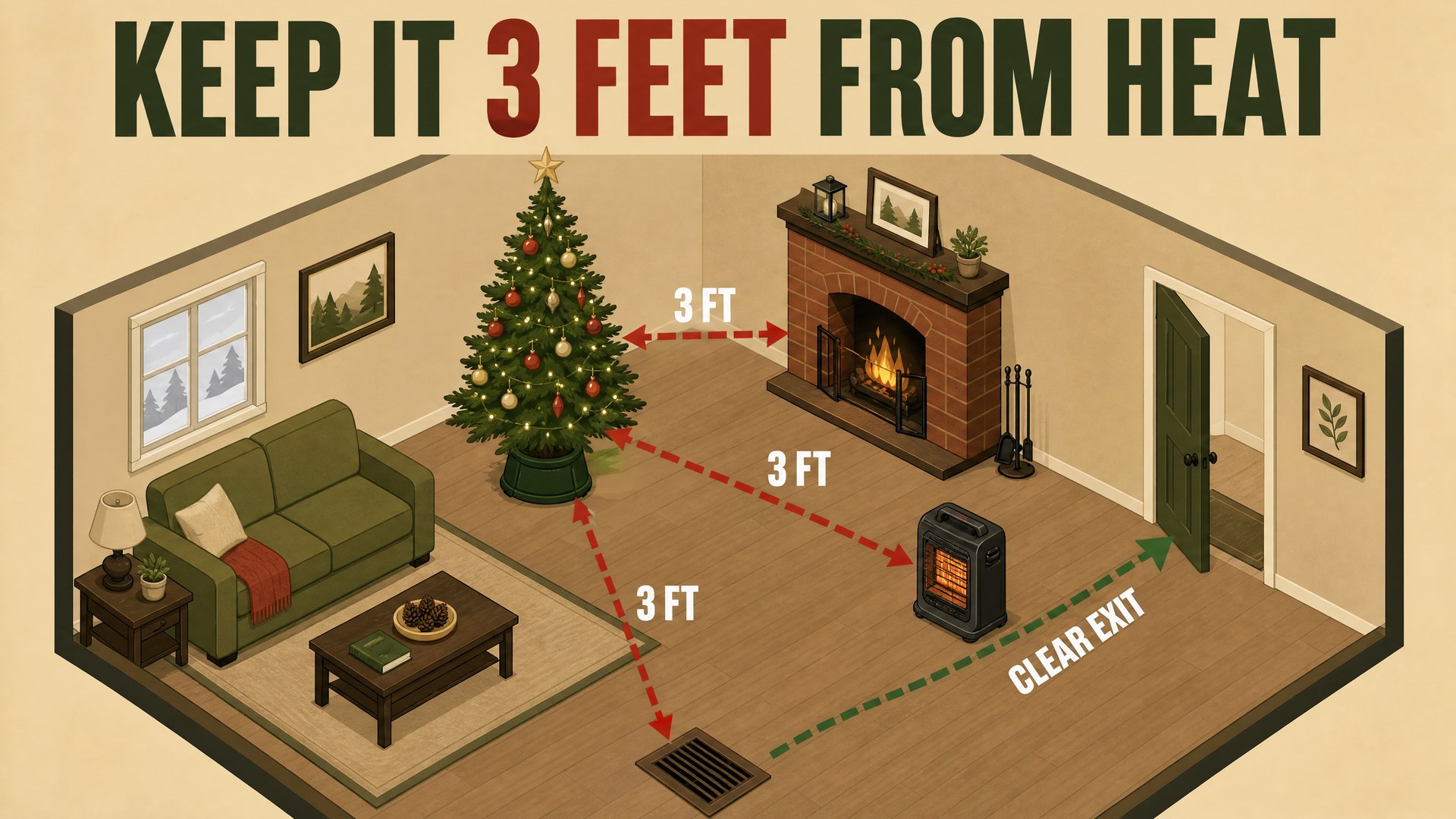
Keep it 3 feet from heat. Fireplaces, wood stoves, radiators, heat vents, space heaters and candles all count. If your living room only works with the tree near the fireplace, move the tree, not the rule. Our space heater safety tips cover the same 3-foot clearance for portable heaters.
Don't block an exit. A tree beside the only door out of the room becomes a wall of fire between you and safety. Put it somewhere that leaves your exits clear.
Use lights that carry a testing lab label. Look for a mark from a recognized laboratory on the box or the cord tag. Before the lights go on the tree, check every strand for cracked or frayed wire, broken sockets and loose bulbs. Replace a damaged strand instead of taping it.
Don't overload the cords. Follow the manufacturer's limit on how many strands you can connect end to end. The North Carolina fire marshal's guidance for older mini-light sets is no more than three strands. Plug the tree into a wall outlet or a heavy-duty cord, and don't run cords under rugs where heat builds up.
Turn the lights off when you leave or go to bed. A timer makes this automatic.
Never put lit candles on the tree. Keep candles away from it entirely.
If you have an artificial tree, check that it's labeled fire-retardant. That label slows ignition. It doesn't make the tree fireproof, so the light and heat rules still apply.
What to Do If Your Christmas Tree Catches Fire
A burning tree isn't a fire you fight. It's a fire you leave. Have this plan in your head before you need it.
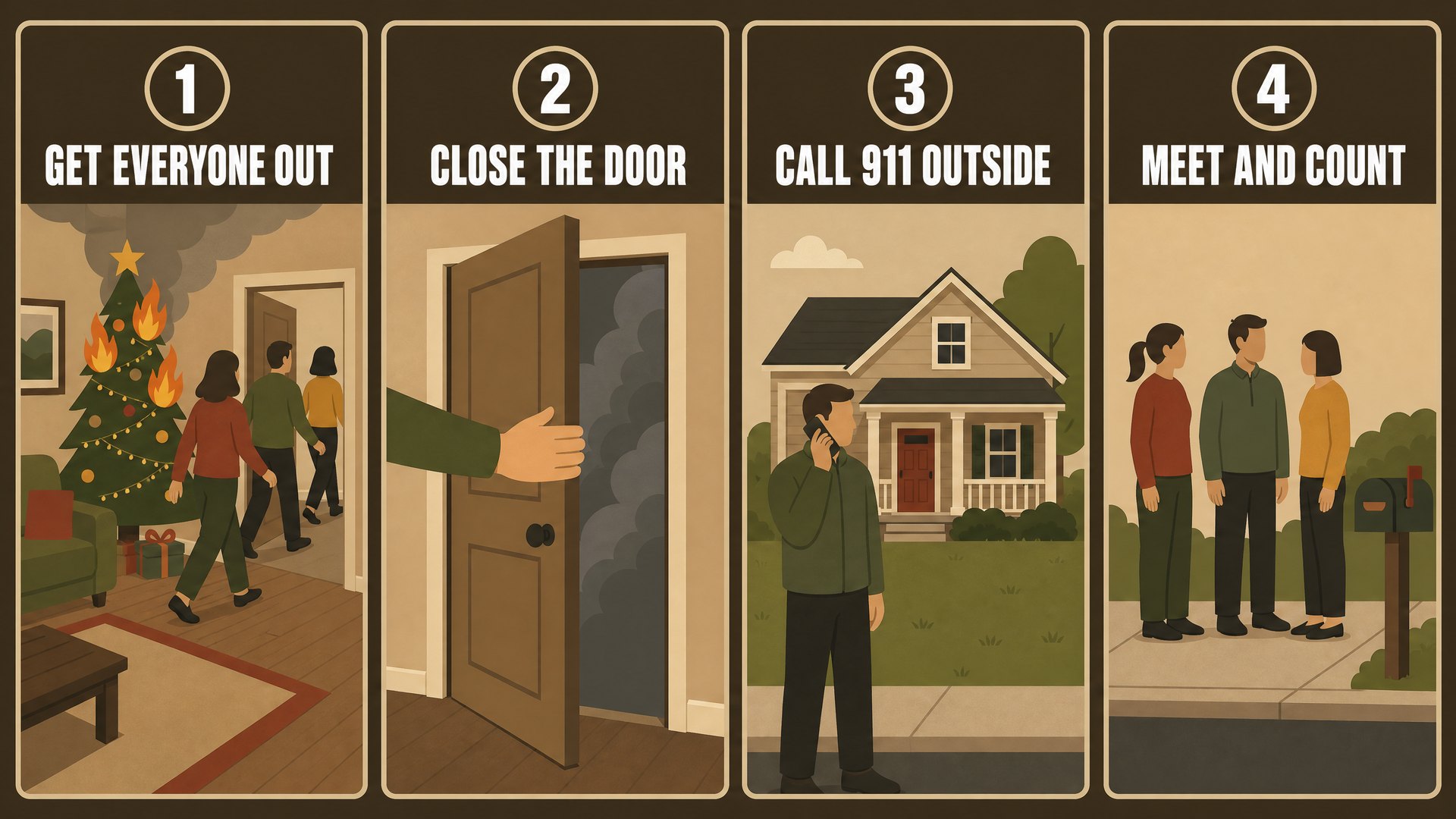
- Shout "Fire!" and get everyone moving. Don't stop for presents, phones or coats.
- Get out and stay out. Use the nearest safe exit. If there's smoke, stay low.
- Close the door behind you. A closed door slows the spread of fire and smoke to the rest of the house.
- Call 911 from outside. Give your address first.
- Meet at your outside meeting spot and count heads. Never go back in for a person or a pet. Tell firefighters who's missing and where they're likely to be.
The only exception is a tiny fire caught at the very start, like a single smoking bulb or a scorched spot on one branch. If you're between the fire and an exit and it's no bigger than a wastebasket, you can unplug the lights and use an extinguisher. Our guide on how to use a fire extinguisher walks through the PASS method. If it isn't out in a few seconds, or it's already climbing the branches, drop the extinguisher and get out.
Don't throw water on a tree fire while the lights are still plugged in.
This is where working smoke alarms earn their keep. Make sure there's one near the living room and that it's less than 10 years old. Our guide on how often to replace smoke detectors shows how to find the date. And if you haven't practiced a house fire escape plan with your family, the week the tree goes up is a good week to do it.
After a Fire: Burns and Smoke
Once you're out, check everyone for burns and breathing trouble. Cool a burn under cool running water for 20 minutes and cover it loosely with clean plastic wrap or a dry dressing. Our burn first aid guide covers which burns need the ER.
Smoke from a house fire carries carbon monoxide and toxic gases. Hoarseness, coughing, headache or confusion after being in the smoke means a trip to the hospital, even if the person feels okay at first. See our guide to smoke inhalation symptoms for the warning signs.
When to Take the Tree Down
A lot of tree fires happen after the holiday, when the tree has been drying out for weeks. The North Carolina fire marshal notes that three in four tree fires happen in December or January.
Take the tree down when any of these is true:
- It's stopped drinking water for a few days.
- The needles are brittle or fall when you brush past.
- The holiday is over.
Don't store a dried-out tree in the garage or lean it against the house while you wait for pickup. Check your town's tree recycling or curbside schedule. Pack the lights away carefully so the cords aren't kinked or crushed for next year.
Most of Christmas tree fire safety is about a watering can and a 3-foot gap. The rare night it goes wrong, what you do in the minutes after you get out matters too: a burn on a hand, a cut from broken glass, someone who needs help before the ambulance pulls up. We built The 1stHour Trauma Kit for exactly those minutes. See what's inside The 1stHour Trauma Kit and keep it where you can grab it on the way out.
This content is for informational purposes only and does not replace instructions from your local fire department or emergency services. If your tree catches fire, get out and call 911.


