Turkey Fryer Fires: How to Fry Safely and What to Do If It Ignites
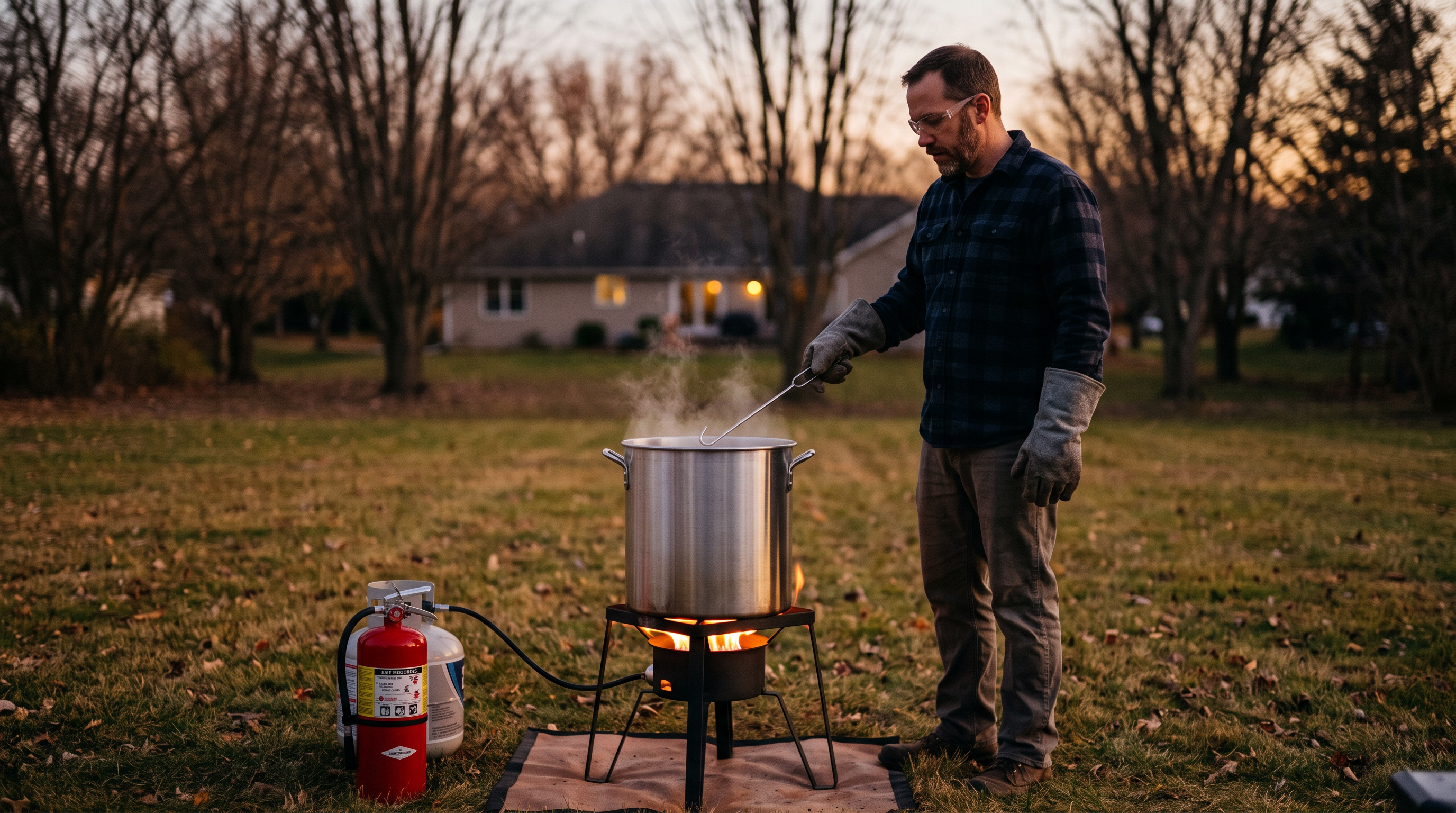
Thanksgiving is the one day of the year when cooking fires peak, and a pot of hot oil sits at the center of the worst ones. A fried turkey is a great meal. It is also a few gallons of oil heated over an open flame, with a heavy, wet, cold bird about to be lowered in. This guide covers turkey fryer fire safety from setup to cleanup, plus the first moves if the oil does catch.
Why Turkey Fryer Fire Safety Starts Before You Light the Burner
Most of what goes wrong with a fryer is decided before the first flame. The Los Angeles Fire Department lists the usual causes: fryers that tip over, pots that are overfilled, turkeys that are still partly frozen, units with no thermostat control, and hot pot sides and handles that burn people who brush against them.
The sidebar of a U.S. Army article on turkey fryer safety, citing Firesafety.gov, adds a detail that surprises people. Most turkey fryer fires happen while the oil is being heated, before the turkey goes in at all. That means an unattended pot is a fire risk long before dinner is in it.
So the plan is simple. Set up correctly, prepare the bird correctly, and stay with the pot from the moment you light it until the oil is cool.
Turkey Fryer Fire Safety Setup: Outdoors, Away From Anything That Burns
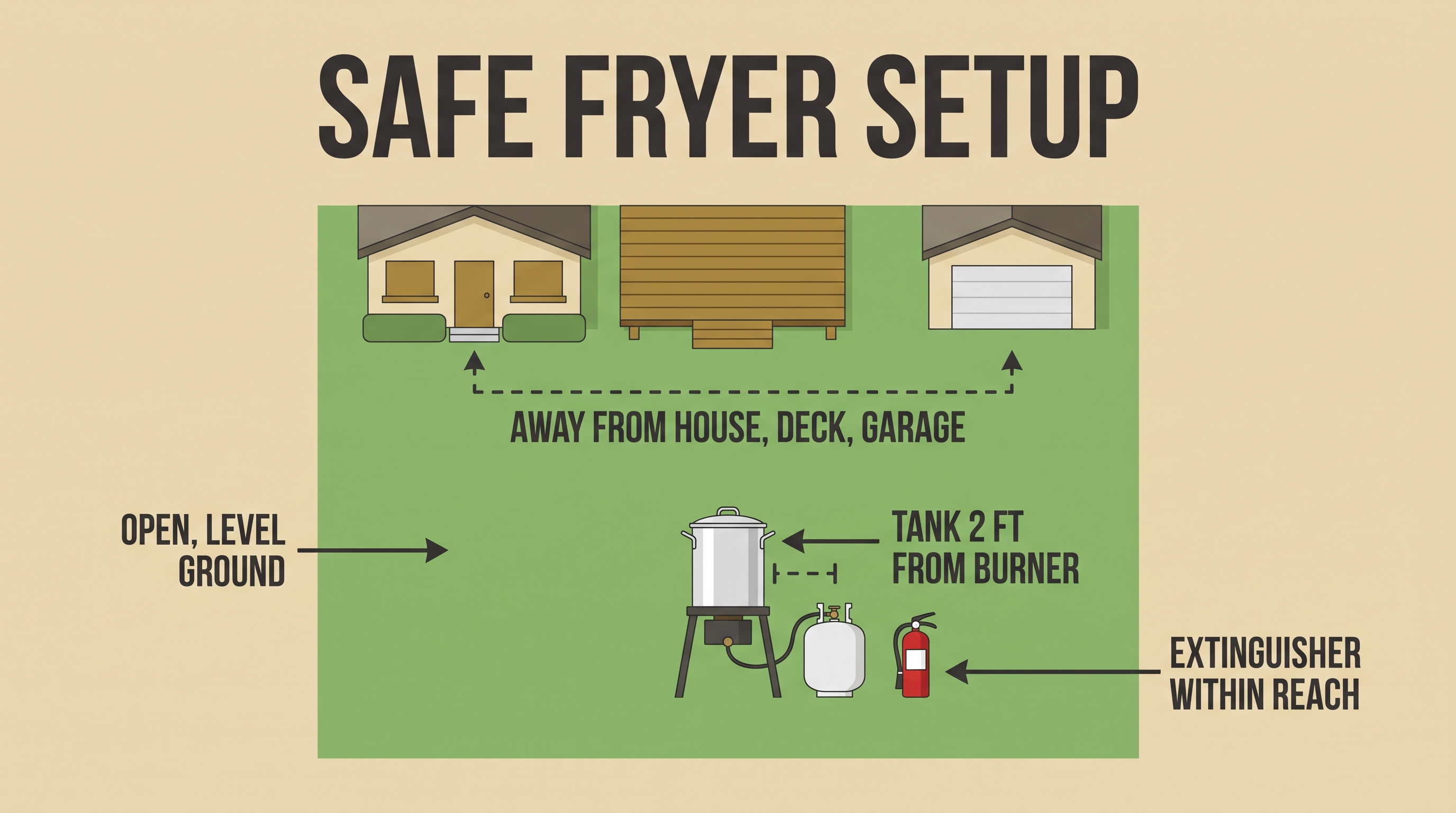
The Los Angeles Fire Department says turkey fryers should always be used outdoors, on a solid, level surface, a safe distance from buildings and flammable materials. Not on a wooden deck. Not under a patio cover. Not in a garage or any enclosed space.
The U.S. Consumer Product Safety Commission advice, repeated in the Army article, is just as specific. Put the fryer in an open area away from all walls, fences, and other structures. Never use it in, on, or under a garage, breezeway, carport, porch, or any structure that can catch fire.
If your fryer runs on propane, keep at least two feet of space between the tank and the burner, and set the tank so the wind blows heat away from it. Center the pot over the burner so it sits stable.
Pick your spot now, in daylight, before the oil is hot. Check that the ground is level by looking at the pot with a few cups of water in it. A pot that leans is a pot that can tip.
Keep kids and pets well back. The Los Angeles Fire Department notes that the oil stays dangerously hot for hours after you shut the burner off, so the danger does not end when the cooking does.
Thaw and Dry the Turkey Completely
A frozen center is the classic fryer mistake. Ice turns to steam the moment it hits hot oil, and the oil can foam up and spill over the side onto the burner. The Los Angeles Fire Department warns that even moisture from a marinade can cause oil to spill over, leading to a fire or explosion hazard.
The Army article, quoting the U.S. Department of Agriculture, puts the thawing time at 24 hours in the refrigerator for every four to five pounds. A 14-pound bird needs about three days. If you are counting back from Thursday, start on Monday.
Then dry it. Pat the outside dry with paper towels and dry the cavity too. Skip wet marinades and injections that leak, and use a dry rub instead.
Use the Water Test to Measure the Oil
Overfilling is how a normal frying session turns into an oil fire. When the turkey goes in, it pushes oil up the sides of the pot. Too much oil and it spills straight onto the flame.
The CPSC method, repeated in the Army article, takes about five minutes and uses no oil:
- Put the turkey in the empty pot.
- Fill the pot with water until the bird is covered by about half an inch.
- Take the turkey out and dry it well.
- Mark the water level on the pot, or measure it.
- Pour out the water and dry the pot completely.
- Fill with oil only up to that mark.
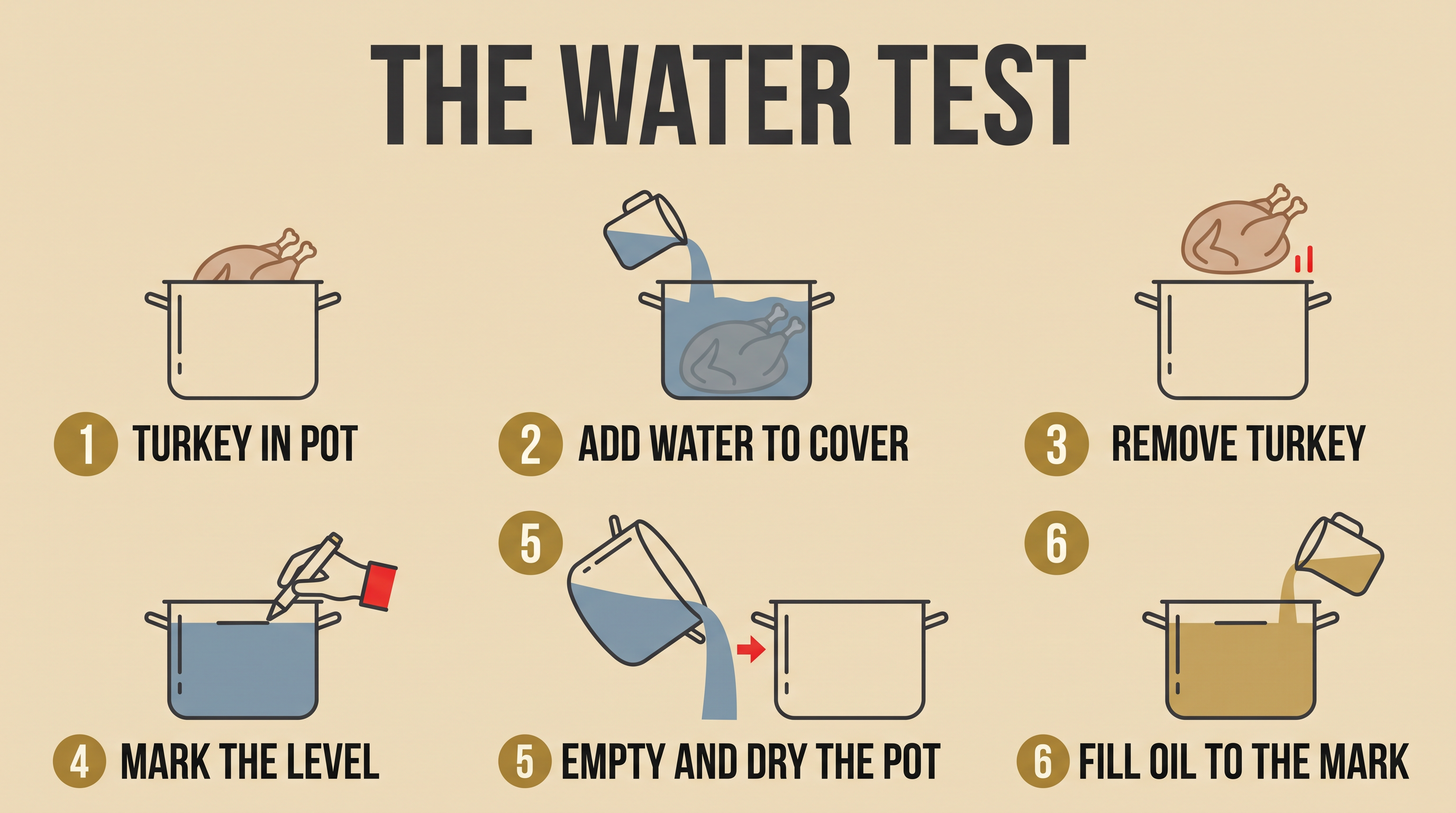
Dry is the key word in step five. Any water left in the pot hits hot oil and spits. Also follow the manufacturer's instructions for the right amount of oil for your fryer.
Frying Day: Stay With the Pot
Frying a turkey takes full-time adult attention, according to the Los Angeles Fire Department. Keep the fryer in view whenever the burner is on, as the CPSC advises. This includes the heating stage, since that is when most fires start.
A few habits make a real difference:
- Check the oil temperature often rather than guessing.
- If the oil starts to smoke, turn off the gas supply right away.
- Raise and lower the turkey slowly to cut down on splatter and burns.
- Cover bare skin when adding or removing food. Insulated oven mitts, long sleeves, and safety goggles are the Los Angeles Fire Department's list.
- Keep your hands and sleeves clear of the burner flame.
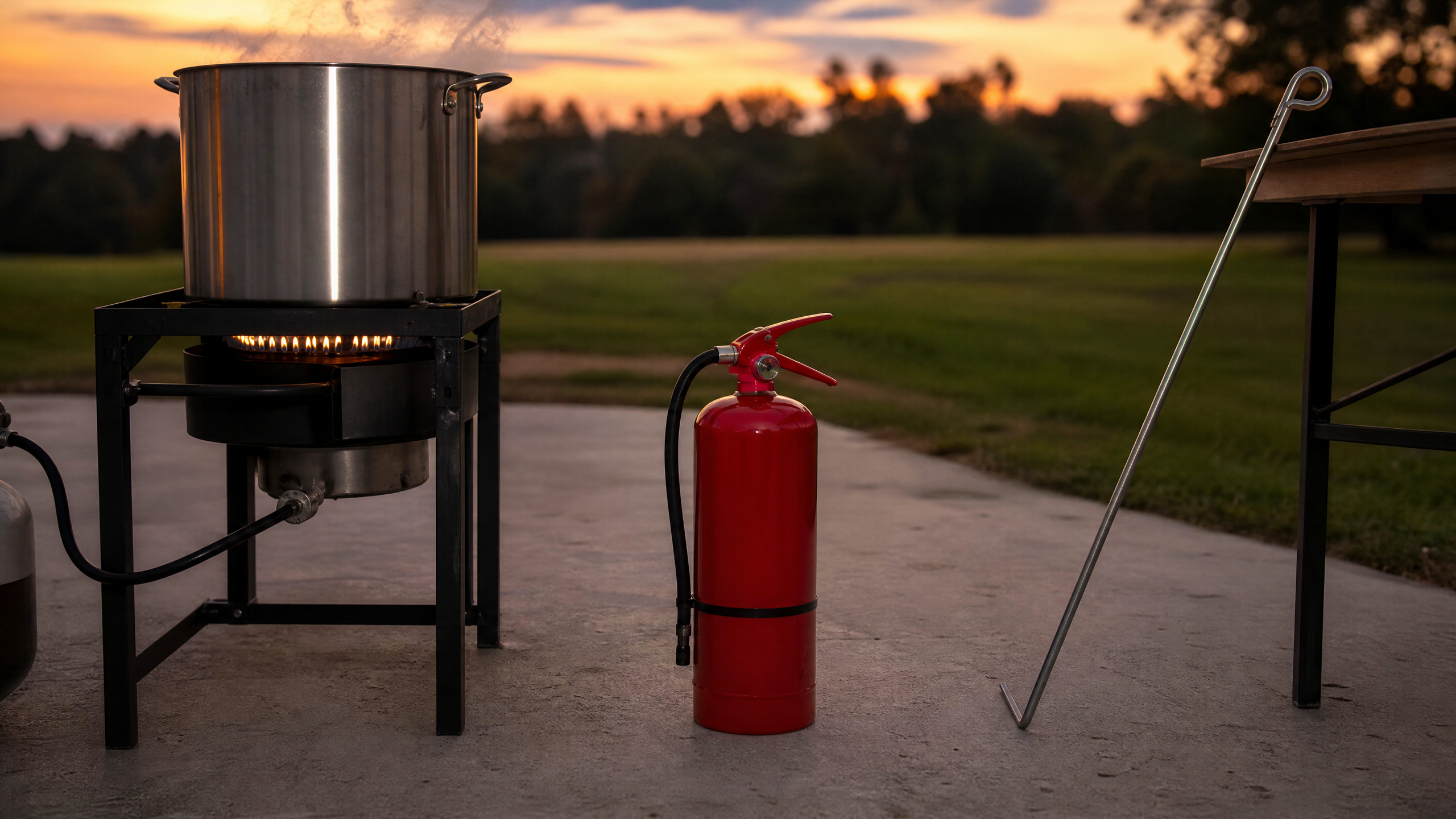
Keep a fire extinguisher where you can reach it without walking past the fryer. The Los Angeles Fire Department recommends an all-purpose extinguisher nearby. If you do not know how to use one, our guide to the PASS method for a fire extinguisher takes two minutes to read.
If the Oil Ignites: What to Do in the First Seconds
The rule that matters most: never use water. Water sinks below the oil, turns to steam, and throws burning oil outward. Both the Los Angeles Fire Department and the Army article say this plainly.
If a fire starts:
- Get everyone back. Move people and pets away from the fryer, upwind if you can.
- Call 911. Both sources say to call right away. Do it early, even if you think you can handle it.
- Shut off the gas if you can reach the valve without getting close to the flames. Do not reach through or over the fire to do it.
- Use the extinguisher only if the fire is manageable and you can do it safely. The Los Angeles Fire Department says to use the all-purpose extinguisher in that case. If the flames are large, climbing, or near the house, leave it to the fire department.
- Keep the fire away from the house. If it spreads to the structure, get everyone outside and follow your house fire escape plan.
Our post on a grease fire in the kitchen covers the same no-water rule for pots on the stove.
Burns, Cleanup, and the Cooling Oil
If someone is burned, run cool water over the burn right away and follow the steps in our burn first aid guide. Call 911 for large burns, burns on the face or hands, or any burn that looks deep.
Once dinner is served, the fryer is still a hazard. The oil stays hot for hours. Keep the pot outside and out of reach, and let it cool fully before you move it. Do not carry a pot of warm oil across the yard or into the house.
Keep one thing in mind if the whole process feels like a lot. An oven-roasted turkey has none of these risks. If you do fry, a calm setup and a measured pot of oil make the difference between a good story and a bad one.
A fried turkey should be the best thing on the table, and the first hour of any kitchen emergency is yours to use well. See what's inside The 1stHour Trauma Kit, built for the moments before help arrives.
This content is for informational purposes only and does not constitute medical advice. In an emergency, call 911 immediately. This article is not a substitute for hands-on training or guidance from your local fire department.


