Ruptured Achilles Tendon Symptoms: Not Just a Sprain
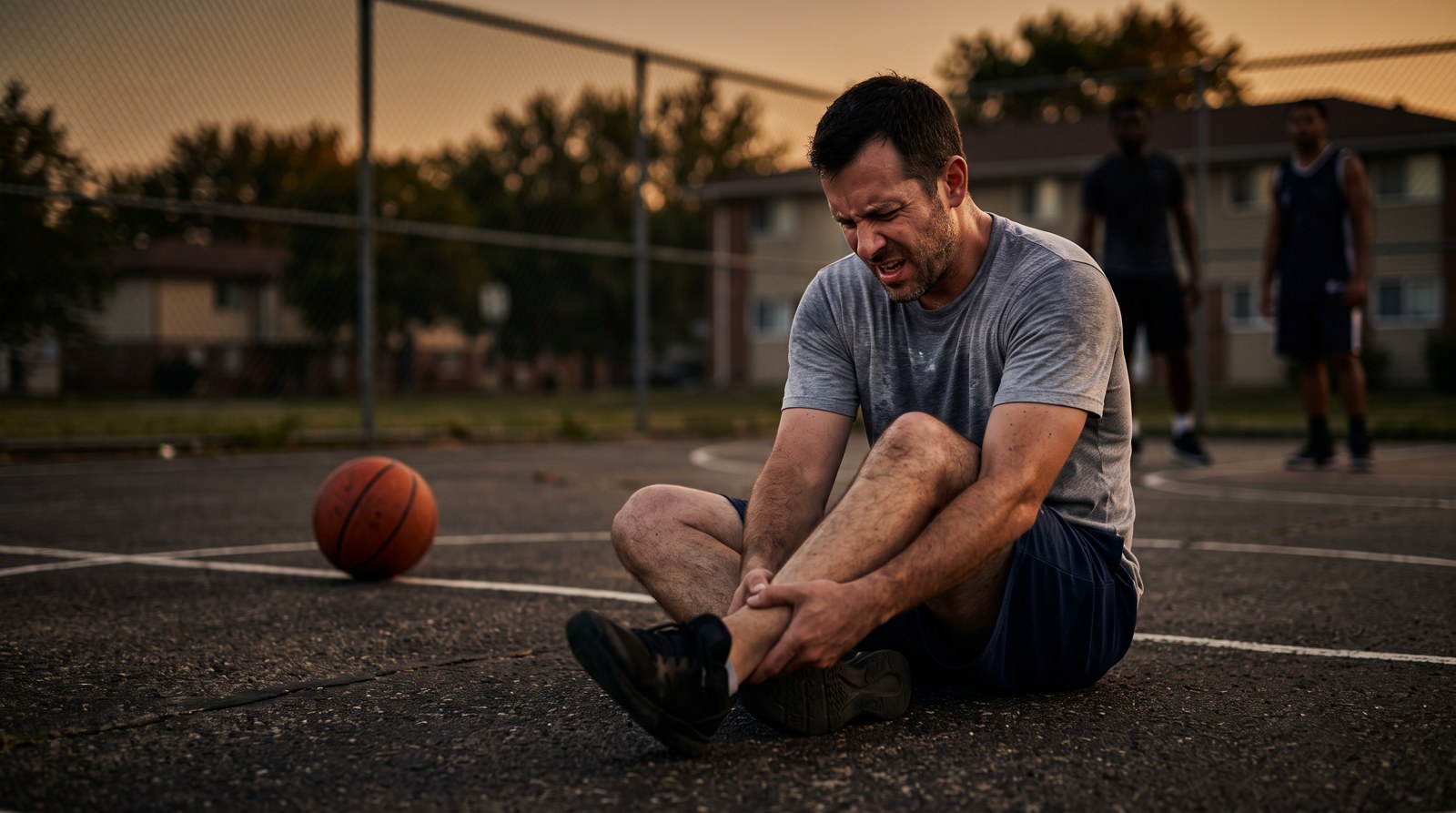
You were sprinting for a rebound, or cutting hard on a pickup soccer field, or just pushing off on a Saturday run. Then something went wrong at the back of your ankle. Maybe there was a crack loud enough that someone asked if you were okay. Maybe you turned around to see who hit you, and nobody was there. Ruptured Achilles tendon symptoms are strange enough that people talk themselves out of them fast, and that hesitation is the real problem. Here is what a rupture feels like, how it differs from a sprain, and what to do in the first hour.
Ruptured Achilles Tendon Symptoms: The Pop and the Kick
The Achilles is the thick cord that connects your calf muscles to your heel bone. When it tears, the classic signs are consistent from person to person. According to Mayo Clinic, most people describe a feeling of having been kicked in the calf, sometimes with a popping or snapping sound at the moment of injury.
What follows the pop:
- Sharp pain and swelling near the heel
- Trouble pushing off the injured foot when you walk
- Difficulty bending the foot downward
- Not being able to stand on your toes on that side
The pain can fade faster than you would expect. Some people report that it hurts badly for a few minutes and then settles into a dull ache. That does not mean the tendon is fine. A full tear can feel less dramatic than a partial one, and a tendon that has stopped working does not send loud pain signals.

Why a Ruptured Achilles Gets Mistaken for a Sprain
Here is the trap. You can usually still walk after an Achilles rupture. Several smaller tendons in the lower leg also move the foot, so the ankle still bends and the toes still curl. Someone limps to the car, decides it is a bad sprain, and goes home to ice it.
A published review in the British Journal of General Practice notes that patients with a complete rupture can still move the ankle actively, and that swelling can hide the gap in the tendon that a doctor would otherwise feel. The result is a diagnosis that gets missed more often than it should, sometimes for weeks.
Delay costs something real. The same review points out that any delay of more than 24 hours becomes a relative reason to consider surgery, and that ruptures left alone tend to heal in a stretched-out position, which leaves long-term weakness in the push-off. The tendon can heal, but it heals best when it is treated early.
Ruptured Achilles Tendon Symptoms vs. a Sprain: How to Tell
A sprain is a ligament injury at the ankle joint. A rupture is a tendon tear above it, in the lower calf. That difference shows up in where it hurts and what you can no longer do. If you are unsure whether the joint itself is the problem, our guide to a sprained ankle versus a broken ankle covers the joint injuries in detail.
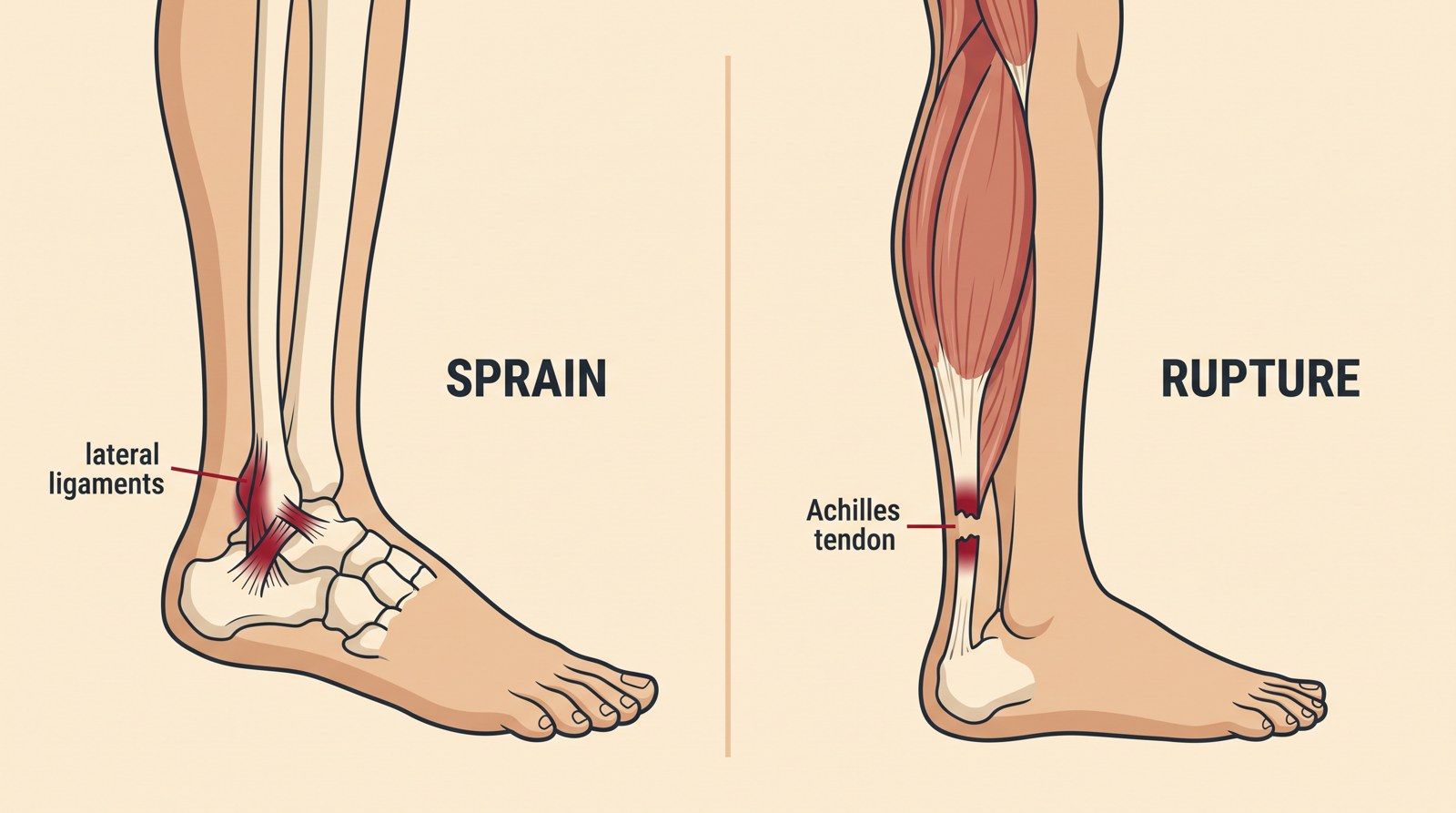
Points that lean toward a rupture rather than a sprain:
- The pop came from the back of the lower leg, not the side of the ankle
- It felt like a kick or a blow with nothing there
- You cannot rise onto the toes of that foot, even with support
- You can feel a dent or gap a couple of inches above the heel bone
- The injury happened during a sudden push-off, not a rolled ankle
Sprains tend to show up as swelling and bruising on the outer side of the ankle, with pain when you put weight on the joint. If you rolled your ankle and it hurts on the outside, a sprain is more likely. If the story is a pop in the back of the leg, treat it as a possible rupture until someone examines it.
The Calf Squeeze Check You Can Do Before the ER
Doctors use the Thompson test to check the Achilles. OrthoInfo, the patient site of the American Academy of Orthopaedic Surgeons, describes it simply: the doctor squeezes your calf and watches whether your foot moves in response. A bystander can try a gentle version of this. It is a screening check, not a diagnosis.
- Have the injured person kneel on a chair or lie face down with the foot hanging off the edge of a bed.
- Let the foot relax completely.
- Gently squeeze the calf muscle on the healthy leg and watch the foot point downward slightly. That is normal.
- Squeeze the injured calf the same way.
- If the foot does not move, or moves much less than the other side, the tendon may be torn.
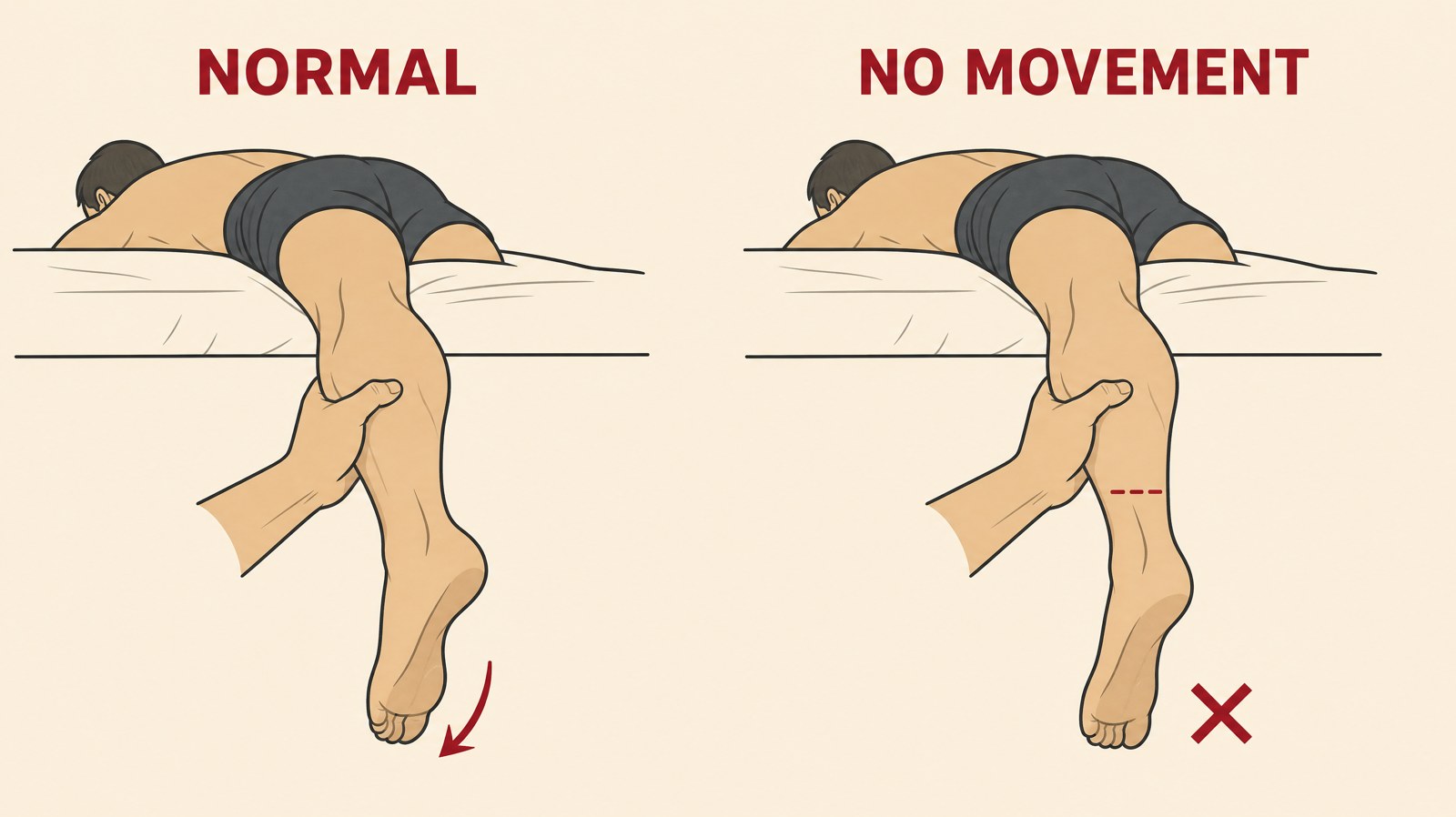
A normal result does not rule out a partial tear, and a swollen, painful leg can be hard to read. Do not press hard or test repeatedly. If the squeeze looks abnormal, or if it looks normal but the story fits, the next step is the same: get it examined.
What to Do Right Now
You do not need to treat this like a 911 call, but you do need to act the same day.
- Stop and get off the leg. Do not try to walk it off or test it with a jog.
- Elevate it above the level of the heart when you are sitting or lying down.
- Ice it in a cloth for about 15 to 20 minutes at a time. Skip direct ice on bare skin.
- Keep the foot relaxed and pointed slightly down, a natural resting position, rather than pulling the toes up toward the shin.
- Do not stretch or massage it. Stretching a torn tendon can pull the ends further apart.
- Get to urgent care or an emergency room within 24 hours, and say you heard or felt a pop in the back of the leg.
Calf pain with swelling is also a symptom of a blood clot, especially after a long trip or a stretch of being off your feet. If your calf is swollen, warm, and sore and you did not injure it, or if you get sudden shortness of breath, read our guide to blood clot in the leg symptoms and seek care right away.
What Happens at the ER, and Why Speed Matters
Expect a physical exam, including the calf squeeze, and possibly an ultrasound or MRI to confirm the tear. Your leg will likely be placed in a boot or splint with the toes pointed downward to keep the tendon ends close together.
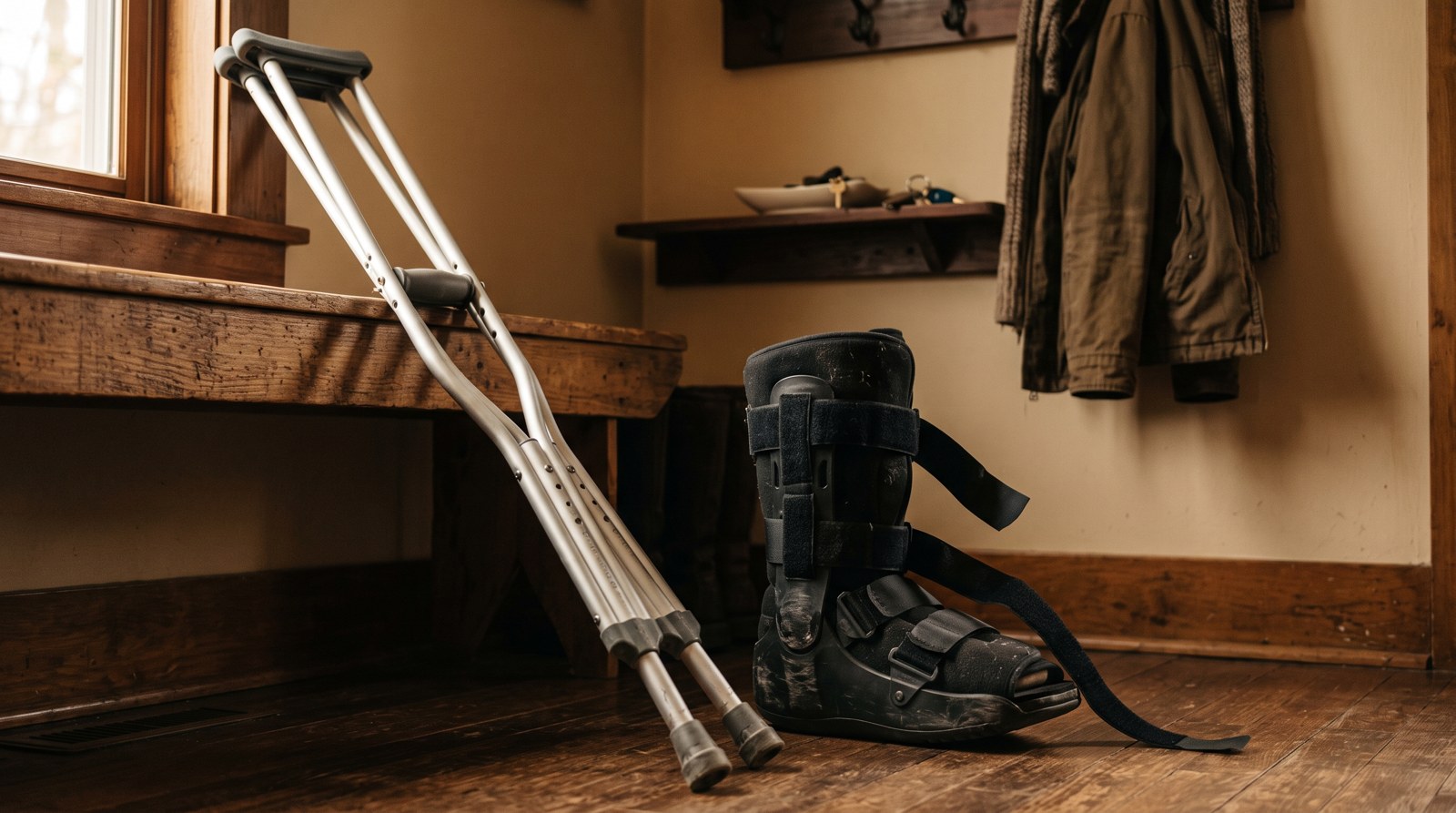
Treatment comes in two forms. OrthoInfo explains that the nonsurgical route means wearing a boot or cast for at least six weeks, followed by physical therapy. Surgery may be recommended for competitive athletes or anyone who needs strong push-off power, with potentially lower re-tear rates, though surgeons still debate how much the choice matters. Either way, recovery is a long game. OrthoInfo puts full recovery at about 12 months for many people, and closer to two years for some.
Who tears one? Mayo Clinic notes that ruptures peak between ages 30 and 40, that men are up to five times as likely as women to have one, and that sports built on sudden starts and stops, like basketball, tennis, and soccer, carry the most risk. Certain antibiotics called fluoroquinolones, such as ciprofloxacin and levofloxacin, and steroid injections near a tendon also raise the risk. If a leg starts hurting behind the ankle while you are on one of those medications, mention it to your doctor before you keep training.
If you are also wondering whether something is actually broken, our piece on how to tell if a bone is broken lays out the signs. And for any injury where you need to immobilize a limb before you can travel, it helps to have real supplies on hand.
Most sports injuries are not emergencies, but a few of them, like a torn Achilles, reward the people who react in the first hour instead of the third day. See what's inside The 1stHour Trauma Kit, gear and guidance built for the first hour of whatever happens next.
This content is for informational purposes only and does not constitute medical advice. If you suspect an Achilles tendon rupture or any serious injury, seek prompt medical attention.


