Kidney Stone Symptoms vs. Back Pain: How to Tell the Difference
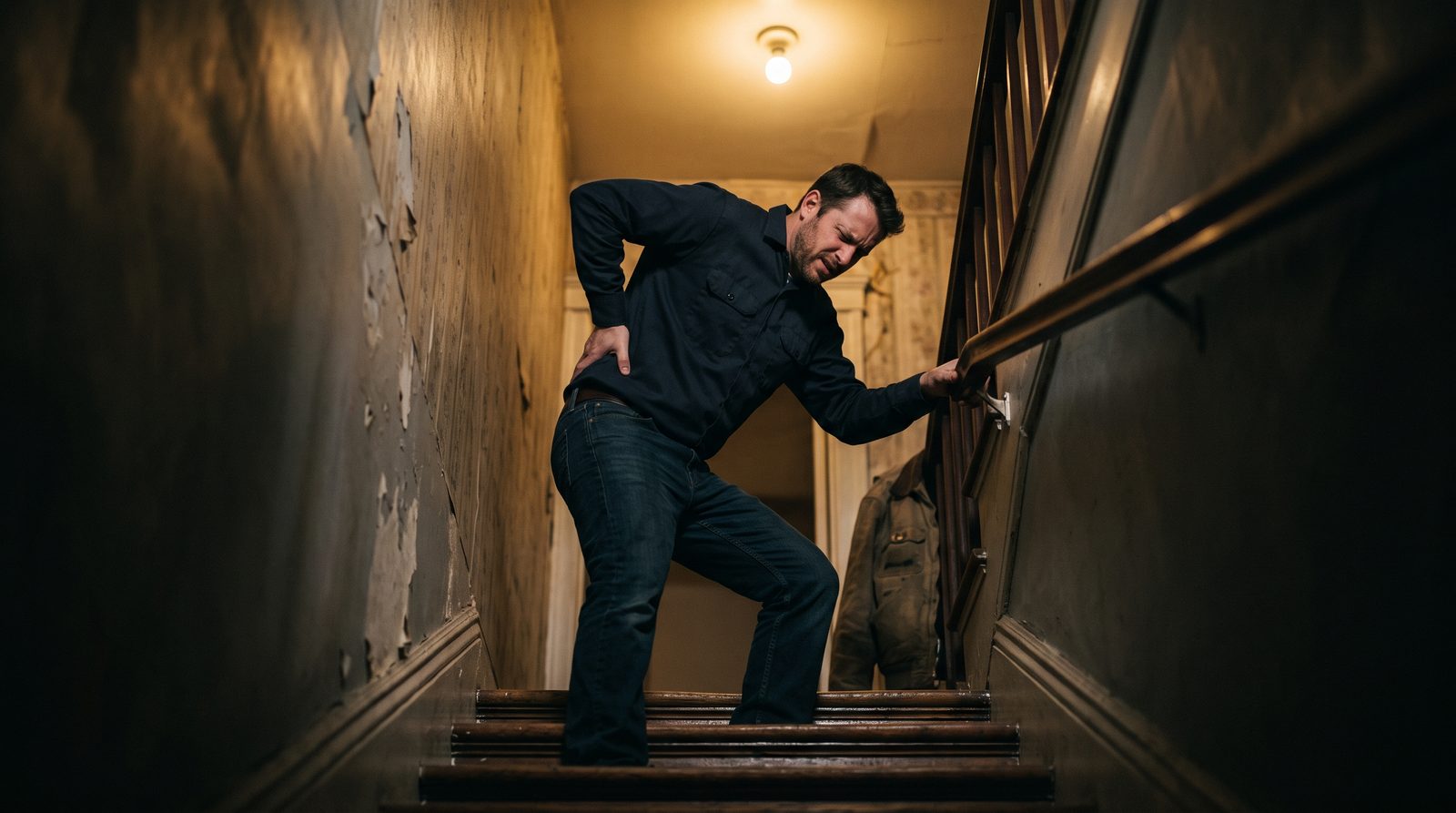
You bent down to load the truck, or you got up from bed, and something in your lower back or side started to hurt. Your first thought is probably the reasonable one: you tweaked something. Most of the time you'd be right.
But kidney stones like to set up shop in almost the exact same spot as a strained lower back, and the two conditions get confused constantly, in ER waiting rooms as much as at home. The difference matters, because one of them needs rest and ibuprofen, and the other one can turn into a middle-of-the-night emergency room trip.
Why Kidney Stone Pain Gets Mistaken for a Bad Back
A kidney stone forms when minerals in concentrated urine crystallize into a hard deposit, and it causes trouble the moment it starts moving out of the kidney and into the ureter, the narrow tube that carries urine to the bladder. That organ sits low in your back, tucked under your ribs on either side of your spine. So does a lot of the muscle and connective tissue people strain lifting, twisting, or sleeping wrong.
Both conditions can start as a dull ache in the same general region. Both can feel worse on one side than the other. And because a stone doesn't show up on the outside the way a bruise or a swollen joint would, most people default to the more familiar explanation.
A strained muscle is common. A kidney stone, statistically, is too: according to the National Institute of Diabetes and Digestive and Kidney Diseases, about 1 in 10 Americans will have one at some point in their life.
The Symptoms That Point to a Kidney Stone, Not Your Back
A handful of symptoms rarely show up with an ordinary muscle strain, and any one of them should shift your suspicion toward a stone.
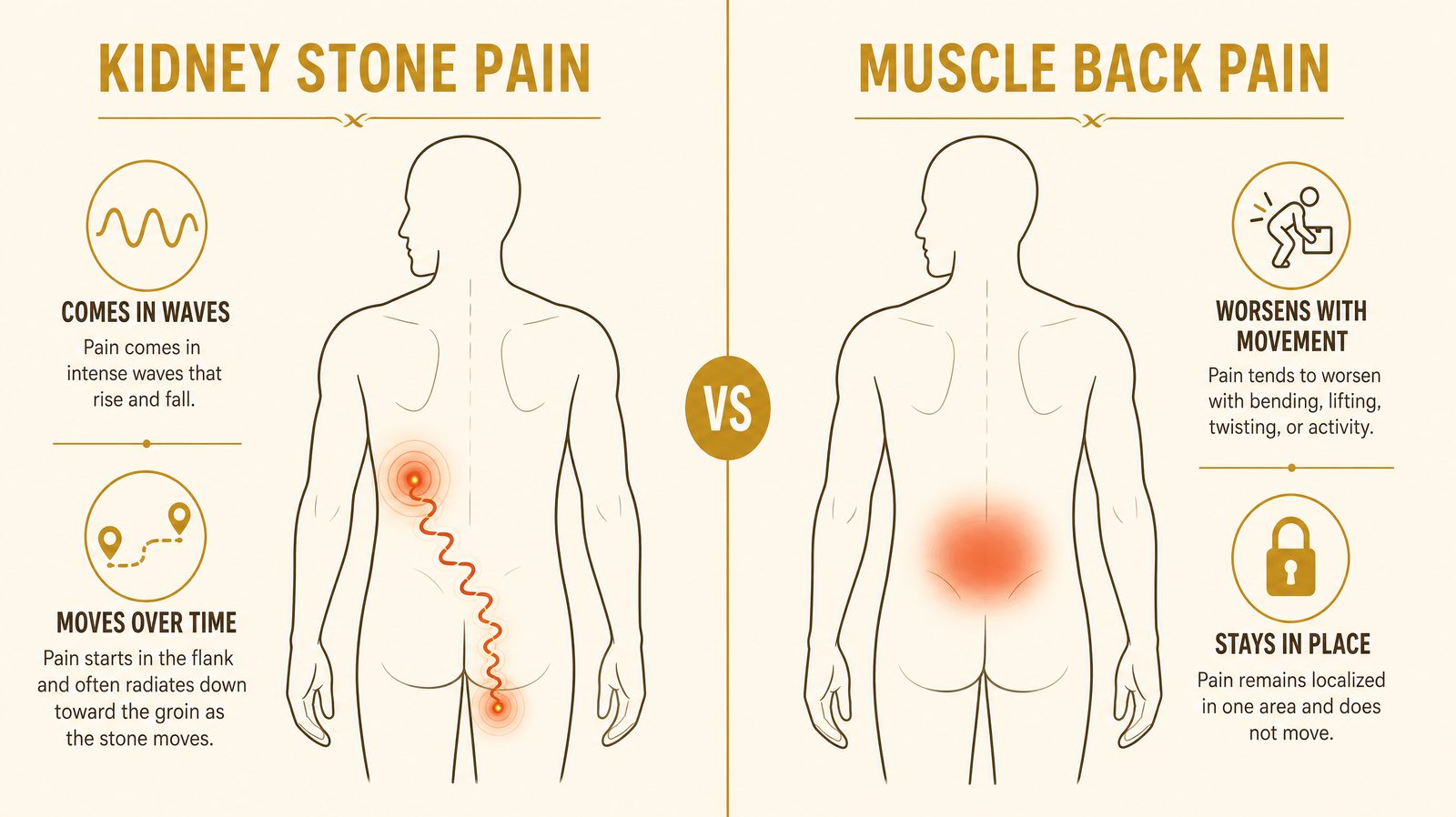
- Pain that comes in waves. Cleveland Clinic describes this as colicky pain, caused by the ureter squeezing around the stone as it tries to push it along. It can spike to severe, ease off, and spike again minutes later.
- Pain that travels. It often starts in the back or side below the ribs and migrates toward the lower abdomen or groin as the stone moves down the ureter.
- Blood in the urine. Pink, red, or brown urine is one of the more reliable tells, even when the blood is too faint to see and only shows up on a urine test.
- Burning or urgency when you urinate, or needing to go constantly without producing much.
- Nausea and vomiting, often severe enough on their own to send someone to urgent care.
- Fever or chills, which can signal an infection behind the stone and turn a painful problem into a dangerous one fast.
None of these are things a strained muscle typically produces. If you're dealing with back pain and any of them show up too, stop assuming it's your back.
Three Ways to Tell Them Apart
If you're trying to make a call at 2 a.m. before deciding whether this is an ER trip, three practical differences do most of the work.
Does it change when you move? Muscle and joint pain almost always responds to position. It gets worse when you bend, twist, or lift, and it eases when you lie still or shift how you're sitting. Kidney stone pain is much less predictable that way. People with a stone often can't find any position that helps, and end up pacing or shifting constantly because nothing brings relief.
How did it start? A pulled muscle usually has a story: you lifted something heavy, slept at an odd angle, or took a bad step. Kidney stone pain tends to start suddenly, with no obvious trigger, sometimes waking someone up out of a sound sleep.
Is it staying in one place? Back pain from muscle or joint issues generally stays where it started. Kidney stone pain moves. As the stone works its way down the ureter, the pain tends to travel from the back or flank toward the lower abdomen and groin over the following hours.
Why Summer Heat and Dehydration Raise Your Risk
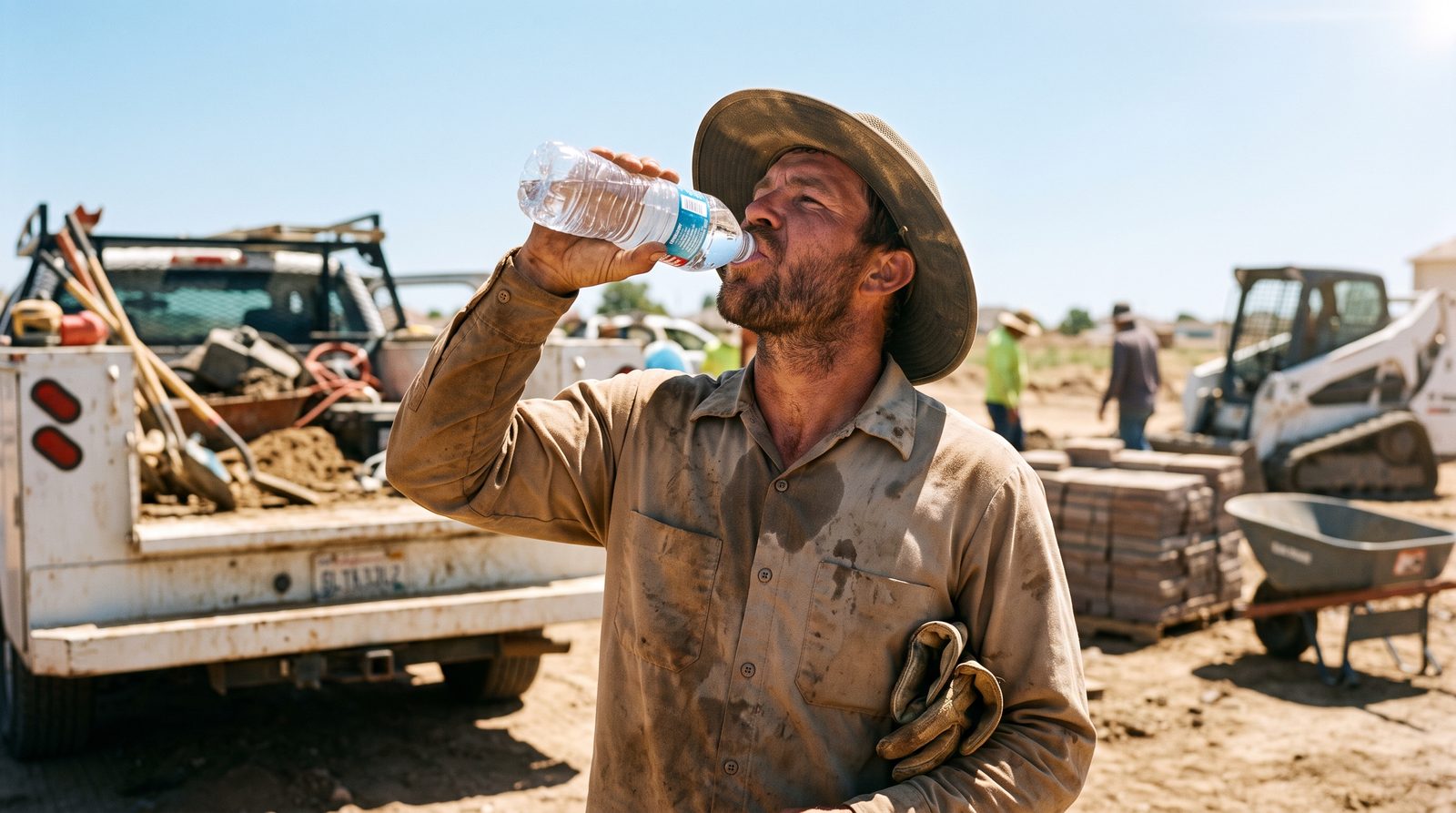
If you work outside, train hard, or just live somewhere hot for part of the year, this isn't an abstract risk. Kidney stones form when urine becomes concentrated enough for minerals like calcium and oxalate to crystallize, and the single biggest driver of concentrated urine is simply not drinking enough. According to Mayo Clinic urologist Dr. William Haley, heat, humidity, and inadequate hydration all push kidney stone rates higher in the summer months, because people sweat out fluid faster than they replace it.
That's a real, ongoing exposure for landscapers, roofers, warehouse workers, farmhands, and anyone else logging hours outside in the heat, not a once-a-year fluke. It's the same reason dehydration symptoms are worth learning to catch early: the two problems share a root cause. Roughly 3.8 million Americans develop a kidney stone every year, and the numbers climb every summer for exactly this reason. Pale yellow urine, not dark, is the easiest daily check that you're staying ahead of it.
When Kidney Stone Symptoms Mean You Need the ER Now
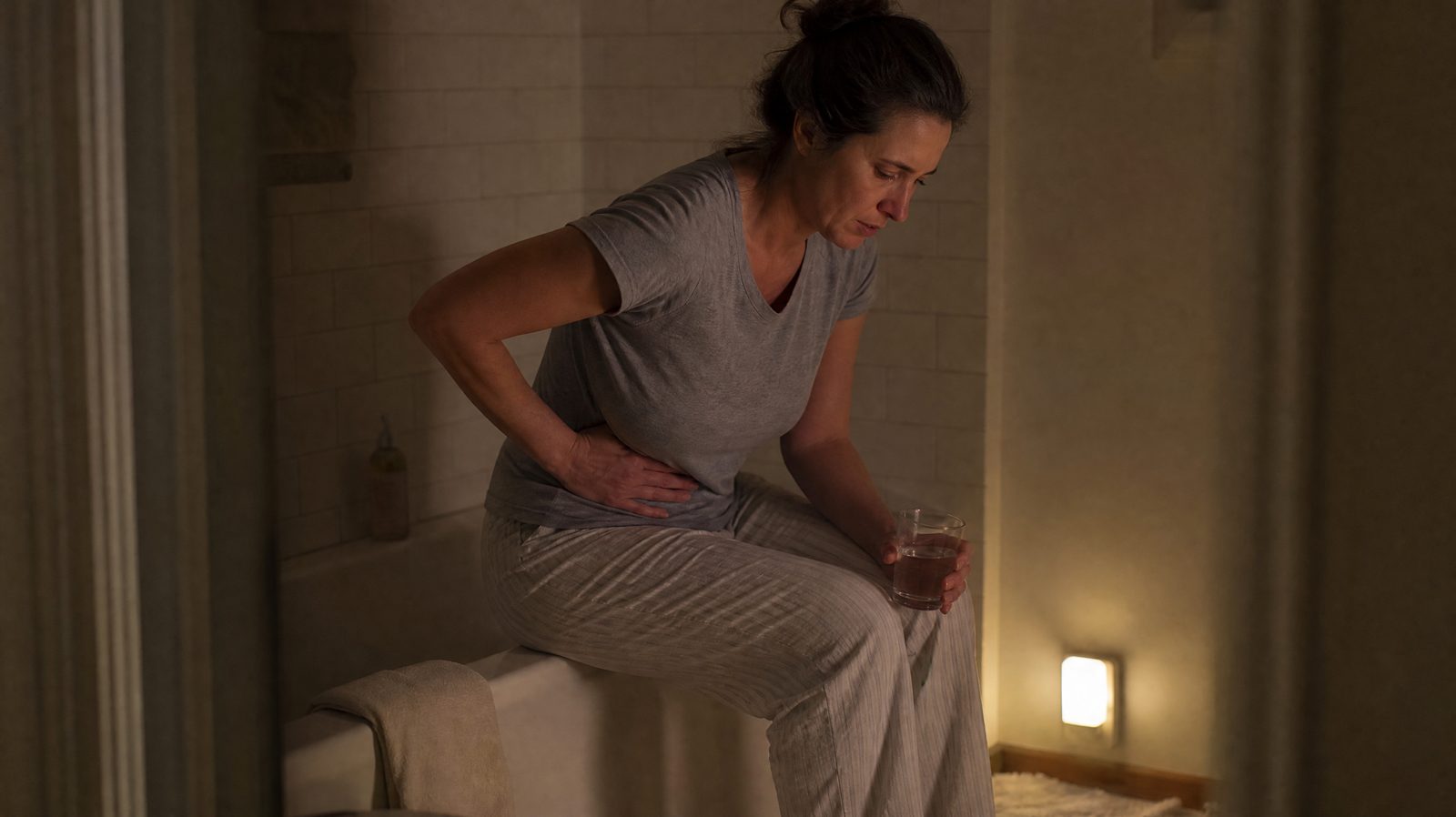
Plenty of kidney stones pass on their own with fluids and time. Some don't, and a handful of warning signs mean this isn't a wait-and-see situation:
- Pain severe enough that you can't sit still or find any relief
- Fever or chills alongside the pain, which can mean infection behind a blocked stone
- Persistent vomiting that keeps you from keeping fluids down
- Visible blood in the urine, or an inability to urinate at all
- Kidney stone symptoms during pregnancy, which always warrant prompt evaluation
Any of those, especially fever with flank pain, is a same-day medical problem, not a tomorrow problem. An infected, obstructed kidney can become dangerous within hours.
Back and abdominal pain hide other things worth knowing about too. Gallbladder attacks cause a similar wave-like pain on the opposite side of the torso, and an abdominal aortic aneurysm, while far less common, is a rarer but more dangerous cause of deep back and abdominal pain that shares some of the same "this doesn't feel like my back" quality. None of these are diagnoses to make yourself. They're reasons to take the pain seriously and get it looked at.
What Happens if It's Actually a Stone
A doctor will usually confirm a kidney stone with a urine test, a CT scan, or an ultrasound. Small stones often pass on their own with fluids, time, and pain control. Larger ones may need a procedure to break them up or remove them. Either way, once you know what you're dealing with, the plan gets a lot simpler than it feels at 2 a.m. wondering if you just need to stretch.
Knowing the difference between a strained back and a kidney stone buys you the right response instead of a guess. That same instinct, knowing what you're actually looking at before you act, is worth building into how you handle any sudden pain or injury.
See what's inside The 1stHour Trauma Kit, built to help you respond correctly in the minutes that matter most.
This content is for informational purposes only and does not constitute medical advice. If you're experiencing severe pain, fever, or you're unable to urinate, seek emergency care immediately.


