Gallbladder Attack Symptoms vs Heartburn: How to Tell the Difference
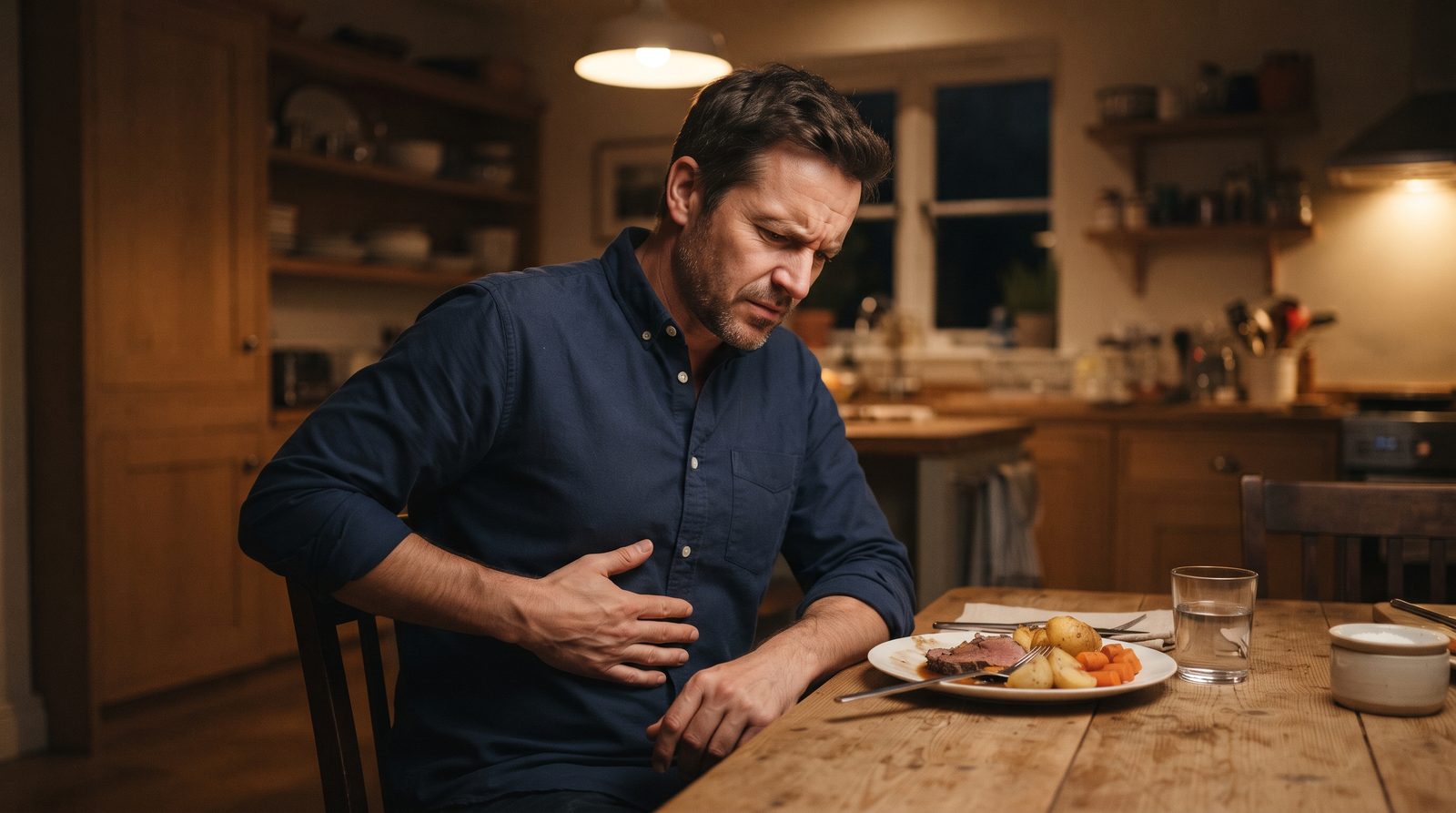
You just ate. Maybe it was a burger, maybe it was the good cheese plate at a family dinner, and now something under your right ribs has locked up tight. You've had heartburn before. This doesn't feel like that. It also doesn't feel like it's going away.
That's a fair thing to worry about, and it's one of the more common mix-ups in the ER waiting room. Both conditions hit after meals. Both can make you feel sick to your stomach. But they come from completely different organs, and treating one like the other means you either suffer through pain an antacid was never going to fix, or you miss a warning sign that your gallbladder needs real medical attention. Here's how to tell them apart, and what to do once you know which one you're dealing with.
Gallbladder Attack Symptoms: What It Actually Feels Like
Your gallbladder sits tucked under your liver, on the right side of your body, and its job is to store bile that helps you digest fat. When a gallstone blocks the tube leading out of it, the organ squeezes against that blockage. That squeezing is what you feel.
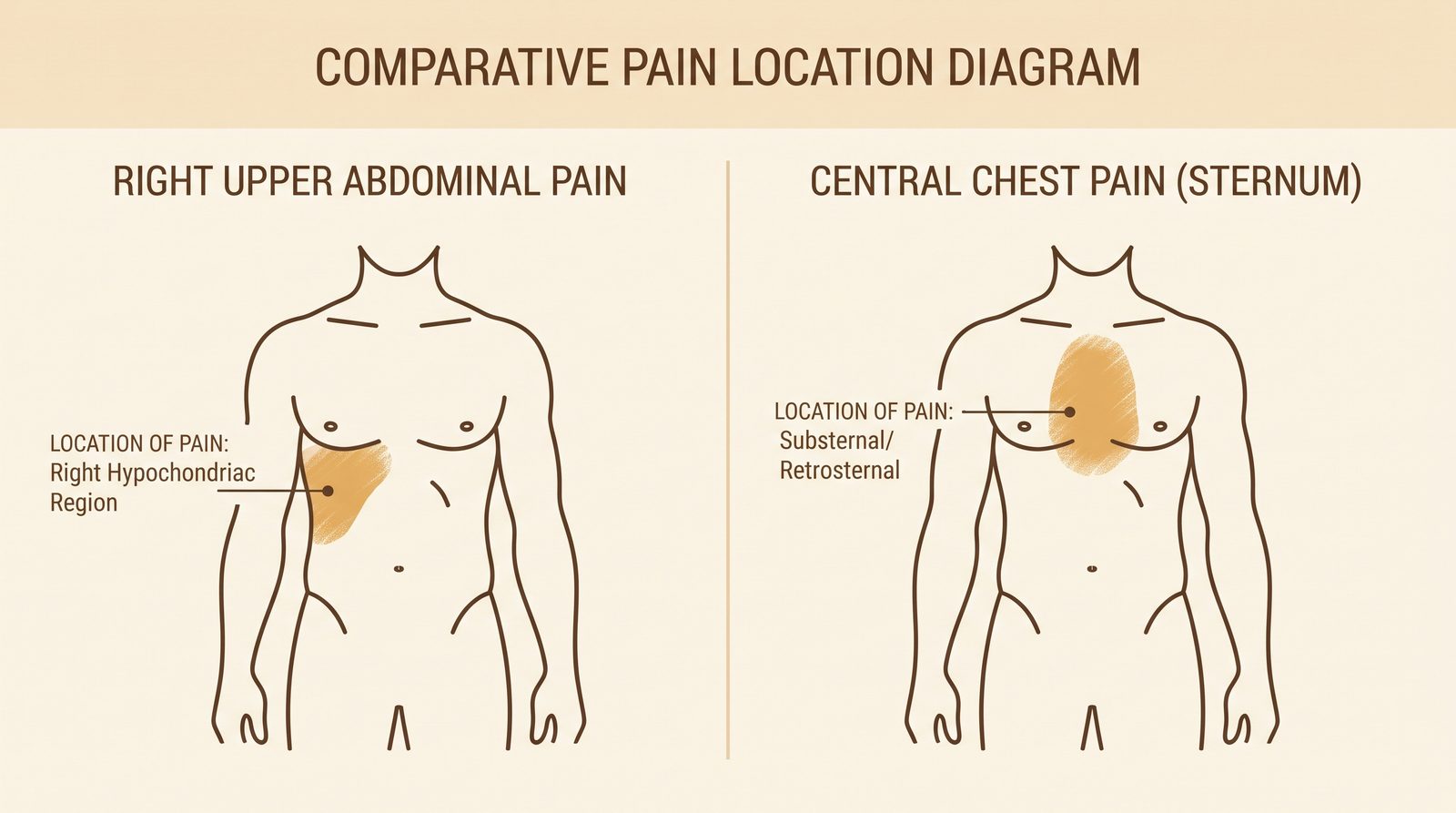
The pain shows up under your right ribs, sometimes spreading into your upper back or the tip of your right shoulder blade. It's not a dull ache. People describe it as sharp, cramping, or like a fist closing around that spot, and it tends to arrive fast rather than build slowly. It usually starts within an hour of a rich or fried meal and can hold steady anywhere from twenty minutes to a few hours before it lets go. Some people feel nauseated or vomit during an episode. Sitting still doesn't help much, which is its own clue, since most stomach cramps ease up if you stay put.
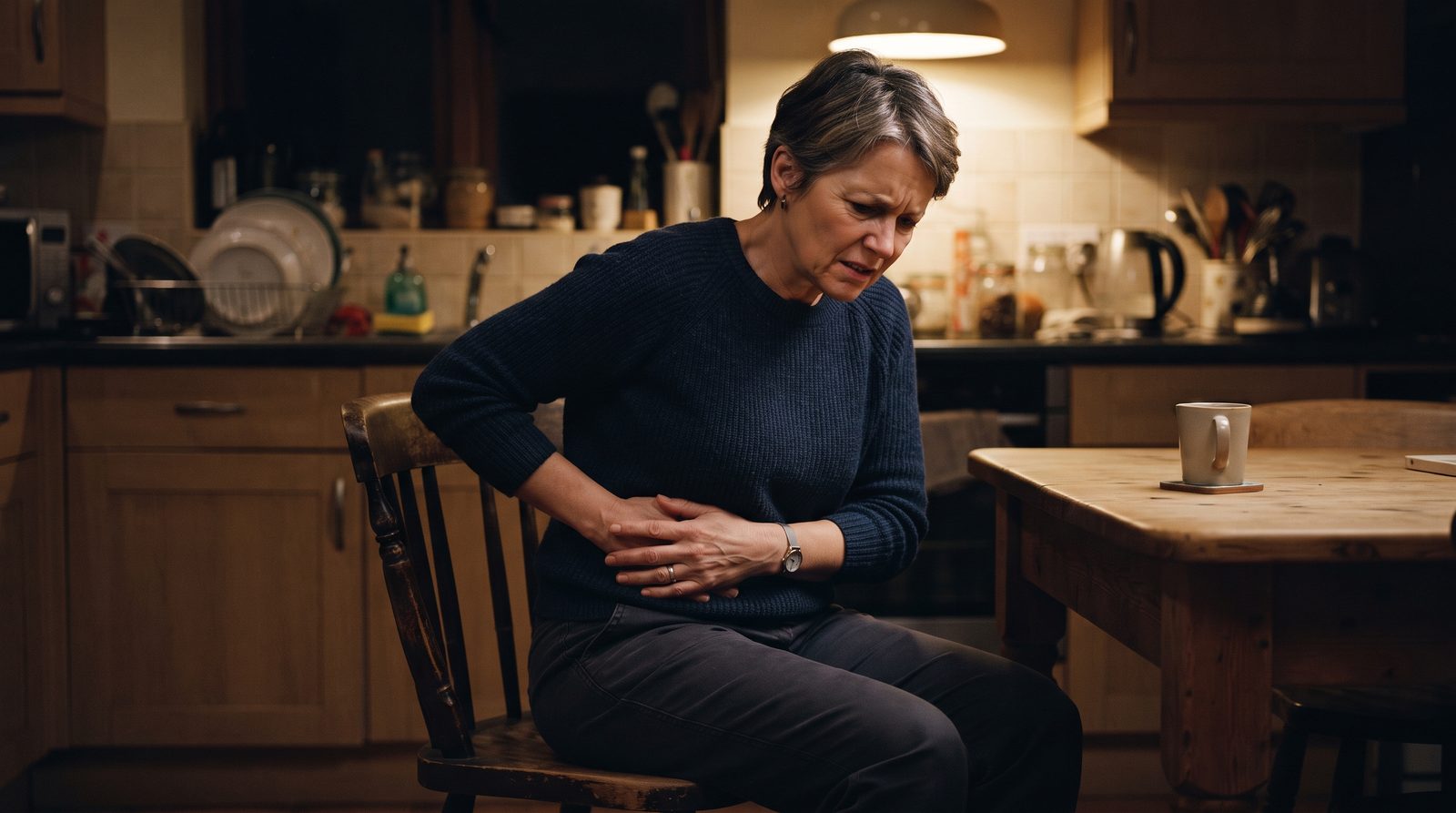
Doctors call this biliary colic when it comes and goes without infection setting in. It's uncomfortable enough that most people remember the exact chair they were sitting in when it happened. It's also easy to confuse with a stomach bug at first; if you want to see how those compare, food poisoning vs. stomach flu is worth a look, since all three can start with nausea after a meal.
Heartburn Symptoms, for Comparison
Heartburn comes from stomach acid moving up into your esophagus, and it feels almost nothing like a gallbladder attack once you know what to look for. The pain sits higher, right behind your breastbone, and it burns rather than cramps. It gets worse when you lie down or bend over, which is why it wakes people up at night more than a gallbladder attack does. You might also get a sour taste in your mouth, a lingering cough, or a feeling that food is sticking on the way down.
The biggest tell is what makes it better. Antacids, sitting upright, or avoiding a second helping of spicy food all tend to calm heartburn within twenty or thirty minutes. That response is a real diagnostic clue, not just a home remedy footnote.
Five Gallbladder Attack Symptoms That Rule Out Heartburn
If you're standing in your kitchen trying to decide whether to grab the antacids or call a doctor, these are the differences worth weighing:
Location. Gallbladder pain sits under the right ribs and often wraps to the back or shoulder blade. Heartburn stays centered behind the breastbone.
Trigger. Gallbladder attacks follow fatty, fried, or heavy meals specifically. Heartburn can follow almost any large meal, spicy food, caffeine, or just lying down too soon after eating.
Response to antacids. Heartburn usually improves. A gallbladder attack does not, because there's no acid problem to neutralize.
Fever or chills. These point toward the gallbladder, especially if the pain has lasted more than a few hours. Heartburn doesn't cause fever.
Duration and intensity. Heartburn tends to be a burning discomfort that fades within an hour. A gallbladder attack is sharper, holds you still, and can leave you sore in that spot for a day or two afterward even once the worst of it passes.
Why Gallbladder Attacks Happen
Most gallbladder attacks trace back to gallstones, hardened deposits of cholesterol or bile that form inside the gallbladder and occasionally drift into the duct that drains it. A stone doesn't have to be large to cause serious pain. It just has to be in the wrong place at the wrong time.
Risk climbs with age, with a family history of gallstones, and after rapid weight loss, which is common enough after bariatric surgery or an aggressive diet that doctors watch for it specifically. Pregnancy and certain medications, including some hormone therapies, raise the risk too. None of that means an attack is inevitable if you check a few of these boxes. It just means it's worth taking seriously if the symptoms show up. The same goes for abdominal pain in general; appendicitis symptoms get missed for the same reason, because people assume a stomachache will pass on its own.
When a Gallbladder Attack Becomes an Emergency
A single episode of biliary colic that resolves on its own is unpleasant but usually not an emergency by itself, though it's still worth getting checked out since it tends to repeat. What turns it into something urgent is infection or a blocked duct that doesn't clear.

Get to an ER, not just an urgent care, if you notice any of the following:
- Pain that lasts longer than a few hours instead of easing off
- A fever above 100.4°F, especially with chills
- Yellowing of your skin or the whites of your eyes (jaundice)
- Dark urine or pale, clay-colored stool
- Pain severe enough that you can't find a comfortable position
- Vomiting that won't stop
Those signs can mean the gallbladder has become inflamed (cholecystitis), that a stone has moved into the main bile duct, or that the pancreas has gotten involved. All three need medical treatment, not home management, and waiting them out at home puts you at real risk of a much bigger problem than the pain you started with, including sepsis from an infection that gets ignored too long.
What to Do in the First Hour
If the pain fits the gallbladder pattern and you don't have any of the red-flag signs above, avoid food for a few hours, especially anything fatty, and see how the episode resolves. A heating pad on the area sometimes eases the cramping. Over-the-counter pain relief can take the edge off, though it won't fix the underlying blockage.
Call your doctor the same day if this is a new symptom for you, even if the pain has already passed. Repeat attacks are common once the first one happens, and a same-day call gets you on the path to an ultrasound and a real answer instead of another guessing game next time.
If any of the emergency signs above show up, don't wait for an office to open. That's an ER visit.
Most gallbladder attacks happen at home, at night, or somewhere without a hospital down the street, which is exactly the kind of moment the 1stHour Trauma Kit was built for. It won't treat a gallstone, but it puts real tools for the first hour of any emergency within reach so you're not improvising when it counts.
This content is for informational purposes only and does not constitute medical advice. If you're experiencing severe or worsening abdominal pain, seek medical attention.


