Jammed Finger or Broken Finger? How to Tell the Difference
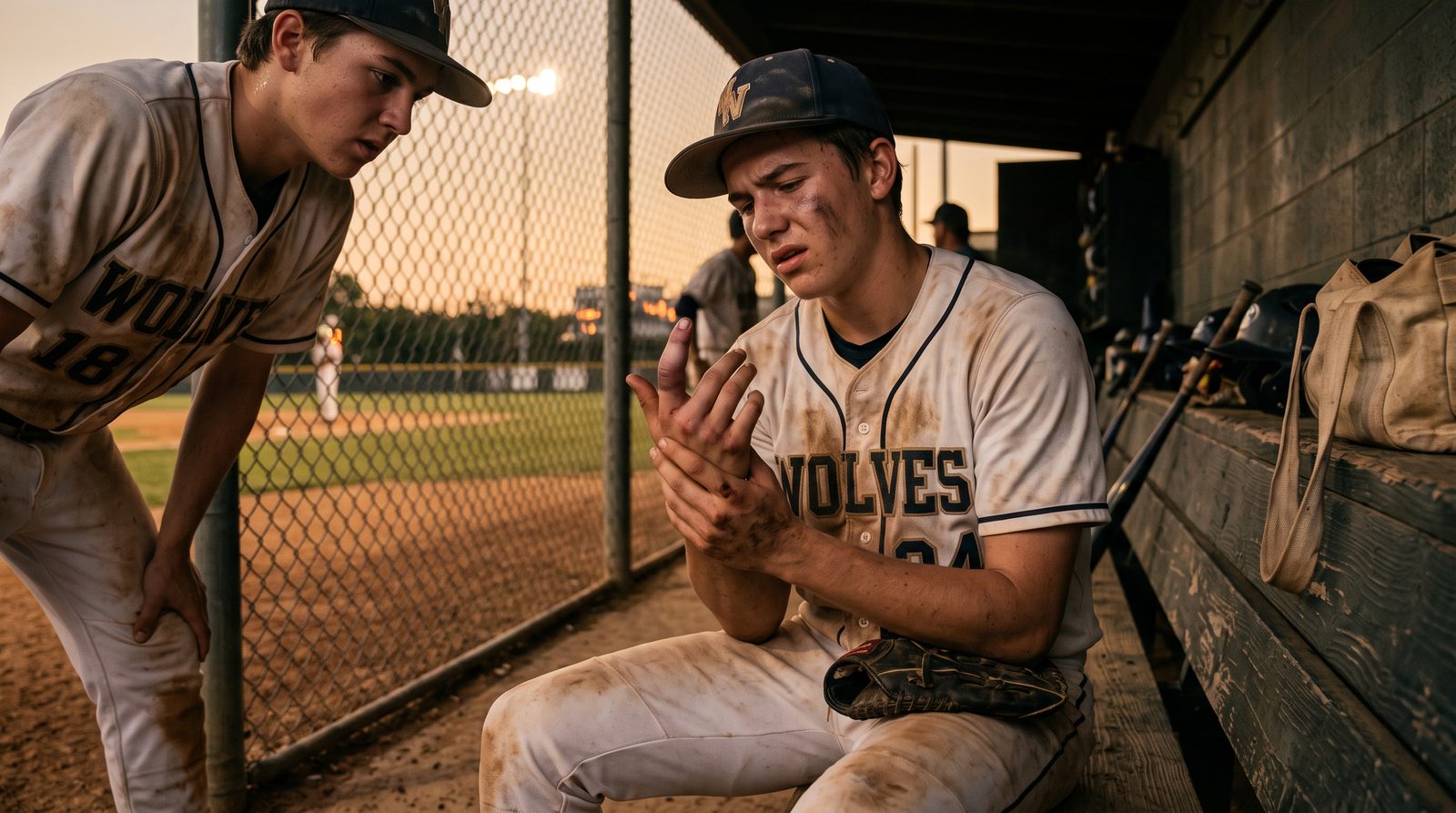
Somebody just took a bad hop off a grounder, jammed a finger diving for a pass, or caught a basketball wrong on the tip of a finger. It swelled up fast, it's throbbing, and the instinct on every sideline in America is the same: tape it to the finger next to it and get back out there.
That instinct is right most of the time. It's also exactly how a broken finger gets treated like a sprain for two weeks, healing crooked, and needing surgery to fix what a same-day X-ray would have caught.
This isn't about scaring anyone off buddy taping, which is a legitimate, doctor-recommended treatment for a real sprain. It's about knowing which injuries that trick actually helps, and which ones it makes worse.
What to Do in the First Few Minutes
Get the ring or any jewelry off that finger immediately, before swelling makes it impossible. Then look at it, really look, before you touch anything else. Is it straight? Does it point in roughly the same direction as the finger on your other hand? Can you see the knuckle, or has the whole joint disappeared into swelling?
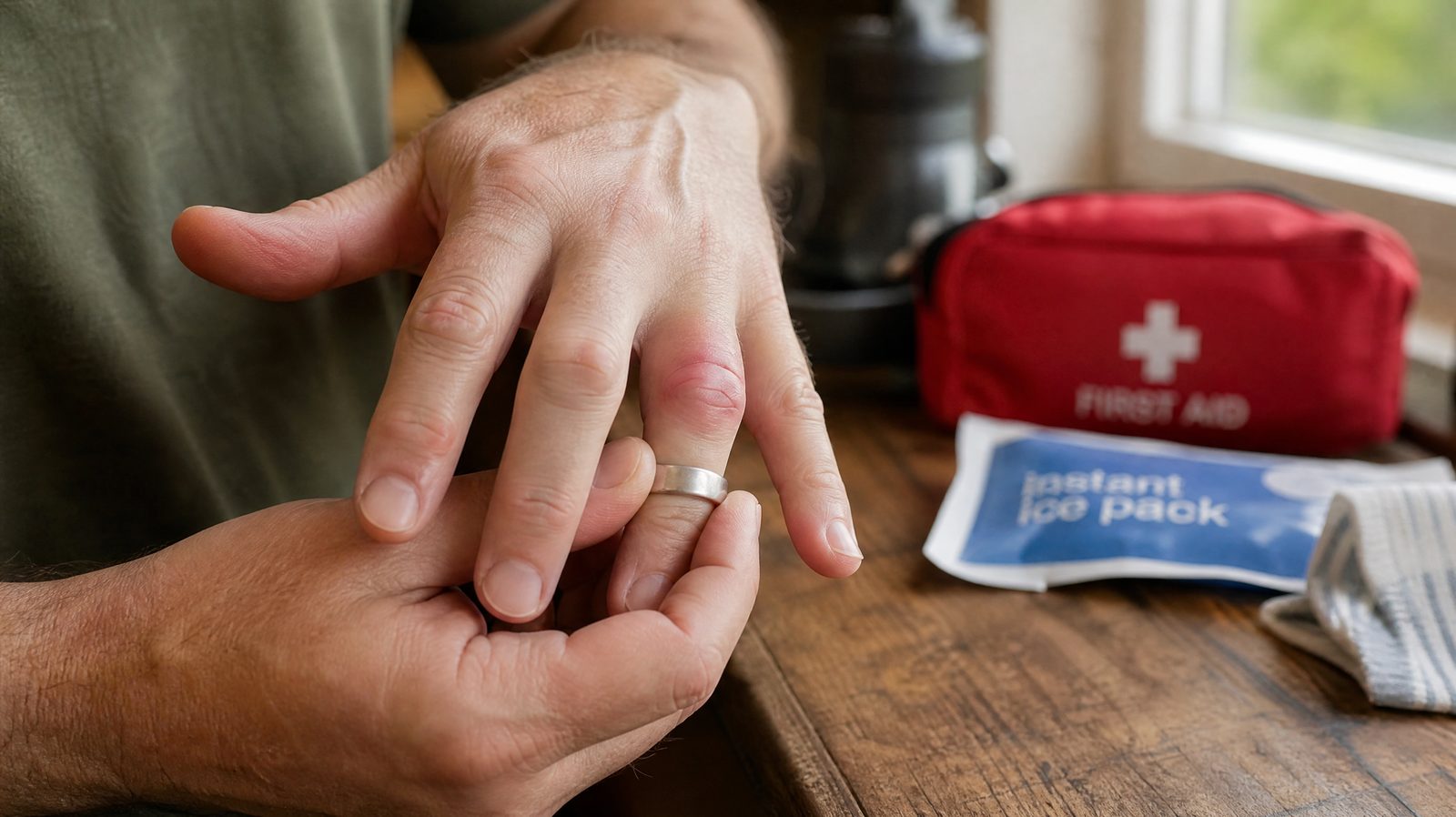
If it looks straight and there's no obvious deformity, standard RICE care is the right first move. Rest it, ice it for 15 to 20 minutes at a time, and elevate it above your heart when you can. According to OrthoInfo, the American Academy of Orthopaedic Surgeons' patient resource, most finger sprains involve the middle joint of the finger and cause pain, swelling, and stiffness that can take weeks to fully resolve even when nothing is broken.
Buddy taping, wrapping the injured finger to a healthy neighbor so it acts as a moving splint, is a real treatment doctors prescribe for confirmed sprains. But that's the catch: it's a treatment for a diagnosis, not a diagnosis itself. Reaching for tape before you've ruled out a fracture is where things go wrong.
Signs That Point to a Break, Not a Jam
A handful of things separate an ugly-looking sprain from an actual fracture, and none of them require an X-ray machine to spot.
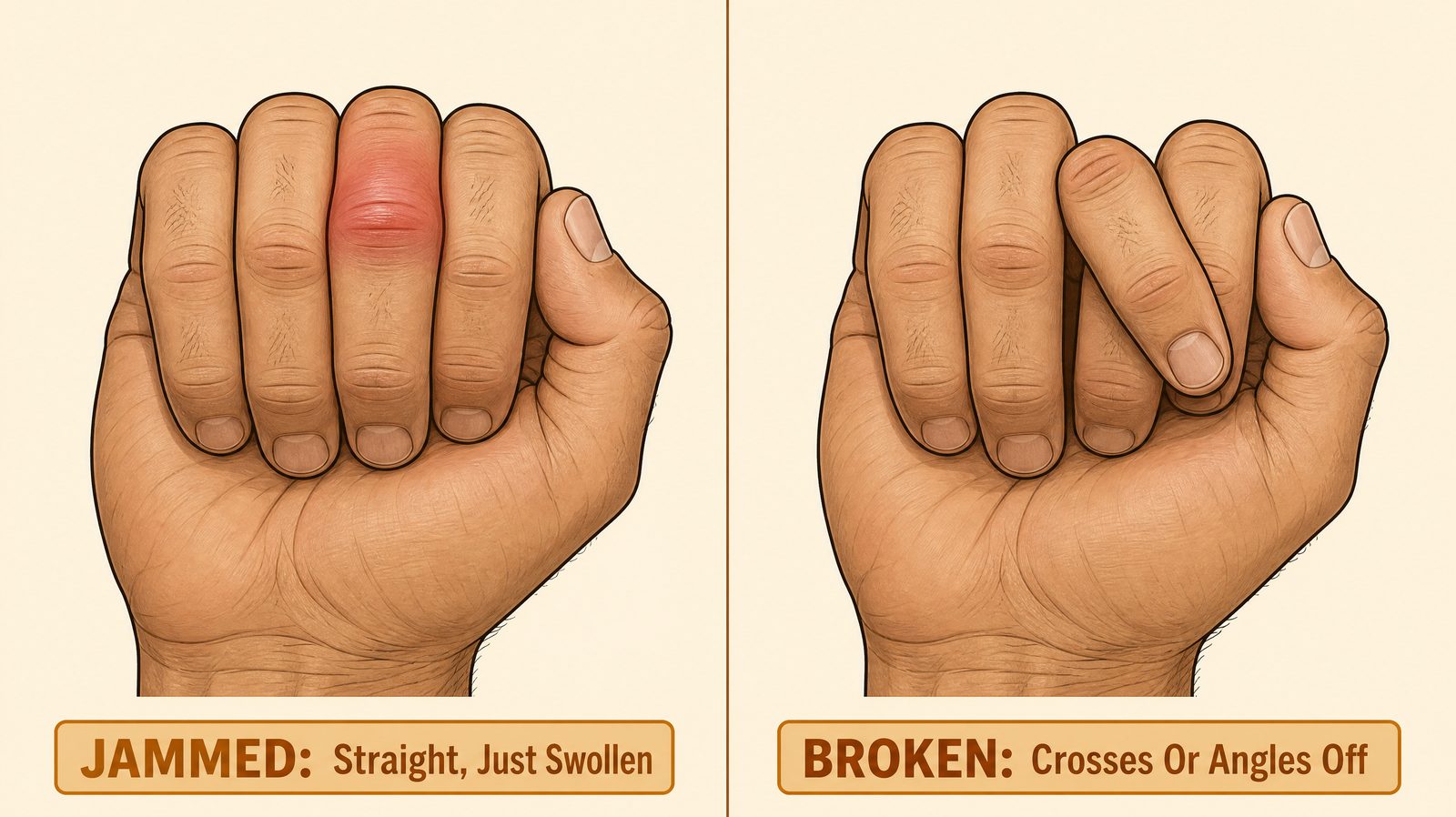
Deformity is the biggest one. A finger that's bent at an odd angle, sitting sideways instead of straight, or noticeably shorter than the same finger on your other hand has almost certainly cracked. OrthoInfo notes that doctors specifically check whether an injured finger overlaps its neighbor or angles the wrong way when you make a fist, since either one signals malrotation, a fracture pattern where the bone has twisted along its length.
You don't need training to see it. Curl your fingers slowly into a loose fist and watch what the injured one does. If it crosses over the finger next to it, or points off at a different angle than the others, that's a break, and taping it to a neighbor will only lock the misalignment in place while it heals.
Swelling that's dramatic and immediate, arriving within minutes rather than building over an hour, also leans toward bone injury. So does bruising that shows up fast and spreads, rather than staying limited to the joint that took the hit.
Pain that keeps climbing instead of settling is another red flag. A sprain typically hurts most at the moment of injury and gradually eases with ice and rest. A fracture often keeps getting worse for the first several hours, especially with any attempt to bear weight on the hand or grip something.
The Pain-Location Test: Ligament vs. Bone
Here's a simple check that takes ten seconds and tells you a lot: press gently, one spot at a time, along the length of the injured finger.
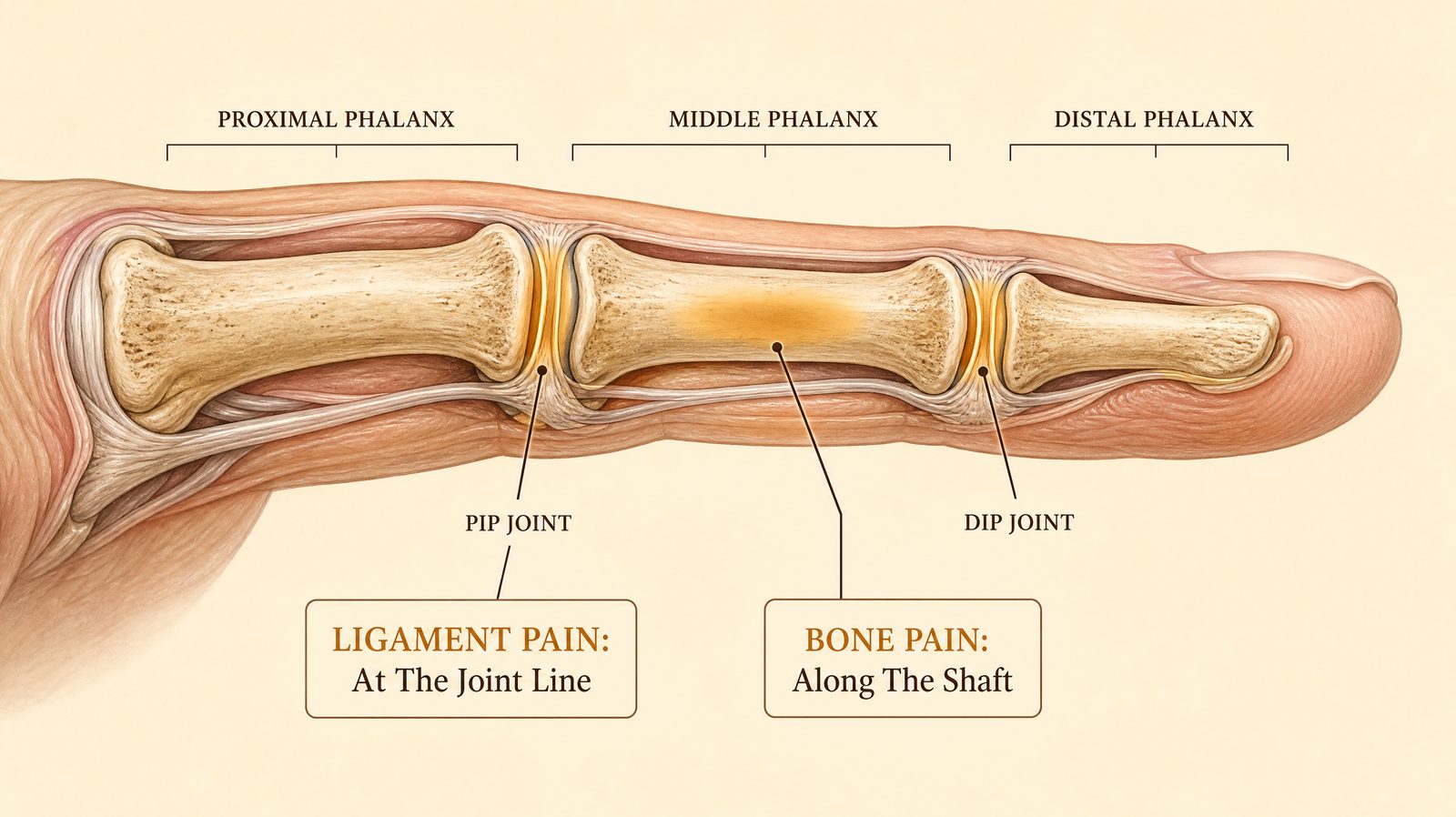
If the sharpest pain sits right at a joint, the knuckle line where two bones meet, that points toward a ligament injury. Ligaments are the tough bands that hold joints together, and they run along the sides of each joint, not down the middle of the bone. Joint-line tenderness with a stable, straight-looking finger is the classic sprain pattern.
If the sharpest pain is instead centered along the shaft of the bone itself, between the joints rather than at one, that's a different story. Bone pain doesn't usually localize to a joint line. It tends to sit wherever the crack actually is, which can be anywhere along the finger's length. This one test won't replace an X-ray, but it's a useful gut check for deciding how urgently you need one.
One more test worth doing gently: can you fully straighten the finger on your own, without help? If a finger gets stuck in a bent position and you can't extend it under your own power, no matter how hard you try, that's worth treating as a possible fracture rather than muscling through it.
When Buddy Taping Can Make a Broken Finger Worse
This is the part that doesn't get said enough on the sideline. Buddy taping works for a sprain because it lets a stable joint move while borrowing support from the finger next to it. That same movement is the problem if the finger is actually fractured.
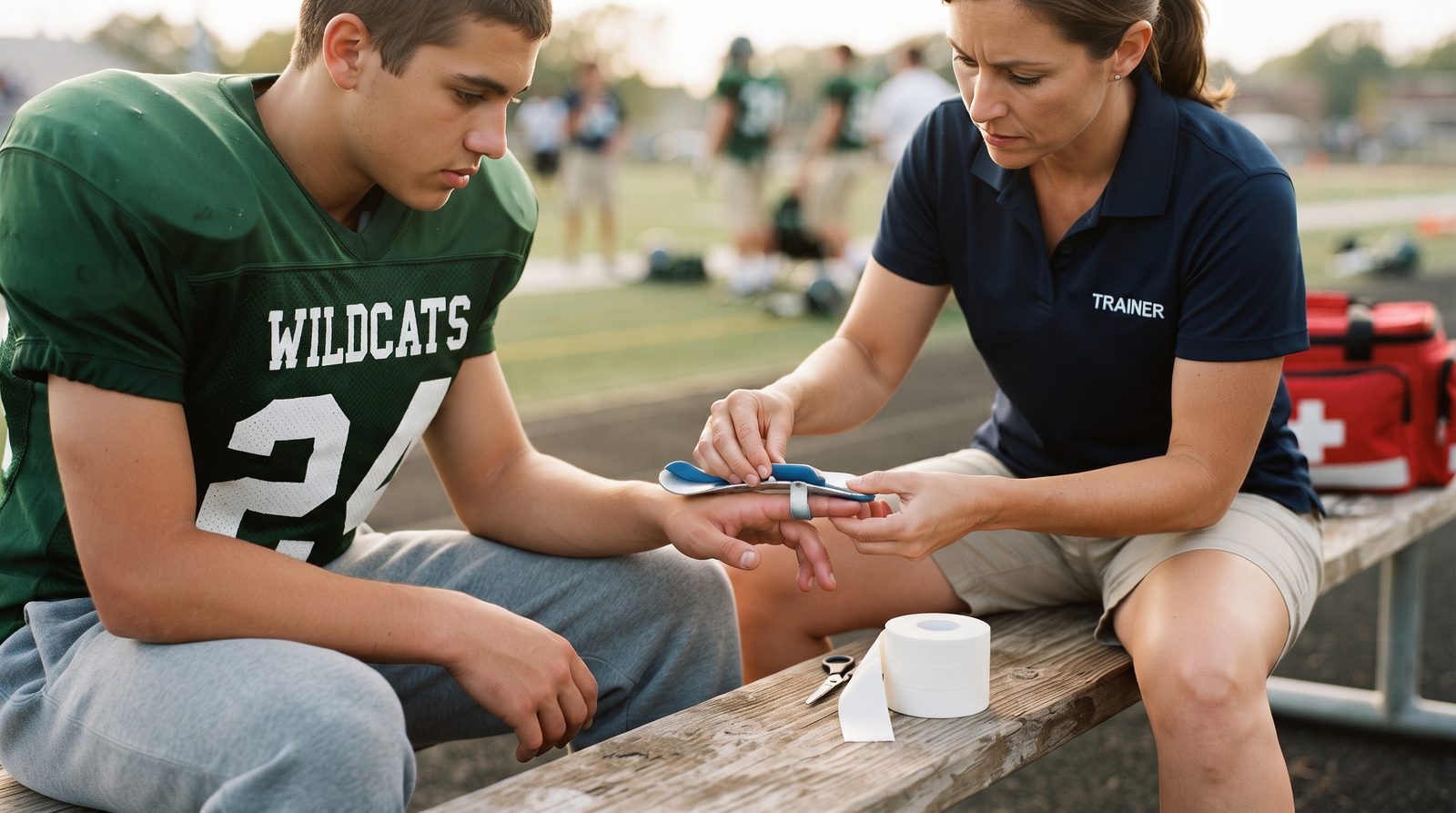
A broken bone needs to stay still to heal in the right position. Taping a fractured finger to its neighbor keeps it moving with every catch, throw, or grip, which can shift the broken ends out of alignment, delay healing, or let the bone set crooked. By the time it's obvious weeks later, whatever damage happened is already done, and fixing a finger that healed in the wrong position usually means surgery that a same-day splint would have avoided entirely.
If there's any deformity, angulation, or crossing when you make a fist, skip the tape and splint it straight instead, or leave it alone entirely until it's been checked. A rigid, straight splint that immobilizes the joint is the right call for a suspected fracture. Buddy taping is for injuries that are allowed to move.
Why a "Jam" That Won't Straighten Still Needs an X-Ray
Some finger fractures hide extremely well. The classic example is mallet finger, where a hard blow to the tip of an extended finger, like a ball hitting it dead-on, tears the tendon that straightens the last knuckle. Sometimes that tendon pulls a small chip of bone away with it.
The result looks deceptively minor. There's often only modest swelling, and it might not even hurt that much. The one unmistakable sign is that the very tip of the finger droops and stays bent, and no amount of effort lets you straighten it on your own. People frequently mistake this for "just a jam" because the rest of the finger looks and moves normally.
That drooping fingertip is exactly the kind of injury this brand exists to help you catch. Left untreated, Cleveland Clinic's overview of jammed finger injuries describes mallet finger as one of the more commonly missed hand injuries precisely because it looks so unremarkable at first glance, yet it typically requires weeks in a specific splint, worn continuously, to heal correctly. Wait too long to get it splinted properly, and the fingertip can end up permanently unable to fully straighten.
The rule of thumb: any finger that won't fully extend on its own, even if it isn't crooked and doesn't hurt as much as you'd expect, gets an X-ray. So does any jam where the pain is still getting worse a day later instead of easing off, or where swelling and stiffness haven't budged after 48 hours of proper RICE care.
Cleveland Clinic recommends seeing a provider if symptoms haven't improved within one to two days of at-home treatment, which is a reasonable line for most of these injuries, mallet finger included.
Getting Back in the Game (or Not) Safely
Most jammed fingers heal in one to two weeks with nothing more than ice, a buddy strap, and some patience. The handful that turn out to be fractures need a splint, sometimes a follow-up X-ray or two, and a longer runway before a full return to sport. Knowing which one you're dealing with in the first few minutes, deformity or none, joint pain or bone pain, straightens or doesn't, is what keeps a two-week nuisance from turning into a permanently stiff or crooked finger.
For anything more serious than a finger, the same first-minutes instinct applies: check for deformity before you move it, and a rigid splint that immobilizes the injury properly beats improvised tape every time you're not sure what you're dealing with.
The same goes for any injury with visible deformity, since that sign alone is one of the more reliable ways to tell a bone is actually broken, whether it's a finger, a rib, or anywhere else. Sideline injuries like a hard hit to the chest that leaves breathing painful follow a similar pattern: most aren't emergencies, but a few red flags mean today, not next week.
A stocked trauma kit doesn't replace an X-ray, but it buys you the right first minutes: something rigid to splint a finger that shouldn't move, instant cold packs for the swelling, and tape for the sprains that actually call for it. See what's in the 1stHour Trauma Kit so the decision between tape and splint isn't made with whatever's in your gym bag.
This content is for informational purposes only and does not constitute medical advice. If a finger shows deformity, won't straighten, or the pain is worsening, see a doctor or urgent care provider for an evaluation and X-ray.


