How to Use Narcan in an Opioid Emergency
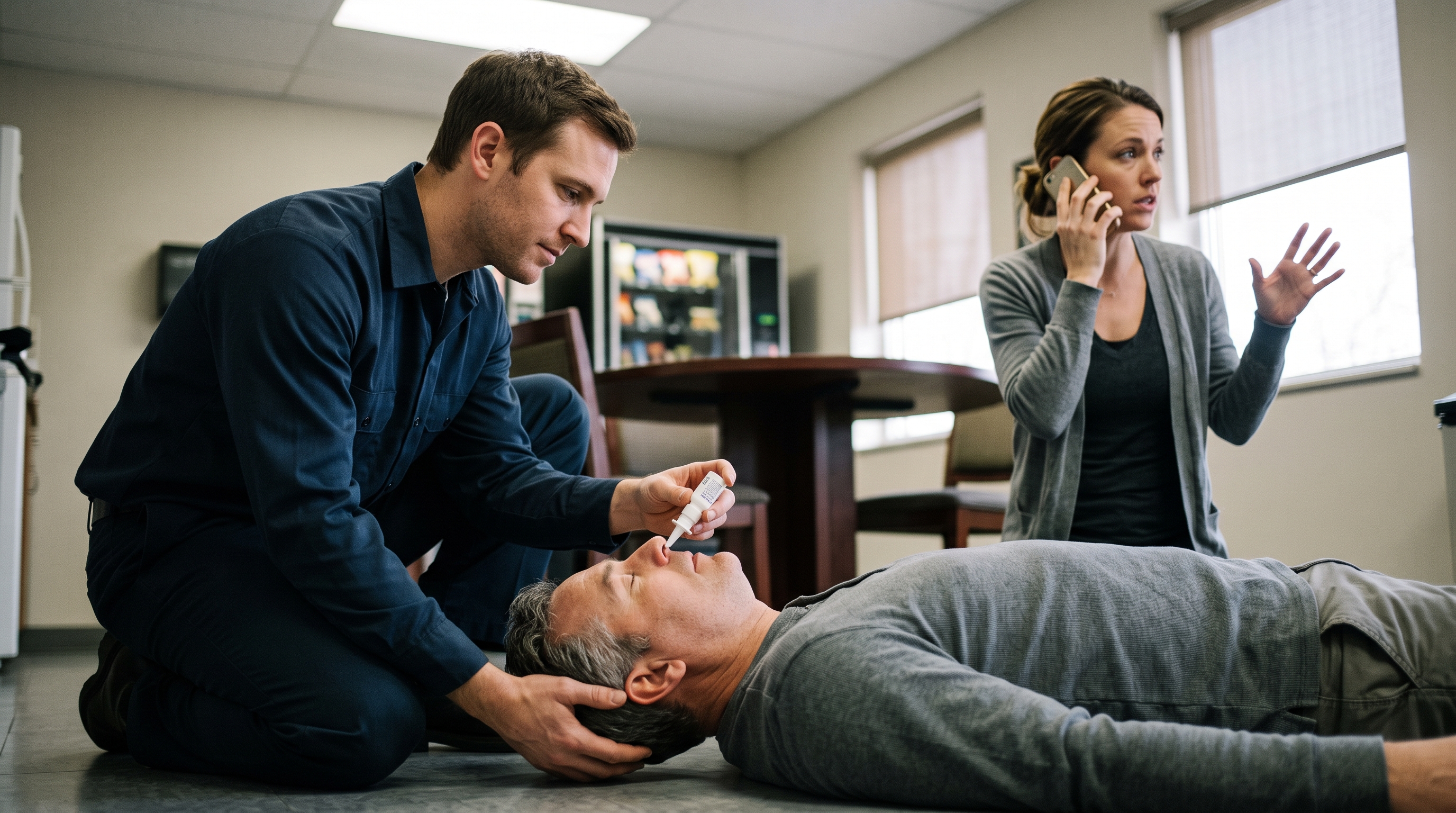
You don't need to be a paramedic to do this. You need to know what you're looking at, know where the spray goes, and know that calling 911 isn't optional even if the person wakes up and says they're fine. This is a bystander skill, the same category as CPR or the Heimlich maneuver, and most people who use Narcan for the first time are doing it on a coworker, a family member, or a stranger in a parking lot with no warning at all.
How to Tell Someone Is Having an Opioid Overdose
The signs cluster together, and once you've seen the pattern, it's hard to miss. Look for pinpoint pupils, so small they look like dots. Breathing that's slow, shallow, or stopped altogether. A limp body that doesn't respond when you shake their shoulder or shout their name. Blue or grayish lips and fingertips, which mean oxygen isn't getting where it needs to go. Some people make a gurgling or choking sound, sometimes called the "death rattle," as their airway partially closes.
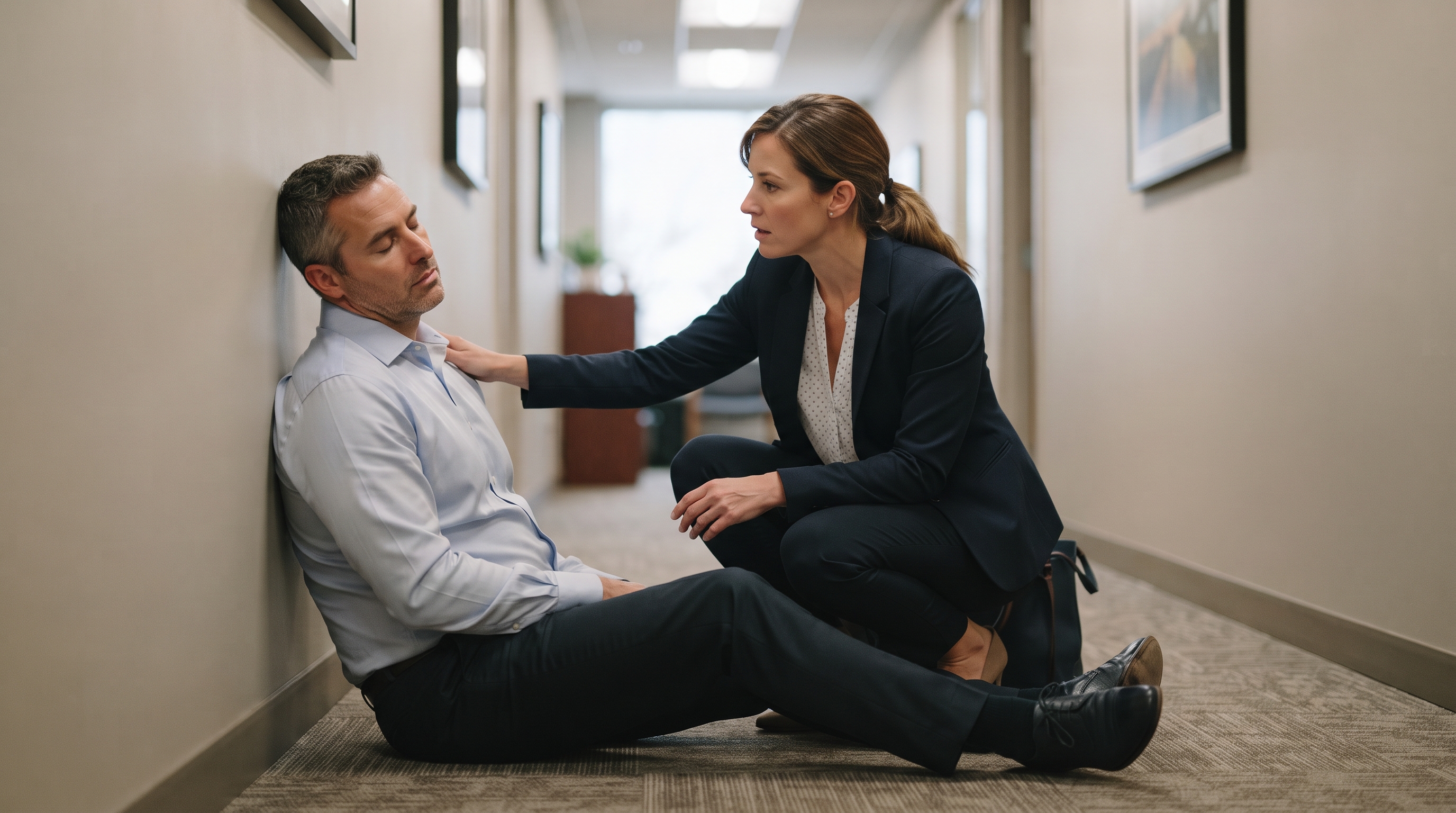
Not every sign has to be present. A person who's breathing four times a minute and won't wake up is already an emergency, even with normal-colored lips. If you're not sure, treat it as an overdose. Naloxone does nothing harmful to someone who isn't on opioids, so there's no downside to acting.
How to Use Narcan Nasal Spray, Step by Step
Most Narcan kits come as a single-use nasal spray, no assembly and no needle. Here's the sequence:
- Lay the person on their back. If they've vomited or you're worried about their airway, you can tilt their head to the side instead.
- Peel back the packaging to remove the device. Don't test the spray or prime it first, it's a single full dose and pressing it before it's in the nose wastes the only spray in that unit.
- Hold the device with your thumb on the bottom of the plunger and your first two fingers on either side of the nozzle.
- Tilt the person's head back gently, supporting their neck, and insert the nozzle tip into one nostril until your fingers touch the bottom of their nose.
- Press the plunger firmly with your thumb. That releases the entire dose in one motion. There's nothing left to give from that device afterward.
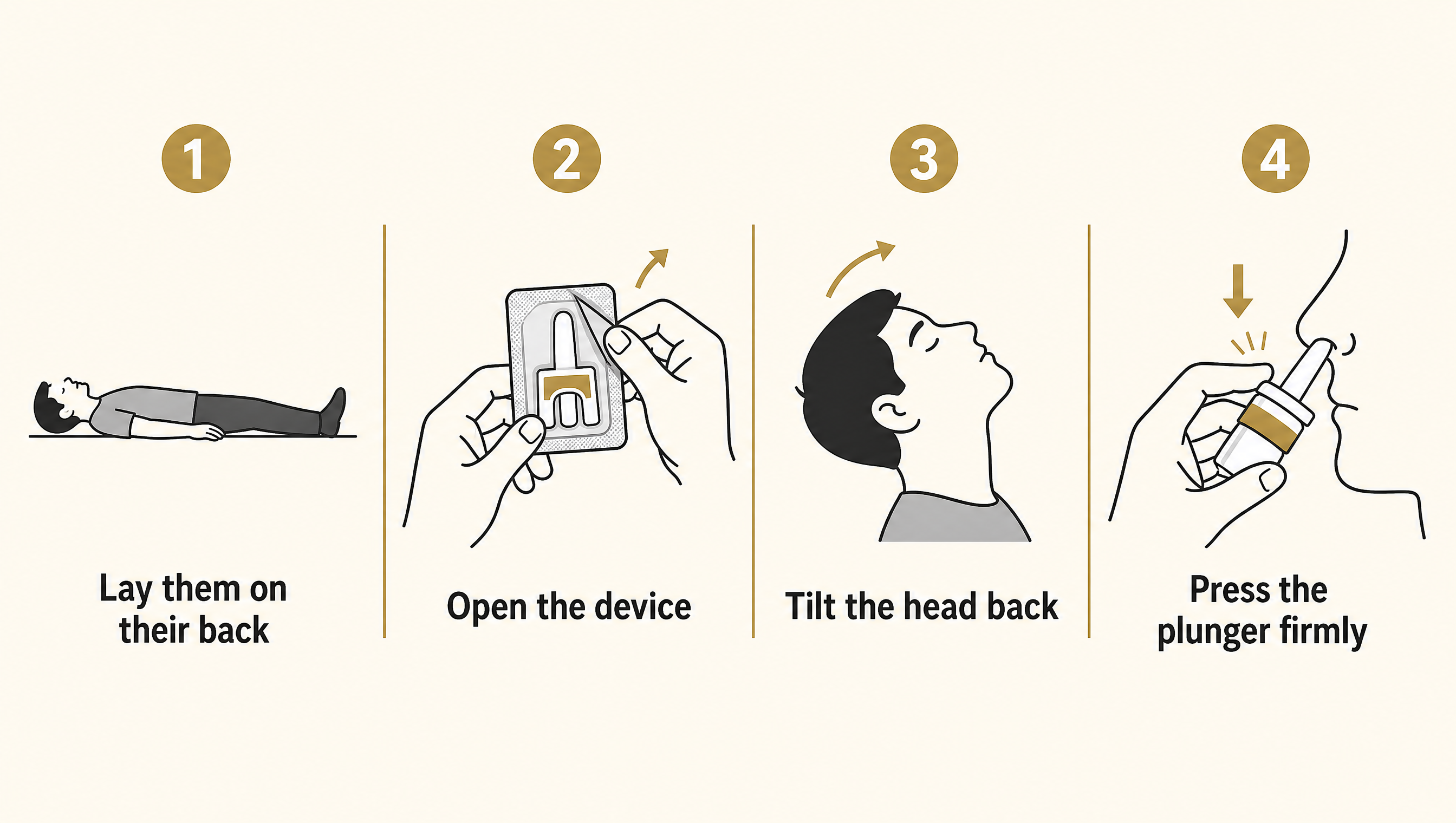
The whole thing takes under a minute once it's in your hand. If you have training in it, this is also the point where CPR starts if the person isn't breathing at all, since hands-only CPR can be used alongside naloxone rather than instead of it.
What to Do While You Wait for Help
Call 911 as soon as you recognize what's happening, ideally before or right after that first dose, not after you've tried everything else first. Tell the dispatcher what you're seeing and that you're giving naloxone. They'll walk you through the rest and get help moving.
If the person isn't breathing or their breaths are too shallow to count, give rescue breaths between doses: tilt the head back, pinch the nose, and give one breath every 5 seconds until they start breathing on their own or paramedics arrive. Once breathing improves and they're still unconscious, roll them into the recovery position, on their side, with the top leg bent for stability, so they don't choke if they vomit.
Stay with them. Don't leave to find help elsewhere once you've already called. And don't assume the emergency has resolved once someone responds, because the next section is the part people get wrong most often.
Why You Might Need a Second Dose of Narcan
Give the first dose, then wait. Naloxone typically starts working within 2 to 3 minutes, according to the CDC, so that's also your window for deciding whether a second dose is needed. If breathing hasn't improved by then, give a second dose in the other nostril.
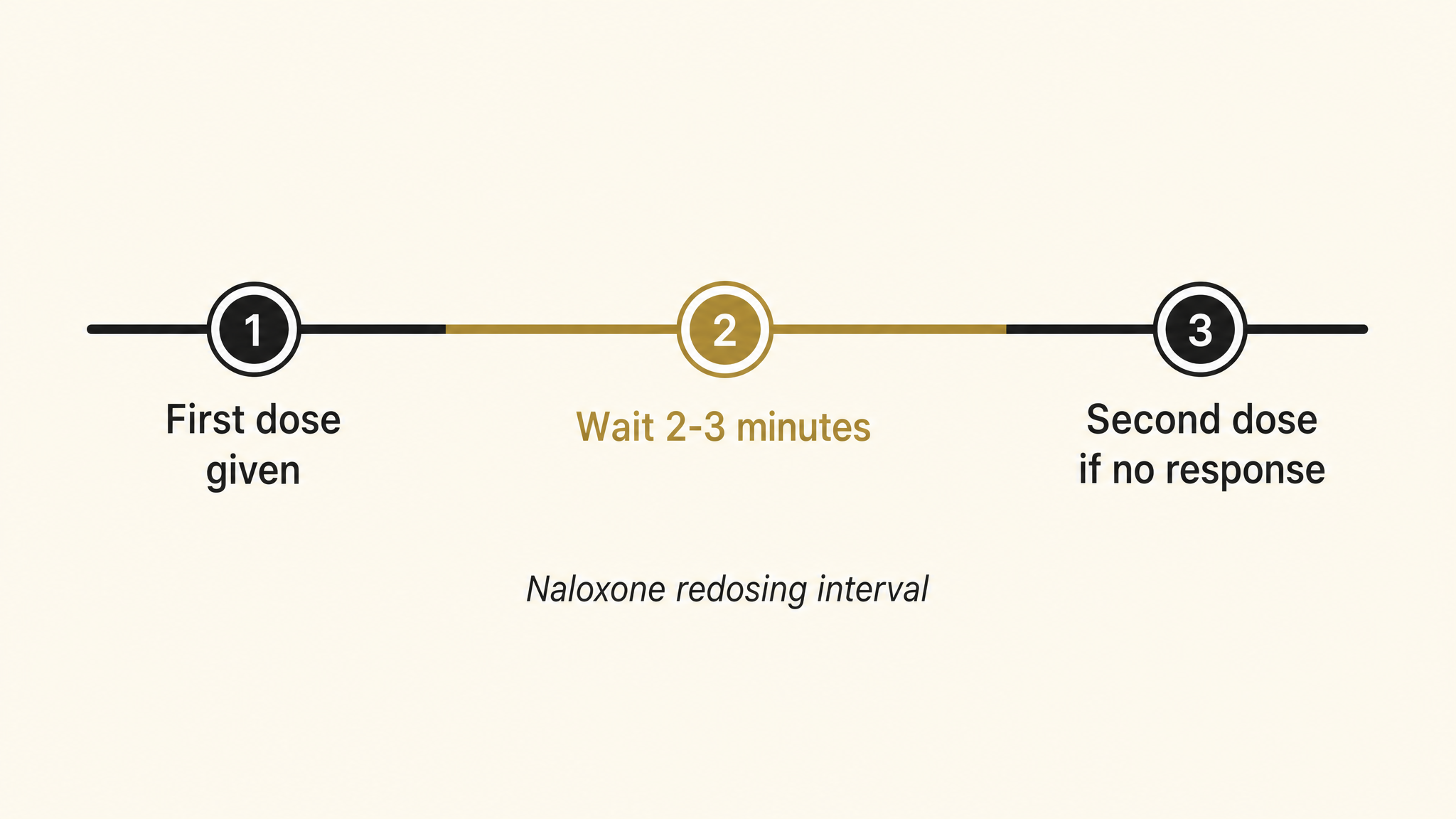
Fentanyl has changed the math here. It's stronger than heroin or prescription opioids, and it's now mixed into a huge share of the illicit drug supply, sometimes without the user's knowledge. That potency means a single dose of naloxone that would have reversed an overdose a decade ago may not be enough today. Don't hesitate to give a third dose if a second one, two to three minutes later, still hasn't worked. Naloxone has an unusually wide safety margin, so extra doses aren't a risk to the person you're helping.
What Happens After Narcan Works, and Why the Danger Isn't Over
Here's the part that catches people off guard. Naloxone wears off faster than most opioids do, often within 30 to 90 minutes, while the opioid itself can stay active in the body for hours. That means someone can wake up, seem completely normal, insist they're fine, and then slip back into an overdose once the naloxone fades and the opioid takes over again. This is called renarcotization, and it's the single biggest reason 911 is not optional, even when the person you helped is sitting up and talking.
Long-acting opioids like methadone or extended-release oxycodone raise this risk further, since they can outlast naloxone by a wide margin. A person who looks fully recovered ten minutes after a dose can still need a second reversal an hour later if nobody's watching. This isn't a reason to panic. It's a reason to stay put and let paramedics make the call about whether it's safe to leave.
How to Use Narcan Without Training or a Prescription
No, and this surprises a lot of people. In March 2023, the FDA approved Narcan nasal spray for over-the-counter sale, meaning anyone can buy it at a pharmacy without a prescription, in every state. Many pharmacies, harm reduction organizations, and public health departments also give it away free.
You also don't need a certification card to use it on someone else. Good Samaritan laws exist in most states specifically to protect people who call 911 and try to help during an overdose, shielding both the caller and the person overdosing from certain legal consequences. Those laws are associated with meaningfully fewer overdose deaths in states that have them, because they remove the biggest reason bystanders hesitate: fear of getting someone, or themselves, in trouble for calling.
If you keep a first aid kit at home, in your car, or at work, Narcan is worth adding to it the same way you'd add a tourniquet or an EpiPen, something you hope to never use but want within reach if the moment comes. It's also worth knowing the difference between this and other emergencies that can look similar from across a room, like alcohol poisoning or a non-opioid accidental poisoning, since the first steps of checking responsiveness and calling 911 look the same either way.
Being ready for the first hour of a medical emergency means having the right tools within reach, not buried in a junk drawer while someone's counting seconds. The 1stHour Trauma Kit was built around that same idea, so you're not searching for what you need while a clock is running you can't see.
This content is for informational purposes only and does not constitute medical advice. If you or someone near you is experiencing a suspected opioid overdose, call 911 immediately and administer naloxone if available while you wait for emergency responders.


