Ear Infection Warning Signs: When Ear Pain Needs Same-Day Care

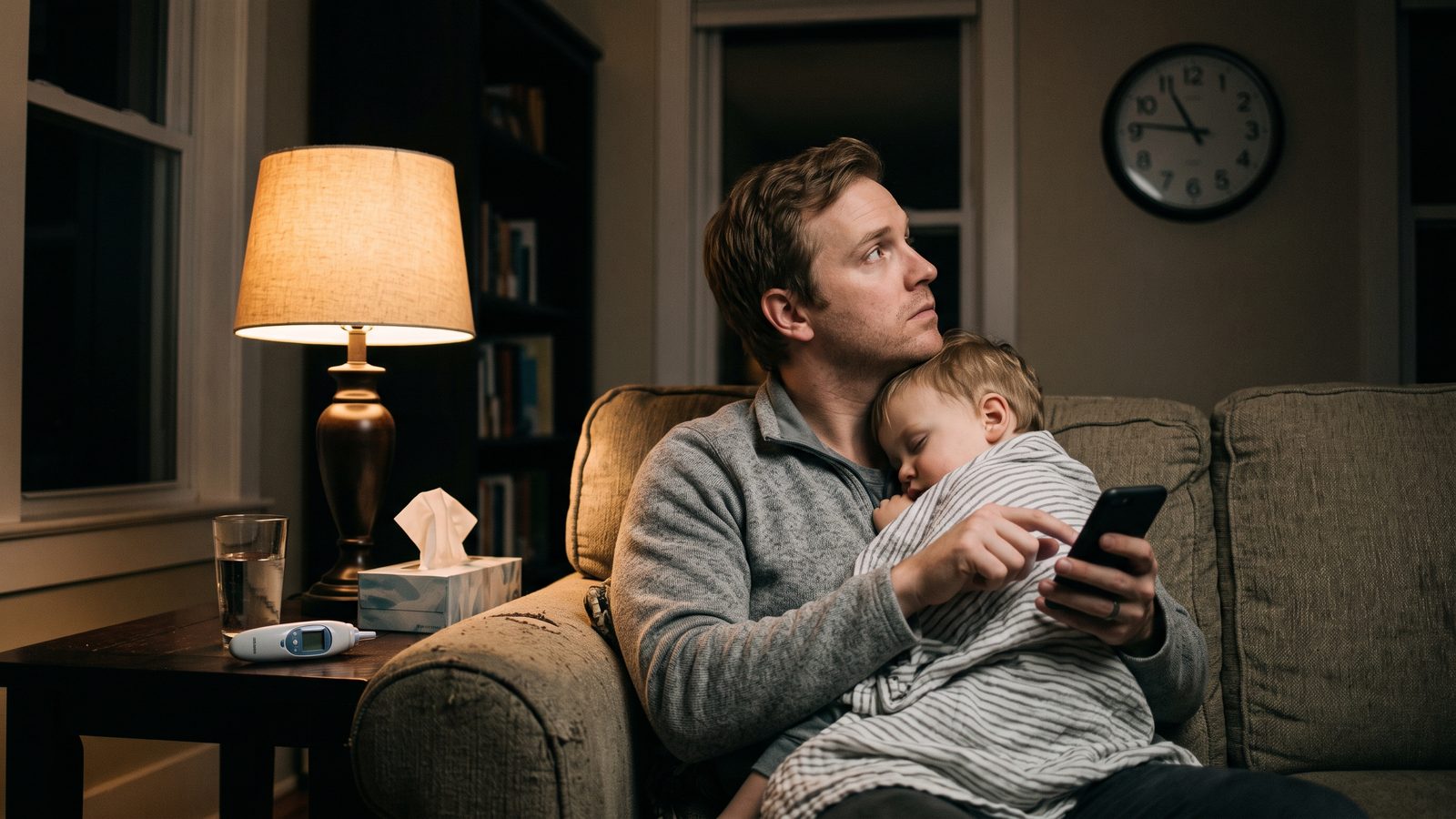
Ear pain shows up at the worst times. It's 9pm, the pediatrician's office closed hours ago, and your kid is crying and grabbing at their ear between sobs. Or it's you, three days into a cold, suddenly noticing your own hearing has gone muffled on one side. The question underneath all of it is the same: is this something that fixes itself, or something that needs a doctor tonight? Knowing the actual ear infection warning signs, not just "my ear hurts," is what makes that call easier.
What an Ear Infection Actually Is (and What Causes It)
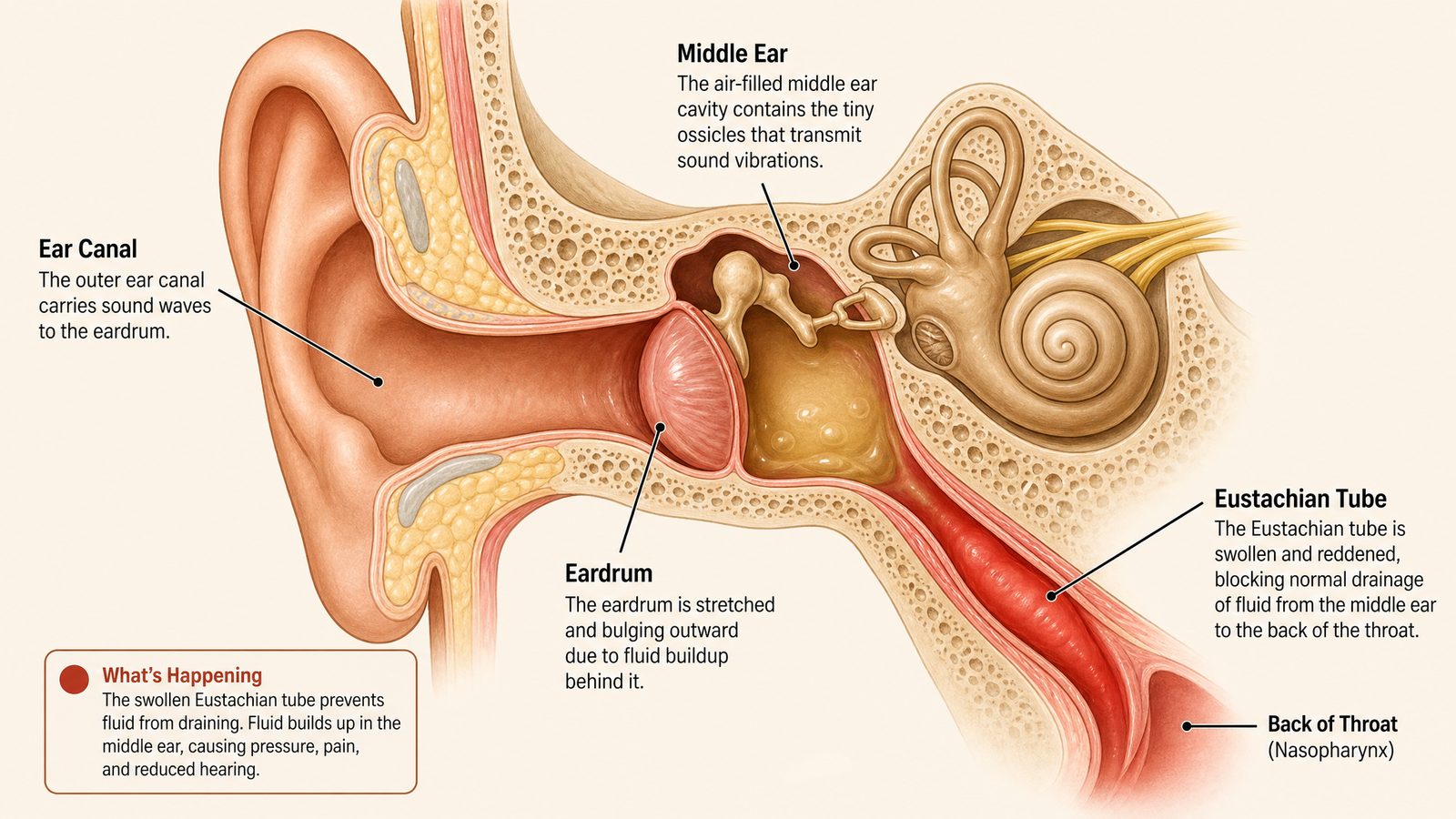
Most ear infections happen in the middle ear, the small air-filled space just behind the eardrum. A cold or the flu inflames the tissue lining the Eustachian tube, the narrow passage that normally drains fluid out of that space and into the back of the throat. When that tube swells shut, fluid backs up behind the eardrum instead of draining, and bacteria that are normally harmless get a place to multiply. The CDC names two bacteria as the most common culprits: Streptococcus pneumoniae and a strain of Haemophilus influenzae. Plenty of cases start as purely viral, though, which is part of why not every ear infection needs antibiotics.
Kids get these far more than adults, mostly because their Eustachian tubes are shorter and sit at a flatter angle, so they clog more easily. Adults aren't immune. A bad sinus infection or a flight with a stuffy nose can do it to anyone.
Ear Infection Symptoms in Toddlers Who Can't Tell You What Hurts
A toddler isn't going to describe ear pressure or a dull ache. You're reading behavior instead, and that makes the call harder.
Watch for crying that gets worse when they're lying flat, trouble sleeping, tugging or pulling at one ear, and a fever that shows up alongside those other signs. One thing worth knowing: toddlers pull at their ears constantly for reasons that have nothing to do with infection. Teething, curiosity, boredom, discovering they have ears. Ear pulling by itself, with no fever and no fussiness, usually isn't cause for alarm. It's ear pulling plus crying, plus a fever, plus a bad night's sleep that adds up to something worth checking.
Fluid or pus draining from the ear is a clearer signal. So is a baby under six months old who seems off in any of these ways. That age group gets a lower bar for calling the doctor, not a higher one.
Ear Infection Warning Signs in Older Kids and Adults
Older kids and adults can actually tell you what's wrong, which helps. The classic description is a sharp pain or a dull, throbbing ache that tends to worsen at night, when lying down shifts pressure inside the ear. Add in a sense that hearing has dropped, sounds feeling muffled or the ear feeling "plugged," a headache that sits behind or above the ear, and sometimes fluid or pus draining out.
A fever runs alongside a middle ear infection in roughly half of kids who get one, according to St. Louis Children's Hospital, so its absence doesn't rule anything out. If a low-grade fever appears with ear pain that's been building for a day or two, that combination points toward infection rather than a passing ache from pressure changes or a cold.
Swimmer's Ear vs. a Middle Ear Infection: How to Tell the Difference
These get confused constantly because both involve ear pain, but they're different problems in different parts of the ear, and the fix isn't the same.
Swimmer's ear is an infection of the outer ear canal, usually from water sitting in the ear after swimming or showering, which softens skin and lets bacteria take hold. The tell is pain that spikes when you tug on the outer ear or push on the little flap of cartilage in front of the canal. It rarely comes with a fever. You'll often see redness, itching, or a clear or yellowish discharge, and it tends to improve within a few days once it's treated with medicated ear drops and the ear is kept dry.

A middle ear infection lives behind the eardrum instead, usually follows a cold, and doesn't hurt more when you touch the outer ear. It's more likely to come with a fever, some hearing loss, trouble sleeping, and in kids, a general crankiness that's hard to pin down. If pulling on the ear itself makes the pain worse, that's leaning toward swimmer's ear. If the pain is deeper and came on the heels of a cold, that's leaning toward a middle ear infection. We've covered the outer-ear side of this in more detail, including what to do after a ruptured eardrum, which is its own separate injury worth knowing about.
The Warning Signs That Mean Same-Day Care, Not a Wait-and-See
Most ear pain, even from an actual infection, can wait for a regular appointment or a call to the nurse line the next morning. A shorter list of signs changes that:
- Symptoms that have lasted more than two to three days without improving
- An infant under six months old showing any signs of ear pain or fussiness
- Fluid, pus, or blood draining from the ear
- A red, bulging eardrum on exam (something a provider checks, but it's worth naming so you know what they're looking for)
- Hearing loss that seems sudden rather than gradual
- A fever that's climbing rather than holding steady, especially in a young child
- Severe pain that isn't responding to over-the-counter pain relief
None of these mean panic. They mean the situation has moved from "watch and treat the pain" to "get eyes on it today," whether that's an urgent care, a same-day pediatrician slot, or a telehealth visit that can prescribe if needed.
Do Ear Infections Always Need Antibiotics?
Not usually, and that surprises a lot of parents who expect an automatic prescription. The American Academy of Pediatrics estimates that around 80% of childhood ear infections clear up on their own without medication, since a good number are viral or resolve as the underlying cold does. Many pediatricians now recommend a 48- to 72-hour window of pain management and observation before reaching for antibiotics, especially in kids over two with milder symptoms.
That watchful-waiting approach shifts, though, for children under two, for anyone with severe pain or a high fever, and for symptoms that are getting worse instead of better. In those cases, antibiotics are the right call, and waiting longer just extends the discomfort. This is exactly why the same-day list above matters: it's the dividing line between "give it a couple of days" and "don't wait."
If your family deals with ear infections more than once, it's worth knowing the difference between a cold-related ache and a real infection with fluid behind the eardrum. A lingering low-grade illness can drag on in a way that looks similar to a stomach bug. We've written about telling apart two other easily-confused conditions in our post on food poisoning versus a stomach bug. The same logic applies here: timing and the specific combination of symptoms tell you more than any single sign alone.
Ear pain in a kid, especially a young one who can't explain it, is one of those situations where a first-aid kit built for scrapes and burns doesn't help much. Neither does a fever thermometer that just tells you the number without the context. If your family's still filling gaps in what you'd reach for at 9pm on a Tuesday, see what's inside The 1stHour Trauma Kit, built around the situations that actually show up at home rather than the ones that look good in a catalog. It won't replace a same-day doctor visit, but it covers the parts you can handle yourself while you decide whether tonight's the night to make that call. Infant and toddler symptoms read differently than an older kid's, too. It's the same reason CPR on a child looks nothing like CPR on an adult, in case you ever need that skill instead.
This content is for informational purposes only and does not constitute medical advice. If you're concerned about a possible ear infection, especially in an infant or young child, contact a pediatrician or healthcare provider.


