Driving Through a Flooded Road: Why You Turn Around and What to Do If You Stall
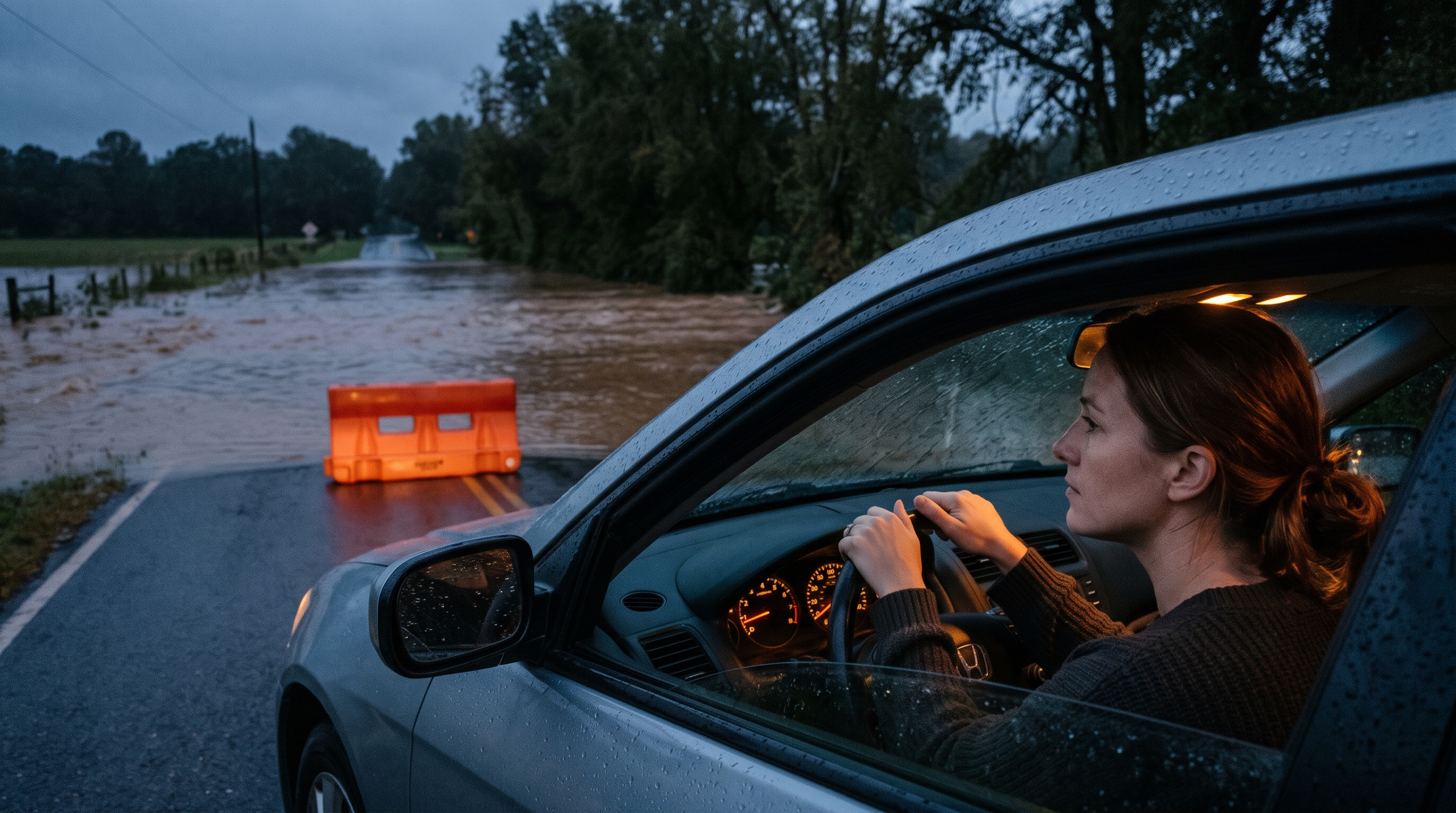
It looks like a puddle. The road ahead is covered by a sheet of brown water, other cars may have gone through, and you are late. This is how most flood deaths on the road begin. The National Weather Service reports that more than half of flood deaths happen in motor vehicles, when people try to drive into flooded roadways. This guide explains why driving through a flooded road is such a bad bet, what to do instead, and how to get out if you are already in trouble.
Why Driving Through a Flooded Road Is Never Worth It
You cannot read the water. Muddy floodwater hides washed-out pavement, open storm drains, and debris. A road that was solid an hour ago can be gone now. The depth you can see at the edge tells you nothing about the middle.
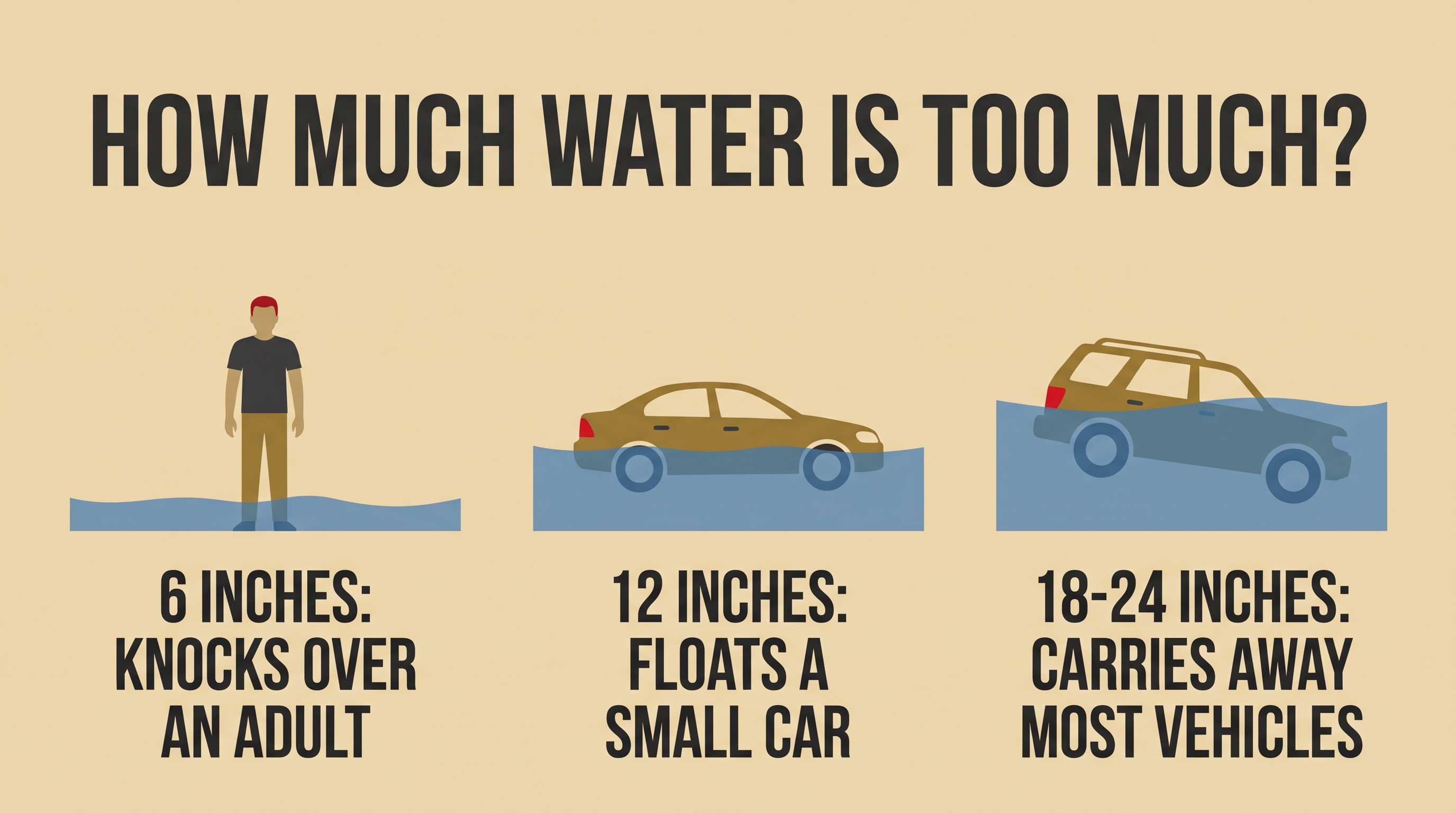
Then there is the force of the water itself. According to the National Weather Service, just six inches of fast-moving water can knock over and carry off an adult, twelve inches can float a small car, and eighteen to twenty-four inches of flowing water can carry away most vehicles, including large SUVs. A heavy vehicle does not make you safe. It only changes the number.
Water also gets into places that stop your engine. A stalled car in moving water is no longer a car. It is a box that the current can push wherever it likes, and you have lost your brakes, your steering, and often your power windows.
What to Do Instead of Driving Through a Flooded Road
The rule from the National Weather Service is short: turn around, don't drown. Here is how to follow it when you are the one behind the wheel.
- Stop before the water. Brake early and slowly. Do not test it with your front tires.
- Turn around and pick another route. Use a road you already know is dry, even if it adds twenty minutes. Barricades and closed signs are not suggestions.
- Do not follow the car ahead. Someone else getting through tells you nothing about your vehicle or the next few feet of road.
- Stay off bridges over fast-moving water. AccuWeather notes that fast water can scour the material around a bridge footing and make it unstable.
- Do not walk into it either. Standing water can be electrically charged from downed power lines, and it can hide holes.
- Pull over somewhere high and wait. If you cannot go back, park on higher ground and wait for the water to drop. Check your phone for local flood alerts.
If you are in a flood-prone area, our guide on what to do during a flash flood covers the decisions to make before you ever get in the car.
If Your Car Stalls in Flood Water
If the engine dies or the water starts rising around the doors, the goal changes. You are no longer trying to drive out. You are trying to get out of the car, and time matters.
The advice from rescue trainers is consistent: do not wait to see how bad it gets. Acting early gives you the most choices.
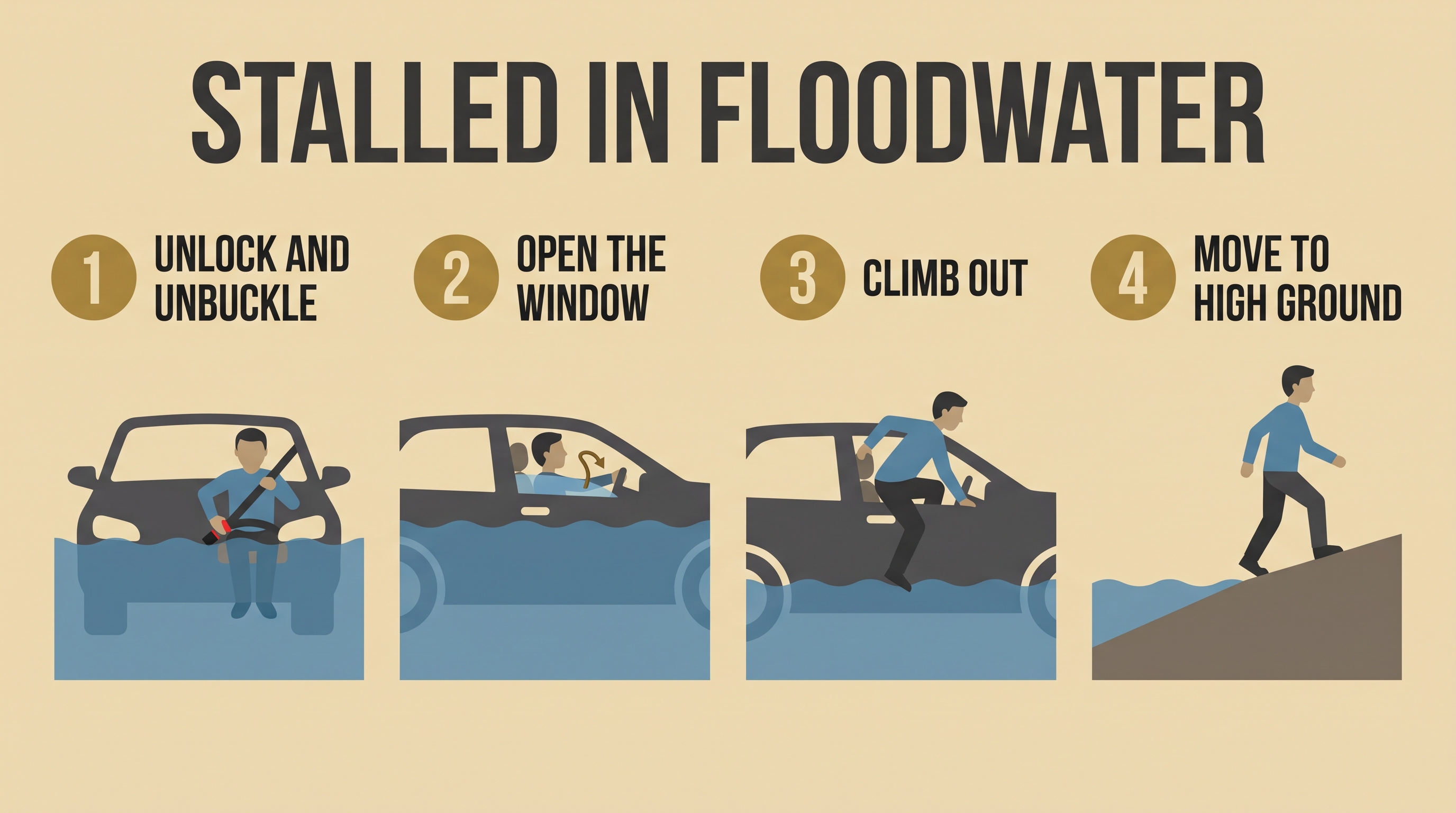
- Unlock the doors and release your seatbelt. Do this first. Locks usually still work even if the engine is off.
- Open a window now. The AA says windows are the best exit when a car is in water, because the outside pressure makes a door hard to open. Power windows may work for a short time, so use them right away.
- If the window will not open, break it. Use a window-breaking tool, the metal prongs of a headrest, or a heavy object. Aim for a side window, not the windshield.
- Get everyone out, helping the most vulnerable first. Move passengers out through the window, then follow.
- Climb up and away. If the water around the car is still, move to higher ground. If it is moving, do not step into it. Climb onto the roof and call 911.
One more point: CBS News quoted a survival trainer who said not to roll the windows up and that waiting for pressure to equalize so a door will open is a worst-case scenario. Your first move is the window, not the door.
Call 911 Once You Are Out
Getting out comes first. Once you are safe, call 911 and tell the dispatcher your location, that you left a vehicle in floodwater, and who is with you. If you cannot get a signal, stay put on high ground, stay visible, and wait. Do not wade back to the car for your phone or bag.
If you are not in danger but cannot get out of the flooded area, call your local non-emergency line or 211 and ask about road closures. If the water is rising, call 911.
Keep a Window Tool Where You Can Reach It
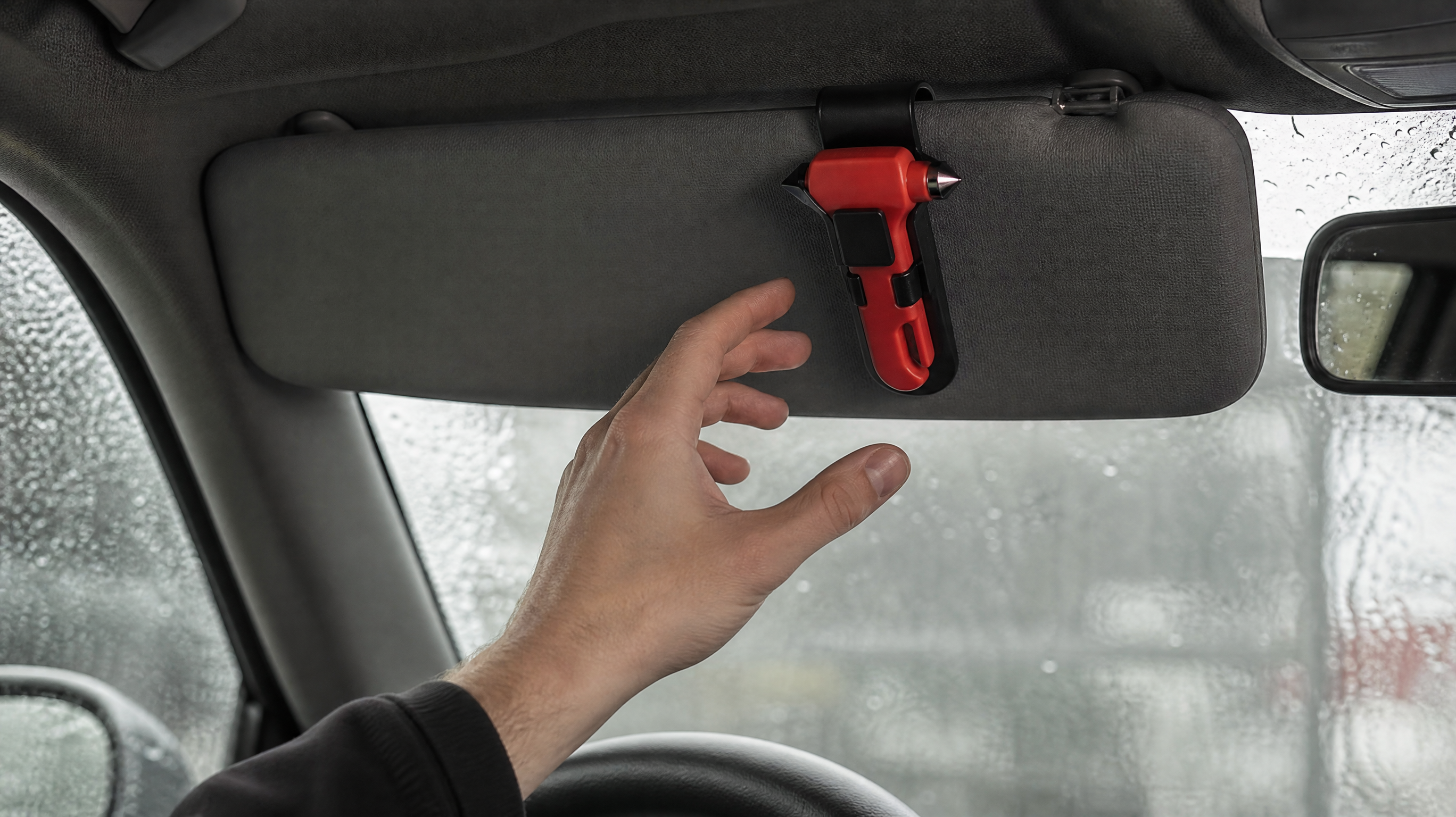
A window-breaking tool does nothing in a glovebox you cannot reach from a sinking seat. Keep one clipped to the sun visor, on a keychain, or in the center console, within reach of the driver without leaving the seat.
A few other items that help in a flood-prone region: a phone charger and power bank, a flashlight, a whistle, and a bright rain jacket. Our guide to car emergency kit essentials has the full list. If your trip involves a snowstorm instead, read about being stranded in a car in a snowstorm.
The first hour of a flood is rarely about the water. It is about the decision to stop, turn around, and give up a few minutes. That decision is almost always the one that matters.
When help is minutes away, what you can do in the first hour changes everything. See what's inside The 1stHour Trauma Kit, built for the moments before help arrives.
This content is for informational purposes only and does not constitute medical advice. In an emergency, call 911 immediately. This article is not a substitute for hands-on training.


