Broken Nose First Aid: What to Do Right After the Hit
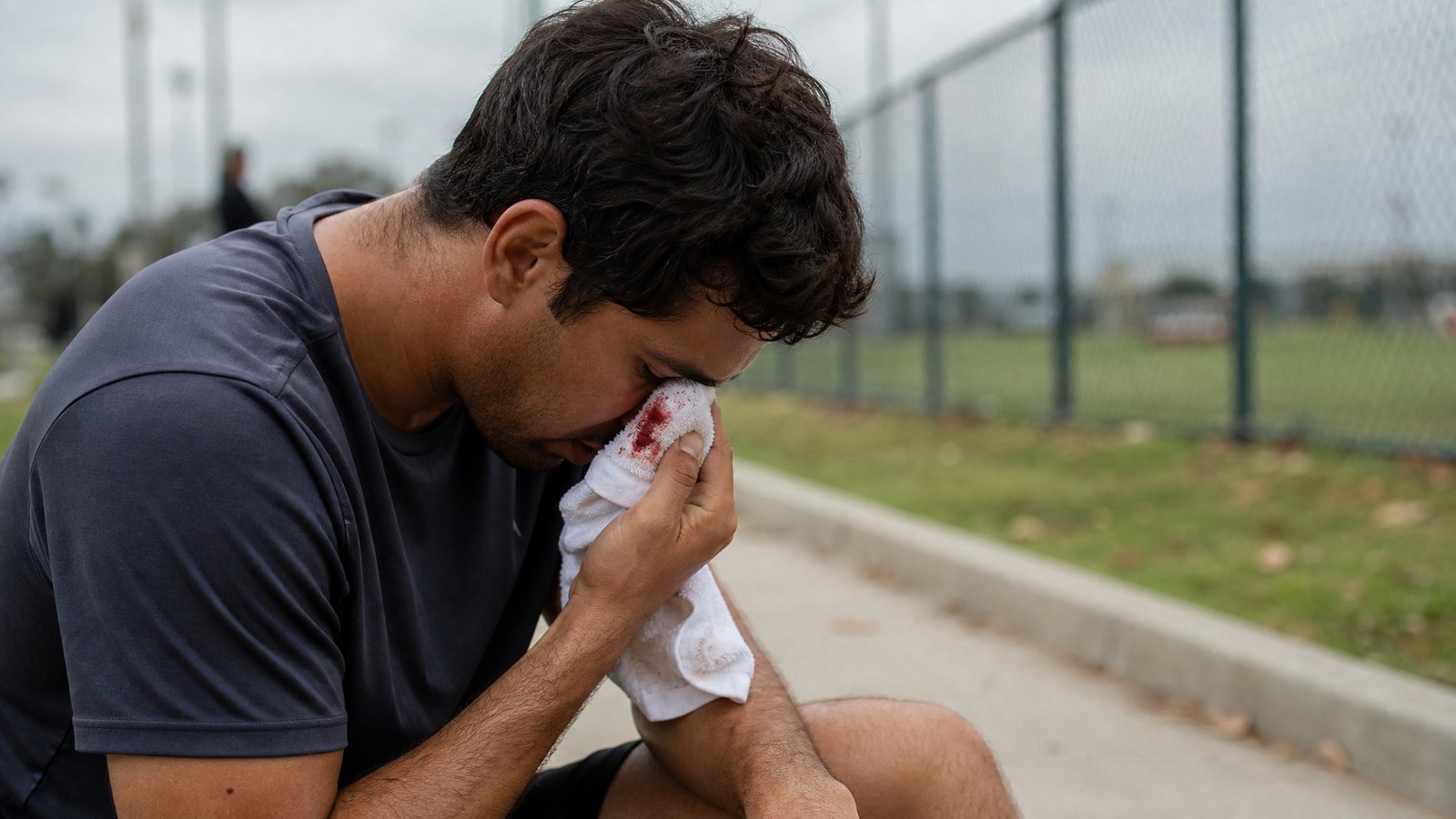
You just got hit, elbowed, hit the dashboard, took a ball to the face, whatever it was. Your nose is throbbing, your eyes are already watering, and there's blood. The first question everyone asks is "is it broken?" but that's not actually the question that matters most in the first hour.
What matters is whether you're dealing with a straightforward nose injury or one with a hidden complication that needs attention today, not next week. Here's what to do right now, how to tell the difference, and the specific warning signs that turn a broken nose from an inconvenience into an emergency.
What to Do in the First Few Minutes
Sit up. Lean your head forward, not back. This is the opposite of the old advice most of us grew up with, and it matters: tilting your head back lets blood run down your throat, which can make you swallow it, cough, or gag. Leaning forward lets it drain out the front where you can control it.
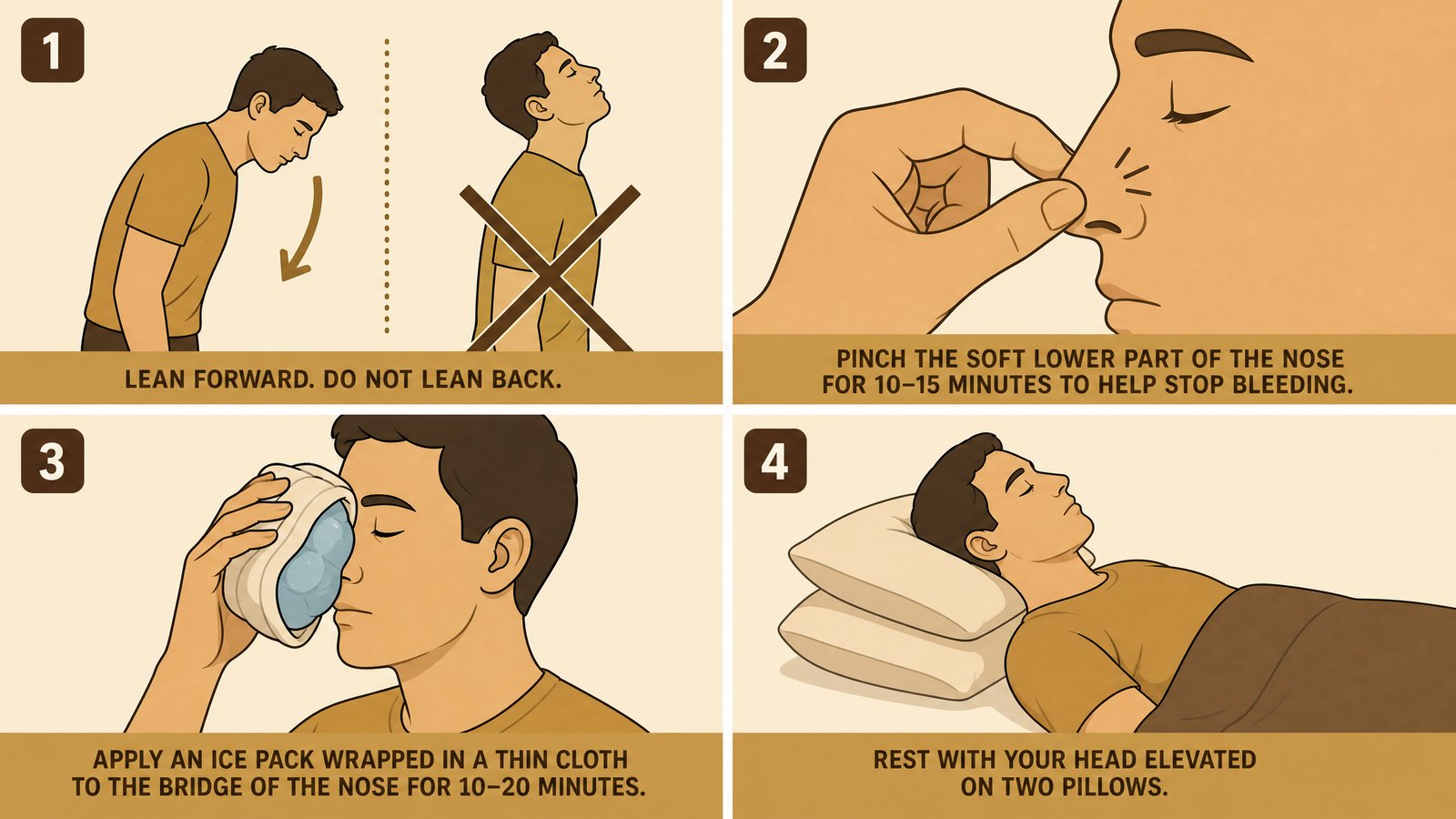
- Pinch the soft part of your nose, just below the bony bridge, between your thumb and finger. Hold steady pressure for 10 to 15 minutes without checking. Breathe through your mouth while you do this.
- Ice it once the bleeding slows. Use an ice pack or a bag of frozen peas wrapped in a thin towel. Ten to fifteen minutes on, then off, several times over the first day or two.
- Take acetaminophen or ibuprofen for the pain. Skip aspirin if you have a choice, since it thins the blood and can make bleeding harder to control.
- Prop your head up with an extra pillow when you lie down, even that night. Gravity helps keep the swelling from pooling.
Broken Nose vs. Bruised Nose: How to Tell
Here's the frustrating truth: in the first hour, you often can't tell for certain. A hard hit to the nose bruises and swells whether or not the bone actually cracked, and both look similarly dramatic at first. A few signs lean harder toward an actual fracture.
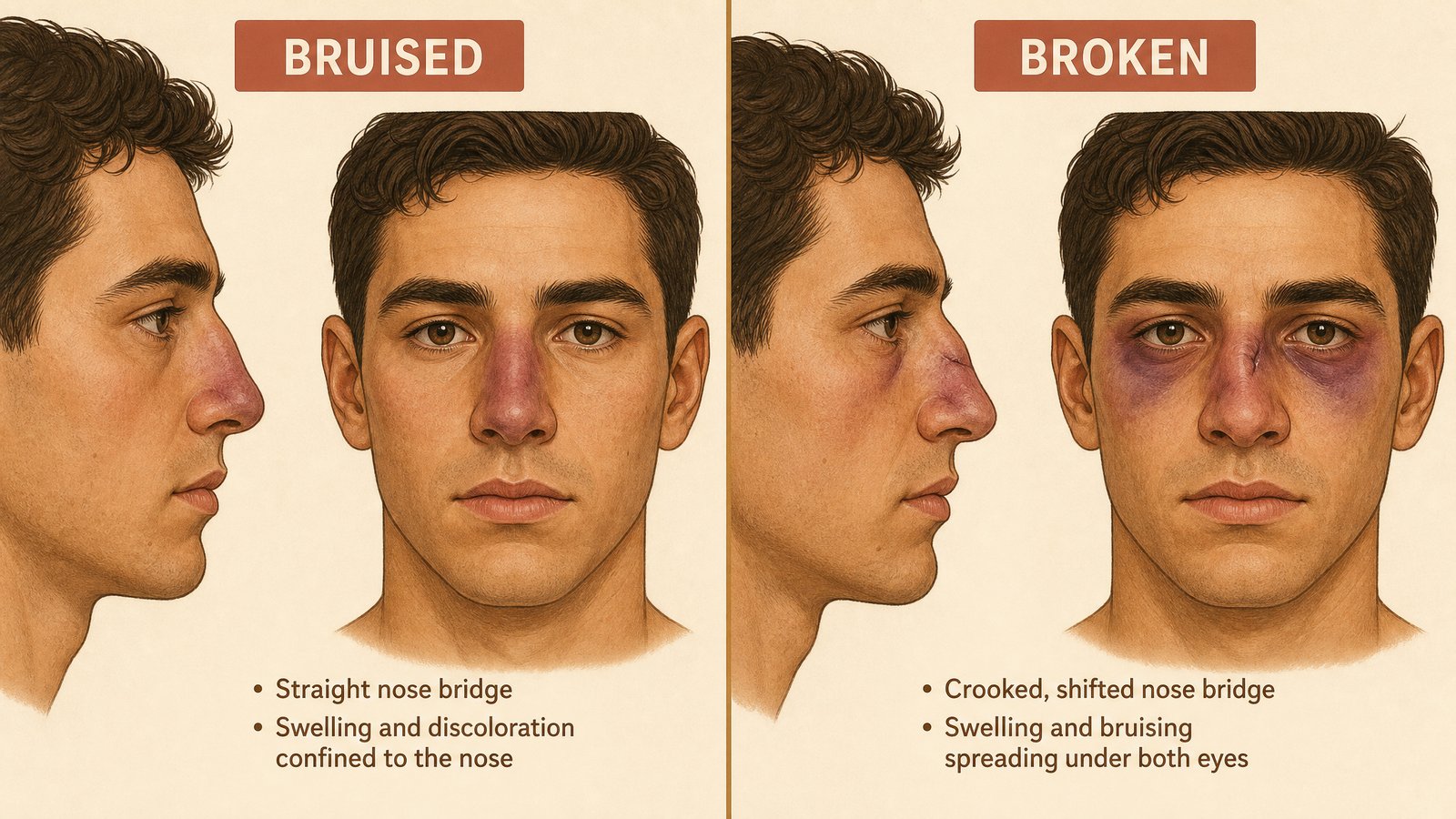
Deformity is the most obvious one. If the nose looks visibly crooked, flattened, or shifted to one side compared to before the injury, that's a break until proven otherwise. A crunching or grinding feeling when you gently touch the bridge, sometimes called crepitus, is another strong sign, though we'd rather you not go looking for it by pressing hard.
Pain that keeps getting worse instead of easing off over the following hours is a different pattern than a simple bruise, which usually peaks early and then gradually improves. Bruising that spreads down under one or both eyes, sometimes called raccoon eyes, points toward a fracture too, though the same caution about eye injuries applies here if the bruising is severe or your vision changes.
Heavy or repeated nosebleeds also lean toward a break rather than a bruise. If bleeding won't slow down after 20 minutes of steady pinching, the pinch-and-lean-forward technique works the same way here as it does for any other nosebleed, but a bleed that stubborn is worth a same-day evaluation regardless of what the nose looks like.
Why Everyone Says "Wait for the Swelling to Go Down"
This is the part that trips people up the most. You want an answer right now. A doctor, even a good one, often can't give you one right now either.
Swelling hides everything. A nose that will end up perfectly straight can look lumpy and off-center on day one simply because of fluid buildup, and a nose that's actually shifted can look deceptively normal under all that puffiness. According to Mayo Clinic, doctors typically wait for swelling to subside, usually three to five days, before deciding whether the nose needs to be realigned.
That waiting period isn't wasted time. Use it to keep icing, keep your head elevated, and watch for the red flags below. If after the swelling goes down your nose still looks crooked or you're still having trouble breathing through one side, that's when a doctor examines it properly and decides whether it needs to be reset, and how.
Septal Hematoma: The Complication Hiding Behind the Swelling
This is the part most broken-nose advice skips entirely, and it's the one time-sensitive piece of this whole injury that can't wait for the swelling to go down.
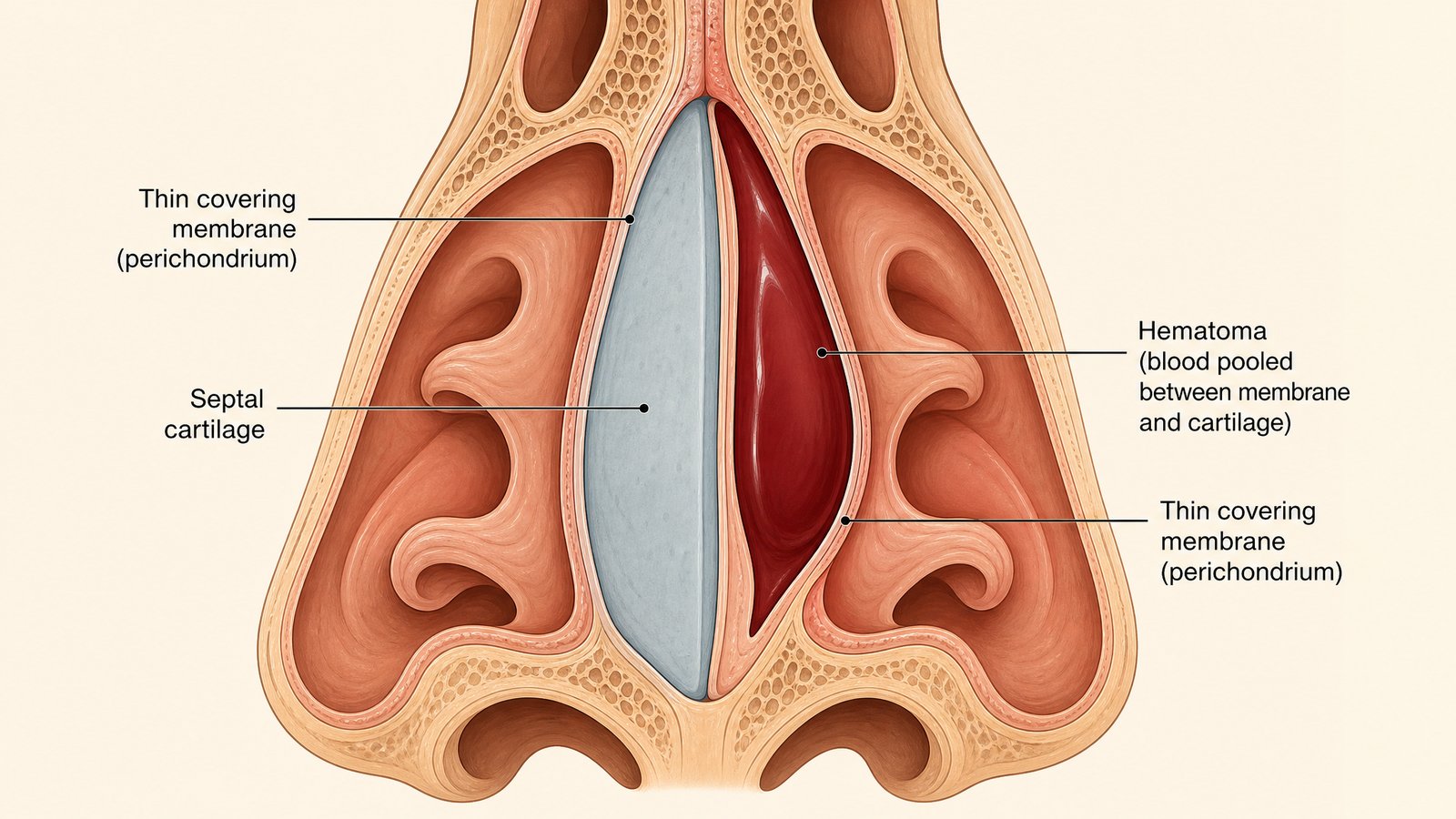
Inside your nose, the wall of cartilage that separates your two nostrils is called the septum. A hard enough hit can cause blood to pool between that cartilage and the thin tissue covering it, a condition called a septal hematoma. It feels like severe nasal congestion or blockage, often on both sides, along with pain that seems disproportionate to a simple bruise.
Here's why it matters so much: cartilage gets its blood supply from that thin covering tissue, not from vessels running through it directly. When a hematoma separates the two, the cartilage starts losing its blood supply immediately.
Research indexed by the National Library of Medicine describes cartilage damage beginning within 24 hours and tissue death setting in by 72 hours if the hematoma isn't drained. Left untreated long enough, it can also become infected, and in the worst cases leads to a collapsed nasal bridge, sometimes called a saddle nose deformity, that's permanent.
The practical takeaway: if your nose feels completely blocked on both sides after an injury, not just swollen but genuinely stuffed shut, and it's not improving, get it looked at the same day. A doctor can check for a hematoma in minutes, and draining it early is a simple, low-risk procedure. Waiting is what turns this into a real problem.
When a Broken Nose Is a 911 Problem
Most broken noses, even the ones that need to be reset later, are not emergencies. A handful of situations are, and they're worth knowing before you're standing in your bathroom trying to decide what to do.
Get to an ER immediately if:
- Clear, watery fluid is draining from your nose, especially after a harder hit that could have affected the base of the skull. This can signal a cerebrospinal fluid leak, not just a nosebleed, and it's a different category of injury entirely
- You have a severe headache, neck pain, confusion, vomiting, or you lost consciousness even briefly, since any of these alongside a facial injury raises the possibility of a more serious head injury
- You can't breathe well through either nostril, not just one side blocked from swelling or blood
- The bleeding won't stop after 20 to 30 minutes of proper pressure
- The injury came from a high-speed impact, like a car accident or a fall from height, where other injuries are likely
None of these mean panic. They mean this particular injury needs eyes on it faster than "call your doctor tomorrow."
Getting It Fixed: What Happens After the ER or ENT Visit
If the nose does turn out to be broken, treatment is usually less dramatic than people expect. Most fractures don't need surgery. Once swelling has gone down enough to see the actual shape, a doctor can often realign the bone with a quick in-office procedure using local anesthesia, typically within the first one to two weeks after the injury. After that, you'll likely wear a splint or nasal packing for about a week while it sets.
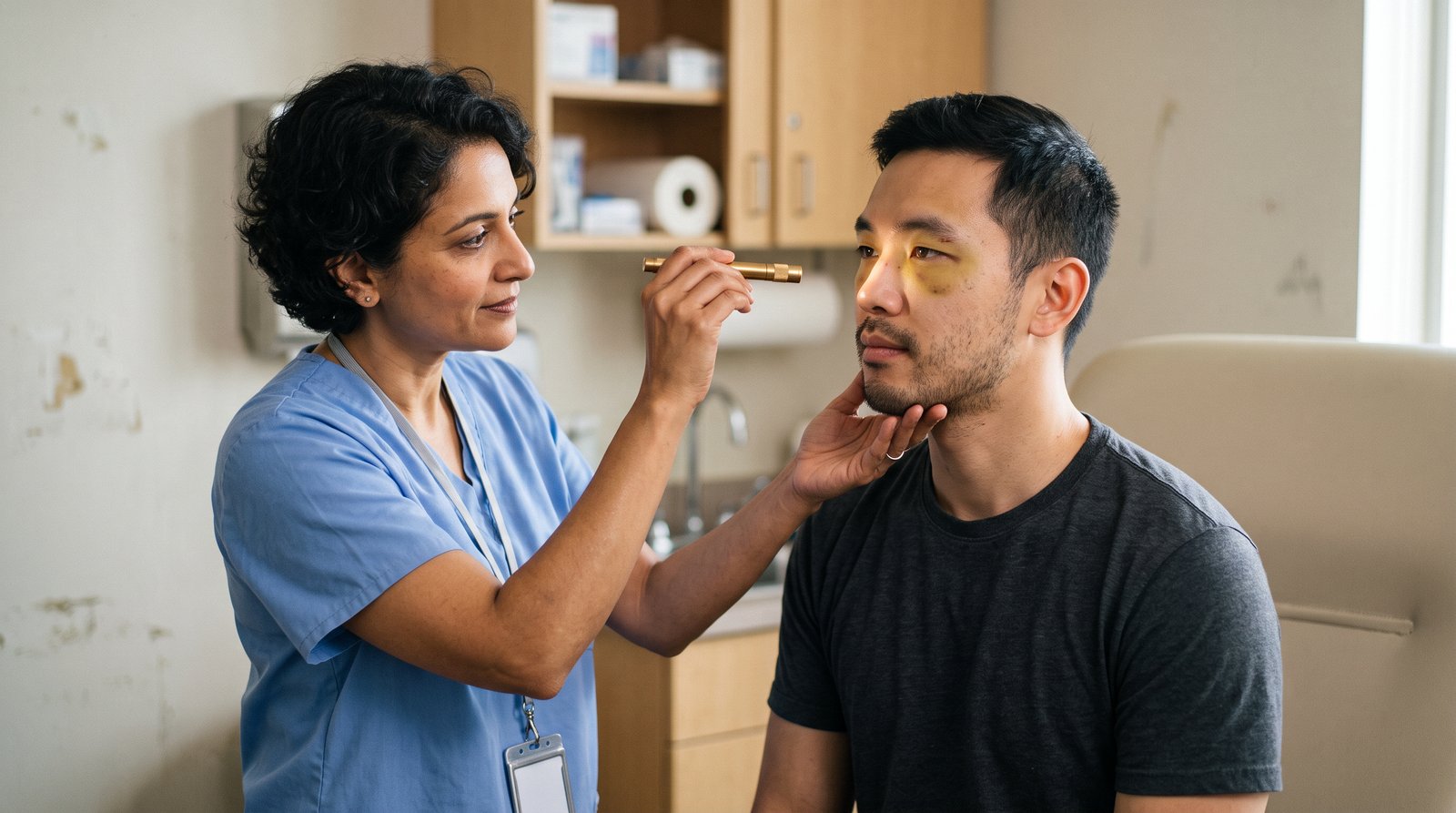
If too much time passes, generally beyond two to three weeks, the bones can start healing in the wrong position, and correcting it later may require a more involved surgical procedure. That's the main reason not to just shrug off a nose that still looks crooked once the swelling clears. It's a much smaller fix now than it is in six months.
Being Ready for the Next One
A face full of blood from a fall, a foul ball, or a scuffle isn't rare, and most people handle the first few minutes wrong simply because nobody ever walked them through it. Knowing to lean forward instead of back, having gauze and an ice pack within reach, and recognizing the difference between "this will heal on its own" and "this needs a doctor today" changes how that hour goes.
That's exactly the kind of moment a stocked trauma kit earns its space in your bag or glovebox. Gauze for the bleeding, instant cold packs for the swelling, and everything else for the injuries that tend to show up alongside a hit to the face. See what's in the 1stHour Trauma Kit so you're not digging through a medicine cabinet mid-nosebleed.
This content is for informational purposes only and does not constitute medical advice. If you suspect a serious facial or head injury, seek medical attention immediately.


