Compartment Syndrome Symptoms: The Pain That Won't Quit
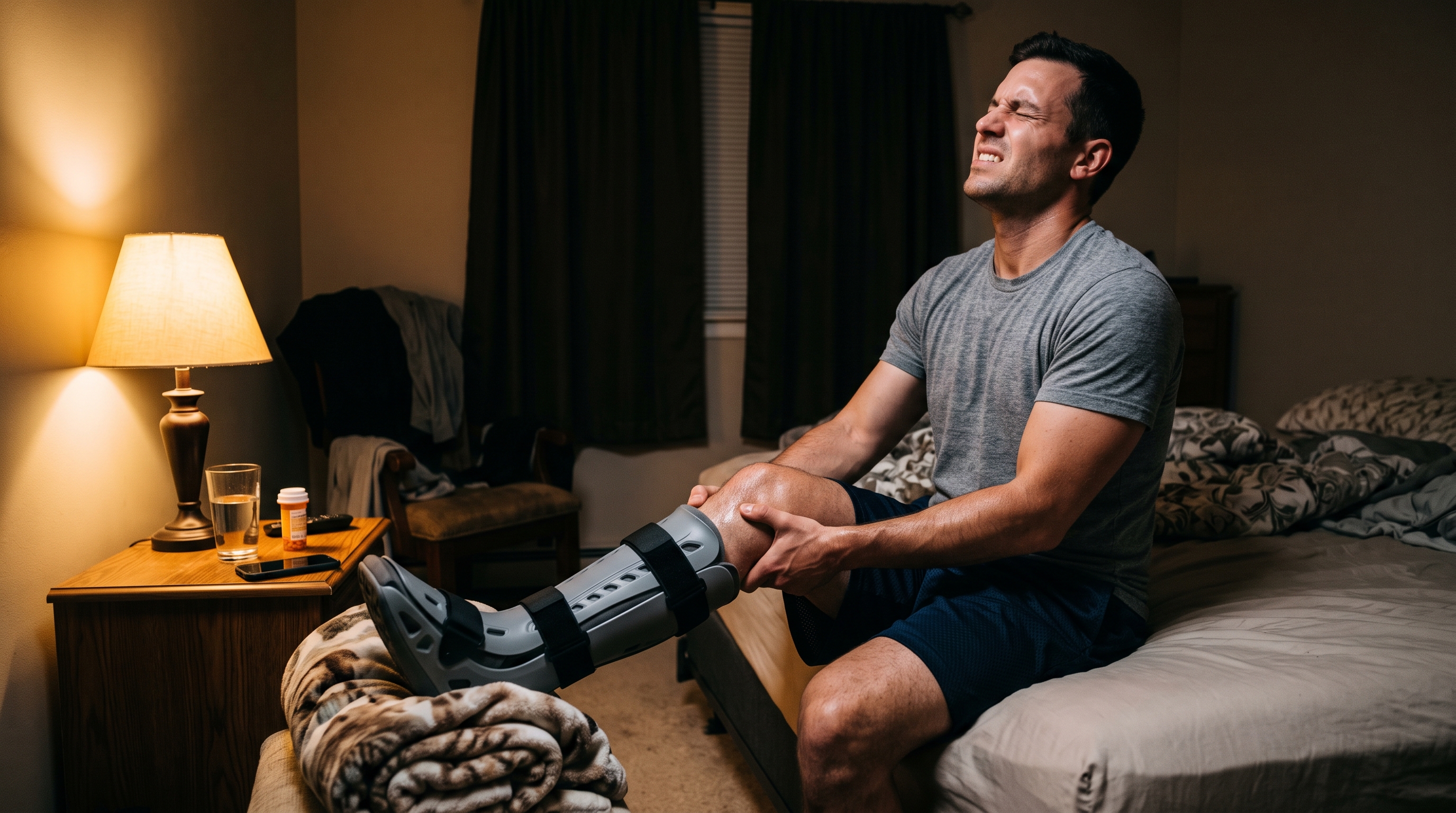
You broke an arm or a leg a day or two ago. It got set, splinted, maybe casted. You were told to expect some soreness. Instead, the pain is climbing, the pain meds aren't touching it, and the whole limb feels swollen and tight in a way that doesn't match "healing."
That's not a normal part of recovery. Compartment syndrome is one of the few orthopedic problems where the clock matters as much as it does in a heart attack. Most people have never heard of it until they're living it.
Here's what compartment syndrome actually is, how the pain differs from ordinary post-injury pain, and exactly when it stops being something to monitor and starts being an emergency room visit.
What Compartment Syndrome Actually Is
Your arms and legs are divided into sealed sections called compartments, each wrapped in a tough membrane called fascia. Muscles, nerves, and blood vessels all share that space. Fascia doesn't stretch the way skin does. It's closer to a tight sleeve than a rubber band.
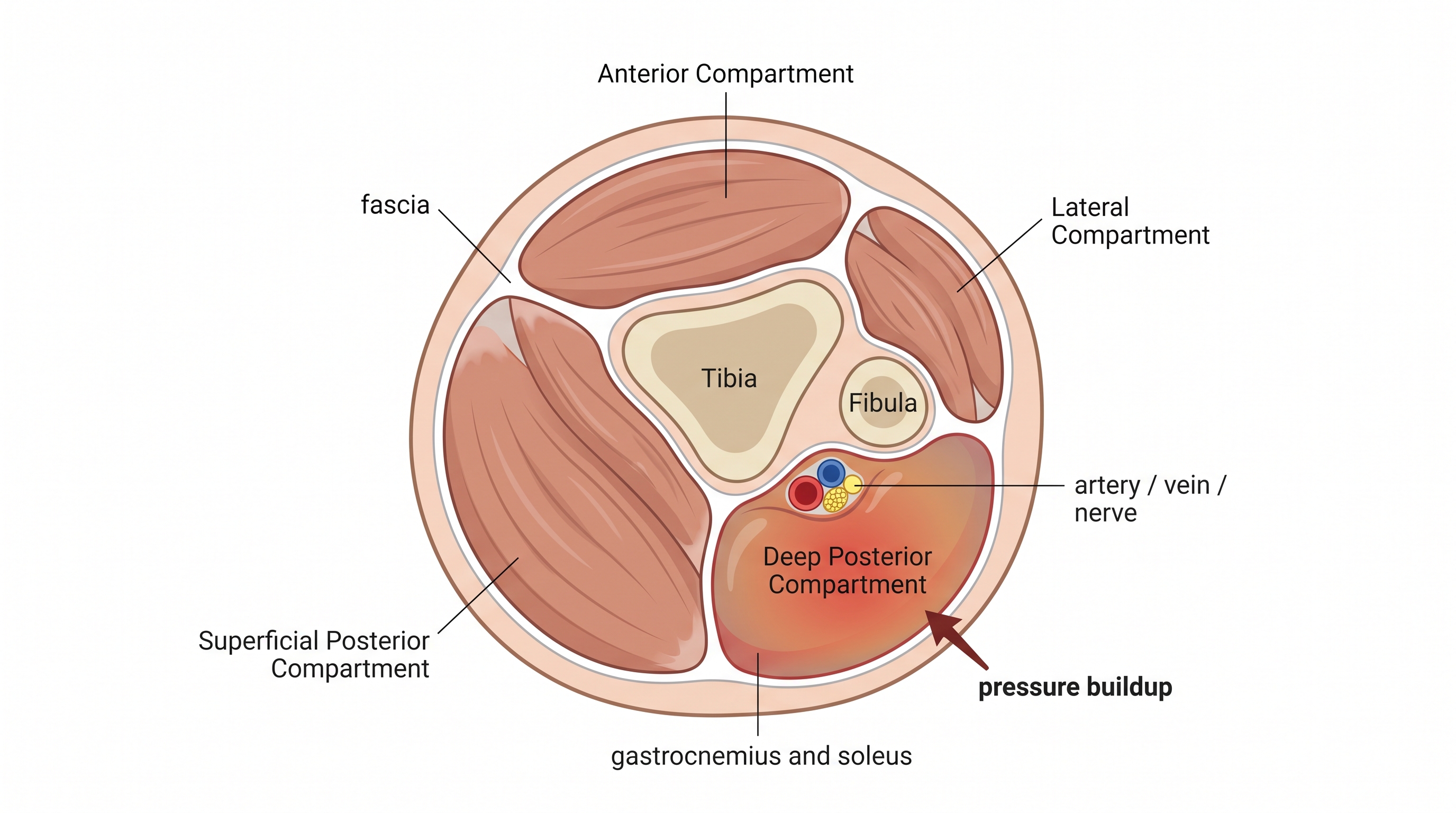
Something inside a compartment swells or bleeds after a fracture, a crush injury, or a deep muscle bruise. The pressure inside that sealed space climbs. According to the American Academy of Orthopaedic Surgeons, that rising pressure squeezes the capillaries first. That cuts off blood supply to the muscle and nerve tissue inside. Nerve and muscle cells start dying within hours of losing that blood supply.
This is called acute compartment syndrome, and it's a surgical emergency. It's different from chronic (or exertional) compartment syndrome, which shows up during repetitive activity like running and eases with rest. That version isn't the kind of thing that costs someone a limb overnight. This article is about the acute version: the one tied to an injury, a cast, or a tight bandage.
The Pain Pattern That Sets It Apart
Every fracture hurts. Every deep bruise hurts. So how do you tell ordinary injury pain from something building toward compartment syndrome?
Two things stand out. First, the pain is out of proportion to what happened. A hairline fracture that should feel like a 4 out of 10 the day after setting instead feels like an 8. It keeps climbing rather than settling.
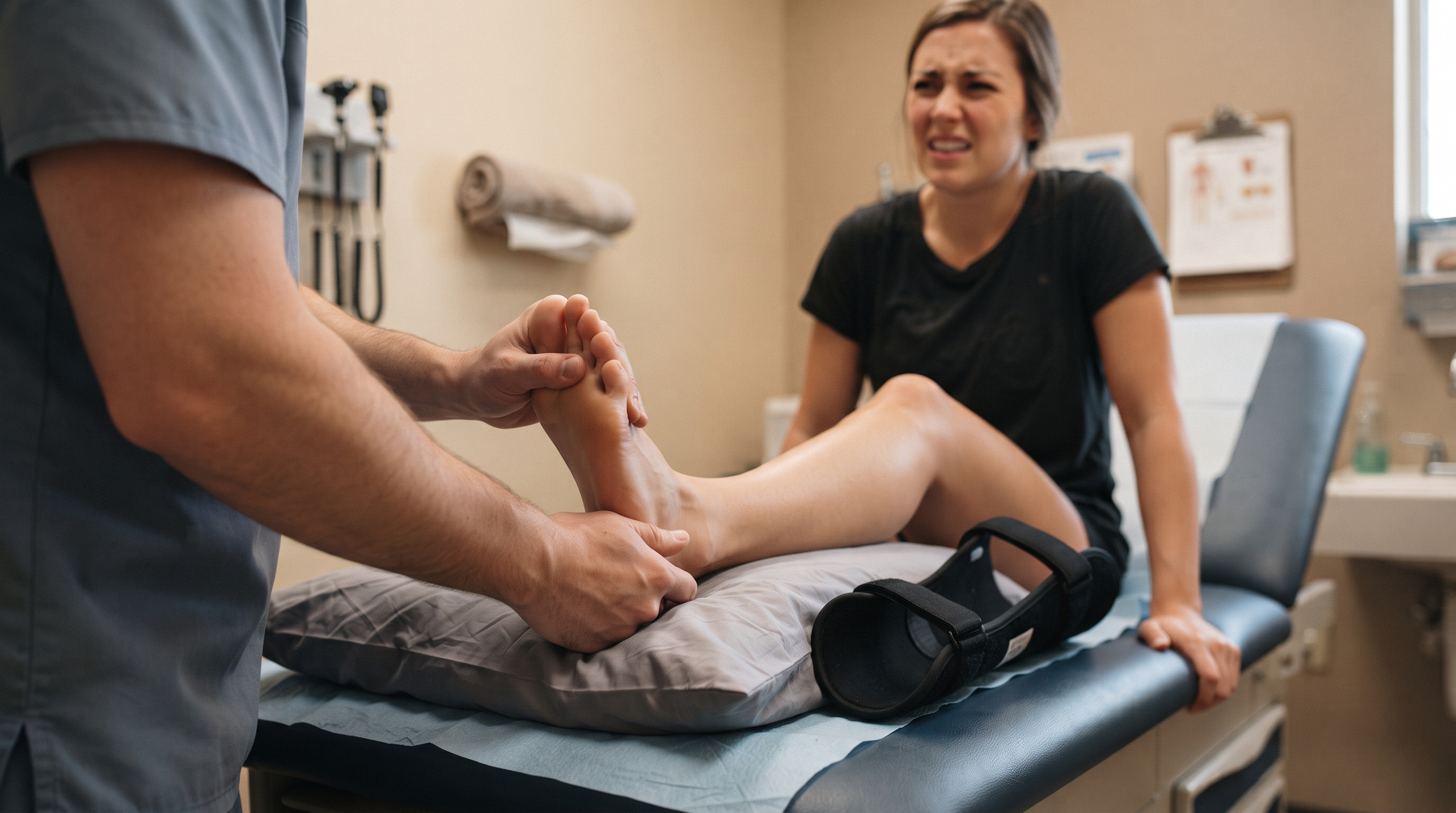
Second, and this is the one clinicians rely on most, the pain gets dramatically worse when the muscles inside that compartment are stretched. Say someone broke their lower leg. If gently flexing their toes upward sends pain shooting through the calf, that's pain with passive stretch. It's one of the earliest reliable signals doctors have.
Pain medication is another tell. Regular over-the-counter doses, or even prescribed opioid doses, that do nothing for the pain is a pattern worth reporting rather than pushing through. So is pain that keeps outrunning the dose. Cleveland Clinic lists this kind of unrelenting, disproportionate pain as the first and most reliable early symptom, well before any of the more dramatic signs show up.
The 5 Ps: Signs Doctors Watch For, and Why Waiting for Them Is Dangerous
You'll see compartment syndrome described by a list of five (sometimes six) signs, all starting with P: pain, pallor, paresthesia, pulselessness, and paralysis. Pressure sometimes gets added as a sixth.
Here's the part that trips people up. These five signs read like a checklist, but they don't all show up at once. By the time most of them appear, damage may already be underway.
Research summarized in StatPearls is blunt about this: pallor, pulselessness, and paralysis are late findings. Waiting for them means the window for the best outcome has likely already closed. Pain, and pain with passive stretch specifically, comes first. That's the signal actually worth acting on.
That's the opposite of how most people think injuries work. We're trained to watch for numbness or a limb going pale as the "real" warning sign. With compartment syndrome, by the time you see those things, you're behind, not ahead.
A pulse can even still be present after real damage has started. The pressure needed to choke off the small capillaries feeding muscle and nerve tissue is lower than the pressure needed to block a major artery you can feel at the wrist or ankle.
The practical version: don't wait for numbness, color change, or a weak pulse to decide something's wrong. Escalating pain and pain with stretch are your cue on their own.
Why a Cast or Splint Can Make Compartment Syndrome Worse
This is the situation that catches people off guard the most, because a cast or splint is supposed to be the thing that helps you heal, not the thing making it worse.

Swelling after a fracture is expected and normal. The problem is that a cast is rigid. It can't expand the way skin and soft tissue can.
Say a cast or a tightly wrapped splint was sized for a limb before the swelling peaked. If swelling keeps building underneath it, the cast itself becomes part of the pressure problem. It squeezes the compartment from the outside while internal swelling pushes from the inside.
This is why the instructions you get at urgent care or the ER after a new cast sound so specific and repetitive: keep it elevated above heart level for the first day or two, wiggle your fingers or toes regularly, and call back immediately, not at your next scheduled visit, if you notice any of the following:
- Pain that's increasing rather than settling, especially pain that isn't touched by your prescribed medication
- A feeling that the cast or splint has gotten too tight since it was applied
- Tingling, numbness, or a "pins and needles" sensation in the fingers or toes
- Fingers or toes that look pale, bluish, or feel unusually cold
- Difficulty moving the fingers or toes at all
None of these require you to wait for a follow-up appointment. A cast that feels too tight gets loosened or split (called "bivalving") the same day, not the same week, and doing that early is a simple fix compared to what happens if the pressure isn't relieved.
Who's Most at Risk for Compartment Syndrome
Compartment syndrome isn't common, but it's not rare enough to dismiss either, and certain situations raise the odds enough to be worth knowing.
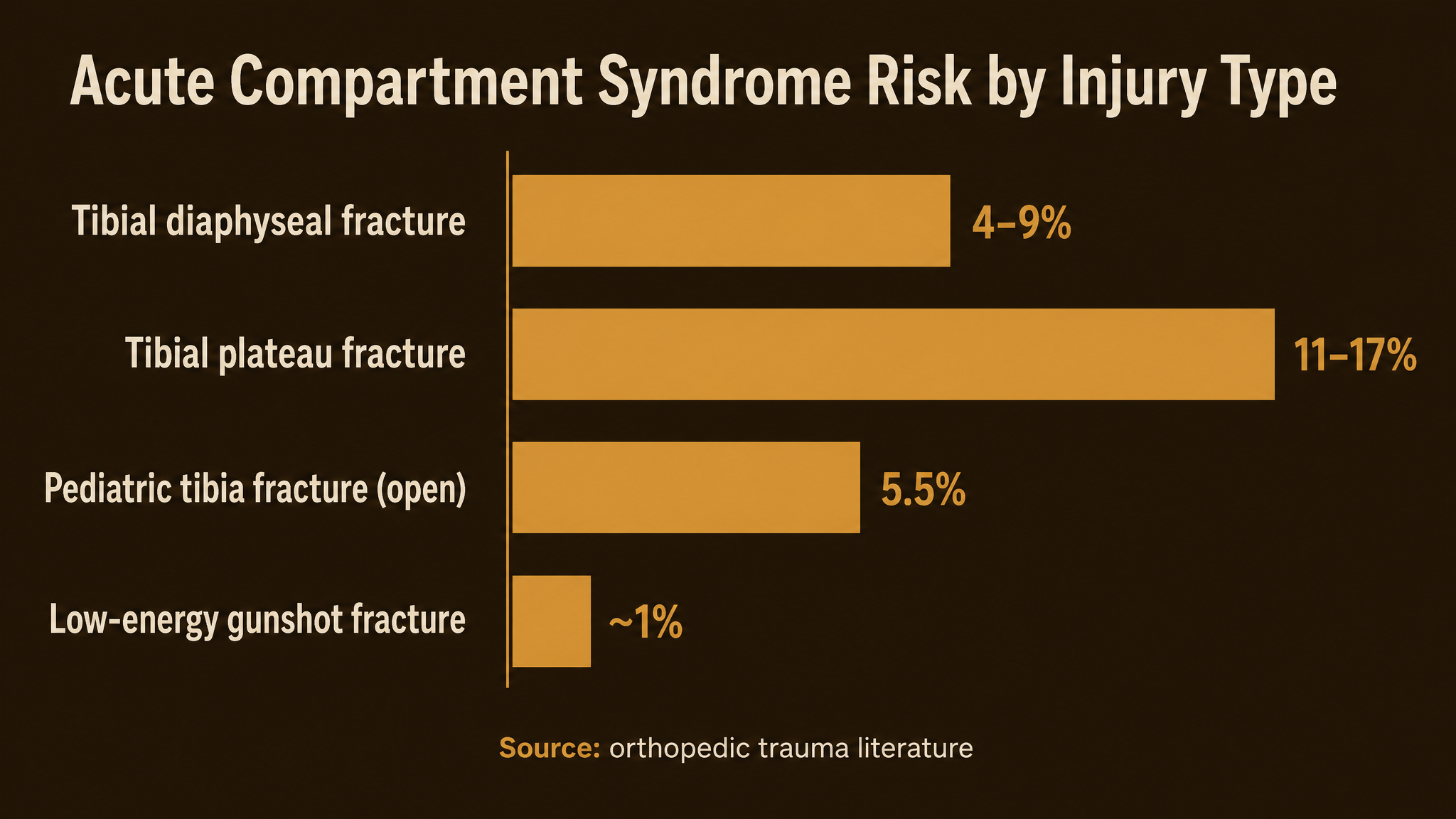
Fractures of the tibia, the long bone in the lower leg, are the single biggest driver. Depending on the type of break, research on tibial fractures puts the incidence of acute compartment syndrome roughly in the 4 to 9 percent range. Tibial plateau fractures near the knee run even higher, in the 11 to 17 percent range in some studies.
Forearm fractures, crush injuries, and severe muscle bruises from a fall or an accident all raise the risk too. So do long periods of limb compression, like being trapped or lying on a limb for hours during a medical event.
Young, otherwise healthy men in their teens, twenties, and thirties show up in this data more than any other group. That's mostly because they're overrepresented in the high-energy injuries, like motor vehicle accidents and falls from height, that cause it. Jobsite crews and weekend athletes coming off a hard fracture or crush injury fall squarely into that risk window. That's exactly why this is worth knowing before it's ever needed, not after.
What Happens Next: Diagnosis and Fasciotomy
If a doctor suspects compartment syndrome, the diagnosis is mostly clinical. That means it's based on the exam: the pain pattern, how tight and swollen the compartment feels, and how the limb responds to passive stretch. When a patient can't reliably report pain, like a young child or someone who's sedated, doctors can insert a small needle to directly measure the pressure inside the compartment.
The treatment, once confirmed, is a fasciotomy: a surgical incision through the skin and the fascia itself, made to physically open up the compartment and let the pressure release immediately. It's not a subtle procedure. The incisions are often left open for a few days to make sure the swelling has genuinely gone down before closing.
That sounds aggressive because it is, and it's aggressive on purpose. Tissue that goes without blood flow for too long doesn't come back. Nerve damage and dead muscle tissue from an unrelieved compartment syndrome can mean permanent loss of function or, in the worst outlook, amputation.
That's the entire reason this condition gets treated as a race against a clock instead of something to keep an eye on. Every hour compartment pressure stays elevated is an hour of tissue running without oxygen. That kind of damage isn't something surgery can fully reverse after it's already happened.
Compare that to the alternative: a phone call, an exam, and if needed, a cast that gets split open the same afternoon. One of those costs you an inconvenient trip. The other one can cost you a limb.
If you've already read up on how to tell if a bone is broken or leaned on our guide to splinting a broken bone in the field, this is the piece that comes after the splint goes on: watching the pain pattern in the hours and days that follow, not just the injury itself.
Most emergencies don't announce themselves clearly. Compartment syndrome is a good example: the person living it usually assumes it's just a bad reaction to a normal injury, right up until it isn't. The 1stHour Trauma Kit was built around that same idea: give you the tools to check circulation, control bleeding, and stabilize an injury correctly in the first hour, before confusion costs you time you don't get back. See what's inside the 1stHour Trauma Kit.
This content is for informational purposes only and does not constitute medical advice. Compartment syndrome is a surgical emergency. If you or someone you're caring for has escalating pain after an injury, a cast, or a splint, especially pain that worsens with stretching or isn't controlled by prescribed medication, seek emergency medical care immediately rather than waiting for a scheduled appointment.


