Car Breakdown on the Highway: What to Do Until Help Arrives
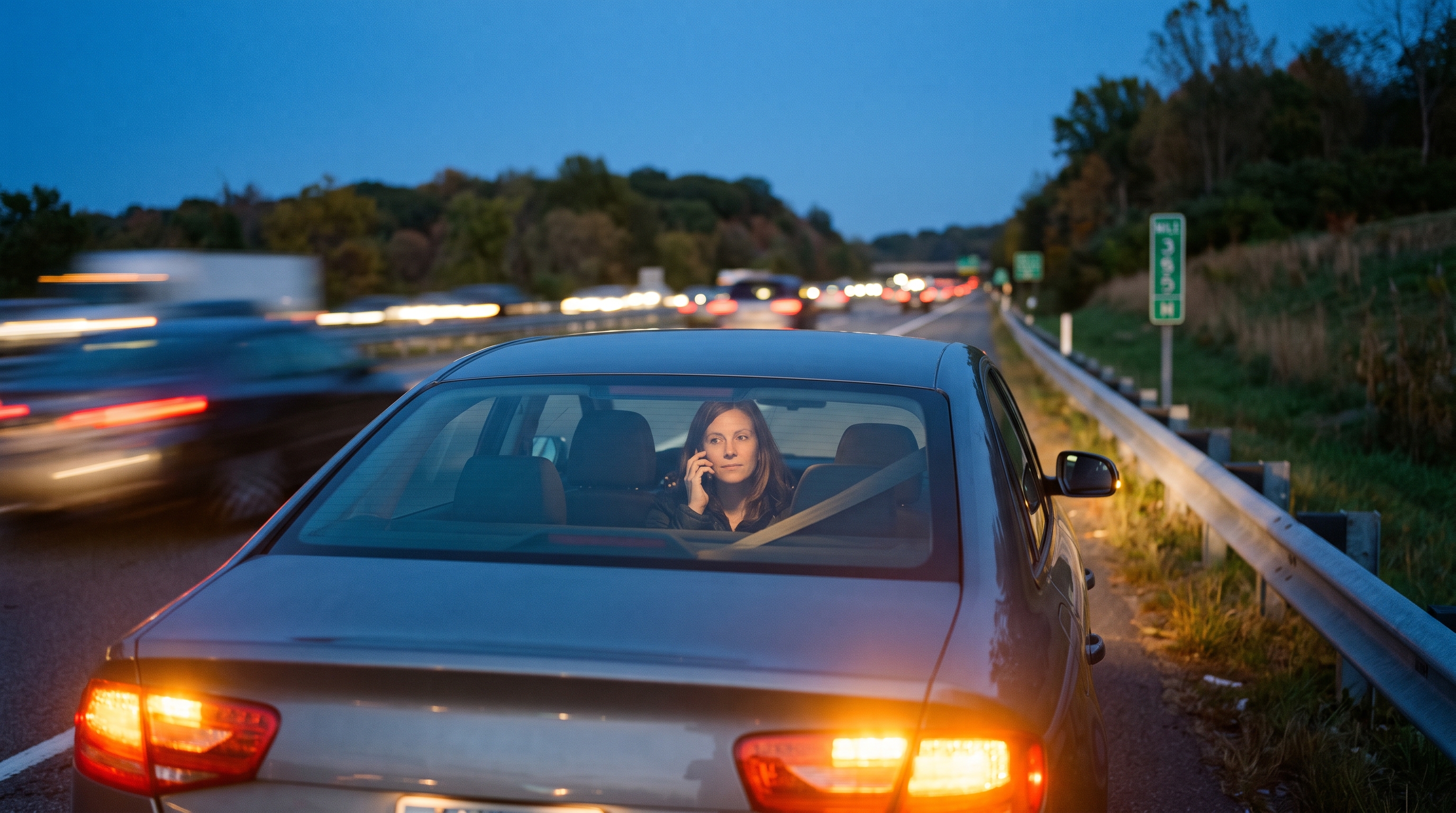
The engine shudders, the dash lights up, and the car slows even as you press the pedal. Cars are moving past you at 65 miles an hour or more. The first minute after a highway breakdown decides how the next hour goes. This guide covers how to get off the road, whether to stay in the car or step out, and what to say when you call for help.
What to Do When Your Car Breaks Down on the Highway
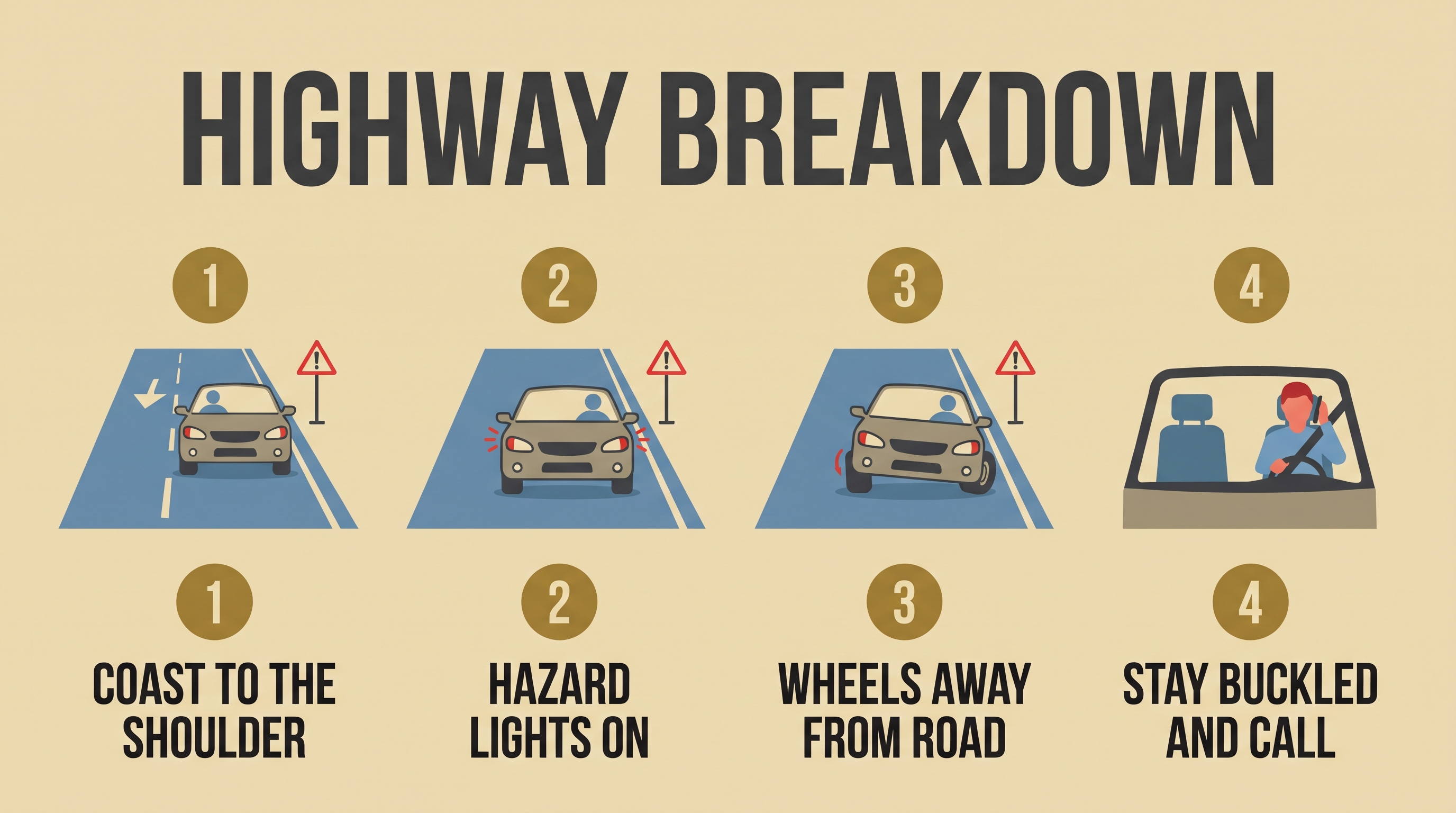
Do not brake hard or stop short. Take your foot off the accelerator, keep both hands on the wheel, and steer toward the shoulder while the car still has momentum. Progressive advises easing off the gas at the first sign of trouble and braking gently as you coast.
- Pick the right shoulder. The right shoulder is the usual choice. AAA Oregon says that on multi-lane highways the right shoulder is generally safer than the left.
- Go as far off the road as you can. Aim for level ground with room between your car and the traffic lane.
- Turn on your hazard lights right away. Do it before you stop, not after.
- Turn the front wheels away from the road and set the parking brake. If another car clips yours, it pushes your car away from traffic instead of into it.
- Keep your seatbelt on. You will want it if something hits you from behind.
If you cannot reach the shoulder, keep the hazards on and stay as far to the side as you can. Then call 911 at once and say that your car is blocking a lane.
Car Breakdown on the Highway: Stay In or Get Out?
For most people the answer is to stay in the car. AAA Oregon says safety experts generally recommend staying inside with your seatbelt fastened, and WTOP quotes AAA Mid-Atlantic saying the same: in most circumstances, it is safest to remain inside your vehicle. A car body protects you better than a patch of gravel does.
Keep the doors locked and the windows up. If a stranger stops to help, you can crack the window just enough to say that help is already on the way. You do not need to open the door.
There are times when getting out is the safer call. AAA Oregon lists two: your car is not fully off the road, or you are on a blind curve where you might be rear-ended. Smoke, a fuel smell, or fire are also reasons to leave the car at once.
If you do get out, follow these rules:
- Use the door furthest from traffic. That is usually the passenger side.
- Move well away from the road. AAA Oregon says at least 40 feet from the roadway and your car.
- Stand behind a guardrail or on an embankment if you can. Never stand directly in front of or behind the car.
- Do not try to fix the car. Do not look under the hood or change a tire on a busy highway.
The risk is real. A 2024 report from the AAA Foundation for Traffic Safety counted 123 roadside assistance providers struck and killed by vehicles while working in the United States between 2015 and 2021. AAA Foundation researchers found that 89 percent of those deaths happened where the speed limit was 55 mph or higher. If trained crews are at risk on the shoulder, so are you.
Calling for Help: What to Tell the Dispatcher
If you are in danger, because your car is in a lane or you feel unsafe, call 911. If you are safely on the shoulder, you can call your roadside assistance provider or your insurer. Either way, the information you give is the same.
- Where you are. Give a mile marker, the nearest exit, the last exit you passed, or a rest area. Look for green mile marker signs on the right side of the road. Note the direction you are traveling.
- What happened. Say your car broke down and whether it is on the shoulder or in a lane.
- Who is with you. Mention children, older adults, or anyone who is hurt.
- What your car looks like. Give the make, color, and plate number so a trooper can find you.
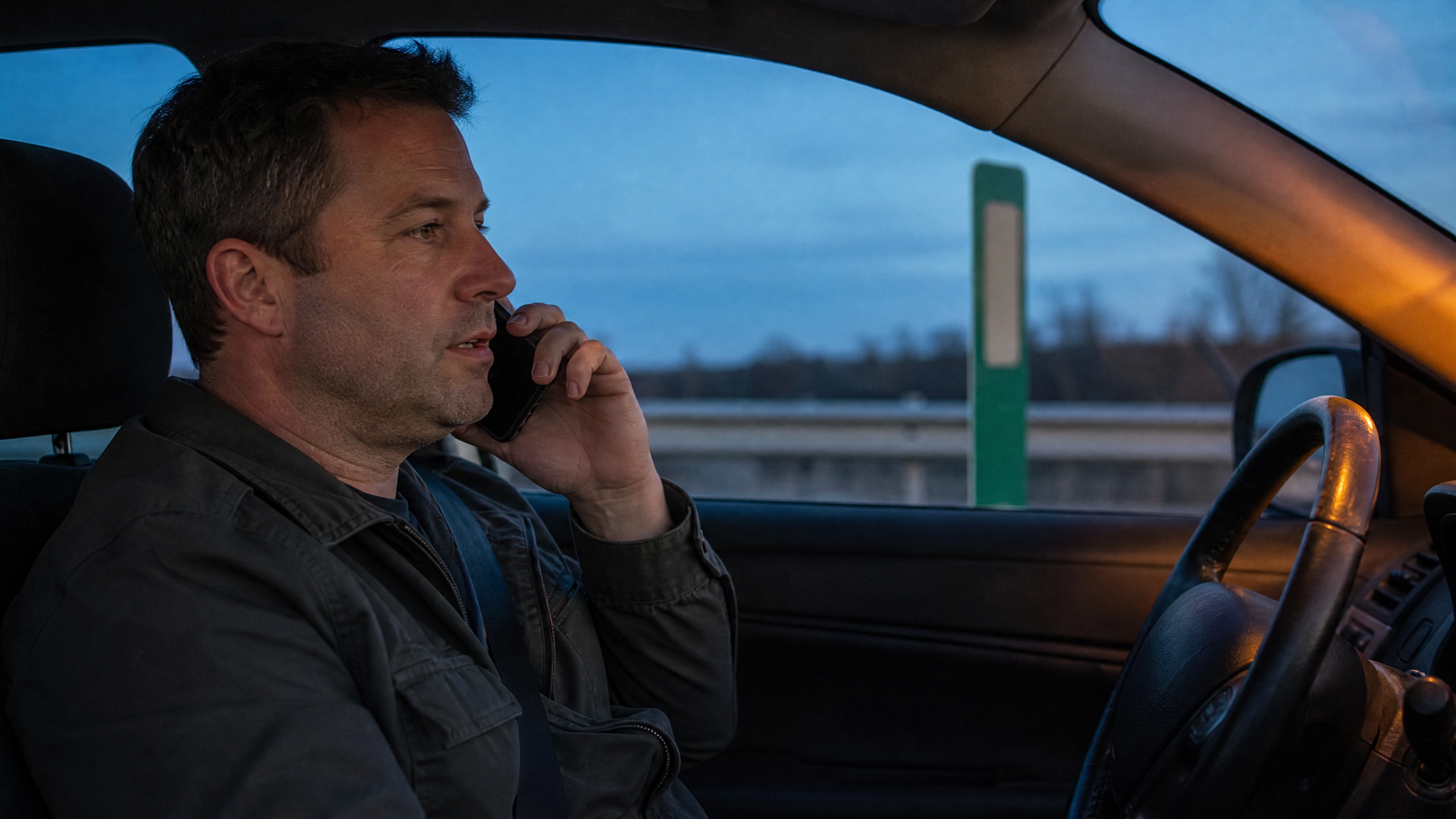
Stay on the line if the dispatcher asks you to. Save your phone battery by lowering the screen brightness while you wait.
Make Your Car Easier to See
Anything that helps drivers notice you early gives them more time to move over. If it is safe to reach them, place reflective triangles or flares behind the car. AAA Oregon suggests the first marker about 10 feet behind the car, with more at 100 feet and 200 feet. Do not use flares if you smell gas.
A bright cloth tied to the antenna or hung from a window works too, and so does raising the hood. In many states, drivers are required to move over or slow down for disabled vehicles with flashing lights, though the rules vary by state.
Keep a Few Things in the Car Before You Need Them
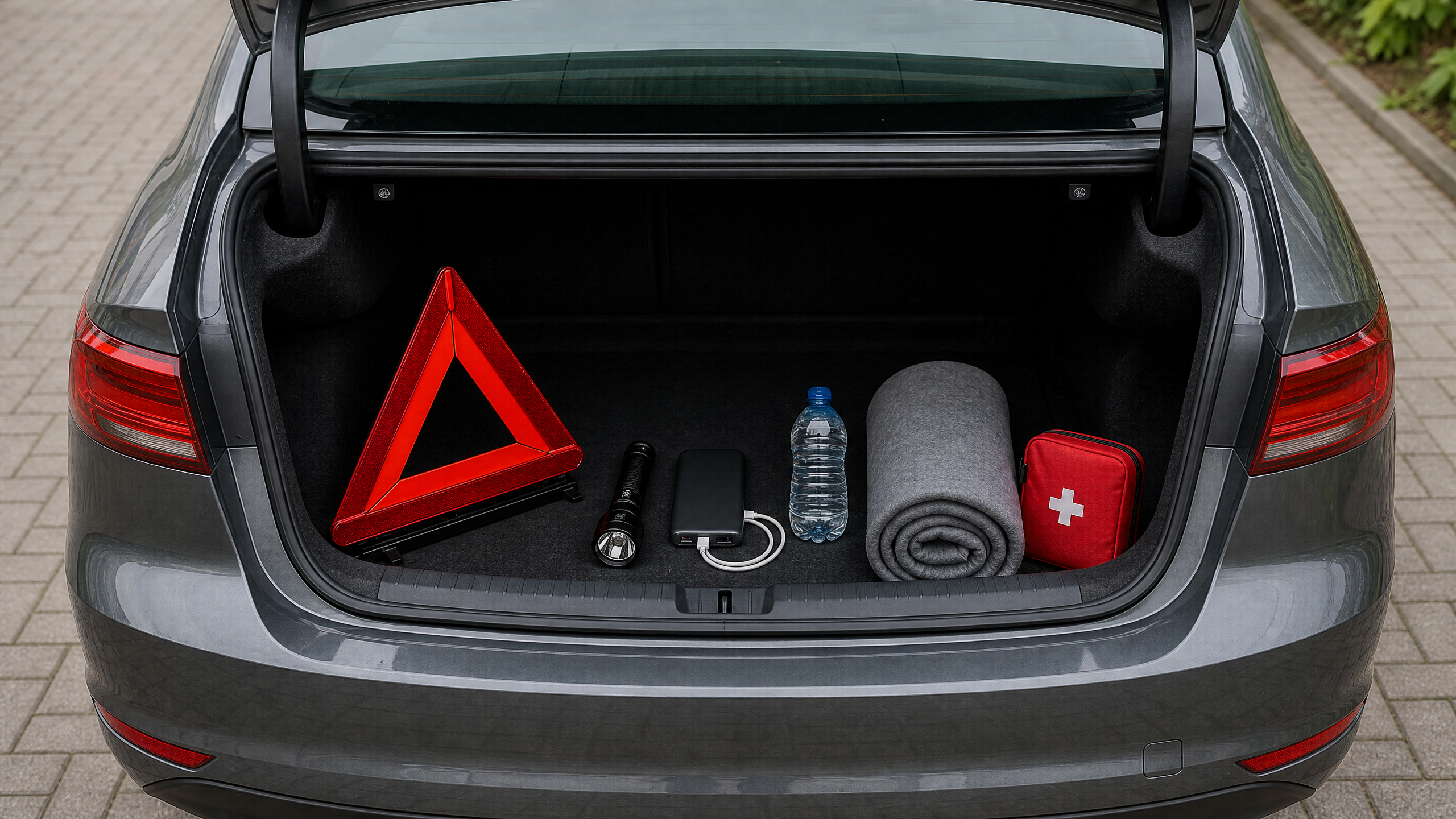
A breakdown is much easier when your kit is already packed. Useful items include reflective triangles, a flashlight, a phone charger or power bank, water, a blanket, and a high-visibility vest. Our guide to car emergency kit essentials has the full list.
If you are stuck in winter weather, the rules change a little. Read about being stranded in a car in a snowstorm before the season starts.
Most highway breakdowns end with nothing worse than a tow. What turns them into emergencies is a driver who stops short, steps into the lane, or stands behind the car. The first hour goes better when you move slowly, stay buckled, and let the people with trucks and flashing lights do the roadside work.
When help is minutes away, what you can do in the first hour changes everything. See what's inside The 1stHour Trauma Kit, built for the moments before help arrives.
This content is for informational purposes only and does not constitute medical advice. In an emergency, call 911 immediately. This article is not a substitute for hands-on training.


