What Is Bleeding Out? Signs, Risks, and How to Respond

What is bleeding out — and how fast can it actually kill? The clinical answer is faster than most people realize. A severed femoral artery can drain a fatal volume of blood in under three minutes. A large vein, in five to ten. In both cases, the emergency is measured in seconds, and the typical ambulance response time doesn't cover the gap.
Understanding what bleeding out means — the physiology, the timeline, and especially the warning signs — is the first step toward being useful when it happens near you. This isn't a step-by-step treatment guide (that's here). This is about recognition: what's happening inside the body, how to spot it, and what the decision points are.
Bleeding out (exsanguination) is the loss of enough blood volume that the body can no longer sustain organ function. The average adult has 5–6 liters of blood. Losing 30–40% of that — roughly 1.5 to 2 liters — creates a life-threatening emergency. External bleeding is visible; internal bleeding is hidden and equally dangerous. Early recognition of the warning signs is critical.
The Physiology: What Happens When You Lose Blood
Your circulatory system is a closed-loop pressure system. The heart pumps blood through arteries, which deliver oxygen to organs and tissue. Veins carry deoxygenated blood back. The entire system depends on volume — enough fluid to maintain pressure, enough red blood cells to carry oxygen.
When that volume drops suddenly, the system starts to fail in a predictable sequence.
Class I — Up to 15% Blood Loss (~750 mL)
The body compensates. Heart rate ticks up slightly. Blood pressure holds steady. Most people feel fine or mildly anxious. This is roughly equivalent to donating blood. The body recovers on its own without intervention.
Class II — 15–30% Blood Loss (~750–1,500 mL)
Compensation starts to strain. Heart rate climbs above 100 bpm. The person becomes noticeably anxious, pale, and thirsty. Blood pressure may still read normal at rest but drops when they stand. Capillary refill slows — press a fingernail and it takes more than two seconds for color to return. This stage requires medical intervention.
Class III — 30–40% Blood Loss (~1,500–2,000 mL)
The body is losing the battle. Heart rate exceeds 120 bpm. Blood pressure drops measurably. The person becomes confused, disoriented, or agitated. Skin turns cold and ashen. Breathing becomes rapid and shallow. This is hemorrhagic shock. Immediate intervention — pressure, tourniquets, rapid fluid replacement — is the difference between life and death.
Class IV — Over 40% Blood Loss (~2,000+ mL)
Organ failure begins. Heart rate may exceed 140 bpm or become irregular. Blood pressure collapses. The person loses consciousness. Cardiac arrest follows shortly. Survival at this stage depends on surgical intervention and massive blood transfusion within minutes.

How to Recognize Bleeding Out: The Warning Signs
The most dangerous aspect of severe blood loss is that it doesn't always look dramatic. People expect a horror-movie scene. What they get is a person who seems tired, confused, or "off" — and by the time it becomes obvious, the window for effective intervention is closing.
Here's what to watch for, divided by what you can see and what you have to assess.
Visible Signs
- Blood that pulses or spurts rhythmically — this indicates arterial damage. Each pulse matches a heartbeat. Arterial bleeds are the most immediately lethal.
- Rapidly saturating bandages or clothing — if a dressing soaks through within one to two minutes, the bleed is severe and current measures are insufficient.
- Blood pooling on the ground beneath the person — volume on the ground is volume that's no longer in the body. Even a modest-looking pool can represent significant loss.
Physiological Signs
- Skin that turns pale, gray, or waxy — the body diverts blood from the skin to protect the heart and brain. This is one of the earliest visible shock signs.
- Cold, clammy skin with visible sweating — adrenaline response combined with circulatory failure. The skin feels damp and cool even in warm conditions.
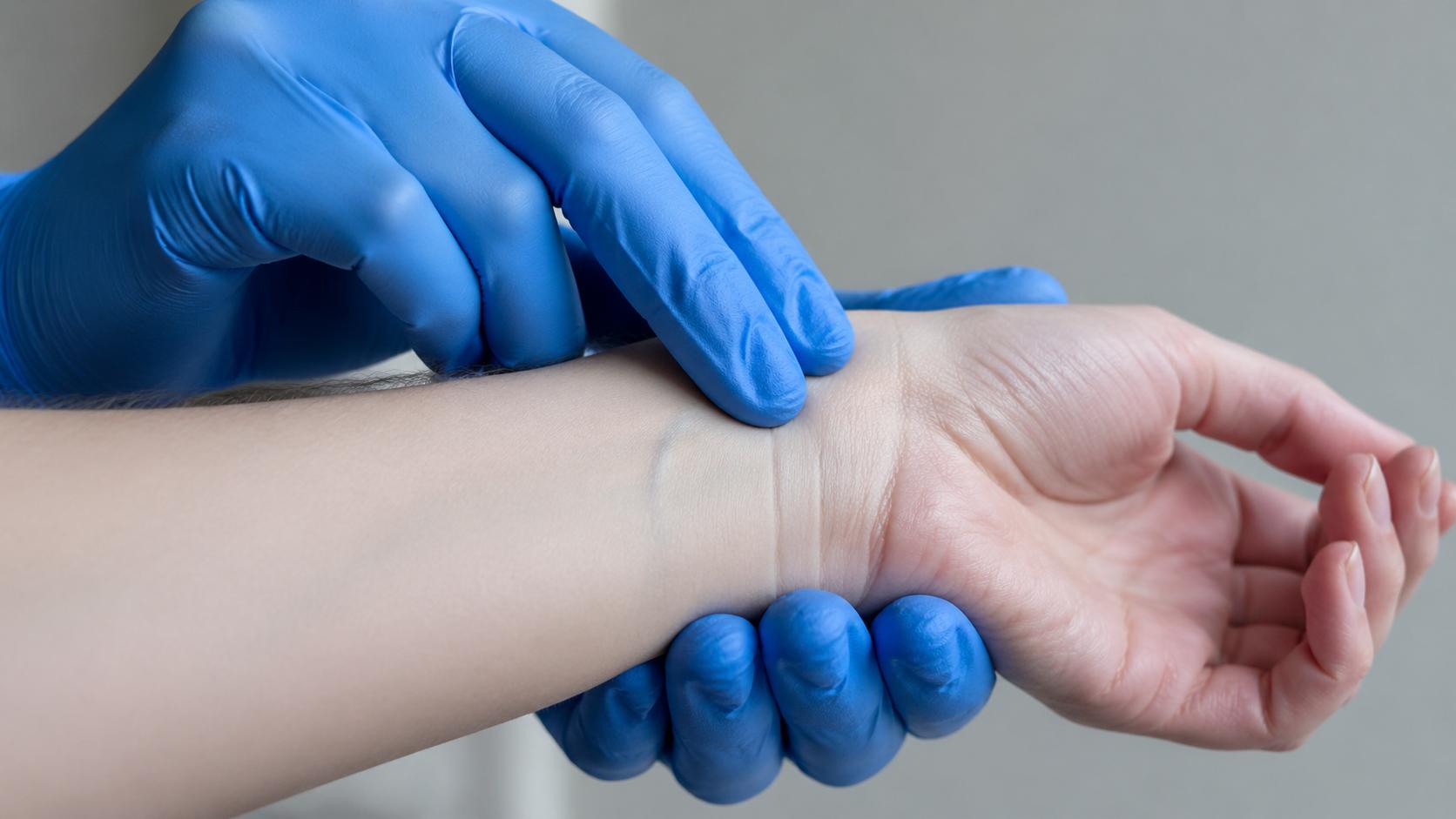
- Rapid, thready pulse — the heart races to compensate for lost volume, but each beat pushes less blood. A pulse that's fast and hard to feel at the wrist is a red flag.
- Altered mental status — confusion, inability to answer simple questions, agitation, or unusual calmness. When the brain gets less oxygen, cognition degrades quickly.
- Rapid, shallow breathing — the body tries to increase oxygen intake as delivery drops. Breathing rate over 20 per minute in an adult at rest is concerning.
- Thirst — an underappreciated early sign. The body signals fluid deficit long before other symptoms become obvious.
Internal Bleeding: The Hidden Killer
External bleeding is visible and immediate — you see the blood, you find the wound, you apply intervention. Internal bleeding follows none of those rules. There's no wound to press on. The blood collects inside body cavities — the abdomen, the chest, the pelvis — where you can't see it or reach it.
This is what makes internal bleeding so lethal in civilian settings. The person was in a car accident, seemed okay at the scene, walked around, talked to bystanders — then collapsed 15 minutes later. The bleeding was happening the entire time, hidden under the skin.
When to Suspect Internal Bleeding
- Mechanism of injury: High-speed vehicle collision. Fall from significant height. Blunt force to the abdomen or chest. Crush injury. Pedestrian struck by a vehicle.
- Physical signs: Abdominal rigidity or distension (the belly feels hard or is visibly swelling). Bruising around the navel or flanks. Pain that's disproportionate to visible injuries.
- Deterioration pattern: The person's condition worsens over minutes despite no visible external bleed. Shock signs appear and progress — pale skin, rapid pulse, confusion — with no obvious cause.
What You Can Do for Internal Bleeding
Honestly — not much in the field. Internal hemorrhage requires surgical intervention. But what you can do matters enormously:
- Recognize it. Suspicion is the first step. If the mechanism was severe and the person is deteriorating, assume internal bleeding.
- Call 911 immediately. Tell the dispatcher you suspect internal bleeding and describe the mechanism of injury. This information changes how they dispatch — a trauma team versus a standard ambulance.
- Keep the person still and lying flat. Movement can worsen internal hemorrhage. Elevating the legs slightly (6–12 inches) can help maintain blood flow to the core.
- Monitor and report. Track their level of consciousness, pulse rate, and breathing. When EMS arrives, relay the timeline: "She was alert at 2:15, confused by 2:22, stopped responding at 2:28."
The Time Problem: Why Bleeding Out Is a Race
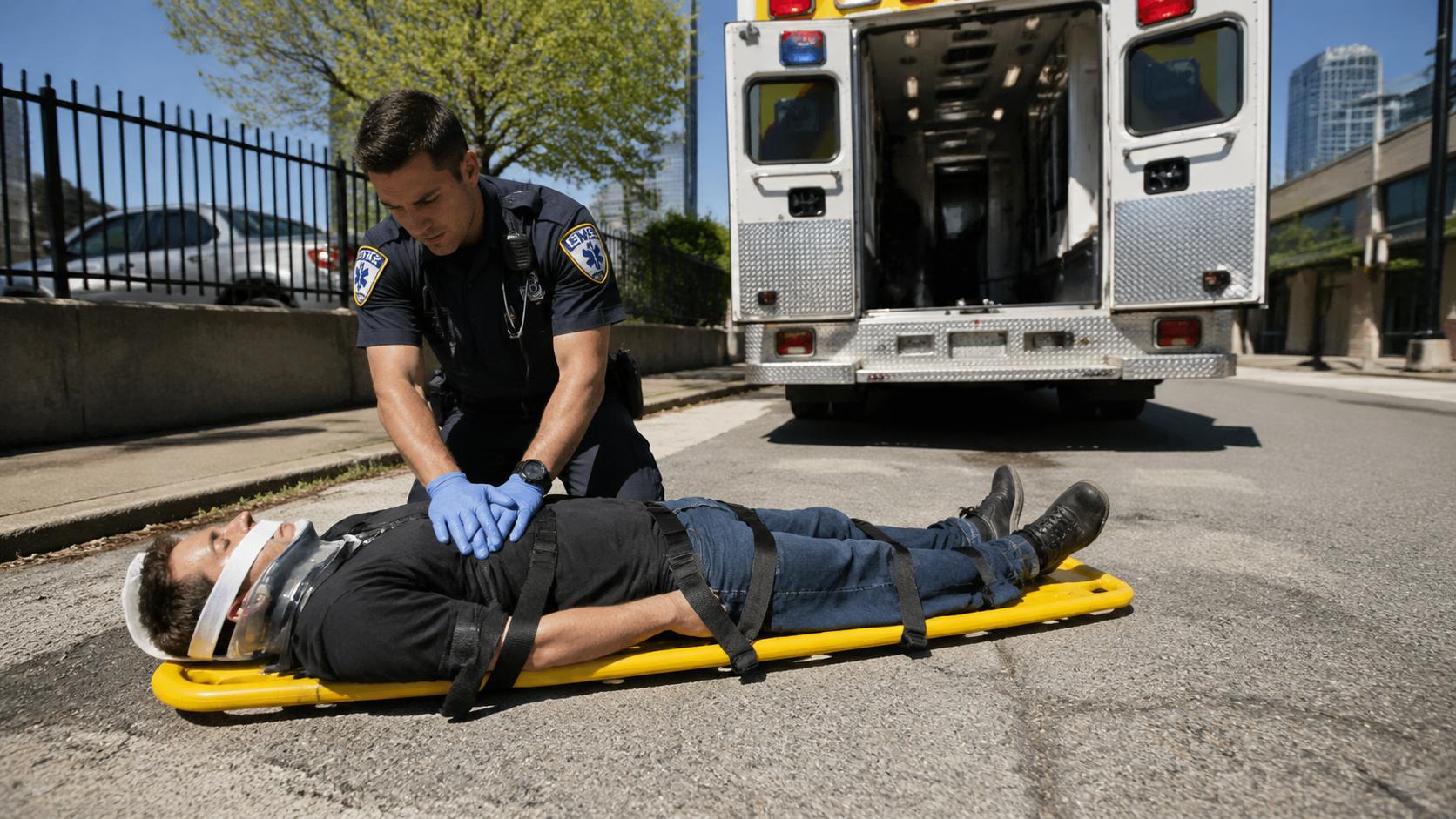
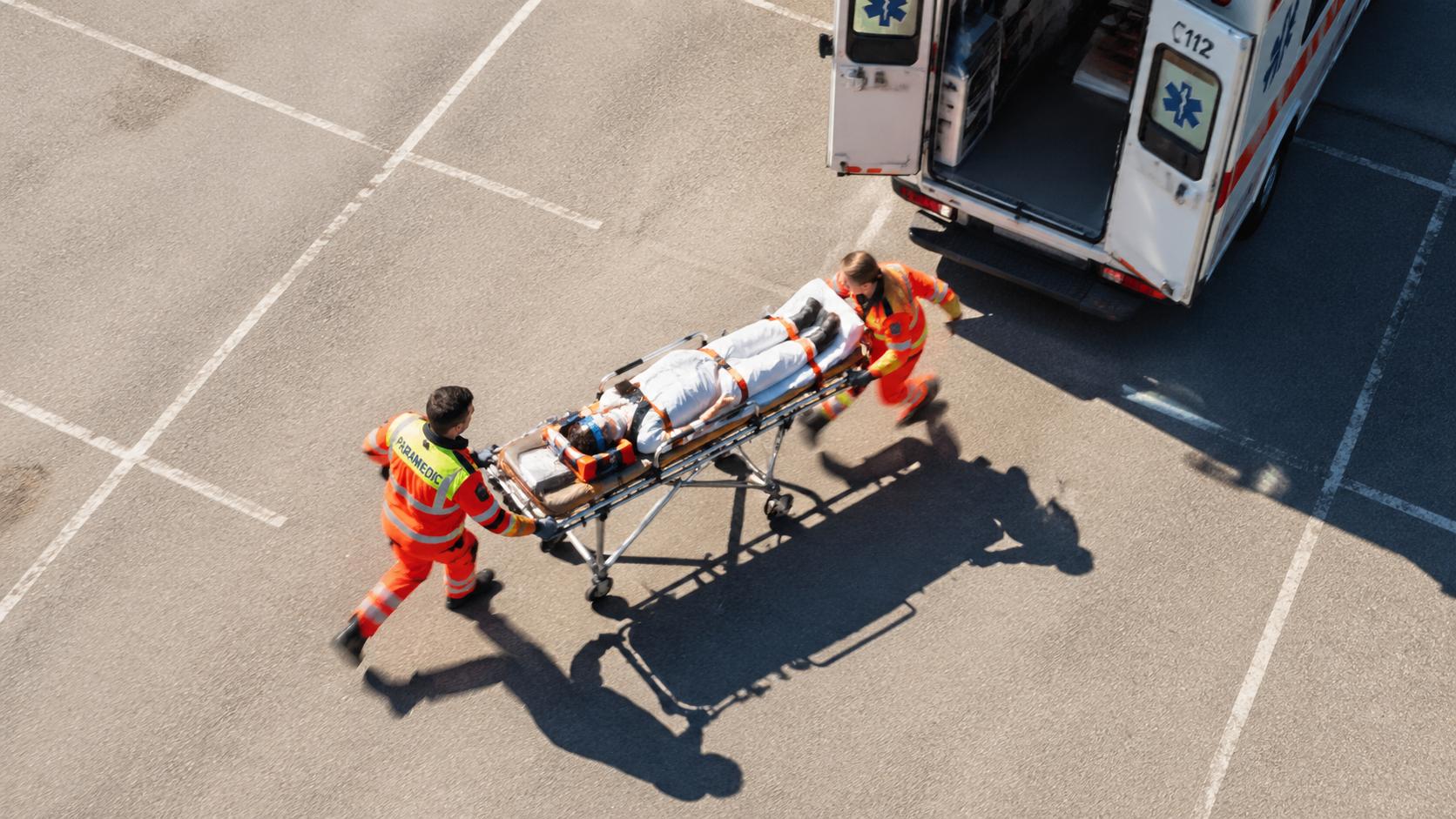
The math is unforgiving. A major arterial bleed can produce death in under three minutes. A large venous bleed, in five to ten. The national average EMS response time is 7–14 minutes.
That gap — between injury and professional help — is the entire reason this knowledge matters. No one bleeds out because the trauma surgeon wasn't skilled enough. People bleed out because the three to ten minutes before anyone with training arrived were spent watching, panicking, or waiting.
The clinical term is the platinum ten minutes — the initial window after a traumatic hemorrhage where intervention has the highest impact on survival. Every minute of delay in hemorrhage control reduces the chance of a good outcome. By the time Class III shock sets in, the body is in a physiological spiral that becomes exponentially harder to reverse.
This is why organizations like the Stop the Bleed campaign, backed by the American College of Surgeons, exist — to put basic hemorrhage control skills into civilian hands. Peer-reviewed research consistently shows that bystander intervention in the first minutes post-injury is the strongest single predictor of survival in traumatic hemorrhage. Additional clinical guidance is available from MedlinePlus (NIH).
Being Ready: What Separates a Bystander from a First Responder
The difference between a bystander and a first responder isn't a certification. It's preparation. Knowing the signs. Having the tools. Having rehearsed the decision tree before the adrenaline hits.
Here's the minimum kit that covers the interventions described in this article and its companion guide:
- Tourniquet (CAT or SOFTT-W) — for uncontrolled limb hemorrhage.
- Hemostatic gauze — for packing deep wounds where surface pressure fails.
- Pressure bandage — for sustained compression after initial hemorrhage control.
- Nitrile gloves — bloodborne pathogen protection for the responder.
- Chest seal — for penetrating chest injuries.
Stage the kit where you'll actually reach it: your vehicle's center console, your daypack, your desk. A kit buried in a trunk or closet is a kit that won't get used in the three-minute window where it matters most.
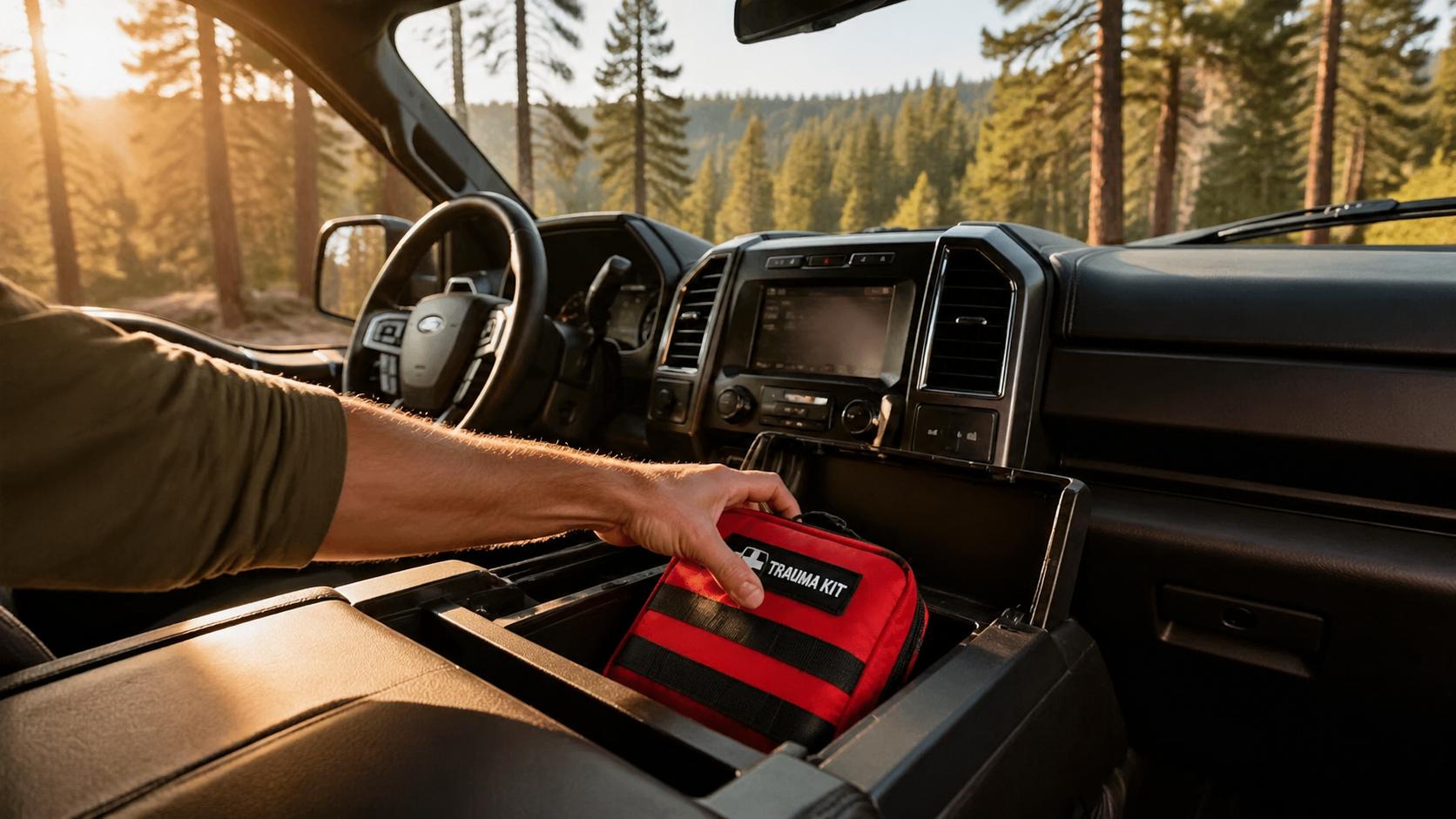
1st Hour trauma kits are built for exactly this — the right tools, staged where you need them, ready for the moment that matters. See the full lineup at 1sthour.com.
The Bottom Line
Bleeding out is a race against volume loss. The body follows a predictable physiological cascade as blood leaves the system — from mild compensation to hemorrhagic shock to organ failure. That cascade can complete in minutes.
Most people who die from traumatic bleeding don't die from injuries that were unsurvivable. They die in the gap between the injury and the ambulance. Knowing what is bleeding out, recognizing the warning signs, and understanding how quickly the situation escalates — that's the knowledge that turns a panicked bystander into someone who can keep a person alive.
This article covered the recognition side. For the step-by-step action protocol — direct pressure, wound packing, tourniquet application — read How to Stop Severe Bleeding: A Step-by-Step Guide.


