How to Build an Emergency Shelter in the Wild with Zero Gear
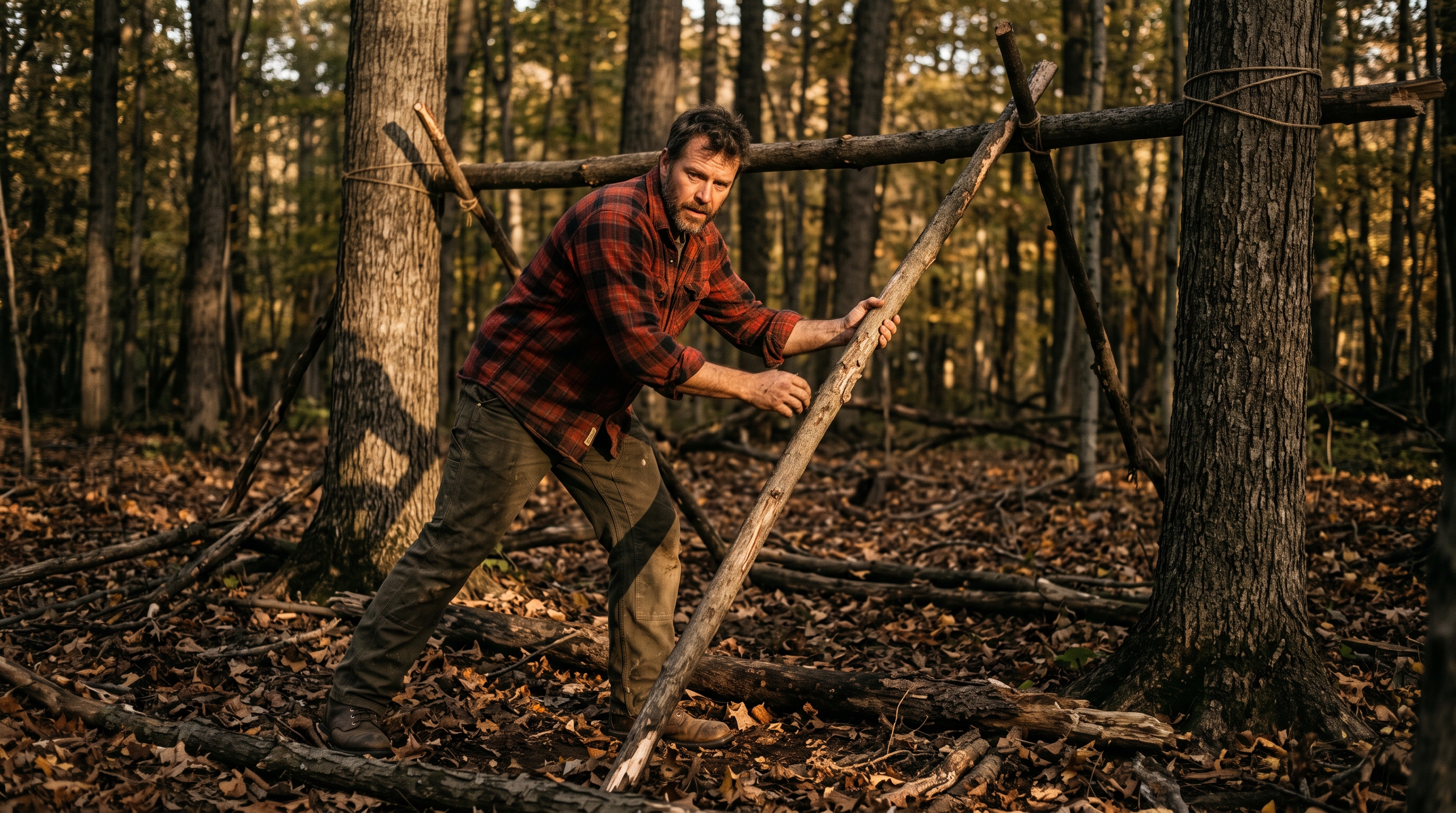
If you're reading this standing in the woods with no tent, no tarp, and the light starting to fade, here's the good news: building an emergency shelter in the wild doesn't require any of that. People built shelter with sticks and leaves for most of human history. The skill still works. What you need is a plan, because the two things that get hikers hurt overnight aren't wild animals or falls. They're cold and bad decisions made in the dark.
Why Shelter Comes Before Water or Food
Survival instructors teach a rough guideline called the rule of threes: about three minutes without air, three hours without shelter in a harsh environment, three days without water, three weeks without food. The numbers aren't exact science, but the order is the point. In bad weather, exposure kills faster than thirst does, and much faster than hunger.
Hypothermia doesn't require a blizzard. A cool, wet, windy night in the 50s can drop your core temperature if you're stuck in damp clothes with no cover. It's a leading cause of accidental death in cold-weather regions, and most cases happen outdoors, not in some extreme Arctic scenario, according to the NOLS wilderness medicine program. That's why shelter comes first on the list, ahead of finding water, ahead of signaling for help, ahead of almost everything except making sure you can breathe.
Pick Your Shelter Site Before You Pick Up a Branch
The shelter itself matters less than where you put it. A well-built structure in the wrong spot will still fail.
Look for high, dry ground. Low spots collect cold air and moisture overnight, and a depression that looks cozy at dusk can turn into a puddle by 2 a.m. Avoid the base of slopes and dry creek beds even if they're bone dry right now.
Check what's over your head. Dead trees and heavy dead branches, sometimes called widowmakers, can come down without warning, especially in wind. Pick a site with live, sturdy trees nearby, or none at all if you're building on open ground.
Build close to your materials. If you have to drag branches fifty yards, you'll burn daylight and energy you don't have to spare. A site near deadfall, dense brush, or a stand of evergreens usually has what you need within arm's reach.
Give yourself real time. Shelters take longer to build than people expect, especially the first time. If it's within two hours of dark, stop moving and start building. Searching for a "better" spot at dusk is how people end up building nothing at all.
The Lean-To: Fastest Shelter You Can Build
The lean-to is the shelter most people can finish before losing the light. Find two trees roughly eight to ten feet apart. Wedge or lash a sturdy branch between them at about shoulder height. This is your ridgepole.
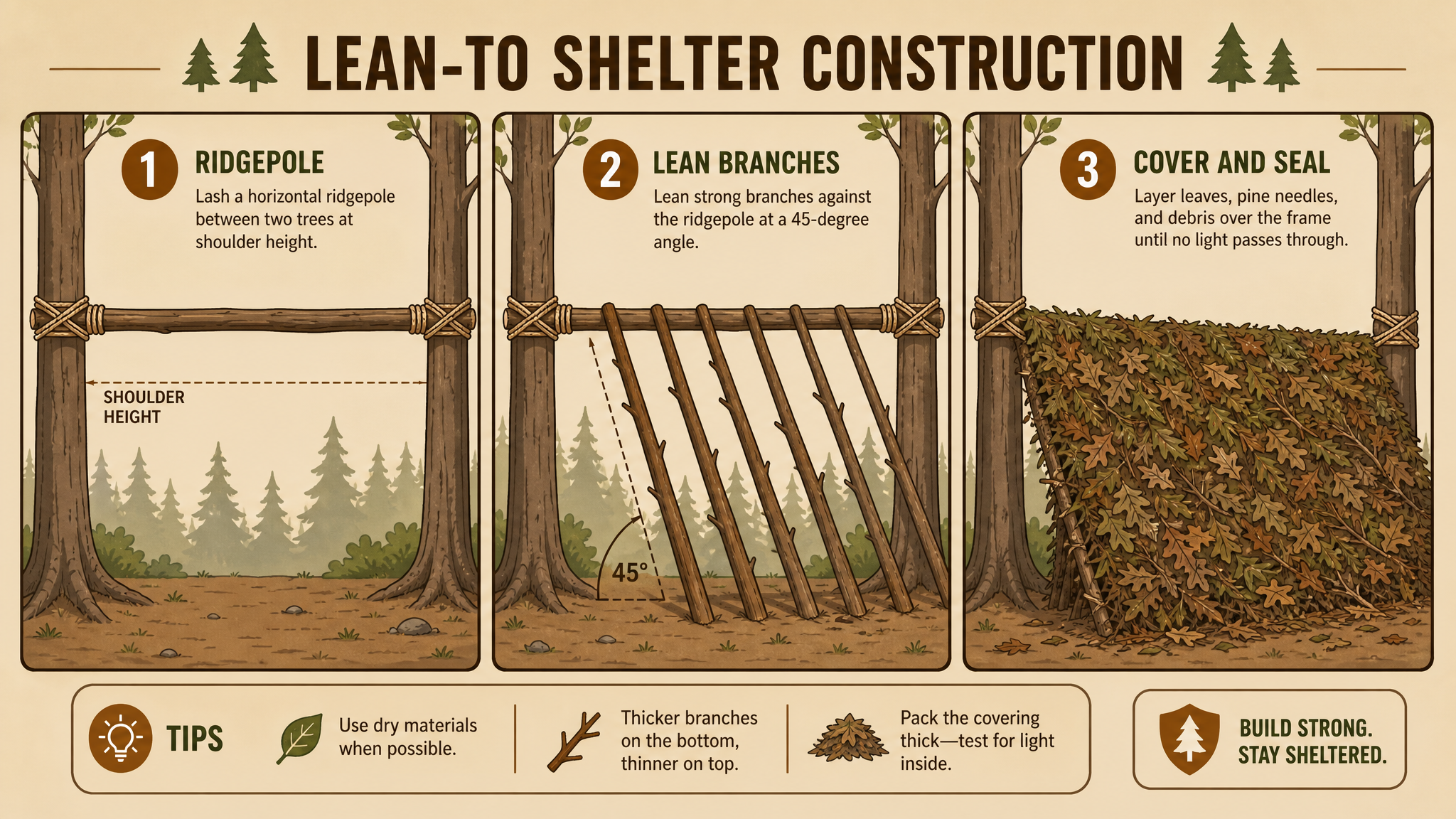
Lean branches against that ridgepole at roughly a 45-degree angle, packed close enough that they overlap. This becomes your wall and your roof at once. Then layer smaller branches, leaves, bark, and pine boughs over the frame until you can't see daylight through it. Thin coverage is the most common mistake here. If light gets through, so does wind and rain.
Orient the open side away from prevailing wind, and if you can, angle it to reflect heat from a small fire back toward you. A basic lean-to with decent materials can go up in 30 to 60 minutes, which makes it the right call when time is short or you're building solo with failing light.
The Debris Hut: Best Shelter for Cold Nights
If the temperature is dropping and warmth matters more than speed, build a debris hut instead. It works differently than a lean-to. Instead of blocking wind, it traps your own body heat in a small, insulated pocket around you.
Start with a ridgepole at ground level, either a fallen log or a branch propped in the fork of a tree, angled low. Lean branches along both sides to form a rib-cage shape just wide enough to fit your body with a few inches to spare. Bigger isn't better here. A shelter sized for two takes twice as long to insulate and traps half the heat.
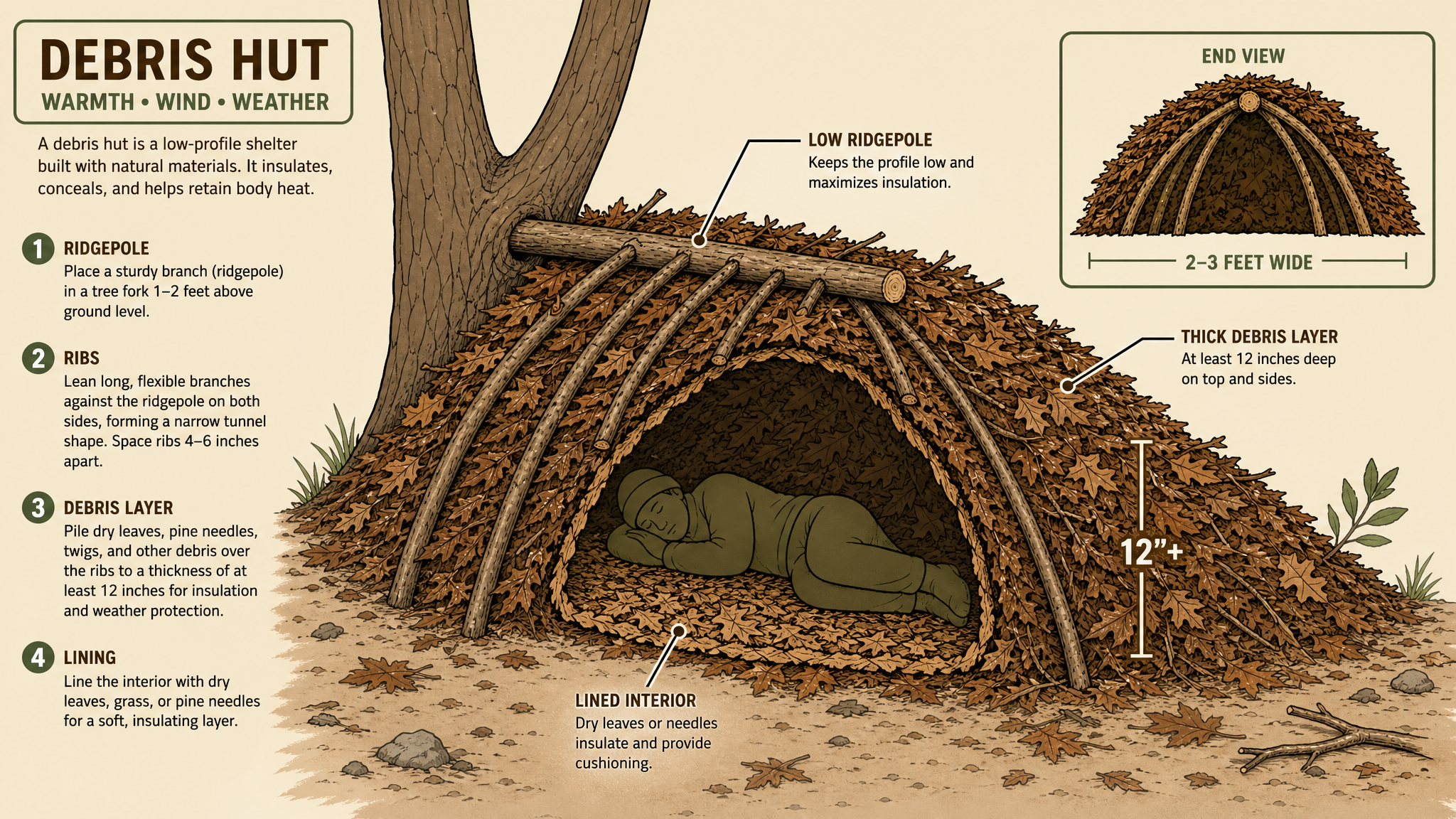
Once the frame is up, pile debris, dry leaves, pine needles, bark, dead grass, over the entire structure until you have at least a foot of coverage on all sides. This is not a light layer. Twelve inches compressed down is closer to two feet loose, and it takes longer to gather than most people plan for. Stuff the inside with dry leaves too, then plug the entrance behind you with a bundle of debris or your pack once you're inside.
Done right, a debris hut can keep you noticeably warmer than sleeping in the open, even without a fire. It takes longer than a lean-to, usually one to two hours if materials are plentiful, so weigh that against how much daylight you actually have left.
Insulation Is the Part People Skip
Here's what most first-timers get wrong: they focus entirely on the roof and ignore the ground. Cold ground pulls heat out of your body faster than cold air does, through direct contact. A shelter with a great roof and bare dirt underneath you will still leave you cold and miserable by 3 a.m.
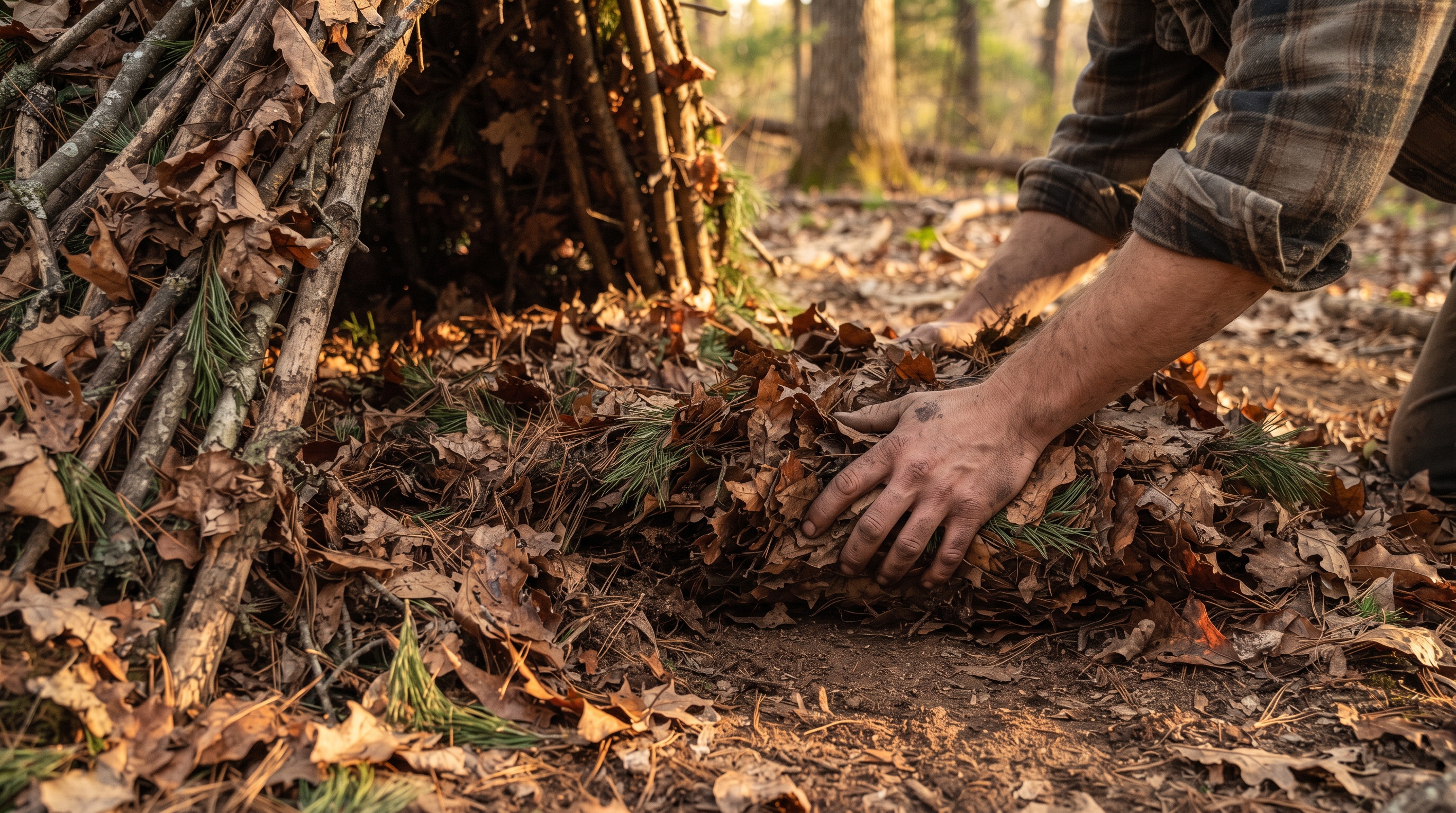
Before you lie down, build a bed of dry leaves, pine needles, or grass at least several inches thick under where your body will rest. If it compresses when you lie on it, add more. This single step does more for your night than almost anything else on this list, and it's the one people cut corners on because it feels less important than the walls.
Mistakes That Get People Hurt Overnight
A few patterns show up again and again in shelter failures:
Building too large. Bigger interior spaces are harder to insulate and slower to warm with body heat alone. Size the shelter to your body, not your comfort preferences.
Choosing a low or wet site. Cold air sinks and pools in depressions. What looks flat and convenient can be the coldest spot around.
Skipping ground insulation. Covered above, and worth repeating because it's the most common failure point.
Starting too late. Waiting until the last hour of daylight to begin building leaves no room for a mistake, a bad material source, or a design that isn't working. Start earlier than feels necessary.
Ignoring wind direction. A shelter with its open side facing the wind performs worse than no shelter at all in some conditions, because it channels cold air directly at you.
None of this requires special training. It requires slowing down, picking the right spot, and building smaller and denser than instinct tells you to.
Shelter-building is a skill you hope to never need, right up until you need it badly. The same logic applies to a first aid kit. Most people don't think about what's in their pack until something's already gone wrong, which is exactly the wrong time to find out it's missing a tourniquet or wound-packing gauze. The 1stHour Trauma Kit is built for the moments before help arrives, whether that's a twisted ankle two miles from the trailhead or something more serious. It pairs well with the STOP method for staying found and everything else you'd want in place before the first hour after things go wrong.
This content is for informational purposes only and does not constitute medical or wilderness safety advice. In a real emergency, prioritize contacting local emergency services or search and rescue when possible.


